
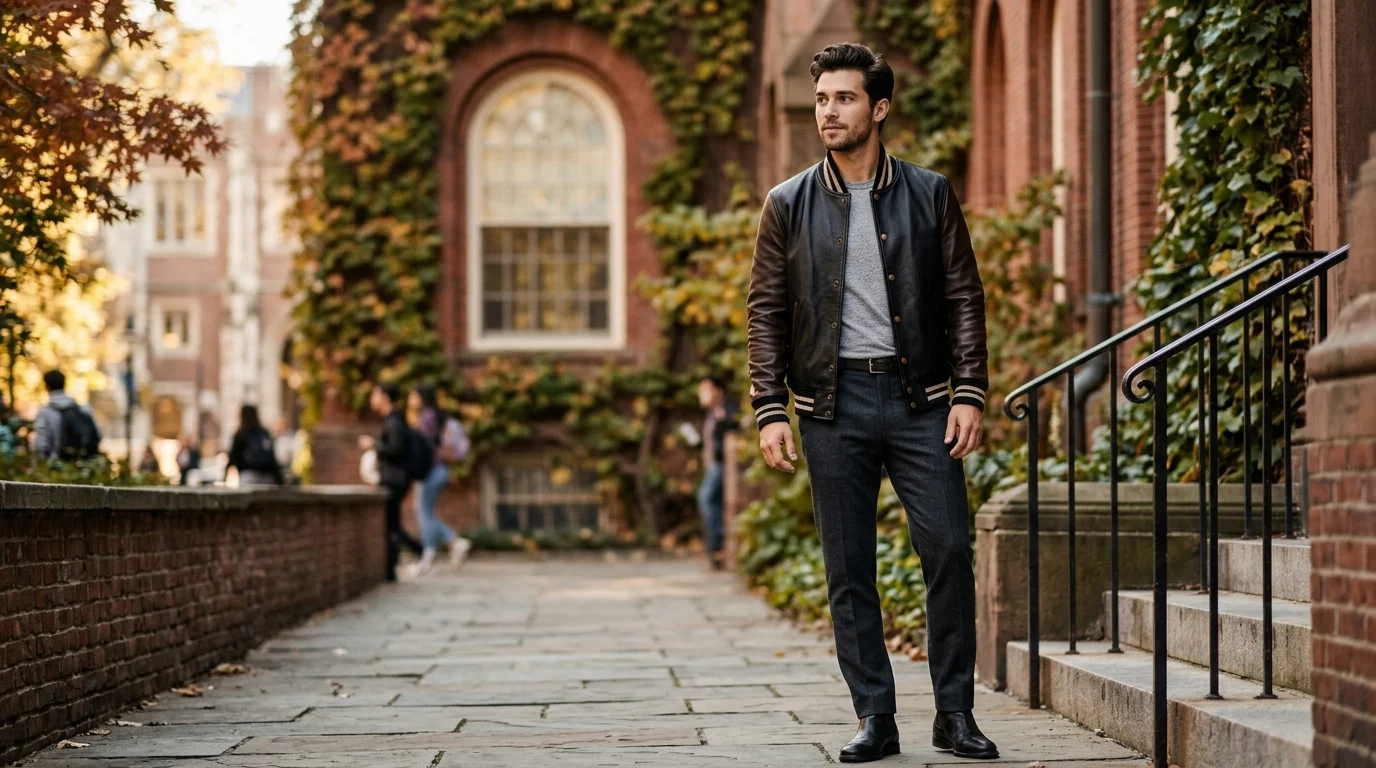
Leather Varsity Jacket vs Wool Letterman Which One Wins
Compare an all-leather varsity jacket vs a wool-body letterman on warmth, 1.1-1.4mm cowhide durability, rain resistance, patch support, and USD 149-499 pricing.
Choosing between an all-leather varsity jacket and a classic wool-body letterman is the single biggest material decision a streetwear buyer faces before spending real money. Both builds share the iconic ribbed collar, snap-front placket, and athletic shoulder line, yet they age, drape, and handle winter weather in completely different ways. Understanding how full-grain hide compares to woven Melton wool across rain protection, patch weight, and ten-year cost per wear ensures you buy the build that actually fits your climate and wardrobe.
Key Takeaways
- All-Leather Wins Wind and Rain Resistance: A full-grain leather varsity jacket blocks freezing wind across your entire torso and sheds light precipitation, while wool bodies absorb moisture and grow heavy in wet sleet.
- Wool-Body Hybrids Excel at Breathable Warmth and Patches: Traditional wool-and-leather letterman jackets trap insulating air pockets indoors without overheating and anchor thick chenille patches without puckering.
- Exact Hide Thickness Dictates Structure: Full-grain cowhide at 1.1-1.4mm holds a crisp, structured sleeve and torso shape, whereas 0.9-1.2mm lambskin drapes softly with zero break-in time.
- Custom Tailoring Solves Broad-Shoulder Pull: Standard off-the-rack varsity cuts often bind across the back yoke or leave baggy sleeves, whereas made-to-order tailoring matches your exact chest and arm measurements.
- Real Price and Lead-Time Benchmarks: Entry cowhide builds start at USD 149-249, premium full-grain jackets run USD 249-399 in 3-5 business days, and custom orders cost USD 299-499 in 7-14 business days.
What Is the Difference Between a Leather Varsity Jacket and a Wool Letterman Jacket?
A leather varsity jacket uses genuine animal hide across both the torso and sleeves, whereas a wool letterman jacket pairs a heavyweight woven wool body with contrasting leather sleeves. Both silhouettes retain striped rib-knit trims and snap closures, yet all-leather construction prioritizes sleek weather protection while wool-and-leather hybrids deliver classic collegiate texture and lighter torso breathability.
Historically, American university athletes wore boiled wool sweaters before adding leather sleeves in the 1930s to shield high-friction elbows from stadium benches and turf wear. Modern streetwear designers later replaced the wool torso with matching cowhide or lambskin to create a unified, weather-sealed outer shell. That single material shift changes how the garment hangs on your shoulders, how it reacts to sudden rain, and how many decades it stays wearable.
Today, buyers shopping mens varsity jackets encounter three distinct constructions: pure wool, wool body with leather sleeves, and 100% full-grain leather. Pure wool versions feel soft and affordable, yet they pill quickly under backpack straps and let sharp gusts cut straight through the chest. Choosing between the wool-and-leather hybrid and the all-leather powerhouse comes down to how you balance heritage collegiate texture against urban durability, and how each build fits alongside broader mens leather jackets in your closet.
Which Leather Varsity Jacket Construction Keeps You Warmer in Winter?
An all-leather varsity jacket delivers superior windproofing across the chest and back, whereas a wool-body leather-sleeve letterman provides better breathable thermal insulation in dry cold. Full-grain cowhide creates an impenetrable barrier against biting windchill, while dense wool fibers trap warm air around your core without trapping excess perspiration indoors.
Warmth in winter outerwear depends on two separate mechanics: loft insulation and wind resistance. Thick Melton wool acts like a breathable blanket because microscopic crimps inside the yarn hold still pockets of heated air next to your knitwear. However, the moment you step onto a windy city avenue, cold gusts penetrate woven wool fibers unless the jacket carries a tight wind-resistant lining.
An all-leather varsity build eliminates that windchill leak completely across every square inch of the garment. Paired with a smooth polyester satin lining over a heavyweight cotton hoodie, a full-grain leather torso locks body heat inside the shell during brisk commutes. If you live in damp, gusty coastal cities, all-leather blocks sleet and wind far better than wool, while riders needing even heavier sub-zero loft can look at aviator jackets or insulated full-length coats.
How Do All-Leather and Wool Varsity Jackets Compare Across Silhouette and Fit?
All-leather varsity jackets hang with heavier, sculpted shoulder drape and sleeker torso lines, while wool-body letterman jackets hold a boxy, puffed collegiate shape at the waist. Choosing the best silhouette depends on your shoulder width, layering habits, and whether you prefer sharp minimalist streetwear or nostalgic campus proportions.
| Silhouette & Material Build | Best Body Type | Primary Aesthetic | Formality Tier | Shoulder Offset & Ease | Price Range USD |
|---|---|---|---|---|---|
| All-Leather Varsity (Cowhide) | Broad Shoulders, Athletic, Average | Sleek Urban Streetwear | Smart-Casual to Streetwear | 2.0 - 2.5 inches chest ease | USD 249-399 |
| All-Leather Varsity (Lambskin) | Lean, Slim, Tall Builds | Quiet Luxury Minimalist | Smart-Casual to Dinner | 1.5 - 2.0 inches chest ease | USD 249-399 |
| Wool-Body & Leather-Sleeve Hybrid | Average, Athletic, Stocky | Heritage Collegiate Retro | Everyday Casual | 2.0 - 2.5 inches chest ease | USD 149-249 |
| Custom Made-to-Order Varsity | Big & Tall, Petite, V-Taper | Tailored Modern Streetwear | Versatile Daily Casual | Custom anatomical pattern | USD 299-499 |
| Cropped Women's Leather Varsity | Petite, Hourglass, Pear | Contemporary Editorial | Casual to Nightlife | 1.5 - 2.0 inches chest ease | USD 249-399 |
| Classic Flight Bomber Cut | All Body Types, Broad Chest | Military Heritage Utility | Relaxed Weekend Wear | 1.75 - 2.25 inches chest ease | USD 249-399 |
Notice how sleeve construction alters upper-arm mobility from day one. A wool-body jacket flexes easily across the chest buttons when you reach forward, letting 1.1-1.4mm cowhide sleeves pivot without pulling at the back yoke. Meanwhile, an all-leather lambskin torso softens within days to match your posture, offering effortless motion for daily wear across both womens varsity jackets and relaxed men's cuts. To compare how varsity shoulders differ from military flight cuts, read our full breakdown of leather bomber vs varsity jackets.
How Long Does a Full-Grain Leather Varsity Jacket Last Compared to Wool?
A full-grain leather varsity jacket routinely outlasts a wool-body letterman by a decade or more because hide resists abrasion, moth damage, and pilling along high-friction seams. While cowhide sleeves on a hybrid jacket remain intact for twenty years, the woven wool torso typically fuzzes, snags, or thins at the pocket welts first.
Most online buyer guides gloss over the weakest failure points on a wool-and-leather jacket. Every time you slip your hands into the slant pockets, rub against a car seatbelt, or carry a canvas messenger strap over your shoulder, friction abrades the raised wool nap. Within three to five winters, cheap wool blends develop unsightly lint pills and bare thread spots around the snap placket and lower hem.
Genuine full-grain hide responds to friction in the opposite way by burnishing into a richer, darker patina. Full-grain cowhide leaves the toughest outer fiber layer intact rather than sanding it down or gluing thin leather dust onto fabric backing. When you pair full-grain hides with YKK brass zippers, solid metal snaps, and hand-stitched seams, the jacket body ages in lockstep with the sleeves instead of wearing out prematurely—a durability standard shared across our mens classic leather jackets and vintage leather jackets.
What Are the Exact Material Specs and Prices for Genuine Varsity Jackets?
Genuine Lux Wearz varsity and leather outerwear options use 100% full-grain cowhide (1.1-1.4mm), lambskin (0.9-1.2mm), or goatskin (0.8-1.0mm) paired with YKK brass zippers and polyester satin linings. Entry cowhide jackets range from USD 149-249, premium full-grain builds run USD 249-399, and custom made-to-order pieces cost USD 299-499.
| Garment Grade & Hide Spec | Material Thickness | Hardware & Stitching | Lining & Trim Spec | Lead Time | Price Range USD | Warranty & Returns |
|---|---|---|---|---|---|---|
| Entry Genuine Leather Varsity | 1.1-1.4mm cowhide | Heavy snaps, YKK brass zippers | Polyester satin lining, rib knit | 3-5 business days | USD 149-249 | 30-day returns, 1-year warranty |
| Premium Full-Grain Varsity | 0.9-1.2mm lambskin or 1.1-1.4mm cowhide | YKK brass zippers, hand-stitched seams | Polyester satin lining, dense rib | 3-5 business days | USD 249-399 | 30-day returns, 1-year warranty |
| Goatskin Heritage Letterman | 0.8-1.0mm goatskin | YKK brass zippers, reinforced snaps | Polyester satin lining, rib knit | 3-5 business days | USD 249-399 | 30-day returns, 1-year warranty |
| Wool-Body Leather-Sleeve Hybrid | Heavy woven wool torso, 1.1-1.4mm cowhide sleeves | Heavy snaps, hand-stitched seams | Polyester satin lining, rib knit | 3-5 business days | USD 149-249 | 30-day returns, 1-year warranty |
| Custom Made-to-Order Varsity | Choice of 0.8-1.4mm full-grain hide | Custom YKK brass zippers, hand-stitched | Polyester satin lining, bespoke rib | 7-14 business days | USD 299-499 | 30-day returns, 1-year warranty |
| Shearling-Lined Winter Aviator | Heavy full-grain hide shell | YKK brass zippers, buckle latches | Genuine shearling lining | 3-5 business days | USD 349-599 | 30-day returns, 1-year warranty |
Every piece handcrafted by our master artisans with 20+ years experience completes a 12-point quality inspection before leaving the workshop. You also receive free shipping across the USA plus international delivery to the UK, Canada, Australia, and EU. If you want to compare grain behavior across hides before ordering, check our deep-dive on lambskin vs cowhide vs goatskin jackets.
Should You Buy Cowhide, Lambskin, or Goatskin for an All-Leather Varsity Jacket?
Full-grain cowhide (1.1-1.4mm) is the smartest choice for rugged daily wear and crisp varsity structure, while lambskin (0.9-1.2mm) wins for weightless softness and luxury drape. Goatskin (0.8-1.0mm) splits the difference with natural pebbled texture, high flex comfort, and impressive scratch resistance at a lighter overall weight.
Picking the right animal hide prevents buyer's remorse far more effectively than obsessing over sleeve colorways. Cowhide feels substantial right out of the box and resists sharp scuffs against concrete walls, subway turnstiles, or motorbike bars, similar to our mens biker moto jackets. After two weeks of wear, cowhide sleeves crease cleanly around your elbows without losing torso rigidity.
Lambskin offers an entirely different wearing sensation because its fine, tight pores create an ultra-smooth, buttery surface. An all-lambskin varsity jacket drapes effortlessly over tailored trousers and wears comfortably indoors without feeling stiff or heavy. Goatskin brings a distinct pebbled grain and natural lanolin resilience, giving active commuters lightweight toughness that stays supple for years—qualities buyers also love in mens bomber flight jackets.
Which Varsity Material Handles Rain, Snow, and Stains Better?
An all-leather varsity jacket handles rain, sleet, and city grime better than a wool letterman because natural full-grain hide repels surface droplets that wipe clean with a dry cloth. Wool-body varsity jackets soak up damp snow quickly, smell musty when wet, and absorb dark grease or coffee stains deep into the weave.
Real-world urban weather reveals the biggest drawback of wool-and-leather hybrids. Catch a sudden autumn downpour in a wool-body jacket, and the wool torso drinks moisture, turning heavy around your waist while pulling down on the shoulder seams. Worse, drying damp wool near a radiator can shrink the body panel unevenly against the fixed length of the leather sleeves.
Full-grain leather handles unexpected drizzle calmly when you blot water away promptly and let the jacket air-dry away from direct heat. Light rain beads off well-conditioned 1.1-1.4mm cowhide, and road salt or dust wipes right off with a damp microfiber cloth. For complete seasonal conditioning schedules across leather sleeves and full-hide coats, follow our leather care guide or browse sleek casual jackets built for unpredictable forecasts.
Does Wool or Leather Support Chenille Patches and Embroidery Better?
Heavy woven wool supports thick chenille letterman patches more easily because dense fabric needles anchor without leaving permanent perforations, whereas leather requires careful seam placement and heavy backing stabilizer. However, tonal leather appliqué and chain-stitched embroidery on full-grain cowhide (1.1-1.4mm) look sharper and resist fraying far better than fuzzy wool felt.
Patch customization separates authentic heirloom jackets from sloppy promotional merchandise. On a wool body, sewing machines punch cleanly between woven yarns, allowing large chest crests and oversized back mascots to sit flat without rippling the surrounding cloth. Because wool has natural give, embroidery threads settle deep into the nap and stay snug.
Stitching heavy patches onto leather demands far higher workshop skill because every needle puncture in animal hide is permanent. Thin 0.9-1.2mm lambskin can pucker or tear along dense satin-stitch borders if an inexperienced shop skips stabilizer backing. At Lux Wearz, artisans mount custom leather appliqués onto sturdy cowhide panels using hand-stitched seams and precision stitch spacing so crests lie flat for life—learn how our custom made-to-order jackets process handles custom paneling and sizing.
Why Do Rib-Knit Collars and Cuffs Stretch Out First on Cheap Varsity Jackets?
Rib-knit collars, cuffs, and waistbands wear out first on budget varsity jackets because makers use loose acrylic yarns that lose elasticity, pill rapidly, and snag on brass snaps. High-grade cotton-elastane ribbing holds tight recovery around your wrists and waist while supporting the weight of genuine leather sleeves.
Even buyers who inspect sleeve leather closely often forget to squeeze the ribbed trim before buying. Cheap varsity jackets pair decent-looking shells with spongy, paper-thin knit cuffs that flare out like bell bottoms after a single winter of pushing sleeves up your forearms. Once the waist rib stretches loose, cold wind rushes straight up your back and ruins the classic blouson silhouette.
Weight balance also accelerates rib wear on wool-and-leather hybrids versus all-leather builds. Heavy cowhide sleeves pull downward on the shoulder yoke every time you hang the jacket on a narrow hook or thin wire hanger. Always store any leather varsity jacket on a wide, contoured wooden hanger, and consider collarless or hooded leather jackets if you want zero-rib knitwear maintenance.
How Heavy Is an All-Leather Varsity Jacket Compared to a Wool Letterman?
An all-leather varsity jacket made from 1.1-1.4mm cowhide feels noticeably heavier across the torso than a wool-body letterman, while a 0.9-1.2mm lambskin varsity weighs nearly the same as traditional wool. Weight distribution shapes all-day shoulder comfort during long commutes, air travel, and indoor wearing sessions.
Many first-time leather buyers underestimate how hide density affects torso fatigue over an eight-hour workday. Heavyweight cowhide carries substantial natural fiber mass across the chest and back yoke, giving the wearer a reassuring, armor-like presence outdoors. However, walking briskly through heated indoor concourses in heavy cowhide can feel warm and demanding if you prefer featherlight outerwear.
Selecting 0.9-1.2mm lambskin or 0.8-1.0mm goatskin drops total garment weight dramatically while keeping an all-leather exterior. Lambskin distributes shoulder load softly so the collar never digs into your trapezius muscles when worn unzipped over a simple jersey tee. Meanwhile, wool-and-leather hybrids balance heavier 1.1-1.4mm cowhide sleeves against a breathable Melton torso, making them effortless to throw on for multi-stop city errands.
How Should You Store and Condition a Leather Varsity Jacket Between Seasons?
Storing a leather varsity jacket properly requires hanging it on a broad wooden coat hanger inside a breathable cotton garment bag away from heat vents and damp basements. Conditioning the leather panels lightly twice per year prevents dry cracking while keeping oils completely away from wool bodies and striped ribbed trims.
Off-season neglect destroys more varsity jackets than regular winter street wear ever does. Folding a leather jacket inside a plastic storage bin traps residual humidity against the hide while carving stubborn creases across the elbows and chest placket. Even worse, cedar blocks touching raw leather directly can draw natural oils out of the surface, while hanging a hybrid wool body unprotected invites clothes moths.
Before storing your jacket for spring, wipe away city dust and road salt with a slightly damp microfiber cloth, then allow twenty-four hours of open-air drying. Apply a pea-sized drop of pH-balanced leather conditioner onto a clean cloth and massage it only across the hide panels, maintaining a crisp half-inch margin around wool seams and rib-knit cuffs. Button the front snaps halfway before slipping the garment into a breathable cloth bag so the collar keeps its upright horseshoe curve until autumn returns.
What Updated Men's Varsity Jacket Alternatives Work Best for Adults in 2026?
Monochrome all-leather varsity jackets, tonal leather-on-leather blousons, and unbranded minimalist cowhide letterman cuts are the strongest updated alternatives for adults in 2026. Stripping away bright school numbers and cartoon mascots keeps the athletic ribbed silhouette sharp enough for creative offices, dinner dates, and elevated city travel.
Many adult buyers hesitate before buying a varsity jacket because loud high-contrast team patches can feel stuck in high school. Contemporary menswear solves this problem through material elevation and quiet-luxury restraint. Swapping scarlet-and-gold wool for matte black 1.1-1.4mm cowhide with tonal charcoal ribbing instantly turns a stadium jacket into serious adult outerwear.
Another rising 2026 favorite pairs espresso brown full-grain leather bodies with cream or caramel sleeves and brushed antique snaps. Wearing a clean, unbranded leather varsity jacket over fine merino knitwear and pleated trousers bridges athletic heritage and refined tailoring effortlessly. Explore our complete styling playbook on how to style a leather varsity jacket, check our womens leather jackets for coordinated couple cuts, or verify real buyer photos on customer reviews.
How Should a Men's Leather Varsity Jacket Fit Without Pulling or Bunching?
A men's leather varsity jacket should sit cleanly at the edge of your shoulder bone while leaving 2.0 to 2.5 inches of chest ease for layering over a crewneck or hoodie. The ribbed waistband should rest right on your belt line, and the cuffs must end cleanly at your wrist bone without stacking over your knuckles.
Sizing mistakes happen most often when shoppers buy their tight T-shirt size in heavy leather outerwear. Because genuine cowhide lacks the four-way stretch of synthetic knitwear, a too-small chest pulls horizontally across the snap placket and restricts forward arm reach. Conversely, sizing up blindly to gain room for a hoodie often leaves shoulder seams drooping awkwardly halfway down your biceps.
Measure your widest chest circumference over the heaviest sweater you plan to wear, then check exact garment specs on our size and fit guide before checkout. For athletes with broad lats, long arms, or big-and-tall proportions, off-the-rack grading rarely gets both torso taper and sleeve length right simultaneously. Our bespoke workshop eliminates guesswork with a complimentary video sizing consultation, and you can read more sizing benchmarks in our guide on how a leather jacket should fit.
How Do You Choose Between a Leather Varsity Jacket and a Wool Letterman Today?
Choose an all-leather varsity jacket if you want maximum wind resistance, sleek adult styling, and a 20-year patina investment, or choose a wool-and-leather hybrid if you love classic collegiate texture and breathable indoor comfort. Both builds reward buying genuine full-grain hide over peeling polyurethane synthetics.
Take a quick inventory of your local climate and weekly outfit rotation before placing an order. Commuters walking windy streets or wearing monochrome streetwear get immediate value from full-grain 1.1-1.4mm cowhide or buttery 0.9-1.2mm lambskin across the entire body. Meanwhile, buyers layering heavily in dry autumn air or customizing traditional chenille school letters love the lightweight warmth of Melton wool framed by leather sleeves.
Whichever route fits your wardrobe, refuse cheap split leather or plastic coatings that flake apart within two seasons. Invest in handcrafted construction backed by a 1-year craftsmanship warranty, 30-day hassle-free returns, and free shipping across the USA. Still weighing leather finishes, hardware, or custom sizing? Reach out directly to contact our artisans before your jacket goes into production.
Explore The Full 2026 Leather Outerwear Collection
Vegetable-tanned full-grain cowhide, buttery New Zealand lambskin, and heritage Melton wool. Free express delivery across the USA with 30-day hassle-free returns.