
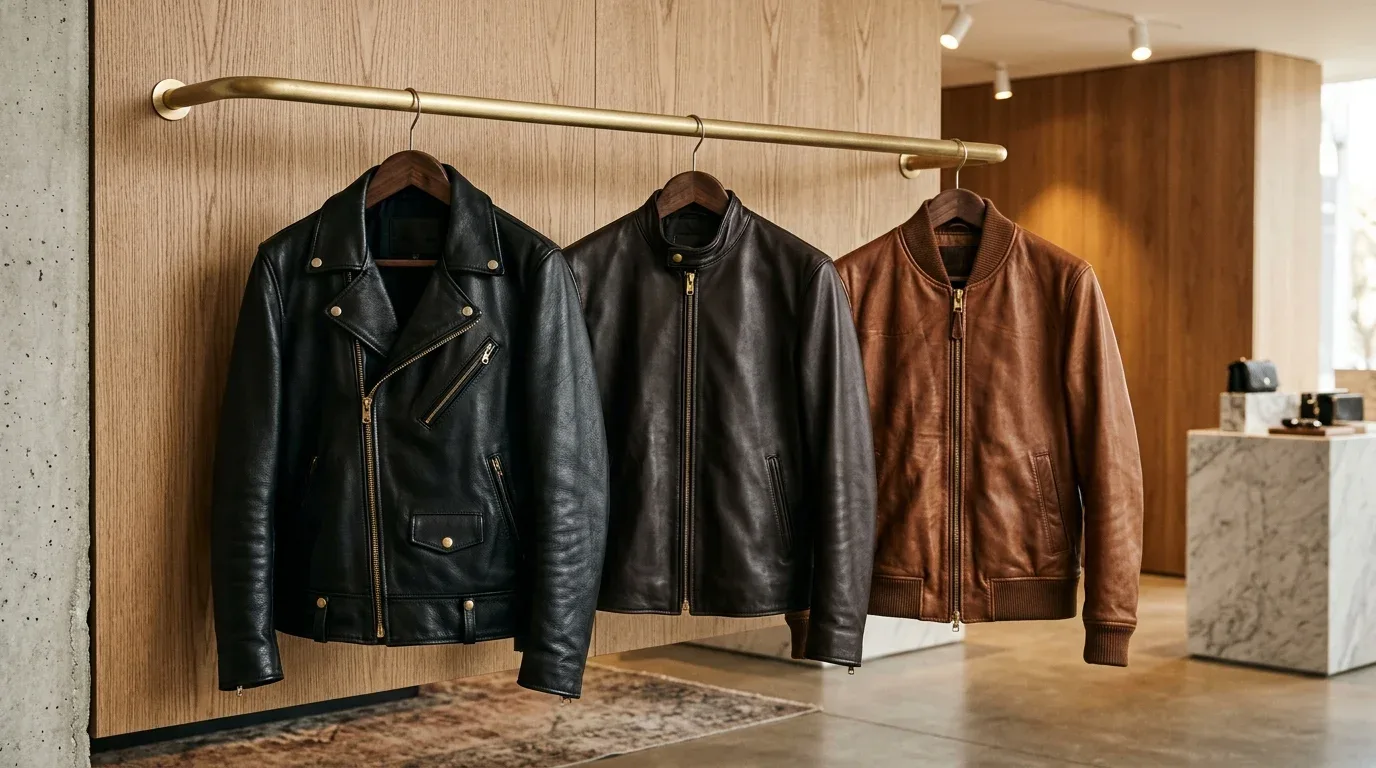
How to Choose a Leather Jacket: Leather Types, Styles and Fit
Lambskin or cowhide? Biker or cafe racer? A clear buyer's guide to choosing a leather jacket you will still love in five years — leather types, styles, fit and the details worth checking.
A good leather jacket is one of the few pieces of clothing that gets better the longer you own it. A bad one is expensive regret. The difference almost never comes down to the price tag. It comes down to three decisions you make before you buy: the leather, the cut, and the style you will actually wear.
This guide walks through all three, in the order that matters, so you can choose with confidence whether you are buying your first jacket or replacing one you loved.
Start with how you will wear it, not how it looks
Before leather types and stitching details, answer one question honestly: what is this jacket for?
- Everyday, three seasons a year. You want a mid-weight leather, a cut that layers over a shirt or light knit, and a colour that goes with most of your wardrobe.
- Cold weather. Look at shearling-lined or insulated styles. A thin fashion jacket will look right and feel wrong in January.
- Riding or serious wear. Heavier hides, reinforced seams and a closer fit. Biker and cafe racer cuts were built for this.
- Occasion and evenings. Lighter, softer leathers and cleaner lines. A blazer cut or a slim bomber often works better than a heavy biker.
Most disappointment with leather jackets traces back to skipping this step. The jacket was fine. It was bought for the wrong job.
Leather types explained
Different animals and different finishing methods produce very different jackets. Here is what the names on a product page actually mean.
Lambskin
Lambskin is the softest, lightest and most supple of the common jacket leathers. It drapes beautifully and feels luxurious against the skin, which is why it dominates fashion and evening styles, from quilted puffers to slim biker cuts. The trade-off is durability: lambskin scratches and marks more easily than cowhide, so it suits careful wear rather than hard use.
Cowhide
Cowhide is the workhorse. It is thicker, tougher and more resistant to abrasion, which is why classic biker and cafe racer jackets are so often cut from it. It starts stiffer and needs a break-in period, but it moulds to you over months and, in waxed or full-grain finishes, develops a patina that only improves with age.
Goatskin
Goatskin sits between the two. It is noticeably tougher than lambskin but lighter and more flexible than cowhide, with a fine natural pebble grain. It is a favourite for gloves and for jackets that need to take some weather without weighing you down.
Suede
Suede is leather with the underside brushed to a soft nap. It is the most textural option and looks wonderful in trucker, aviator and Western-inspired cuts. It is also the most sensitive to water and staining, so it rewards owners who are willing to protect and brush it.
Shearling
Shearling is sheepskin with the wool left on, used as lining or as a collar. It is the warmest option by a wide margin and the reason aviator and B-3 bomber jackets have kept flight crews warm for the better part of a century. Expect more weight and bulk in exchange for that warmth.
Calfskin and deerskin
You will see these mostly on accessories. Calfskin is smooth and fine-grained, which is why it is favoured for wallets and cardholders. Deerskin is exceptionally soft and stays supple in the cold, which makes it a classic choice for driving gloves.
"Genuine leather", "full-grain" and what to trust
Product descriptions use a lot of leather vocabulary. A few terms are worth understanding.
Full-grain is the top layer of the hide with the natural grain intact. It is the strongest, most breathable part of the leather and the part that ages best. If a product says full-grain, that is a mark of quality.
Top-grain has had the very surface lightly sanded to remove imperfections, then finished. It is smoother and more uniform than full-grain, slightly less durable, and still an excellent jacket leather.
Genuine leather simply confirms the material is real leather rather than a synthetic. It tells you nothing about the grade on its own, so read the rest of the description for the animal and the grain.
Faux leather, PU or vegan leather are plastics. They can look convincing on day one and rarely look good in year three, because they do not breathe, do not soften and cannot develop a patina. If longevity matters to you, buy real leather.
The styles, and who each one suits
Once you know your leather, the cut decides how the jacket lives in your wardrobe.
- Biker and moto jackets have an asymmetric or double-breasted front, a snap-down or belted collar and hardware detail. They add attitude to plain outfits and look best fitted. Browse men's biker and moto jackets or women's moto and biker jackets.
- Cafe racer jackets are the minimalist cousin: a straight zip, a short stand collar and almost no hardware. Nothing dates them, which is why they are the safest first leather jacket for most people. See the cafe racer collection.
- Bombers and flight jackets have a ribbed hem and cuffs and a relaxed body. Easy to wear over anything, especially in the bomber and flight jacket range.
- Aviator and B-3 shearling jackets are the cold-weather heavyweights, with wide shearling collars and full shearling linings. Explore aviator and B-3 bombers.
- Trucker and field jackets borrow from denim and military workwear, with a boxy body and chest pockets. Suede versions are particularly good in autumn. See field and trucker jackets.
- Leather blazers and trench coats are the dressed-up end of the spectrum and work in offices and evenings where a biker would not. Look at women's leather blazers and leather trench coats.
- Puffers, hooded and cropped styles are the modern silhouettes: quilted lambskin puffers for warmth with polish, hooded jackets for casual layering, and cropped cuts that sit at the waist and pair with high-rise trousers. Browse leather puffer jackets, hooded leather jackets and women's cropped jackets.
Fit: the detail that makes or breaks it
A leather jacket should fit closer than a coat and a little closer than you might expect off the hanger, because leather relaxes with wear. The shoulder seam should sit at the end of your shoulder, the sleeve should reach the wrist bone, and you should be able to zip it fully over a shirt or light knit without pulling across the chest.
Fit is important enough that it has its own article: read our guide on how a leather jacket should fit and check the size guide before ordering. For women's jackets, also read why brand sizing for women often runs trim before you order.
Details worth checking on any product page
- Lining. Viscose and satin linings slide easily over other layers; quilted linings add warmth. A shearling lining is a winter-only proposition.
- Hardware. Zips and snaps should feel solid. Branded zips are a good sign of overall build quality.
- Pockets. Count the ones you will actually use. Interior pockets matter more than exterior ones on a jacket you wear daily.
- Weight. Descriptions that mention a jacket being cut lean or light are telling you it is a fashion piece rather than a cold-weather one.
- Colour. Black is the most versatile and forgiving; brown and tan develop the most character; bold colours make a jacket the centre of an outfit rather than a supporting piece.
Caring for the jacket once it is yours
Real leather asks for very little: keep it dry, let it air rather than heating it, condition it once or twice a year, and store it on a broad hanger in a breathable bag. Suede needs a protective spray and a soft brush. Our leather care guide covers each type in detail.
The short version
Decide what the jacket is for. Pick lambskin for softness, cowhide for toughness, goatskin for a balance of the two, suede for texture and shearling for warmth. Choose a cut you will still like in five years, which for most people means a cafe racer or a classic biker. Then get the fit right, because no leather is good enough to rescue the wrong size.
When you are ready, browse the full collection or start with men's leather jackets and women's leather jackets.
Explore The Full 2026 Leather Outerwear Collection
Vegetable-tanned full-grain cowhide, buttery New Zealand lambskin, and heritage Melton wool. Free express delivery across the USA with 30-day hassle-free returns.