
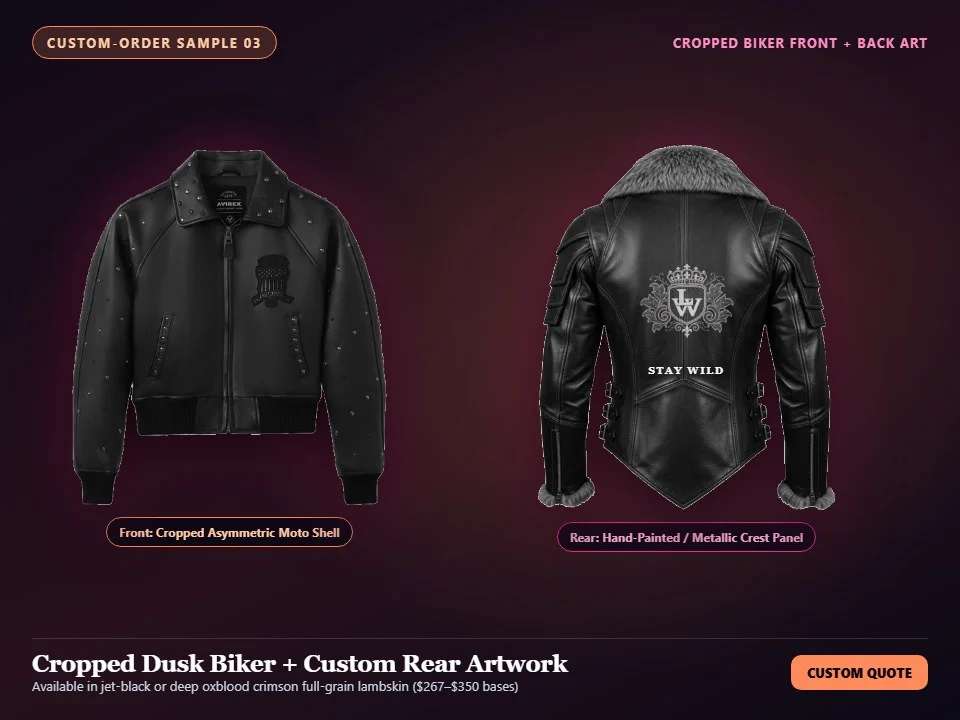
How Custom Back Patch Leather Jackets Are Built to Last
Discover how custom back patch leather jackets are built to last with 1.1-1.4mm cowhide, leather applique, bonded thread, YKK hardware, and bespoke sizing.
Understanding how custom back patch leather jackets are built to last starts inside the pattern room long before an embroidery needle touches the garment. Slapping a heavy decorative emblem onto thin fashion leather or melting heat-seal glue against finished hides causes sagging shoulders, puckered seams, and torn perforations within a single riding season. Master artisans engineer the jacket shell, back panel cut, patch backing, stitch spacing, and interior lining as one structural system.
Whether you commission a bold motorcycle back-art biker, a varsity sleeve-and-back chenille silhouette, or subtle personalized script above a printed interior lining, enduring craft comes down to physics and materials. Knowing how pattern cutters match hide thickness, thread tensile strength, and YKK brass zippers ensures your bespoke centerpiece lasts thirty years instead of flaking apart after one summer.
Key Takeaways
- Start With a Single-Piece Back Panel: Heavy custom artwork requires an unbroken center-back cut of 1.1-1.4mm full-grain cowhide rather than multi-scrap patchwork seams.
- Never Use Iron-On Glue on Genuine Hide: High heat scorches leather grain and breaks down natural oils; genuine patches demand mechanical lockstitching with leather-safe temporary basting.
- Prevent the Postage-Stamp Tear Line: Calibrated medium stitch length with UV-resistant bonded nylon or polyester thread holds patches tight without perforating hide fibers.
- Distribute Weight Across the Interior: Double-felt backings, canvas panel stabilizers, and polyester satin lining keep tall back artwork flat without dragging collars backward.
- Transparent Bespoke Pricing & Timelines: Lux Wearz crafts custom made-to-order jackets from USD 299–499 in 7–14 business days, complete with a 1-year craftsmanship warranty and free USA shipping.
Why Do Cheap Custom Back Patch Jackets Sag, Tear, or Peel Early?
Cheap custom back patch jackets sag, tear, or peel early because factories attach dense patches onto thin split hides using household iron-on glues, multi-piece scrap backs, and overly tight needle perforations. Without proper structural leather thickness and stabilized stitch tension, gravity and shoulder motion pull weak back panels apart rapidly.
The Iron-On Heat-Seal Disaster on Genuine Leather
Many online patch shops sell emblems backed with glossy plastic heat-seal film meant for cotton denim vests. Pressing a hot household iron against 100% genuine full-grain leather scorches collagen fibers, melts surface finishes, and seals natural tanning oils directly against adhesive—causing patch corners to curl upward within weeks.
Once edges lift, road wind and backpack straps snag exposed fabric corners until the artwork rips off cleanly. Skilled ateliers ban heat-press backings completely, relying exclusively on mechanical perimeter stitching paired with light, leather-safe temporary positioning tape prior to sewing.
Multi-Scrap Patchwork Backs vs. Single-Piece Yokes
Turn any bargain sub-$150 replica leather jacket around and count horizontal seams across the shoulder blades. Low-margin factories piece together six or eight tiny belly offcuts across the rear torso to squeeze extra profit from damaged skins. Belly hide stretches unpredictably in multiple directions, warping embroidered back crests into diagonal waves as soon as you sit down.
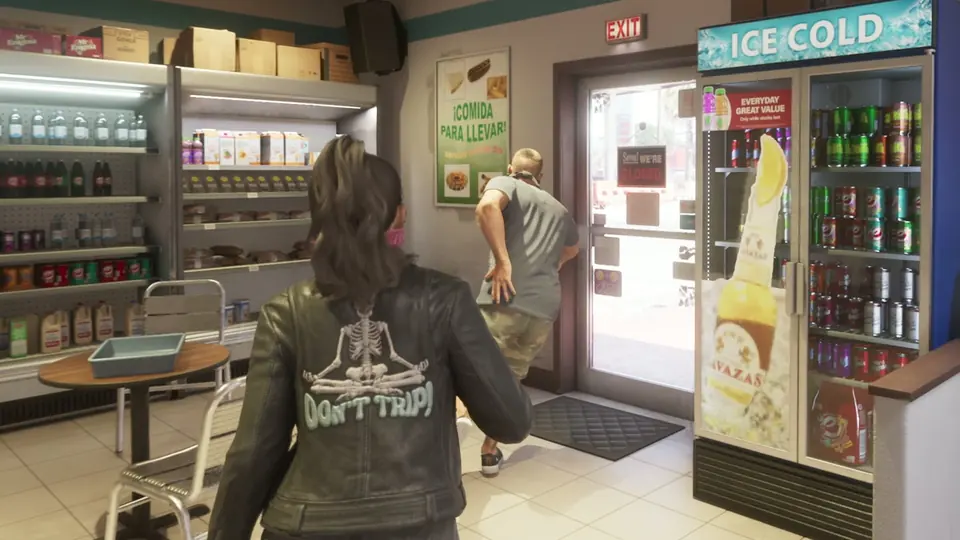
True heirloom workshops cut a broad, continuous center-back canvas—or two mirrored vertical halves joined by a heavy felled center seam—directly from dense prime-back hide across men's biker moto jackets and women's biker jackets. That unified leather plane supports multi-layer emblems smoothly while keeping upper shoulders balanced.
The Postage-Stamp Perforation Failure
Unlike woven denim or twill, leather fibers do not weave back around a sewing needle hole—every single puncture removes microscopic hide tissue permanently. When an inexperienced operator runs cramped, dress-shirt stitch spacing around a 12-inch back emblem, hundreds of closely packed needle holes behave identically to the perforated tear strip on a sheet of postage stamps. One heavy shoulder reach splits the leather clean along the patch outline.
Master leatherworkers dial industrial sewing feed lengths to calibrated medium stitch spacing matched directly to hide density, while skiving (shaving thin) overlapping seam folds so stacked borders lie flat rather than bulging around stiff corners. Properly balanced top-and-bobbin thread tension locks stitches snugly inside natural hide grain without puckering adjacent leather.
Which Leather Hides Support Heavy Custom Back Patches Best?
Full-grain cowhide at 1.1-1.4mm supports heavy custom back patches best because its tightly cross-linked collagen fibers resist stretching under heavy yarn or leather applique weight. Lighter lambskin (0.9-1.2mm) and goatskin (0.8-1.0mm) shine on minimalist jackets or light interior embroidery, whereas heavyweight cowhide carries bold rear emblems effortlessly.
Full-Grain Cowhide (1.1-1.4mm) for Large Back Art and Riding Cuts
Dense 1.1-1.4mm full-grain cowhide forms the backbone of custom riding and rock-heritage jackets across men's motorbike jackets and women's motorbike jackets. Tightly packed collagen bundles lock heavy perimeter threads firmly without puckering, handle road wind without flapping, and develop warm burnished patina around patch edges over twenty years.
Cutting the rear center panel vertically along the natural spine line—rather than diagonally across looser flank hide—also prevents heavy back patches from twisting diagonally after months of road travel. Chrome-tanned and semi-aniline cowhide skins hold deep black and heritage earth dyes consistently through wet weather while keeping tensile resistance uniform across every square inch behind your artwork.
Full-Grain Goatskin (0.8-1.0mm) for Lightweight Mobility
Full-grain goatskin measuring 0.8-1.0mm offers extraordinary tensile strength relative to its featherweight feel thanks to tightly compacted pebble grain. When paired with medium-size sewn emblems or classic flight-patch arrangements on men's bomber flight jackets, goatskin resists abrasion while keeping overall shoulder weight comfortable across twelve-hour travel days.
When Supple Lambskin (0.9-1.2mm) and Suede Make Sense
Ultra-soft 0.9-1.2mm full-grain lambskin drapes effortlessly on fashion motos and cropped streetwear, though massive multi-pound wool chenille back pieces can tug delicate lambskin collars backward if left unbacked. Artisans reserve lambskin primarily for streamlined leather applique, delicate chain-stitch script, or custom-printed interior linings, while reinforcing any rear crest internally with lightweight canvas stabilizer. Similarly, velvety napped suede delivers dramatic matte depth when built qualitatively around sleek stitched emblems rather than over-weighted with stiff heavy patches.
How Do Leather Applique, Chenille, and Chain-Stitch Embroidery Compare?
Leather applique outperforms woven embroidery for raw multi-decade durability because genuine hide-on-hide cutouts weather alongside the jacket shell, whereas plush chenille delivers bold retro varsity texture and chain stitching creates fluid vintage typography. Choosing the right craft technique matches visual depth directly to how you wear your jacket.
Hand-Cut Leather Applique (Zero Fray, Organic Patina)
To execute leather applique, master pattern cutters trace custom typography, stars, flames, or geometric silhouettes onto contrasting dyed hides, bond them lightly in place, and lock every raw edge down with dense hand-stitched seams or industrial walking-foot lockstitches. Because both the base jacket and graphic layers share natural hide chemistry, the patch flexes smoothly, sheds rain evenly, and ages into matching vintage sheen without ever fraying threads.
Plush Chenille on Double-Felt Varsity Foundations
Iconic collegiate crests across men's varsity jackets and women's varsity jackets rely on chenille—plush looped wool or acrylic yarn tufted thickly onto a heavy double-felt base. Because chenille stands three-dimensionally proud of the backing, builders frame letters with tight embroidered satin outlines and sew the entire felt plaque onto the leather shell so heavy yarn never loosens under shoulder movement.
Vintage Chain-Stitch Embroidery and Merrowed Borders
Executed on heritage hand-guided crank machines, chain-stitch embroidery builds raised, rope-like braided loops prized across retro Americana and coastal club streetwear. Rather than burying soft leather under stiff computer-generated solid fill stitches, chain stitching follows fluid script curves smoothly. When paired with separate emblems, thick merrowed borders wrap edges cleanly so yarns never catch or snag on jacket pocket flaps.
| Decoration Method | Substrate & Construction | Visual Texture & Depth | Flex & Abrasion Longevity | Best Jacket Pairing | Price Tier (USD) |
|---|---|---|---|---|---|
| Genuine Leather Applique | Contrasting dyed hides sewn edge-locked | Crisp sculpted layered relief | Highest; ages natively with shell | Heavy cowhide bikers & racers | USD 299–499 (Custom) |
| Double-Felt Chenille Crest | Looped yarn tufted on thick wool felt | Bold plush 3D varsity loft | High; protect from wet friction | Leather & wool-sleeve varsities | USD 299–499 (Custom) |
| Vintage Chain-Stitch Script | Braided yarn loops via crank needle | Organic rope-like retro curves | High when backed internally | Flight bombers & cafe racers | USD 299–499 (Custom) |
| High-Density Satin Patch | Bonded polyester thread on twill base | Sharp crisp micro-detail | High; UV & moisture resistant | Multi-piece biker rockers | USD 299–499 (Custom) |
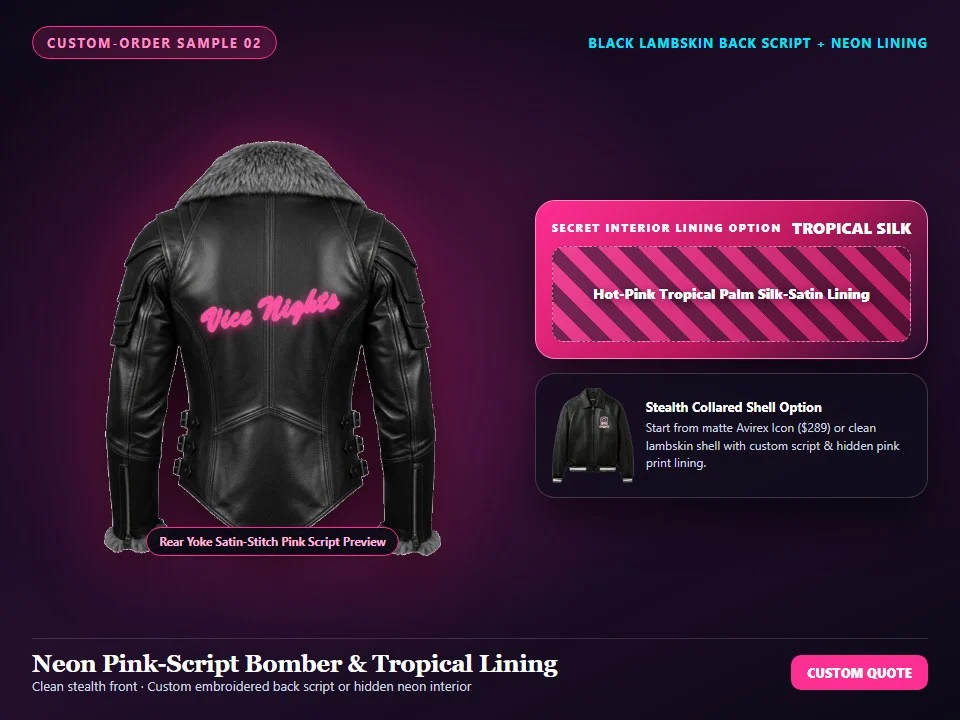
| Custom Printed Interior Lining | Sublimated smooth polyester satin | Hidden interior color statement | High; friction-free arm glide | Minimalist stealth black shells | USD 299–499 (Custom) |
What Stitching Engineering and Hardware Keep Custom Back Patches Anchored?
Custom back patches stay anchored for decades through spearpoint cutting needles, UV-resistant bonded nylon or polyester thread, solid YKK brass zippers, and slack-cut polyester satin lining. Every internal mechanical detail protects leather fibers from splitting under stress while letting upper back panels move freely.
Spearpoint Leather Needles and Bonded UV-Resistant Thread
Standard ballpoint garment needles push leather fibers violently aside, leaving jagged tears that widen over time. Leather craftspeople load industrial walking-foot machines with triangular diamond-point or chisel-cut leather needles that slice microscopic angled slits aligned neatly with the stitch line. As tension settles, surrounding collagen grips the thread snugly.
Thread selection matters just as urgently. Ordinary cotton thread absorbs acidic rainwater, rots rapidly under ultraviolet exposure, and snaps cleanly along tight shoulder curves. Master builders thread bonded nylon or heavy polyester thread through both structural seams and patch borders, sealing synthetic thread tails securely inside the shell so stitching never unravels.
Interior Canvas Stabilizers and Weight Distribution
Attaching a 14-inch leather-and-chenille crest onto an unreinforced jacket panel focuses all patch gravity directly onto the collar seam. Inside custom commissions, tailors laminate lightweight breathable cotton canvas or interlining strips behind the embroidery zone before sewing polyester satin lining cleanly around the perimeter. That hidden structural bridge spreads patch weight smoothly across the entire shoulder yoke so your back sits flat when zipped open.
Matching Zipper Gauges and Backing Washers to Heavy Shells
Adding bold back art elevates a jacket into a multi-decade keeper, meaning primary metal hardware cannot fail before the artwork ages in. Heavyweight YKK brass zippers (#8 and #10 gauge) anchor asymmetrical fronts and cuff gussets without tooth separation, while hidden internal leather washers behind every snap post prevent metal prongs from cutting through hand-stitched seams. Read our detailed breakdown of what zippers and stitching make a quality leather jacket to inspect every hardware checkpoint yourself.
| Lux Wearz Material & Build Tier | Hide Thickness | Hardware & Stitching | Interior Lining | Price Range (USD) | Production Lead Time & Coverage |
|---|---|---|---|---|---|
| Entry Genuine Cowhide | 1.1-1.4mm | Solid metal zips; hand-stitched seams | Polyester satin lining | USD 149–249 | 3–5 business days; 30-day returns; 1-yr warranty |
| Premium Full-Grain Lambskin | 0.9-1.2mm | YKK brass zippers; hand-stitched seams | Polyester satin lining | USD 249–399 | 3–5 business days; 30-day returns; 1-yr warranty |
| Premium Full-Grain Cowhide | 1.1-1.4mm | YKK brass zippers; hand-stitched seams | Polyester satin lining | USD 249–399 | 3–5 business days; 30-day returns; 1-yr warranty |
| Premium Full-Grain Goatskin | 0.8-1.0mm | YKK brass zippers; hand-stitched seams | Polyester satin lining | USD 249–399 | 3–5 business days; 30-day returns; 1-yr warranty |
| Custom Made-to-Order Jacket | Choice of 0.8-1.4mm hides | YKK brass zippers; hand-stitched seams | Choice of satin or custom print | USD 299–499 | 7–14 business days; 30-day returns; 1-yr warranty |
| Shearling & Aviator Tier | Heavyweight winter hide | YKK brass zippers; hand-stitched seams | Genuine shearling lining | USD 349–599 | 3–5 business days; 30-day returns; 1-yr warranty |
How Should You Layout Single-Piece vs. Three-Piece Back Patches Without Cracking Leather?
Laying out custom back patches without cracking leather relies on centering motifs 2 to 3 inches below the collar seam, leaving horizontal flex channels between multi-piece sections, and mounting badges exclusively through unlined shell leather before closing the interior lining. Smart geometry lets your shoulder blades round naturally while riding or driving.
Modular Three-Piece Layouts vs. Full-Back Emblems
Classic motorcycle club layouts divide large rear graphics into a curved top rocker, a central emblem, and a curved bottom rocker—a structure engineered for mobility as much as visual identity. Leaving half-inch gaps of bare 1.1-1.4mm cowhide between the upper rocker and center crest gives your back natural hinge lines when leaning forward over handlebars.
When commissioning original street art or personal emblems as a single 11-to-13-inch centerpiece, avoid thick 100% solid plasticized embroidery fills across the entire circle. Blending open leather negative space, sculpted leather applique, and curved chain stitching keeps the emblem pliable enough to move with your posture.
Avoiding Structural Seams and Action-Back Pleats
Never stitch a rigid circular back patch straight across deep bi-swing action-back shoulder pleats. Action pleats exist specifically to expand outward as you reach forward; locking a patch over them freezes shoulder articulation completely and snaps perimeter threads within months. Keep custom artwork cleanly centered inside the flat inner back panel between the pleats, and double-check custom garment alignment via our official Lux Wearz size guide.
Respecting Traditional Riding Culture and Trademark Boundaries
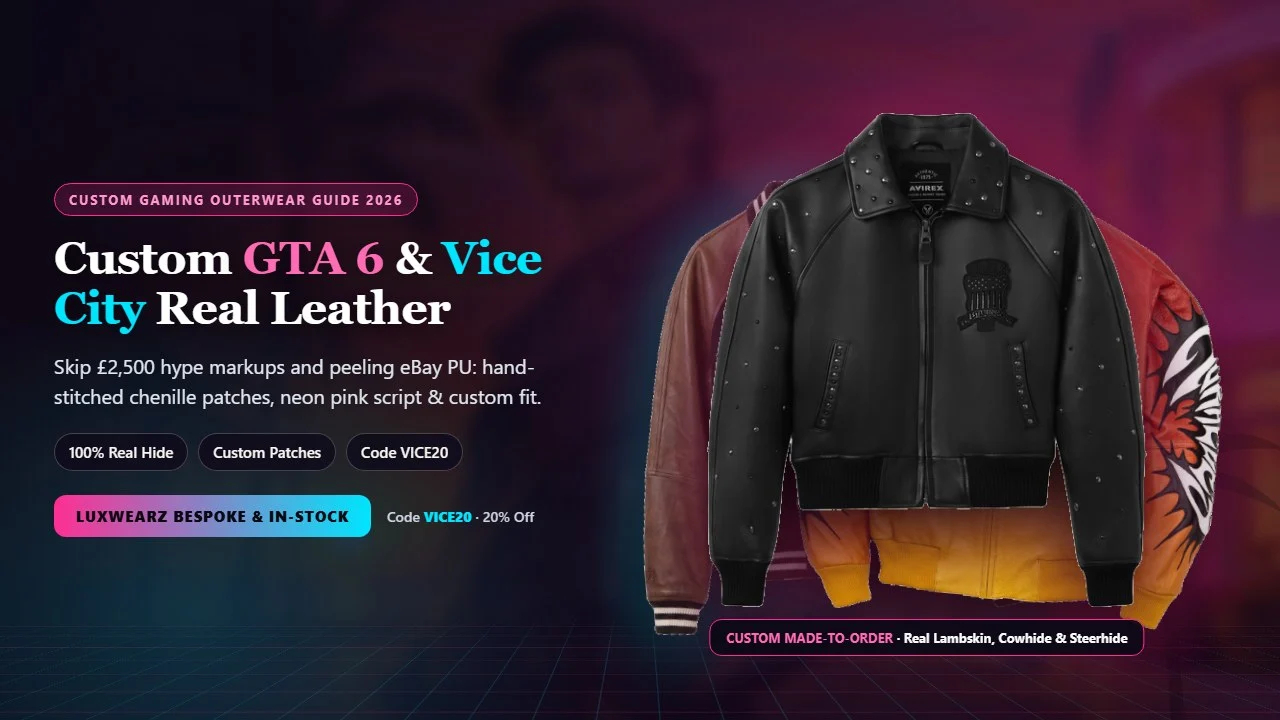
Thoughtful custom commissions avoid borrowing trademarked game studio logos or established motorcycle club rockers that buyers did not earn. Instead, independent ateliers translate retro coastal palettes, skeleton-and-rose folk art, personal monograms, lucky numbers, and original typography into timeless heirloom craftsmanship. Explore how coastal visual references translate safely into original outerwear inside our GTA 6 and Vice City style breakdown gallery and our bespoke Vice City leather craft guide. Fan-inspired independent leather craftsmanship — Lux Wearz is not affiliated with, sponsored by, or endorsed by Rockstar Games or Take-Two Interactive.
How Does a Bespoke Custom Back Patch Commission Work From Sketch to Delivery?
A bespoke custom back patch commission progresses cleanly from submitting your concept sketch and measurements to selecting 0.8-1.4mm full-grain leather, approving embroidery mockups, and receiving hand-stitched delivery within 7–14 business days. Working directly with experienced bench artisans eliminates overseas middlemen, retail markups, and unpredictable off-the-rack sizing.
Step 1 — Submit Artwork Concepts and Exact Body Measurements
Start by uploading reference images, hand sketches, color palettes, or emblem layouts directly through our Lux Wearz custom order portal. Rather than guessing whether a standard Medium or Large accommodates your broad shoulders or long sleeves, you lock exact chest, shoulder yoke, waist, sleeve, and back-panel length measurements—backed by a free sizing consultation via video call whenever you need tape-measure verification.
Step 2 — Choose Hide Thickness, Patch Craft, Hardware, and Lining
Collaborate with our master leatherworkers (boasting 20+ years experience) to pair your artwork with the ideal substrate. Choose 1.1-1.4mm cowhide for rugged biker back art, 0.9-1.2mm lambskin for sleek street tailoring, or 0.8-1.0mm goatskin for lightweight all-season toughness, then finalize YKK brass zippers, leather applique colors, chenille yarn tones, and printed polyester satin lining.
Step 3 — 12-Point Artisan Inspection, Tracked Delivery, and Promo Math
Every completed custom jacket undergoes a strict 12-point quality inspection covering stitch pitch uniformity, slider lock tension, leather grain consistency, and symmetric patch centering before leaving the bench. Custom made-to-order jackets range from USD 299–499 and ship within 7–14 business days (while ready-to-wear classics across men's classic leather jackets and vintage leather jackets ship in 3–5 business days).
Apply VICE20 at checkout for 20% off with $0 minimum (saving USD 80 on a USD 400 build), or compare GAMER40 (USD 40 off USD 250+), VICE60 (USD 60 off USD 350+), and WELCOME15 (15% off). Explore deeper value math inside our guide on whether a custom made-to-order leather jacket is worth buying and review our transparent returns and warranty guide.
How Should You Maintain and Clean a Patched Full-Grain Leather Jacket?
Maintaining a patched full-grain leather jacket requires spot-cleaning bare leather panels with damp microfiber cloths, brushing embroidered yarns gently with dry soft bristles, and hanging the heavy garment on a broad contoured wooden hanger. Avoiding soaking water and harsh chemical bleaches preserves stitch tension and pigment brightness across decades.
Conditioning Leather Around Patches Without Staining Thread
Apply light coats of neutral beeswax balm or cream conditioner strictly across bare cowhide, goatskin, or lambskin zones around your back artwork using a small clean cotton cloth. Keep oily conditioners off chenille wool loops and light satin-stitched borders so dark waxes never wick sideways into bright thread colors. Let conditioned hide rest overnight in cool air before buffing gently, and keep matching everyday companions like full-grain leather bags (USD 89–249), wallets (USD 29–79), and belts (USD 39–89) on the same biannual care schedule so accessories patina smoothly beside your jacket.
Removing Road Dust and Moisture From Chenille and Chain Stitching
After windy rides or crowded outdoor festivals, sweep road dust gently out of raised chenille yarns and chain-stitch grooves using a clean soft-bristle horsehair brush. If caught in unexpected rain, hang the jacket flat on a sturdy wide cedar hanger away from radiators and let damp threads air-dry naturally. Never machine-wash, tumble-dry, apply harsh solvent spot-removers, or steam-press patched leather outerwear, since trapped steam softens backing felt unevenly and heat shrinks natural fibers away from perimeter stitching.
Practical Buyer Checklist Before Commissioning a Custom Back Patch Jacket
Verify these six engineering standards before placing any custom leather order:
- 1. Confirm Full-Grain Hide Thickness: Specify 1.1-1.4mm cowhide for oversized heavy patches, or match 0.9-1.2mm lambskin / 0.8-1.0mm goatskin with internal backing stabilizers.
- 2. Demand Single-Piece Center-Back Cuts: Reject multi-piece horizontal scrap backs that sag unevenly beneath patch weight.
- 3. Verify Sew-On Bonded Thread Construction: Require hand-stitched seams and bonded nylon or polyester thread—never heat-pressed iron-on vinyl adhesives.
- 4. Lock Solid Hardware & Lining Ease: Confirm YKK brass zippers (#8 or #10 main closure) and slack-cut polyester satin lining for friction-free arm reach.
- 5. Keep Emblems Clear of Action Pleats: Center patches cleanly inside flat inner back zones so bi-swing shoulder pleats expand unobstructed.
- 6. Check Guarantees & Shipping Protection: Verify 7–14 business day custom turnaround (3–5 business days standard), free USA delivery (plus UK, Canada, Australia, and EU shipping), 30-day hassle-free returns, and a 1-year craftsmanship warranty.
How Can You Commission a Custom Back Patch Leather Jacket Built to Last?
Commissioning a custom back patch leather jacket built to last requires pairing 1.1-1.4mm full-grain cowhide with stitched leather applique, bonded thread, YKK brass zippers, and bespoke measurements drafted directly for your frame. Skipping £2,500 collector markups and peeling $100 synthetic knockoffs delivers genuine heirloom pride every time you wear your jacket.
Choosing Between Ready-to-Wear Bases and Full Bespoke Builds
If you already love clean vintage silhouettes without exterior artwork, ready-to-ship entry cowhide (USD 149–249), premium full-grain (USD 249–399), and shearling aviators (USD 349–599) deliver fast 3–5 business day shipping right out of stock. Whenever you want bespoke back graphics, custom chenille lettering, tailored sleeve lengths, or one-of-a-kind printed satin linings, custom made-to-order tailoring (USD 299–499) turns your exact sketch into durable wearable art.
Connect Directly With Our Master Leathercraft Studio
Bring your custom emblem concept, chest and shoulder measurements, and color preferences straight to our bespoke bench team—and ask about applying active codes like VICE20 at checkout. Contact Lux Wearz by phone at +44 7446367457, email [email protected], or reach our craftsmanship office at 128 City Road London, EC1V 2NX.
Explore The Full 2026 Leather Outerwear Collection
Vegetable-tanned full-grain cowhide, buttery New Zealand lambskin, and heritage Melton wool. Free express delivery across the USA with 30-day hassle-free returns.