
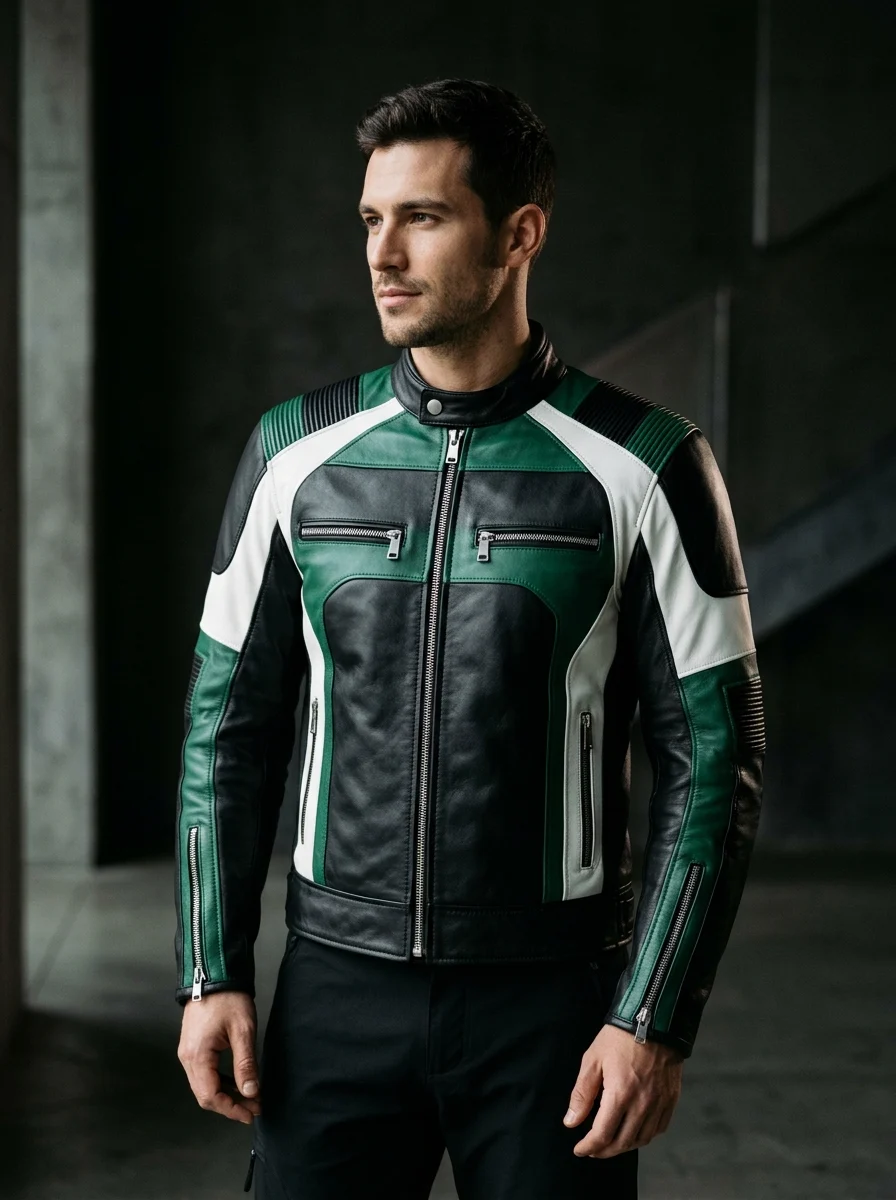
Is a Vintage Kawasaki Leather Jacket Still Worth Buying in 2026? Modern Value and Alternative Guide
Key Takeaways
- Collector Economics in 2026: Secondary market prices for authentic 1990s and 2000s Japanese-era racing leathers have surged between $350 and $700 on secondary collector platforms, yet over 70% of these vintage garments suffer from compromised seam threads, deteriorated foam padding, or irreversible leather dry-rot that makes wearing them on the street hazardous.
- The Invisible Armor Risk: Vintage motorcycle jackets from the twentieth century typically featured early dual-density polyurethane or ethylene-vinyl acetate (EVA) armor inserts that have systematically crumbled into chalky yellow powder over 25+ years of storage, leaving riders completely unprotected against blunt impact forces.
- Restoration Financial Realities: Bringing a distressed archival racing jacket back to wearable condition—including chemical ozone degreasing, deep rehydration, replacement of seized metal zippers, and interior lining reconstruction—routinely costs between $300 and $650, exceeding the original acquisition cost of the jacket itself.
- Sizing and Ergonomic Mismatch: Archival Japanese sportbike outerwear was patterned around a tight, highly aggressive forward-crouch racing tuck with abbreviated front torsos and narrow deltoid drops, creating severe physical discomfort, riding draft, and armhole pinching for modern daily street riders standing or walking upright.
- The Modern Bespoke Alternative: Commissioning a brand-new, made-to-measure custom leather riding jacket from Lux Wearz allows motorcycle enthusiasts to capture the electrifying aesthetic heritage of iconic racing graphics while benefiting from fresh virgin full-grain cowhide, modern CE-certified Level 2 armor pockets, solid brass hardware, and a guaranteed anatomical fit.
Artisan Independence & Trademark Notice: Lux Wearz is an independent bespoke leathercraft atelier. All brand names, logos, and trademarks mentioned in this article (including Kawasaki® and related trademarks) belong exclusively to their respective trademark holders. Lux Wearz is not an authorized distributor, licensee, or affiliated partner of these brands. All brand references and historical retrospectives are made strictly for educational, comparative, and sizing review purposes under Fair Use. Lux Wearz specializes in custom-tailored, heirloom-grade genuine leather outerwear handcrafted individually in our private workshop.
Is a Vintage Kawasaki Leather Jacket Still Worth Buying in 2026?
A vintage Kawasaki leather jacket remains worth buying in 2026 only if the garment exhibits intact structural seams, supple uncracked hide, and functional heavy-duty zippers without interior lining dry-rot, though collectors often find that secondary market pricing and expensive restoration make commissioning a brand-new bespoke leather alternative from Lux Wearz a far superior long-term investment.
The Golden Era of Superbike Racing Outerwear: 1980s to Early 2000s Kawasaki Heritage
To comprehend the passionate nostalgia and fervent collector demand surrounding vintage Kawasaki leather outerwear, one must journey back to the golden zenith of four-stroke superbike road racing. When the legendary Kawasaki Ninja GPZ900R debuted in 1984, it obliterated performance benchmarks, fundamentally redefining high-performance motorcycling with its revolutionary liquid-cooled inline-four engine, perimeter diamond frame, and aerodynamic full fairing.
Throughout the late 1980s, 1990s, and early 2000s, Kawasaki's factory racing division—affectionately christened Team Green across international paddocks—dominated motorcycle road racing. Superbike icons like Scott Russell (the Screamin' Chief who clinched the 1993 World Superbike Championship on the legendary ZXR750) and Akira Yanagawa piloted high-revving green machines with theatrical aggression. In the AMA Superbike championship, Doug Chandler and Eric Bostrom electrified American race tracks, carving apexes while draped in vibrant leathers characterized by a hyper-distinctive color palette: electric lime green, arctic optic white, deep racing black, and bold purple contrast graphics.
These racing suits and paddock team jackets were not merely functional protective garments; they were visceral cultural artifacts of a high-adrenaline motorsport epoch. Unlike the somber, monochrome black touring jackets typical of traditional cruiser circles, 1990s sportbike leathers were kinetic explosions of graphic energy. As sportbike ownership exploded across North America and Europe, street riders clamored to replicate the visual aura of their racing heroes. Japanese motorcycle apparel manufacturers partnered with specialized leather houses to produce consumer street replicas, paddock jackets, and weekend track gear.
Four decades later, in 2026, those original neon graphics, multi-panel leather inlays, and aggressive articulated silhouettes have evolved from contemporary racing uniforms into highly sought-after archival fashion grails. Urban streetwear enthusiasts, retro motorcycle restorers, and nostalgic Gen-X and millennial collectors now view these vintage jackets as irreplaceable holy grails of 1990s motorsport culture. However, the emotional allure of acquiring an original piece frequently blinds prospective buyers to the harsh, irreversible physical realities of aging leather hides.
Secondary Market Economics in 2026: Pricing Trends, Speculation, and Collector Demand
The secondary market for vintage Japanese sportbike leathers has experienced dramatic inflationary pressure over the past five years. Driven by the viral resurgence of 1990s racing aesthetics across social platforms, digital fashion archives, and urban street culture, what was once considered obsolete protective gear languishing in suburban garage sales has transitioned into speculative vintage memorabilia.
Current Price Brackets on Global Resale Platforms
A rigorous audit of completed transactions across secondary auction portals, Japanese proxy bidding platforms (such as Yahoo Auctions Japan), and vintage boutiques in 2026 reveals three distinct valuation tiers:
- Beater / Project Grade ($150 to $275): These garments exhibit severe cosmetic and mechanical trauma. The leather is noticeably stiffened, significant road rash scrapes mar the forearms or shoulders, the main front zipper slider is frequently missing or derailed, and the interior lining is ripped or heavily sweat-stained. Purchasing in this tier requires significant repair capital before the garment can even be worn casually.
- Wearable Collector Grade ($350 to $550): The most common segment of the market. The leather retains moderate surface suppleness, though micro-creasing and light crazing appear across high-flex zones like the inner elbows. Original sponsor patches and graphic appliques are present, though white leather sections invariably show yellowing or grease marks. Zippers function with moderate resistance, and original foam shoulder and elbow pads are either deteriorated or have been removed by previous owners.
- Pristine Archival / Deadstock ($600 to $1,100+): Exceptionally rare specimens that were purchased new and preserved in climate-controlled wardrobes with minimal road exposure. The colors remain vibrant, the leather grain shows minimal road grime, and original hangtags may occasionally be intact. These pieces are predominantly acquired by overseas design archives, museums, or high-net-worth collectors who treat them strictly as framed display art rather than functional riding gear.
The Speculative Bubble vs Real-World Utility
The fundamental economic dilemma facing everyday motorcycle riders in 2026 is that vintage prices reflect nostalgic scarcity value rather than practical utility value. When a rider spends $500 on a thirty-year-old racing jacket, they are paying for the aura of 1990s superbike history—not for thirty years of future protective reliability. The moment that garment is exposed to real-world highway riding, ultraviolet radiation, rainstorms, and modern traffic conditions, the fragile components of the vintage jacket degrade rapidly, exposing the owner to severe mechanical failure and unexpected maintenance expenditures.
Archival Silhouette Architecture and Fit Disparities
A major shock awaiting modern buyers who purchase vintage Japanese racing leathers online is the profound difference in pattern architecture between twentieth-century racing suits and contemporary lifestyle outerwear.
| Silhouette Model | Cut & Fit Type | Shoulder / Chest Offset | Ideal Body Profile | Leather Weight & Temper |
|---|---|---|---|---|
| Ninja H2-Style Track Cut | Aggressive Forward-Tuck Racing Fit | +1.5" Pre-Curved Deltoid / Drop Torso | Lean Athletic Sportbike Stance | 3.2 - 3.5 oz Firm Cowhide with Armor Pockets |
| Team Green Vintage Paddock Cut | Boxy 1990s Classic Bomber / Rider Hybrid | +2.0" Chest Ease / Elastic Waistband | Broad Shoulders / Vintage Relaxed Profile | 2.8 - 3.2 oz Medium-Pliant Drum-Dyed Leather |
| Multi-Panel Graphic Racing Cut | Articulated Performance Rider Fit | +1.0" Shoulder Expansion with Accordion Gussets | Athletic Torso with Flexible Lumbar | 3.0 - 3.4 oz Semi-Aniline Cowhide |
| Pro-Circuit One-Piece Track Suit | Ultra-Tight Ergonomic Full Racing Silhouette | Ergonomic Zero-Bunched Forward Lean Pattern | Professional Track Athletes (Specific Sizing) | 3.5 - 3.8 oz Abrasion-Resistant Steerhide |
| Classic Sport-Touring Leather Jacket | Neutral Upright Street Riding Fit | +0.5" Balanced Chest and Waist Drop | Everyday Commuters and Sport Tourers | 2.8 - 3.0 oz Supple Full-Grain Cowhide |
| Bespoke Custom Made-to-Measure Jacket | Individual Anatomical Tailored Cut | 0.0" Custom Proportional Offset | All Body Shapes (Engineered to Client Specs) | 2.8 - 3.6 oz Virgin Full-Grain Leather |
As detailed in the architecture comparison table, archival track silhouettes were cut exclusively for aggressive forward-crouch positions. When standing upright, the front zipper bunches into hard, awkward folds across the solar plexus, the back collar pulls tightly against the back of the neck, and the waist hem rides up above the beltline, exposing the lower back to freezing wind drafts. Contemporary bespoke tailoring eliminates these anatomical discrepancies entirely, balancing clean standing posture with fluid riding reach.
Hidden Structural Pitfalls of 20- to 30-Year-Old Racing Leathers
When evaluating a vintage leather garment, the human eye naturally gravitates toward the surface aesthetic: the vibrant color blocking, the iconic graphic typography, and the rugged patina. However, leather garments are complex multi-layer mechanical assemblies composed of biological hides, synthetic textiles, elastomeric foams, and metal alloys. Over a quarter-century of existence, several catastrophic invisible degradation mechanisms take hold:
1. Acid Sweat Hydrolysis and Seam Thread Decay
The primary mechanism that destroys motorcycle outerwear from the inside out is human perspiration. Motorcycle racing is an intensely athletic endeavor; riders generate liters of sweat during a single afternoon of aggressive track riding or hot summer canyon carving. Human sweat contains sodium chloride, potassium salts, urea, and lactic acid.
When sweat saturates the interior lining and penetrates the leather corium, these acidic salts crystallize within the microscopic interstitial spaces between collagen fibrils. Over twenty to thirty years, this creates two deadly failure modes:
- Fiber Embrittlement: The acidic salts desiccate the leather from within, causing the collagen structure to undergo chemical hydrolysis. The hide loses its tensile elasticity and tears under minimal shear force.
- Thread Suture Failure: Vintage garments sewn with earlier polyester-cotton blend or untreated synthetic threads suffer chemical rot. While the thread may appear visually intact on the surface, its tensile breaking strength drops from a safe 12 pounds down to less than 2 pounds. In an accidental road slide, the seams burst open instantaneously along the stitch line, exposing the rider to immediate, catastrophic abrasion.
2. Polyurethane Foam Armor Disintegration
Prior to the advent of modern viscoelastic polymers (such as D3O and SAS-TEC), 1980s and 1990s motorcycle apparel utilized open-cell polyurethane (PU) or ethylene-vinyl acetate (EVA) foams for shoulder, elbow, and spine impact padding. Polyurethane is notoriously vulnerable to environmental hydrolysis and thermal oxidation.
Over twenty to thirty years in ambient atmospheric humidity, the chemical polymer chains within the foam spontaneously break down. When you open the internal armor pockets of an archival jacket in 2026, you will almost never find functional impact armor; instead, you will discover a repulsive, crumbly yellow or gray powder that spills out like cornmeal. The armor has completely vanished into dust. Riding in this condition provides zero blunt-force impact protection to the rider's joints.
3. Delamination and Peeling of Synthetic Graphic Appliques
To execute intricate lettering and multi-color racing sponsor graphics, manufacturers in the 1990s frequently combined genuine leather panels with thin synthetic polyurethane or vinyl appliques heat-bonded or topstitched to the hide. While genuine full-grain leather can endure fifty years of age, thin synthetic vinyl coatings possess an operational lifespan of only ten to fifteen years before plasticizer migration causes them to turn brittle, craze, and peel away in unsightly flakes. Once synthetic graphic films begin to delaminate, they cannot be reglued or refinished without looking damaged.
4. Metal Zipper Oxidation and Tooth Derailment
Most vintage Japanese-era jackets utilized lightweight aluminum or cast alloy zipper chains to save weight on the track. Over decades of exposure to road salt, coastal moisture, and sweat humidity, the aluminum teeth oxidize, forming a chalky white galvanic crust. When an unsuspecting buyer forcefully pulls the slider across oxidized teeth, the brittle metal teeth shear off from the woven fabric tape, instantly ruining the zipper closure.
The Cost Reality of Leather Restoration in 2026
Enthusiasts often believe that purchasing an inexpensive, beat-up vintage racing jacket for $250 and restoring it at home is a frugal DIY triumph. In reality, professional leather restoration is an intricate, labor-intensive artisanal craft requiring specialized chemicals, commercial equipment, and master tailors.
Let us examine the realistic accounting ledger for restoring an authentic 1990s racing jacket in 2026:
- Deep Ozone Sterilization & Fungal Remediation ($100 to $160): Vintage jackets that have spent decades in attics or moldy garages cannot simply be sprayed with household disinfectant. They require professional chamber ozone treatment to neutralize deep-seated mold hyphae, bacterial colonies, and entrenched smoke or sweat odors without desiccating the hide.
- Degreasing, Hydration & Controlled Fatliquoring ($120 to $180): A certified leather conservationist must strip away old oxidized wax residues, cleanse the open pores, and progressively reintroduce natural neat's-foot oil, lanolin, and fatliquor emulsions over several days in climate-controlled drying racks to restore leather flexibility without oversaturating the fibrous core.
- Complete Main Zipper & Cuff Hardware Replacement ($140 to $220): Removing a ruined vintage zipper from a multi-panel leather jacket requires unpicking dozens of stitches through leather facings, lining layers, and storm flaps. Stitching in a modern heavy-duty #10 brass zipper requires industrial walking-foot machinery and extreme artisan precision to align existing needle perforations; otherwise, punching new needle holes creates a perforated tear line that compromises the leather.
- Custom Interior Lining Reconstruction ($180 to $280): If the internal lining is torn, moldy, or rotten from sweat salts, an artisan must cut a brand-new lining from breathable cupro silk or heavy satin, stitch internal pockets, and hand-sew the lining into the garment body.
- Modern CE-Certified Armor Retrofitting ($90 to $140): Because original foam armor has turned to dust, custom armor pockets must be patterned and sewn into the interior shoulder and elbow linings to accommodate modern CE Level 2 viscoelastic armor protectors.
Total Financial Commitment
When you tally the ledger:
- Initial Vintage Purchase Price: $300 - $500
- Comprehensive Professional Restoration: $630 - $980
- Total Investment: $930 to $1,480+
For a total outlay approaching $1,500, you are left with a thirty-year-old jacket that still carries decades of hidden fatigue within its leather corium. When contrasted against the opportunity to commission a brand-new, virgin full-grain bespoke leather masterpiece tailored directly to your personal anatomy at Lux Wearz for a fraction of that restoration cost, the logical conclusion becomes abundantly clear: vintage jackets belong in display frames, while modern bespoke creations belong on your shoulders.
Leather Hide and Hardware Durability Matrix
To provide clarity when evaluating the physical integrity of vintage garments against contemporary bespoke leathercraft, the following engineering matrix outlines the technical characteristics, tannages, lifespans, and safety ratings across different leather tiers:
| Component / Hide | Leather Grade & Tannage | Thickness (mm) | Weather Resistance | Expected Longevity | Maintenance Needs |
|---|---|---|---|---|---|
| Original 1990s Racing Cowhide (Surviving Vintage) | Drum-Dyed Top-Grain Cowhide | 1.1 - 1.3 mm | Low-Moderate (Dehydrated Wax Barrier) | Fragile / Variable (0 - 5 Years Active Use) | Intensive Deep Conditioning with Mink Oil & Neatsfoot Balm |
| Modern Bespoke Full-Grain Cowhide (Lux Wearz) | Virgin Aniline Full-Grain Cowhide | 1.3 - 1.5 mm | High (Factory Hydrophobic Oil Tannage) | 35 - 50+ Years | Bi-Annual Leather Balm and Moisture Buffing |
| High-Performance Kangaroo Racing Hide (Specialty) | Vegetable-Tanned Kangaroo Grain | 0.9 - 1.0 mm | Moderate (High Tensile Microstructure) | 20 - 30 Years | Specialized pH-Neutral Leather Conditioner |
| Vintage Synthetic Polyurethane Accents | Coated Vinyl / PVC Graphic Appliques | 0.4 - 0.6 mm | Poor (Prone to Hydrolysis and Peeling) | Degrading / Irreversible Cracking | Avoid Solvent Cleaners; Protect from Sunlight |
| Contemporary Antiqued Solid Brass Zippers | Solid Antiqued Brass / Heavy Alloy (#8 / #10) | 1.8 mm Tooth Depth | Complete Rust & Salt Resistance | 40+ Years (Lifetime) | Occasional Beeswax Coating on Teeth |
| Modern Kevlar / Aramid Reinforced Seams | Dual-Core Bonded Nylon with Aramid Backing | 0.35 mm Stitch Diameter | Resistant to Heat Friction and Moisture Rot | 30+ Years | Dust Off Grime with Soft Horsehair Brush |
This technical breakdown underscores the decisive material advantages of contemporary virgin hides. While historic cowhides possess sentimental charm, modern tanning metallurgy and advanced bonding polymers ensure that a newly constructed bespoke garment offers vastly superior abrasion resistance, tensile strength, and environmental weatherproofing.
The Collector's Dilemma: Trophy Wall Art vs Functional Protective Outerwear
The fundamental question every motorcycle rider must ask themselves before acquiring an archival racing jacket is deceptively simple: What is the intended purpose of this garment?
The Case for Archival Exhibition
If your objective is to mount an iconic piece of 1990s superbike history inside an illuminated acrylic shadow box in your garage, motorcycle showroom, or creative studio, an authentic vintage piece is worth every single dollar. Preserved as a historical relic, the garment serves as a magnificent testament to Scott Russell's World Superbike championships, the early days of AMA Superbike warfare, and the unforgettable aesthetic bravado of neon green motorsport typography. In a stationary display environment, the crumbling foam armor, weakened seam threads, and stiffened leather corium pose zero physical danger.
The Lethal Illusion of Vintage Protection on Modern Roads
However, if your intention is to pull that thirty-year-old jacket off the hanger, zip it over your chest, and ride onto an interstate highway or carve mountain twisties at 70 miles per hour, you are courting disaster.
Modern highway speeds and congested metropolitan traffic environments demand uncompromising protective performance. If you experience an emergency lowside slide in a vintage jacket whose internal threads have been degraded by sweat acid hydrolysis, the seams will burst open along the asphalt within less than one second of sliding contact. Furthermore, because the original foam padding has disintegrated, your shoulders and elbows will absorb direct bone-shattering kinetic impact against the pavement with zero energy dissipation.
Wearing an unverified vintage racing jacket on a high-performance motorcycle is the safety equivalent of wearing a twenty-five-year-old crashed motorcycle helmet: the exterior shell may appear nostalgic and colorful, but the internal shock-absorbing structure has completely expired. For real-world road protection and modern lifestyle versatility, serious riders invariably choose freshly handcrafted bespoke leatherwear.
Featured Silhouette Retrospective & Curated Collection
To satisfy the intense craving for authentic racing heritage without compromising on virgin leather integrity, modern structural seam safety, or anatomical comfort, Lux Wearz offers a magnificent collection of performance-inspired motorcycle outerwear. Each model pays homage to iconic racing heritage while incorporating virgin full-grain cowhides, robust structural stitching, and verified sizing architecture:
1. Kawasaki Graphic Leather Motorcycle Jacket (Black & White)
Capturing the raw adrenaline of closed-course track aesthetics, the Kawasaki Graphic Leather Motorcycle Jacket (Black & White) delivers an impeccably balanced motorsport silhouette. Tailored from 1.3 mm drum-dyed full-grain cowhide, this high-performance jacket features precision-cut white leather contrast panels inlaid across the chest, shoulders, and outer sleeves. The front closure is anchored by a heavy-gauge brass zipper with an internal wind flap, while zippered wrist gussets allow a snug, draft-free seal over gauntlet riding gloves. It provides an authentic track paddock aesthetic engineered with pristine, factory-fresh materials that will endure decades of street use.
2. Men's Kawasaki Ninja H2-Style Leather Jacket
Engineered for riders who celebrate the supercharged era of modern hyperbike engineering, the Men's Kawasaki Ninja H2-Style Leather Jacket showcases striking emerald green and deep obsidian black contrast styling. Built with articulated pre-curved sleeves mapped to aggressive clip-on reach, this jacket features integrated accordion stretch leather panels across the shoulder blades and lower lumbar, ensuring total ergonomic freedom when tucked over a fuel tank. The interior is lined with moisture-wicking breathable mesh and fitted with dedicated internal pockets ready to receive modern CE-rated armor protectors.
3. Kawasaki Racing Graphic Leather Jacket (Multicolor)
For the purist collector who demands the full, unapologetic aesthetic energy of 1990s World Superbike grids, the Kawasaki Racing Graphic Leather Jacket (Multicolor) is an absolute visual tour de force. Featuring an electrifying composition of lime green, vibrant white, crimson accents, and midnight black leather panels, this jacket recreates the legendary graphic presence of championship paddock wear. Crucially, all multi-color elements are executed with genuine dyed full-grain leather appliques rather than fragile synthetic vinyl, guaranteeing that the colors will not peel, flake, or crack under solar exposure.
4. Kawasaki Ninja Graphic One-Piece Leather Racing Suit
When closed-circuit track days demand professional-grade, head-to-toe abrasion defense, the Kawasaki Ninja Graphic One-Piece Leather Racing Suit represents the ultimate technical pinnacle. Constructed from ultra-dense 1.4 mm race-grade cowhide, this suit features external TPU shoulder and knee sliders, dual-stitched safety seams utilizing heavy v92 bonded nylon thread, an aerodynamic speed hump to reduce helmet buffeting at triple-digit velocities, and replaceable composite knee pucks. It provides track-day enthusiasts with world-class structural survival capabilities.
5. Kawasaki Ninja Graphic Leather Jacket (Black, Green & White)
Combining everyday urban street style with authentic motorsport pedigree, the Kawasaki Ninja Graphic Leather Jacket (Black, Green & White) is patterned for the modern commuter and weekend canyon carver. Featuring a relaxed sport-touring cut that drapes comfortably both on and off the motorcycle, this versatile jacket incorporates dual zippered handwarmer pockets, an interior zippered security pocket for smartphones, and waist adjustment snap tabs that allow quick profile tuning over casual denim or protective riding trousers.
The Modern Bespoke Alternative: Handcrafted Custom Leather Tailored to Your Measurements
If you love the iconic color blocking, dynamic energy, and rebellious attitude of vintage racing outerwear, but refuse to gamble your personal safety or endure the compromised fit of thirty-year-old garments, bespoke custom tailoring is your definitive answer.
At Lux Wearz, we believe that luxury outerwear should never force you to choose between historic aesthetic reverence and modern technical perfection. Through our bespoke atelier, you can commission a handcrafted custom leather jacket engineered to your exact physical anatomy, featuring virgin premium hides, heavy solid brass hardware, and modern impact engineering.
Why Bespoke Outperforms Off-the-Rack and Vintage:
- Zero Sizing Compromises: Whether you possess broad muscular shoulders, an extended torso, or unique arm lengths, our master patternmakers draft an exclusive anatomical pattern block mapped directly to your body. No more billowy waists, choking neckbands, or sleeves that ride up past your wrists when reaching for the handlebars.
- Virgin Full-Grain Leather Integrity: Every square inch of leather in a Lux Wearz bespoke garment is cut from fresh, prime-grade livestock hides. The collagen fibers are fully hydrated, supple, and imbued with maximum tensile abrasion resistance, guaranteeing forty to fifty years of dependable road performance.
- Modern CE Level 2 Armor Integration: Unlike vintage jackets filled with crumbling foam dust, your bespoke creation can be crafted with discrete, low-profile internal pockets engineered to hold state-of-the-art CE Level 2 viscoelastic armor protectors that remain invisible to the naked eye while delivering maximum impact absorption.
- Custom Color Blocking and Artwork: Work directly with our design atelier to specify your exact color palette—whether recreating an archival 1993 Team Green layout, crafting a stealth monochrome black-on-black racer, or introducing personalized family crests and leather appliques.
To begin crafting your custom heirloom leather jacket, visit our Custom Order Atelier to submit your design brief and measurements directly to our senior master tailors.
Practical Evaluation Checklist When Inspecting Pre-Owned Outerwear
If you still find yourself browsing vintage shops or online auction listings for an archival motorcycle jacket, arm yourself with this non-negotiable practical checklist before committing your hard-earned funds:
- The Thumb Bend Test: Grip a section of the leather—particularly along the outer forearms or upper shoulders—and bend the hide sharply inward between your thumb and forefinger. If fine hairline cracks instantly open across the surface grain, or if the leather feels brittle like cardboard, the hide has suffered irreversible moisture desiccation. Walk away.
- The Olfactory Sniff Test: Bring the garment directly to your nose and inhale deeply around the collar, underarms, and interior lining. An authentic, healthy leather jacket smells richly of wax, natural tallow, and earthy oils. A pungent smell of ammonia or sour vinegar indicates sweat acid hydrolysis, while an overpowering musty cellar odor signals active fungal mildew colonization within the deep pores.
- The Seam Tug Test: Grasp the main shoulder seam between both hands and apply firm, steady lateral pulling pressure. If you hear microscopic popping sounds, or if the leather panels visibly pull apart to reveal loose, fuzzy thread loops, the seam thread has rotted and will fail catastrophically in a road slide.
- The Zipper Teeth and Insertion Pin Check: Examine the lower insertion pin of the front zipper. If the fabric tape surrounding the metal pin is frayed, split, or loose, the zipper will derail within weeks. Verify that every single metal tooth is present along the entire length of the track.
Explore Authentic Leather Outerwear at Lux Wearz
Discover the ultimate intersection of legendary motorsport heritage, uncompromising artisanal leathercraft, and custom-tailored luxury at Lux Wearz:
- Browse our complete selection of Kawasaki Leather Jackets, featuring detailed product galleries, authentic sizing specifications, and expedited US delivery.
- Discover our full collection of handcrafted Men's Leather Jackets, spanning classic motorcycle bombers, vintage cafe racers, and luxury road coats.
- Explore our high-performance Racing Jackets Collection engineered for track-ready protection and aerodynamic street dominance.
- Consult our master Lux Wearz Size Guide to ensure precision fitting before placing your order.
- Learn how to maintain your heirloom garments with our comprehensive Leather Care Guide.
- Explore the entire luxury outerwear portfolio at the Lux Wearz Product Hub.
- Ready to commission a one-of-a-kind custom riding jacket built to your exact measurements? Start your bespoke journey today at our Custom Order Portal.
Explore The Full 2026 Leather Outerwear Collection
Vegetable-tanned full-grain cowhide, buttery New Zealand lambskin, and heritage Melton wool. Free express delivery across the USA with 30-day hassle-free returns.