
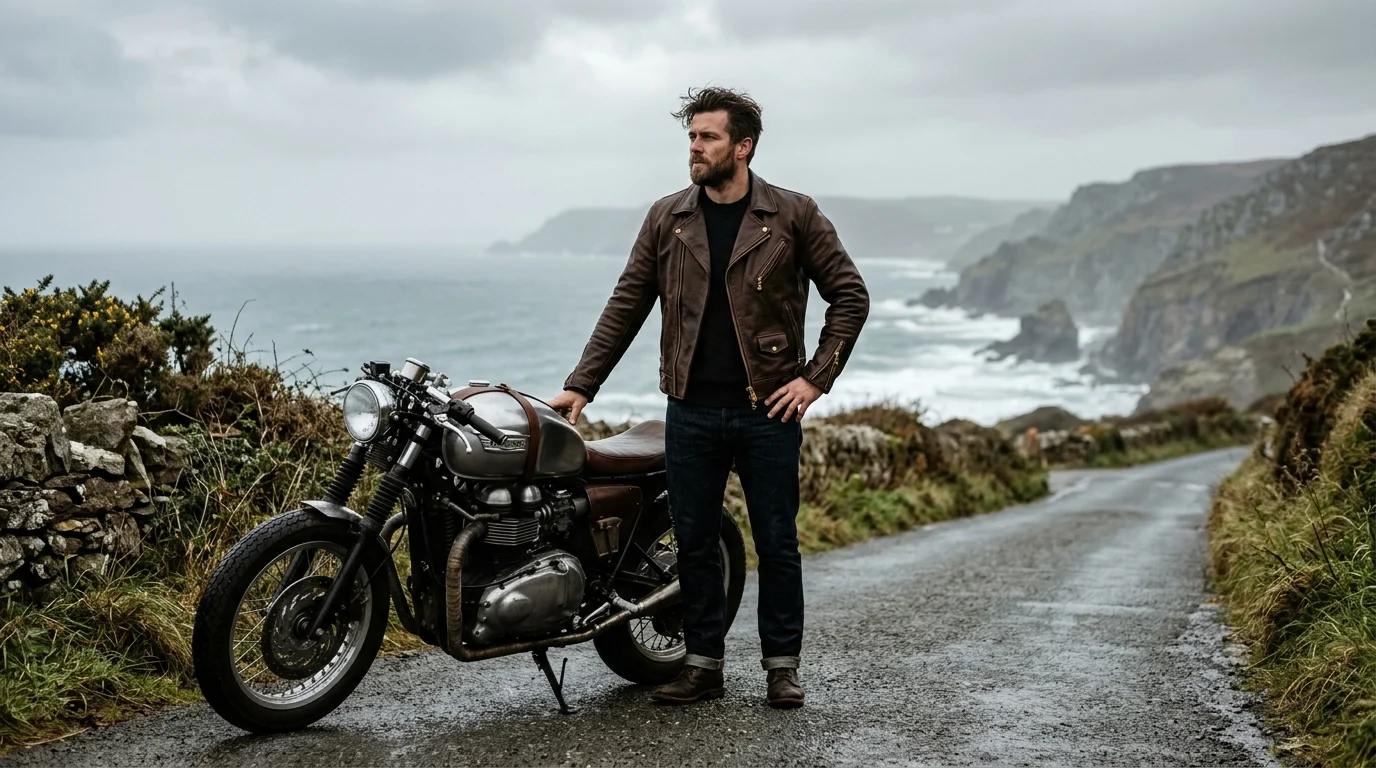
Motorcycle Riding Leather Jacket vs Fashion Biker Real Differences
Compare technical motorcycle riding leather jackets and fashion biker styles. Discover CE armor, hide thickness, seam burst ratings, and artisan fit advice.
Evaluating the differences between a technical motorcycle riding leather jacket and a fashion biker jacket protects both your physical safety on highway tarmac and your personal styling aesthetic on city streets. While both garments share heritage diagonal zippers, snap-down lapels, and rugged appeal, their internal architecture, material density, and structural seam reinforcements belong to completely different disciplines. At Lux Wearz, our master leather artisans engineer purpose-built garments for both worlds, utilizing 1.2mm to 1.4mm competition-grade steerhide for protective road use alongside supple 0.9mm full-grain lambskin for luxury urban tailoring from $249 with complimentary shipping across the USA.
Key Takeaways
- Technical motorcycle jackets serve primarily as Personal Protective Equipment (PPE), requiring EN 17092 CE-certified abrasion resistance and shock-absorbing joint armor.
- Fashion biker jackets prioritize lightweight comfort, supple drape, and body contouring using 0.8mm to 1.0mm lambskin that wears effortlessly throughout long social evenings.
- Structural riding seams require safety lock-stitching with bonded V-92 nylon thread and internal bar-tacks to prevent seam blowout during high-speed asphalt slides.
- Ergonomic riding silhouettes incorporate pre-curved sleeves, bi-swing shoulder gussets, and an extended drop-tail back to maintain kidney coverage when leaning forward on handlebars.
- Lux Wearz custom tailoring offers both reinforced heavy-duty cowhide riding blocks and lightweight luxury lambskin cuts backed by a comprehensive 1-year craftsmanship warranty.
What Are the Primary Differences Between Riding Jackets and Fashion Biker Jackets
A technical motorcycle jacket functions as life-saving safety equipment designed to withstand violent friction and blunt force impacts during high-speed slides across rough asphalt. In contrast, a fashion biker jacket serves as an expressive wardrobe anchor designed to flatter human body proportions, maximize walking comfort, and layer smoothly over casual knitwear. Understanding this fundamental distinction ensures you never compromise safety on a motorcycle or endure awkward stiffness at a dinner party.
Protective Engineering Versus Sartorial Expression
Engineers design motorcycle jackets around emergency slide survival, calculating friction resistance times, thermal burn prevention, and impact deceleration. Fashion designers, conversely, design outerwear around silhouette balance, color drape, and lightweight mobility. Attempting to use a lightweight fashion jacket on a motorcycle leaves you vulnerable to severe road rash, while wearing a rigid competition riding jacket to a cocktail lounge feels heavy and restrictive.
Impact Absorption Architecture and CE Armor Pockets
Motorcycle riding jackets integrate specialized internal pockets positioned directly over the elbows, shoulders, and spine to house CE Level 1 or Level 2 molecular armor inserts. These viscoelastic pads remain flexible during normal riding posture but harden instantly upon impact to disperse kinetic energy away from vulnerable bones. Fashion biker jackets omit armor pockets entirely, relying purely on external decorative quilt stitching that provides zero impact protection.
Aerodynamic Wind Deflection and Thermal Regulation
Riding at 70 miles per hour subjects the human torso to immense wind pressure and rapid convective cooling. Technical riding outerwear incorporates heavy leather draft flaps behind every zipper, zippered bicep intake vents, and rear exhaust ports that regulate airflow without ballooning the garment. Fashion jackets feature lightweight decorative zippers and breathable linings that allow cool wind to penetrate directly to the chest. Explore our curated selection of men's biker & moto jackets to discover authentic highway and city cuts.
How Does Leather Hide Thickness and Tensile Strength Compare
Leather hide thickness and fibrous density represent the single most critical performance gap separating genuine riding armor from everyday fashion outerwear. Technical riding leathers must survive several seconds of grinding abrasion against gravel-embedded pavement without burning through to the rider's skin. Fashion jackets prioritize butter-soft flexibility and featherweight shoulder feel, utilizing significantly thinner animal pelts.
Competition Steerhide and Heavy Cowhide Metrics
Master tanners select premium 1.2mm to 1.4mm full-grain steerhide for protective riding gear. Dense fibrous collagen bundles in mature cowhide deliver exceptional tensile strength exceeding 28.0 MPa, creating an impenetrable natural barrier against abrasion. When sliding along coarse asphalt at highway velocity, heavy steerhide slowly skives away rather than tearing open, shielding your dermal tissue from catastrophic injury.
Luxury Lambskin and Goatskin Drape Characteristics
Fashion outerwear makers predominantly utilize 0.8mm to 1.0mm full-grain lambskin or lightweight goatskin. Lambskin fibers are naturally fine and elastic, yielding an ultra-supple hand-feel that requires zero break-in period and contours gracefully to natural waistlines. While lambskin offers outstanding wind shelter during autumn strolls, its lower abrasion threshold will tear within milliseconds if subjected to tarmac friction. Learn more about leather textures in our analysis on why pick lambskin vs cowhide leather jacket outfits.
Tanning Formulations: Hot-Stuffed Wax Versus Soft Mineral Mills
Tanneries treat motorcycle hides with heavy paraffin waxes, tallow, and mineral oils during hot-stuffing processes to increase water resistance and fiber lubricity. This heavy chemical treatment renders riding leather stiff when new, requiring weeks of physical wear to break in. Fashion hides, by contrast, undergo extensive dry milling in giant wooden drums to soften the leather, creating an immediate broken-in drape. Discover our expert techniques on how to break in a stiff leather jacket fast.
How Do Seam Construction and Thread Burst Strength Differ
Seam integrity dictates whether a leather jacket remains intact or tears apart the instant you contact rough pavement during a motorcycle spill. Standard fashion garments utilize single-needle stitching with lightweight cotton-wrapped polyester thread designed for visual neatness rather than structural load. Protective motorcycle garments demand certified safety seam architecture engineered to withstand immense shear forces.
The Anatomy of an ISO 13938 Safety Seam
Artisan motorcycle jacket construction requires triple-stitched safety seams conforming to ISO 13938 standards. The craftsman folds the leather panels to bury the primary structural seam deep inside the garment, protecting the thread from direct abrasion against the road surface. Two secondary top-stitch rows lock the leather facings flat, ensuring that even if the outer stitching abrades away, the hidden primary stitch keeps the garment panels fused.
Thread Tensile Strength: Bonded V-92 Nylon Versus Garment Thread
Technical riding garments utilize heavy bonded V-92 or V-138 nylon thread boasting a tensile breaking strength of 15 to 22 pounds per single strand. This industrial thread resists friction heat, moisture rot, and UV degradation. Mass-market fashion brands rely on lightweight V-46 thread with a breaking strength of under 4 pounds, which instantly melts or snaps when subjected to sliding friction.
Hardware Fasteners and Zipper Burst Resistance
Motorcycle jackets feature heavy-gauge #10 YKK brass or nickel zippers with locking sliders that never pull open under high-speed wind buffeting. Snap buttons on riding collars incorporate reinforced steel springs that stay fastened at 80 mph. Fashion jackets employ smaller #5 zippers and decorative zinc alloy pullers that bend or detach under moderate tension. Browse our handcrafted vintage leather jackets to see how heavy-duty hardware preserves garment longevity.
How Does Ergonomic Pattern Drafting and Fit Geometry Vary
Pattern geometry for motorcycle riding jackets differs fundamentally from standard casual outerwear because the human body adopts a radically different posture on a motorcycle than when standing upright. When seated on a motorcycle, your arms reach forward toward handlebars, your spine flexes, and your hips rotate. A properly engineered riding jacket accommodates this aggressive posture seamlessly, whereas a fashion cut pulls uncomfortably.
Pre-Curved Sleeves and Forward Armscye Pitch
Master pattern cutters draft motorcycle jacket sleeves with a permanent 30-degree forward curve and high armholes. This pre-curved geometry matches your natural posture on motorcycle handgrips, eliminating forearm fabric bunching and reducing wrist fatigue during four-hour rides. If you try to stand upright with your arms at your sides in a riding jacket, the sleeve cuffs naturally pull forward, reflecting its technical purpose.
Bi-Swing Shoulder Gussets and Kidney Drop Tails
Protective riding jackets feature action back pleats or elasticized bi-swing shoulder gussets that expand when you stretch forward to grab clip-on handlebars. Furthermore, the back panel includes an elongated drop tail that extends 5cm lower than the front hem. This drop tail keeps your lower back and kidneys fully covered when you lean forward over the gas tank, preventing cold wind and road grime from invading your trousers.
Symmetrical Urban Drape in Fashion Biker Jackets
Fashion biker jackets feature straight vertical sleeves, relaxed chest drops, and level waist hems tailored specifically for standing, walking, and socializing. The symmetrical cut allows the jacket to drape cleanly when unzipped, creating an effortlessly cool silhouette over hoodies, graphic t-shirts, and tailored button-downs. For detailed sizing diagnostics, consult our expert guide on how should a leather jacket fit.
What Are the Official CE Safety Ratings for Motorcycle Leather Gear
The European Union establishes the global gold standard for motorcycle garment safety under the EN 17092 testing harmonized standard. Understanding these certified safety tiers allows motorcycle riders to make educated safety investments based on their riding speed, travel terrain, and risk exposure. Every road rider should verify these official rating criteria before purchasing a protective leather jacket.
Class AAA: Professional Track and High-Speed Highway Protection
Class AAA represents the highest level of personal protective equipment certification, mandated for MotoGP circuit racing and extreme highway travel. Testing requires the leather shell and seams to survive at least 4.0 seconds of continuous asphalt abrasion at 75 mph (120 km/h) on the Darmstadt abrasion testing rig without tearing. It demands Level 2 armor at the shoulders, elbows, and hips.
Class AA: Touring and Daily Highway Commuting Standard
Class AA jackets deliver the ideal balance between serious slide protection and comfortable ergonomics for long-distance motorcycle touring and daily highway commuting. Class AA garments withstand 2.0 seconds of slide abrasion at 45 mph (70 km/h) across high-risk impact zones. Most premium cowhide road jackets achieve Class AA compliance, offering dependable safety without the extreme weight of pure racing suits.
Class A and Urban Biker Ratings
Class A garments provide baseline impact and abrasion protection intended strictly for low-speed urban city commuting under 30 mph (45 km/h). They offer superior breathability and lighter hide weights, making them comfortable for riding to an office. Fashion jackets, having undergone zero standardized laboratory testing, possess no CE rating and are legally classified strictly as leisure apparel.
Technical Architecture Comparison: Riding Armor vs Fashion Biker
Comparing technical specifications side by side clarifies why protective riding jackets and fashion biker garments cannot substitute for one another. The analytical matrix below highlights the mechanical differences across both categories.
| Engineering Metric | Technical Motorcycle Riding Jacket | Luxury Fashion Biker Jacket | Commercial Budget Faux Moto |
|---|---|---|---|
| Primary Hide Type | Full-Grain Steerhide / Buffalo | Full-Grain Lambskin / Calfskin | Polyurethane (PU) Coated Fabric |
| Hide Thickness (mm) | 1.2–1.4 mm Heavy Duty | 0.8–1.0 mm Lightweight | 0.5–0.7 mm Paper Thin |
| Tensile Strength (MPa) | 28.5–32.0 MPa | 16.5–18.5 MPa | 3.5–5.0 MPa (Rips Instantly) |
| Impact Armor System | CE Level 2 Removable Armor (Shoulders, Elbows, Back) | None (Cosmetic Diamond Quilting Only) | None |
| Seam Burst Resistance | >700 kPa (Triple-Stitched ISO 13938) | ~250 kPa (Single Garment Stitch) | <120 kPa (Splits Under Tension) |
| Thread Specification | Bonded V-92 Nylon (15 lbs Break Strength) | V-46 Poly-Core (4 lbs Break Strength) | Standard Spun Polyester |
| Sleeve Geometry | 30° Pre-Curved Forward Ergonomic Arc | Straight Vertical Casual Cut | Straight Vertical Casual Cut |
| Back Panel Hem | Extended Drop-Tail Kidney Coverage | Level Straight Waistline | Level Straight Waistline |
| Typical Weight (kg) | 2.8 – 3.8 kg (Substantial Heft) | 1.1 – 1.6 kg (Effortless Comfort) | 0.7 – 0.9 kg (Synthetic Lightweight) |
| Price Range (USD) | $349 – $599 | $249 – $419 | $49 – $99 (Disposable) |
Understanding Seam Burst Resistance in Real Crashes
The seam burst test subjects garment stitching to pressurized hydraulic diaphragm force to measure when threads rupture. A motorcycle sliding on asphalt places extreme lateral shear stress on the seam, attempting to rip the leather panels apart. Our technical riding garments exceed 700 kilopascals of burst pressure, ensuring your jacket remains intact until your slide stops safely.
Silhouette and Lifestyle Fit Matrix for Leather Enthusiasts
Selecting between riding cuts and fashion biker styles depends on your primary daily activities, transportation choices, and wardrobe aesthetics. The comparative table below outlines our signature silhouettes across both categories.
| Silhouette Style | Best Activity | Aesthetic Profile | Mobility Focus | Lining Material | Price Range (USD) |
|---|---|---|---|---|---|
| Highway Armored Moto | Motorcycle Riding, Touring | Rugged Utility Armor | High Handlebar Reach | Moisture-Wicking Mesh / Thermal | $349 – $549 |
| Cafe Racer Minimalist | Urban Riding & Street | Timeless Vintage Biker | Pre-Curved Bicep Ease | 100% Cotton Drill / Cupro | $299 – $469 |
| Double-Rider Fashion Moto | Social Events, Nightlife | High-Impact Rocker | Walking, Standing Ease | Breathable Cupro Bemberg | $259 – $399 |
| Cropped Streetwear Biker | Modern Casual Streetwear | Model Off-Duty Chic | High-Waisted Proportions | Silk-Finish Polyester Satin | $249 – $379 |
| Custom Made-to-Order | Dual Purpose / Hard-to-Fit | Bespoke Personal Cut | Fully Customized Reach | Customer Selected Lining | $299 – $499 |
Lining Breathability and Thermal Insulation
Riding jackets require moisture-wicking spacer mesh linings that circulate air between the thick leather shell and your riding shirt, preventing clammy heat buildup during summer rides. Fashion jackets use luxurious Cupro Bemberg or silky polyester satin that glides effortlessly over knitwear and button-down shirts, keeping your evening attire wrinkle-free.
Can You Wear a Fashion Biker Jacket on a Motorcycle
The short answer is an unequivocal no from a physical safety perspective, although no law prevents you from doing so on public roads. Wearing a fashion leather jacket on a motorcycle provides a false sense of security that can lead to catastrophic skin injuries in even minor low-speed spills. Understanding the physical dynamics of a slide reveals why genuine protective gear is indispensable.
The Physics of Road Rash at 40 MPH
When an unarmored rider separates from a motorcycle at 40 miles per hour, they slide across abrasive asphalt for approximately 25 to 35 feet. Standard fashion lambskin or lightweight faux leather abrades through in less than 0.3 seconds upon impact. Once the leather shreds, the rough aggregate pavement acts like an industrial belt sander on human flesh, causing third-degree friction burns and permanent dermal scarring.
Joint Impact Trauma and Bone Fractures
Abrasion constitutes only half of crash trauma; blunt impact accounts for the most devastating bone fractures. In a typical low-side motorcycle crash, the rider's shoulder and elbow strike the road surface with hundreds of foot-pounds of kinetic energy. CE Level 2 viscoelastic armor absorbs up to 90% of this shock wave, preventing compound fractures and clavicle breaks. A fashion jacket provides zero impact attenuation.
The Smart Two-Jacket Wardrobe Solution
Experienced motorcyclists maintain a dedicated two-jacket wardrobe strategy. Keep an armored, heavyweight cowhide jacket for riding on the open road. Once you arrive at your destination, change into a tailored full-grain lambskin biker jacket from Lux Wearz for dining, socializing, and walking comfortably. This approach gives you maximum road safety without sacrificing style once off the bike. Explore our all products catalog to assemble your complete leather rotation.
How Do You Care for Technical Riding Leathers Versus Fashion Jackets
Caring for heavy-duty motorcycle riding gear involves removing road grime, bug splatter, and exhaust soot, while caring for fashion leather focuses on gentle dust removal and suppleness preservation. Tailoring your maintenance routines to each specific hide formulation extends the usable lifespan of your investment pieces for decades.
Cleaning Road Grime and Insect Residue from Riding Gear
After long highway rides, your technical leather jacket accumulates dried insect acids and oily road film that degrade tanning oils if left untreated. Dampen a clean microfiber cloth with lukewarm water and a drop of pH-neutral glycerin saddle soap. Gently wipe away insect residue, rinse with a clean damp cloth, and let the jacket dry naturally away from direct sunlight.
Conditioning Thick Steerhide Versus Supple Lambskin
Heavy riding cowhide requires deep conditioning twice a year using heavy dubbin or leather balms containing beeswax and neatsfoot oil to replenish lost moisture. Fashion lambskin, however, demands lightweight, wax-free conditioning creams that maintain soft flexibility without clogging delicate pores or altering surface luster. Review detailed maintenance protocols on our leather care guide.
Proper Off-Season Storage and Armor Preservation
When storing your motorcycle jacket during winter months, remove the CE armor pads from their internal pockets so the heavy pads do not stretch the leather linings. Hang the jacket on a heavy-duty contoured wooden hanger capable of supporting 8 pounds without flexing. Store fashion jackets in breathable cotton dust bags in a climate-controlled wardrobe. Consult our size & fit guide for sizing advice on both styles.
Why Choose Lux Wearz for Custom Motorcycle and Fashion Outerwear
Commissioning a custom made-to-order leather jacket from Lux Wearz ensures you receive the precise balance of safety specifications, hide selection, and tailored fit your body demands. Whether you need pre-curved sleeves for highway touring or razor-sharp tailored contours for gallery openings, our master artisans craft your garment to order.
Overcoming Sizing Challenges for Riders and Commuters
Off-the-rack riding jackets frequently fit the chest while featuring excessively long sleeves, or fit the waist while choking muscular shoulders. Our custom made-to-order jackets ($299–$499) eliminate compromise by cutting individual patterns to your exact measurements. Our tailoring team conducts direct sizing consultations via video call to confirm your chest circumference, reach geometry, and torso drop.
Authentic Artisan Leathercraft and Transparent Quality
Every garment crafted in our workshop undergoes an exhaustive 12-point quality inspection. We test seam tensile strength, zip glide performance, hide thickness consistency, and liner breathability before shipment. We back every handcrafted piece with a 30-day hassle-free return policy and an ironclad 1-year craftsmanship warranty. Read real rider and customer experiences on our customer reviews page.
Fast Delivery and Global Reach
We deliver standard sizing orders within 3 to 5 business days, while custom commissions require 7 to 14 business days for hand-cutting and artisan stitching. We provide free shipping across the USA and ship globally to the UK, Canada, Australia, and the EU. You receive genuine artisan leather goods delivered straight to your door with zero shipping surcharge.
Invest in Handcrafted Leather Built for Your Lifestyle
Whether your passion demands highway-tested protective steerhide or runway-ready butter-soft lambskin, Lux Wearz crafts the finest genuine full-grain leather jackets built to endure for generations. Choose the right leather tool for your lifestyle and enjoy authentic craftsmanship from master artisans.
Looking for the ultimate riding or fashion moto? Explore our full collection of handcrafted leather jackets with complimentary shipping across the USA. Need custom sleeve lengths or bespoke armor pocket integration? Design your piece with our custom order service.
Browse our comprehensive outerwear collections, including men's biker & moto jackets, women's biker jackets, men's leather jackets, women's leather jackets, classic leather jackets, and leather accessories. For tailoring inquiries, check our frequently asked questions or contact our artisans directly for expert advice.
Explore The Full 2026 Leather Outerwear Collection
Vegetable-tanned full-grain cowhide, buttery New Zealand lambskin, and heritage Melton wool. Free express delivery across the USA with 30-day hassle-free returns.