
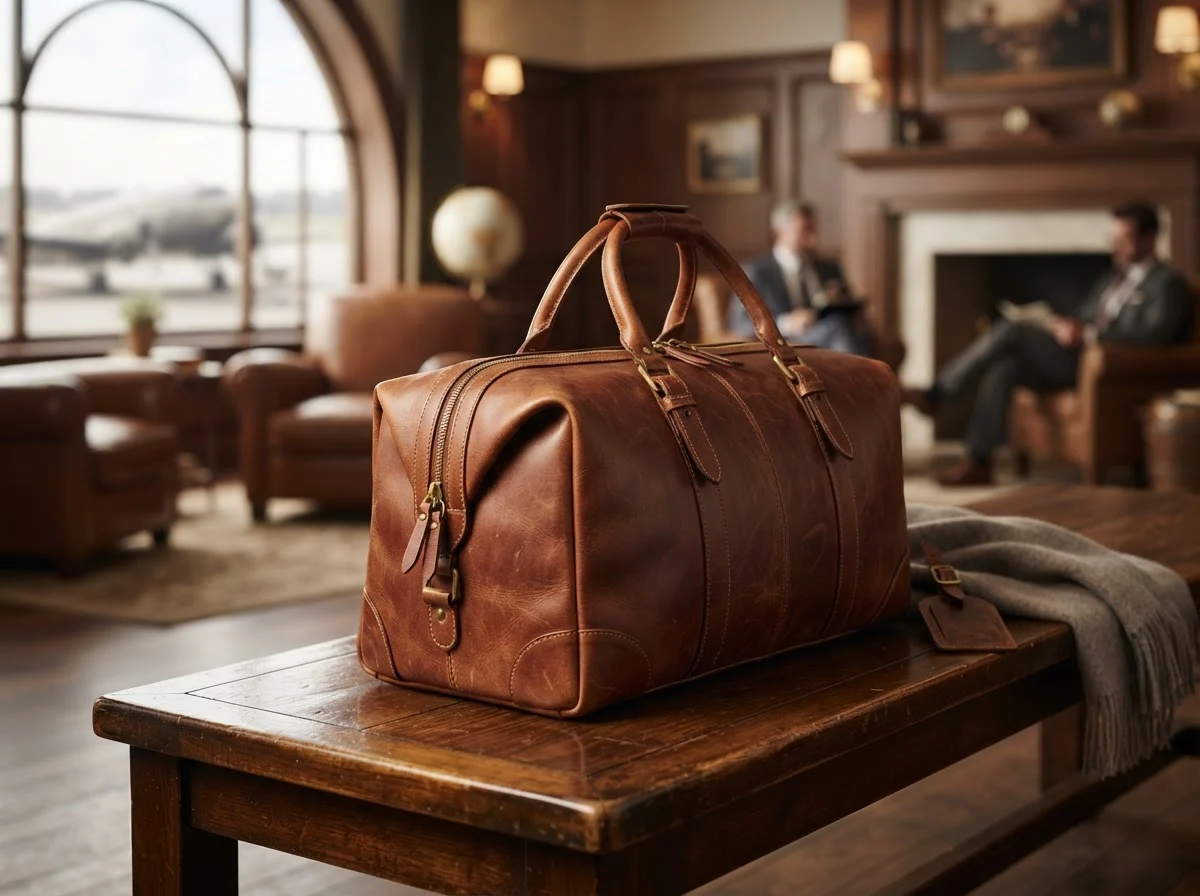
Is a Leather Duffle Bag Worth Buying for Travel in 2026?
Discover why an artisan full-grain leather duffle bag is the ultimate heirloom travel investment for weekenders, road trips, and modern airport carry-on travel.
Travel in 2026 demands luggage that bridges functional endurance with effortless personal elegance. Frequent travelers and style connoisseurs increasingly reject disposable nylon bags in favor of handcrafted full-grain leather holdalls that age with dignity. Investing in an artisan leather duffle provides an unmatched tactile connection to heritage craftsmanship while effortlessly elevating everyday travel wardrobes across commercial airports and luxury getaways.
A luxury leather weekender represents far more than a simple packing vessel. It serves as an expressive extension of your personal wardrobe, complementing structured outerwear while withstanding decades of transit friction. When crafted from authentic full-grain cowhide, an artisan duffle develops an evolving amber patina that chronicles every destination, flight transfer, and road journey.
Key Takeaways
- Full-grain leather duffles represent heirloom investments that develop a rich, customized patina over decades of frequent travel.
- Standard carry-on dimensions of twenty-two by fourteen by nine inches allow compliant overhead bin storage across all major domestic and international airlines.
- Solid brass hardware and reinforced heavy-gauge zippers prevent catastrophic stress-point failures during rigorous transit.
- Genuine cowhide hides ranging from 1.1 to 1.4 millimeters thick offer superior tensile abrasion resistance compared to synthetic fabrics.
- Direct-to-consumer artisan manufacturing delivers premium full-grain leather luggage at transparent, accessible pricing tiers.
Is a Leather Duffle Bag Truly Worth the Investment for Modern Travel?
A full-grain leather duffle bag is unconditionally worth buying for travelers who prioritize long-term durability, timeless airport aesthetics, and sustainable value. While quality leather requires a higher upfront financial investment and modest baseline maintenance, full-grain cowhide construction outlasts synthetic nylon luggage by decades. The bag develops a distinct, personalized patina that transforms every airport journey into an enduring style statement.
Modern travelers frequently experience frustration with mass-produced synthetic luggage that fails after modest use. Flimsy polyester weekenders and petroleum-based technical fabrics degrade quickly when subjected to rough tarmac friction, overstuffed overhead bins, and harsh baggage carousels. Internal plastic water-resistant coatings peel into brittle flakes after twenty-four months, leaving synthetic weaves vulnerable to structural tearing.
In stark contrast, authentic full-grain leather absorbs external kinetic friction without compromising structural integrity. The dense, interwoven collagen protein matrices inherent in unprocessed cowhide distribute point-source tension across the entire surface plane. Even when scraped against abrasive concrete curbs or tight aircraft bulkheads, full-grain leather merely scuffs, absorbing conditioning waxes to deepen its rich character.
When evaluating cost-per-wear metrics, premium leather luggage consistently outperforms budget alternatives over extended horizons. A two-hundred-dollar synthetic bag that requires replacement every three years incurs substantial recurring expenses across a decade of travel. An artisan leather weekender priced fairly under three hundred dollars endures for thirty years, effectively reducing the annual ownership cost to pennies per trip.
Furthermore, pairing high-end seasonal apparel with cheap plastic luggage creates an unwelcome aesthetic dissonance. A traveler dressed in a bespoke wool overcoat or handcrafted jacket looks markedly elevated when carrying rich, vegetable-tanned leather baggage. Handcrafted pieces from our leather bags collection complement sophisticated travel wardrobes effortlessly. You can also explore our curated accessories to harmonize your travel essentials across every journey.
How Does Full-Grain Leather Compare to Top-Grain and Genuine Leather?
Full-grain leather is the highest tier of hide available, retaining the intact outermost epidermal grain without buffing or artificial sanding. This structural purity preserves the natural collagen fiber density, ensuring maximum tensile strength, water repellency, and breathability. Lower grades such as top-grain or bonded leather lack this natural fiber cohesion, making them prone to surface peeling over time.
Selecting the right hide grade separates lifetime heirloom luggage from short-lived commercial compromises. Full-grain cowhide incorporates the natural character of the hide, including subtle grain variations, healed range marks, and organic micro-creases. Because the grain layer remains completely intact, full-grain leather breathes naturally and absorbs conditioning oils without surface blistering or structural flaking.
Top-grain leather undergoes mechanical sanding to buff away natural surface imperfections before receiving an artificial embossed grain print. While top-grain leather provides uniform coloring, the sanding process shaves away the strongest collagen layers. Consequently, top-grain luggage softens prematurely, sags under heavy internal packing loads, and cannot achieve the deep, amber-toned patina characteristic of aged full-grain hide.
Commercial bags stamped with the ambiguous label of genuine leather occupy the lowest tier of real animal hide. Manufacturers create genuine leather from split-grain underlayers bonded together with synthetic polyurethane resins and heavy spray pigments. After twelve to eighteen months of moderate use, the synthetic coating cracks and flakes, exposing the brittle fibrous interior beneath.
Understanding these structural distinctions protects buyers from misleading marketing terminology. True luxury houses take pride in uncorrected hides that showcase organic depth and tactile richness. For an in-depth breakdown of material authenticity tests, consult our guide on testing real versus fake leather.
Which Leather Duffle Bag Size Fits Your Specific Travel Habits?
Selecting the correct duffle bag capacity depends on your trip duration, transit mode, and daily packing density. Weekend getaways spanning two to three days require thirty-five to forty-five liters of internal capacity, whereas week-long excursions demand fifty to sixty liters. Matching your physical frame to the bag silhouette ensures ergonomic balance without unnecessary spinal strain.
Overnight commuters require a compact holdall that transitions seamlessly from corporate boardrooms to evening fitness clubs. A thirty-liter compact duffle accommodates a change of clothes, a dedicated tech sleeve, and grooming essentials without looking bulky. Travelers often pair these sleek compact holdalls with sharp casual attire from our men's collections or women's collection.
Frequent flyers must respect stringent airline carry-on dimensional boundaries to avoid gate-check penalties and boarding delays. Standard United States domestic carriers restrict overhead baggage to twenty-two inches long, fourteen inches wide, and nine inches deep. A properly proportioned leather duffle conforms to these exact parameters while maintaining flexible sidewalls that compress into tight overhead spaces.
Road-trippers and extended vacationers require expandable silhouettes that accommodate bulkier seasonal layers. A fifty-five-liter duffle easily swallows heavy wool sweaters, running footwear, multiple denim trousers, and comprehensive dopp kits. The soft leather construction conforms to awkward trunk spaces much more gracefully than rigid hardshell polycarbonate suitcases.
The table below outlines the primary leather duffle silhouettes, recommended travel durations, and functional carrying ergonomics for modern commuters.
| Silhouette Style | Best Travel Duration | Aesthetic Profile | Formality Level | Shoulder Offset & Ease | Price Range USD |
|---|---|---|---|---|---|
| Compact Overnight Holdall | 1 to 2 Days | Minimalist Executive | Business Formal | Zero drag, sits tight at hip | 89 to 149 |
| Classic Weekender Duffle | 2 to 4 Days | Vintage Heritage | Smart Casual | Balanced center of gravity | 149 to 249 |
| Expandable Explorer Duffle | 4 to 7 Days | Rugged Utilitarian | Casual Streetwear | Wide padded strap distribution | 199 to 249 |
| Executive Garment Duffle | 3 to 5 Days | Architectural Tailored | Professional Travel | Dual-handle structured balance | 219 to 249 |
Choosing between these distinct silhouettes requires an honest appraisal of your packing discipline and destination itinerary. Minimalists who pack capsule wardrobes thrive with a classic forty-liter weekender, while travelers carrying heavy winter boots benefit from expandable explorer cuts. If your travel style requires specialized proportions, examine our comprehensive leather accessories guide for coordinated packing inspiration.
Why Does Hardware Construction Determine the Lifespan of a Leather Bag?
Heavy-duty brass hardware and solid metal rivets dictate whether a leather duffle bag survives rigorous international travel. The stress points where carrying handles attach to the leather body absorb dozens of pounds of dynamic force during movement. Bags manufactured with cheap zinc alloy clasps or lightweight nylon zips inevitably fail at airport security checkpoints under full weight loads.
Artisan leather crafting requires thick gauge antique brass hardware that resists bending, corrosion, and metal fatigue. Solid brass D-rings anchored through reinforced leather tabs distribute carrying tension across multiple square inches of hide. High-stress handle junctures must feature double-box saddle stitching backed by internal reinforcement stays that prevent leather tearing under dynamic loads.
Zipper failure represents the number one structural breakdown in consumer travel luggage across the globe. High-end leather holdalls utilize heavy-gauge YKK brass zippers with substantial teeth that glide smoothly under tension without splitting. Unlike plastic spiral zippers that catch on interior pocket linings, solid brass teeth lock securely under heavy carry-on packing pressure.
Rolled leather carrying handles provide vital ergonomic comfort when navigating sprawling international airport terminals. Craftsmen build rolled handles around a dense leather cord core, wrapping the exterior in supple full-grain hide. This architectural technique prevents handle flattening, banishing hand fatigue during prolonged gate transfers.
Furthermore, base protection hardware prevents premature abrasion when setting your bag on abrasive tarmac or wet hotel lobby floors. Premium duffles incorporate five solid brass dome feet riveted directly into an internally reinforced bottom panel. Inspect our leather backpacks and luggage resource to study reinforced stress-point engineering up close.
What Hide Thickness and Material Specs Provide the Best Durability?
Genuine full-grain cowhide measuring 1.1 to 1.4 millimeters in thickness provides the optimal balance of structural resilience and carry comfort. Cowhide of this caliber possesses natural abrasion resistance capable of withstanding rough airport conveyors without puncturing. Conversely, lambskin hides measuring 0.9 to 1.2 millimeters offer unmatched buttery softness for lightweight executive holdalls and garments.
Understanding hide thickness specifications empowers travelers to make informed heirloom investments. Heavy cowhide retains structural posture even when resting empty on hotel luggage racks, preventing unsightly sagging. Meanwhile, lightweight goatskin hides measuring 0.8 to 1.0 millimeters deliver remarkable tensile strength per ounce, ideal for compact accessories.
Interior linings also play a pivotal role in protecting your packed wardrobe from raw leather oils and moisture. Premium holdalls incorporate smooth polyester satin lining or heavy twill, creating a friction-free barrier that lets fine wool suits slide inside effortlessly. Hand-stitched seams executed with bonded multi-ply nylon thread ensure that raw hide edges never fray under climatic humidity changes.
Tanning chemistry fundamentally influences how hides age under environmental exposure over decades of service. Traditional vegetable tanning utilizes organic tree barks like chestnut, mimosa, and quebracho over a painstaking sixty-day bath immersion. This artisanal tanning process yields a firm, aromatic leather that develops breathtaking depth of color when exposed to ambient sunlight and natural hand oils.
The following material matrix details the exact artisan specifications, hide weights, and warranty protections established by Lux Wearz master craftsmen.
| Leather Hide Type | Hide Thickness mm | Hardware Specs | Interior Lining | Standard Lead Time | Guarantee & Warranty | Price Range USD |
|---|---|---|---|---|---|---|
| Full-Grain Cowhide | 1.1-1.4mm | YKK brass zippers | Polyester satin lining | Ships in 3-5 business days | 1-year warranty, 30-day returns | 89-249 |
| Full-Grain Lambskin | 0.9-1.2mm | YKK brass zippers | Polyester satin lining | Ships in 3-5 business days | 1-year warranty, 30-day returns | 249-399 |
| Genuine Full-Grain Goatskin | 0.8-1.0mm | YKK brass zippers | Polyester satin lining | Ships in 3-5 business days | 1-year warranty, 30-day returns | 149-249 |
| Bespoke Custom Made Leather | 0.9-1.4mm | YKK brass zippers | Polyester satin lining | Ships in 7-14 business days | 1-year warranty, 30-day returns | 299-499 |
Every piece crafted under these exacting standards reflects the skill of artisans possessing over twenty years of leatherworking experience. Each bag undergoes a rigorous twelve-point quality inspection before receiving shipping clearance. Discover the art of conditioning and softening stiff new hides by exploring our guide on breaking in artisan leather.
How Should You Style a Leather Duffle Bag with Travel Outerwear?
Styling a leather duffle bag requires harmonizing hide textures, color temperatures, and outerwear silhouettes into a cohesive aesthetic. Pair rich cognac or espresso cowhide duffles with classic outerwear cuts, such as structured men's leather jackets or tailored women's leather jackets. Balancing rugged luggage textures against refined garments creates an intentional, globetrotting aesthetic.
When flying in transitional autumn or winter weather, layering represents the cornerstone of functional style. Pair a chestnut brown weekender with a timeless aviation silhouette from our men's bomber flight jackets collection. The relaxed ribbed cuffs and storm collar of a bomber jacket echo the adventurous heritage of a classic leather duffle.
Commuters aiming for tailored corporate refinement should opt for a sleek black full-grain duffle paired with pieces from our men's classic leather jackets collection. Clean lines and understated brass hardware communicate quiet confidence across both luxury airport lounges and hotel lobbies. The smooth satin lining of the outerwear mirrors the lustrous interior lining of the bag, ensuring seamless movement.
For weekend road trips and casual getaways, asymmetric silhouettes provide dynamic visual contrast. Pair a rich tan duffle with a belted moto silhouette from our women's biker jackets catalog. To experiment with velvet-like tactile finishes, incorporate earth-toned outerwear from our men's suede jackets collection, proving that mixed leather finishes elevate modern travel wardrobes.
Accessorizing with tonal footwear anchors your transit ensemble effortlessly. Match the burnished undertones of your duffle to clean leather Chelsea boots, Goodyear-welted service boots, or minimalist white calfskin trainers. Avoid exact matching shades; instead, allow subtle tonal variances between mahogany, cognac, and deep chocolate to generate organic visual richness.
How Do You Care for a Full-Grain Leather Duffle Bag on the Road?
Caring for a leather travel duffle involves regular hydration with natural wax conditioners and proactive protection against extreme moisture. Because airport luggage handlers and damp weather expose bags to changing humidity, periodic conditioning preserves leather flexibility and prevents cracking. Wiping the exterior hide with a soft microfiber cloth after travel removes surface road grime before oils settle.
Rainy travel days often raise concerns regarding water spots on fine vegetable-tanned or aniline hides. While genuine full-grain leather repels light precipitation naturally, travelers should never allow a soaked bag to dry next to direct heat sources like radiators. Instead, wipe excess water with a clean cotton towel and allow the duffle to air-dry at room temperature away from direct sunlight.
Annual conditioning with a beeswax or lanolin-based leather balm restores vital moisture lost to dry aircraft cabin air. Apply a dime-sized amount of conditioner using circular motions, allowing the hide to absorb nutrients overnight before buffing with a horsehair brush. For detailed maintenance techniques and storage tips, review our official leather care guide.
When storing your duffle between seasonal excursions, never seal genuine leather inside non-breathable plastic garment containers. Trapped humidity causes mold growth and stiffens delicate hide fibers over prolonged storage periods. Stuff the bag lightly with acid-free tissue paper to maintain its architectural posture and house it inside a breathable cotton dust cover.
Routine edge maintenance also prevents fibrous unraveling along heavy seams. Applying a modest dab of pure beeswax along raw edge burns preserves the moisture seal and restores factory luster. Treat minor scuffs as badges of honor, knowing that authentic full-grain hide integrates surface abrasions into its permanent, storied patina.
What Should You Check Before Buying Your First Luxury Leather Duffle?
Evaluating leather thickness, stitch density, interior volume, and return guarantees protects you from disappointing fast-fashion purchases. Ensure that the manufacturer clearly specifies full-grain cowhide rather than ambiguous leather blends or bonded synthetics. Transparent brands openly publish hide origins, brass hardware specifications, and precise linear dimensions to verify airline carry-on compatibility.
Examine the internal pocketing layout to ensure your travel workflow remains organized. Premium duffles feature a zippered security pocket for passports, slip pockets for charging cables, and an optional water-resistant shoe compartment. These functional partitions keep soiled footwear separated from freshly pressed shirts without requiring cumbersome secondary packing sleeves.
Artisan customer service and bespoke craftsmanship represent the hallmarks of reputable leather houses. If your travel lifestyle requires tailored compartment dimensions, monogramming, or custom strap lengths, consult our team through our artisan concierge chat. Our master craftsmen collaborate directly with clients to build personalized luggage that fulfills unique personal specifications.
Before finalizing your acquisition, inspect customer feedback and verify warranty terms across independent review portals. You can read genuine feedback from seasoned international travelers on our verified customer testimonials page. Familiarize yourself with return policies and international delivery protocols by consulting our comprehensive frequently asked questions portal.
Investing in a handcrafted leather duffle transforms routine travel into an elevated ritual of style and preparedness. Rather than purchasing disposable nylon baggage every few seasons, carry an heirloom that chronicles your global travels through a rich, evolving patina.
How Does Leather Weight and Packing Distribution Impact Airport Mobility?
Ergonomic weight distribution in a full-grain leather duffle relies on structural handle placement and reinforced cross-body strap geometry. An empty full-grain leather duffle weighing approximately four to five pounds provides substantial baseline mass that stabilizes packed contents during rapid walking. Positioning heavy items like dopp kits and footwear centrally along the bottom base plate prevents awkward side-to-side bag oscillation in busy terminals.
Carrying ergonomics differ dramatically between rigid wheeled rolling cases and soft-sided leather weekenders. Rolling suitcases force travelers to navigate curbs, stairs, and cobblestone avenues with jarring vibrations that strain wrist ligaments. In contrast, an artisan leather duffle equipped with a wide, contoured shoulder pad distributes weight smoothly across the trapezius muscle, leaving both hands free for boarding passes and mobile navigation.
Packing efficiency also benefits significantly from the malleable sidewalls of high-grade cowhide. When packing structured items alongside soft garments, leather stretches gently around shoe corners and toiletry kits without tearing. Utilizing high-density packing cubes creates firm internal structure, enabling the duffle to stand upright automatically next to airline departure seating.
Modern luxury travel often involves combining luggage types for multi-week transatlantic itineraries. Many travelers pair their leather duffle with a rolling checked suitcase using an integrated leather trolley sleeve. Slipping the duffle securely over the telescoping handle of a wheeled case allows effortless navigation through customs terminals while keeping your heirloom leather elevated off dirty floors.
What Makes Handcrafted Leather Bags More Sustainable Than Fast Fashion Luggage?
Biodegradable full-grain leather represents a circular material model that drastically reduces consumer landfill waste over multi-decade lifespans. Petroleum-derived polyester and ballistic nylon luggage break down into microscopic non-degradable plastic pollutants that persist in global ecosystems for centuries. In contrast, organic vegetable-tanned cowhide returns naturally to the earth at the end of its multi-decade service life, leaving zero toxic microplastic residues.
The fast-fashion luggage industry thrives on planned obsolescence, producing inexpensive synthetic bags designed to fail within twenty-four to thirty-six months. Broken plastic zipper teeth, shredded nylon seam allowances, and cracked vinyl corners cannot be repaired economically, forcing consumers to repurchase cheap luggage repeatedly. This continuous cycle of replacement consumes immense industrial fossil fuels and generates tons of non-recyclable solid waste.
Artisan leather houses champion heirloom longevity by building products engineered for professional repair and reconditioning. Master artisans construct duffles using heavy bonded nylon threads, modular solid brass hardware, and replaceable leather shoulder strap assemblies. If a seam experiences extreme wear after fifteen years of rigorous travel, a cobbler or artisan can re-stitch the joint in minutes, restoring full structural integrity.
Investing in ethically sourced, vegetable-tanned leather aligns with conscious consumer values in 2026. Choosing heirloom craftsmanship over synthetic fast fashion supports generational tanning traditions, fair artisan wages, and responsible agricultural byproduct utilization. By acquiring a single handcrafted leather duffle that endures for a lifetime, travelers make an active, lasting commitment to sustainable luxury and environmental stewardship.
Explore The Full 2026 Leather Outerwear Collection
Vegetable-tanned full-grain cowhide, buttery New Zealand lambskin, and heritage Melton wool. Free express delivery across the USA with 30-day hassle-free returns.