
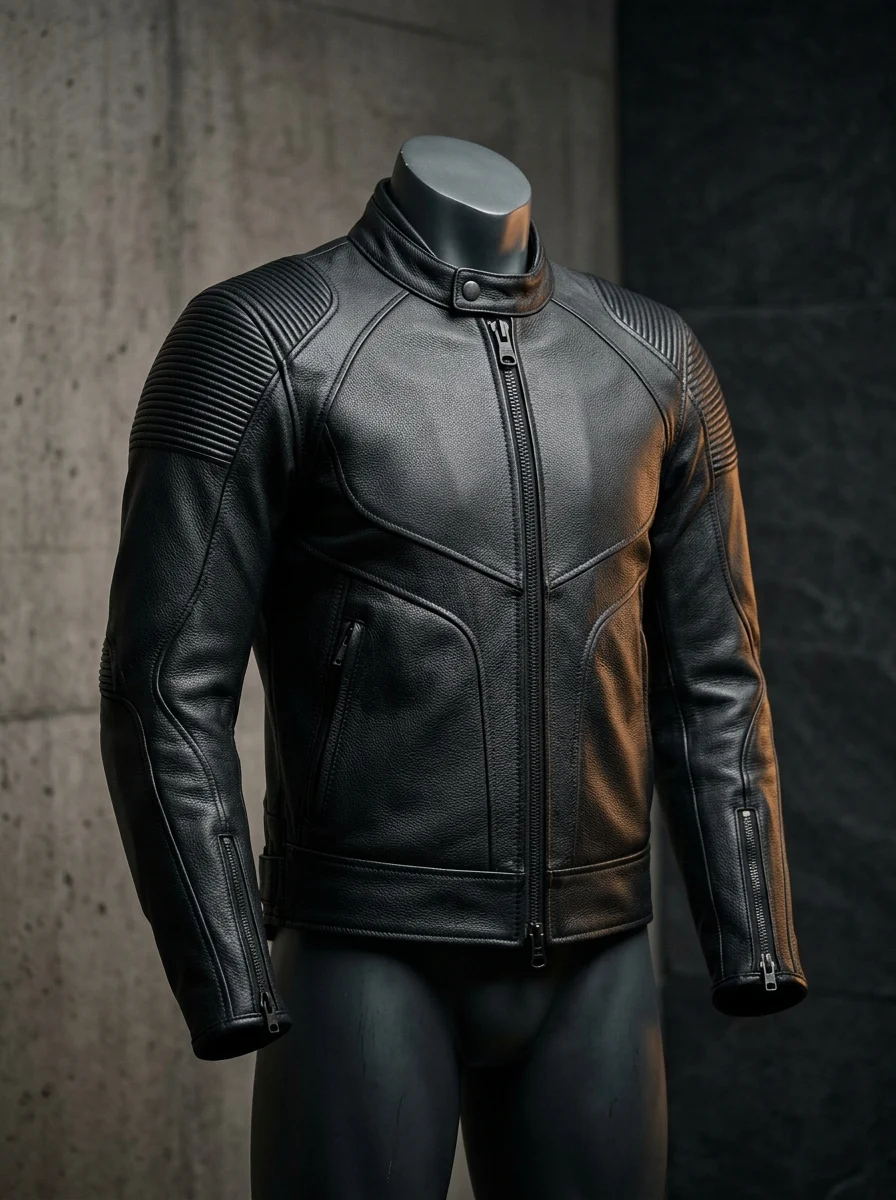
Alpinestars Leather Jackets: Archival Silhouettes & Sizing Guide [2026]
Explore Alpinestars leather jackets in 2026. Compare archival sport cuts, quilted cowhide craftsmanship, European sizing architecture, and street styling rules.
Alpinestars Leather Jackets: Archival Silhouettes & Sizing Guide [2026]
The intersection of high-velocity motorcycle racing engineering and artisanal leather outerwear represents one of the most demanding disciplines in garment construction. For over six decades, track-focused riders and style purists have analyzed the technical evolution of protective cowhide silhouettes, seeking the elusive balance between aerodynamic ergonomics and everyday streetwear versatility. Understanding the anatomical architecture, quilted panel reinforcement, hide grain density, and dimensional drop of sport riding jackets requires examining the mechanical realities of track-tested cowhide. Whether evaluating archival racing cuts from the 1990s or modern perforated sport silhouettes, discerning collectors must navigate European athletic cuts, aggressive pre-curved sleeves, and dense leather tempers that behave fundamentally differently from conventional lifestyle outerwear. For enthusiasts expanding their protective wardrobe across varied riding conditions, exploring our comprehensive breakdown of how to choose a women's leather motorcycle jacket offers essential context on anatomical body profiling.
Key Takeaways for Sport Leather Outerwear Selection:
- European Athletic Drop: Performance racing jackets are engineered with an aggressive 6-to-8-inch chest-to-waist taper, demanding precise shoulder and torso measurements to prevent abdominal bunching while seated in a sport riding tuck.
- Tensile Hide Thickness: True track-grade sport cowhide utilizes 1.2mm to 1.4mm full-grain or top-grain bovine leather with firm temper, requiring structured break-in cycles before reaching full anatomical compliance.
- Quilted Impact Architecture: Dual-density foam padding encased in diamond-stitched leather panels over the shoulders and clavicles provides kinetic energy dispersion alongside structural stabilization.
- Artisan Bespoke Advantage: Custom-tailored bespoke alternatives eliminate the off-the-rack sizing friction between athletic shoulder breadth and waist circumference, incorporating virgin full-grain cowhide tailored to individual anatomy.
- Internal Ecosystem Interlinking: Always inspect genuine leather garments using verified manufacturer care standards outlined in our dedicated leather care guide to safeguard against premature fiber desiccation and stitch dry-rot.
Artisan Independence & Trademark Notice: Lux Wearz is an independent bespoke leathercraft atelier. All brand names, logos, and trademarks mentioned in this article (including Alpinestars® and related trademarks) belong exclusively to their respective trademark holders. Lux Wearz is not an authorized distributor, licensee, or affiliated partner of these brands. All brand references and historical retrospectives are made strictly for educational, comparative, and sizing review purposes under Fair Use. Lux Wearz specializes in custom-tailored, heirloom-grade genuine leather outerwear handcrafted individually in our private workshop.
How Do Alpinestars Leather Jackets Fit and What Is Their Sizing Architecture?
Alpinestars leather jackets feature an aggressive European athletic fit characterized by broad anatomical shoulders, high armholes, heavily pre-curved sleeves, and a sharp chest-to-waist taper designed specifically for a forward-crouched riding posture. American buyers typically need to size up one full numeric size for everyday upright comfort or casual streetwear styling.
The primary engineering objective of a high-performance sport leather jacket is not relaxed lounge comfort; it is biometric stability at triple-digit speeds. When an equestrian or casual cafe racer jacket is cut with straight side seams, wind resistance causes the torso to balloon and vibrate. In contrast, athletic racing jackets employ complex multi-panel patterning where the front chest panels are cut narrower than the back scapular span. This anatomical bias pulls the rider naturally into a forward riding crouch. When standing completely upright in a showroom or fitting room, the wearer frequently notices chest tightness across the pectorals and a forward pitch in the shoulders. This tension is deliberate: once the rider extends their arms toward clip-on handlebars or an aggressive superbike cockpit, the tension neutralizes into an aerodynamic second skin.
For casual enthusiasts and streetwear collectors who appreciate the aggressive silhouette without intending to lap a closed circuit, this technical fit creates distinct sizing challenges. Standard off-the-rack sizing grades chest dimensions in rigid European increments (Euro 48, 50, 52, 54, 56) that correspond roughly to US 38 through 46. However, because the waist circumference is nipped in by 6 to 8 inches relative to the chest, an athlete with developed lats or a broader abdominal profile will experience restrictive waist closure even if the chest dimension matches their tape measurement. Exploring our standardized leather size guide provides clear instructions on obtaining accurate chest, shoulder, and sleeve measurements to avoid costly sizing returns.
Archival Evolution: From Alpine Hiking Boots to World Championship Paddock Leathercraft
To comprehend modern sport leather construction, one must trace the historical origins of technical leathercraft in Northern Italy. Founded in 1963 in the Veneto town of Asolo by master leather craftsman Sante Mazzarolo, the atelier took its name from the English translation of the Italian alpine flower stella alpina (edelweiss), which blooms high in the rocky peaks of the Monte Grappa region. Mazzarolo initially revolutionized mountain footwear and motocross boots by marrying thick Italian steerhide with steel shin guards and buckled ankle stabilization systems. The structural knowledge acquired from fortifying lower-limb extremities under brutal off-road punishment formed the foundation for whole-body leather armor systems.
By the late 1970s and 1980s, the explosion of Grand Prix road racing demanded an entirely new standard of upper-body abrasion defense. Road racing legends like Kenny Roberts and Mick Doohan pushed two-stroke 500cc motorcycles to catastrophic lean angles, suffering high-speed asphalt slides that disintegrated light commercial leather in fractions of a second. The response from Italian leather engineers was a fundamental reimagining of seam construction and hide tannage:
- Safety Seam Multi-Needle Stitching: Conventional single-needle garment seams burst open upon kinetic friction. Italian racing suits introduced safety seams where the exterior seam is reinforced with a concealed interior French stitch and high-tensile bonded nylon thread, ensuring the seam holds even if the external topstitch is abraded away by road grit.
- Accordion Leather Stretch Inserts: Before composite synthetic fabrics were viable on track, leather artisans developed accordion pleating—spring-loaded leather folds backed with elasticized bands placed above the elbows, across the lumbar region, and behind the scapulae. These pleats expand by up to 35% during body articulation and snap flat when the rider straightens.
- Quilted Foam Kinetic Damping: Long before CE-certified visco-elastic molecular armor, impact absorption relied on high-density closed-cell latex foams quilted directly into the exterior leather hide in geometric diamond, fluted, and ribbed configurations.
As motorcycle Grand Prix transitioned into MotoGP and World Superbike championships, the visual vocabulary of the sport leather jacket migrated directly into urban fashion and streetwear culture. Urban riders, musicians, and bespoke style aficionados adopted these sculptural, high-collar leather silhouettes for their unapologetic posture, aggressive shoulder architecture, and unmistakable tactile presence.
Technical Silhouette and Fit Architecture Matrix
The following matrix compares five distinct performance leather cuts, illustrating how panel tailoring, shoulder pitch, and leather thickness dictate both riding ergonomics and casual wearability.
| Silhouette Model | Cut & Fit Type | Shoulder / Chest Offset | Ideal Body Profile | Leather Weight & Temper |
|---|---|---|---|---|
| Track-Spec 1-Piece Suit | Ultra-Aggressive Race Fit | Extreme (-8 to -10 in Waist Drop) | Lean Athletic / Competition Build | 1.3–1.4mm Heavyweight Cowhide (Firm/Stiff Temper) |
| Ergonomic Sport Blouson | Aggressive Pre-Curved Sport | Sharp (-6 to -7 in Waist Drop) | Athletic / V-Taper Physique | 1.2–1.3mm Full-Grain Bovine (Medium-Firm Temper) |
| Urban Hybrid Perforated | Modern Semi-Relaxed Moto | Moderate (-4 to -5 in Waist Drop) | Standard to Muscular Build | 1.1–1.2mm Drum-Dyed Cowhide (Supple/Milled Temper) |
| Vintage Cafe Racer / Heritage | Clean Symmetrical Center-Zip | Minimal (-2 to -3 in Waist Drop) | Broad Torso / Classic Frame | 1.2–1.4mm Oiled Pull-Up Steerhide (Waxy/Firm Temper) |
| Bespoke Custom Made-to-Measure | Individual 1-of-1 Tailored | Zero Offset Gap (Custom Biometrics) | Any Anatomical Build | 1.2–1.3mm Virgin Full-Grain Cowhide (Hand-Tempered) |
Hide Tannage, Thread Tensile Strength, and Hardware Metallurgy Matrix
Outerwear longevity is dictated by the microscopic integrity of the leather corium fibers, thread shear strength, and metal casting density. The table below details the engineering specifications that differentiate track-grade leathercraft from fast-fashion alternatives.
| Component / Hide | Leather Grade & Tannage | Thickness (mm) | Weather Resistance | Expected Longevity | Maintenance Needs |
|---|---|---|---|---|---|
| Full-Grain Bovine Shell | Chrome-Tanned Drum-Dyed Cowhide | 1.2–1.4 mm | High (Factory Wax/Silicone Sealed) | 25–40+ Years (Properly Nourished) | Semi-Annual Lanolin Conditioning |
| Quilted Clavicle & Rib Panels | Top-Grain Cowhide with High-Density EVA Foam | 1.1–1.3 mm Hide + 6mm Padding | Medium-High (Moisture Repellent) | 20–30 Years (Foam Stability Dependent) | Gentle Surface Buffing & Seam Inspection |
| Perforated Cooling Core | Precision Laser-Punched Full-Grain Bovine | 1.2–1.3 mm | Moderate (Permeable to Direct Rain) | 20–35 Years (Keep Free of Grime) | Soft-Bristle Debris Clearing & Cream Balm |
| Seam Assembly Thread | Bonded Nylon Size V-92 / V-138 (Continuous Filament) | 0.28–0.35 mm | Immune to Rot, High Tensile Shear (15+ lbs) | 30+ Years (UV Resistant) | Visual Seam Integrity Audits |
| Heavy-Duty Hardware | Solid Brass & Gunmetal Antiqued YKK #8 / #10 Zippers | N/A (Solid Cast Teeth) | Superior Rust & Corrosion Immunity | 50+ Years (Mechanical Lifetime) | Paraffin Wax Lubrication on Tooth Track |
| Interior Liner Matrix | High-Tenacity Diamond Quilted Polyester Satin | 120–150 gsm | Breathable Moisture-Wicking | 15–25 Years (Abrasion Resistant) | Spot Cleaning with Mild Castile Solution |
The Biomechanics of Quilted Leather Craftsmanship
One of the most recognizable design signatures across heritage and performance sport jackets is the diamond-quilted or channel-fluted leather panel. While frequently imitated as a purely decorative flourish on fast-fashion fast-fashion garments, authentic quilted leathercraft represents an intricate mechanical assembly designed to solve three distinct structural challenges:
1. Hide Stabilization and Tensile Load Spreading
Leather is an organic material with natural grain directionality and differential stretch rates. The hide over an animal's spine has significantly tighter fiber bundles than the belly or flank leather. When a rider is subjected to aerodynamic turbulence or physical impact, concentrated tension on unreinforced leather causes localized stretching and distortion. By stitching heavy-gauge bonded thread in a tight geometric diamond lattice across the hide, the artisan locks the directional fibers into a rigid geometric grid. This grid redistributes tensile stress across dozens of intersecting stitch lines rather than concentrating it along a single edge.
2. Kinetic Impact Energy Deceleration
Behind each quilted exterior panel lies a composite sandwich: an outer layer of 1.2mm drum-dyed full-grain leather, a central core of 4mm to 8mm closed-cell EVA or visco-elastic foam, and an inner scrim of reinforced duck canvas. When kinetic force strikes the diamond pod, the dense outer leather resists piercing while the closed-cell foam undergoes controlled cell collapse, absorbing kinetic foot-pounds before energy reaches the wearer's skeletal clavicle or acromion process.
3. Anatomical Articulation Without Leather Sagging
Over years of wear, leather naturally relaxes along stress points. Without internal structure, leather spanning the shoulders can begin to droop or wrinkle irregularly. The quilted matrix acts like an internal exoskeleton, ensuring that the silhouette retains its sculpted, authoritative military posture regardless of how many seasons the garment has weathered. To discover how clean structural lines complement broader wardrobe options, examine our in-depth analysis on how to style a leather biker moto jacket for styling rules that balance technical jackets with denim and boots.
Pre-Owned Inspection Checklist: Detecting Vintage Wear, Dry-Rot, and Hidden Flaws
The secondary market for vintage sport racing jackets and archival Italian-styled leather has surged among vintage fashion collectors. However, buying a pre-owned sport leather jacket without performing a forensic inspection frequently results in acquiring a display piece that is unwearable due to structural breakdown. When evaluating a vintage performance jacket, conduct this mandatory 5-point inspection before committing funds:
1. The Corium Fiber Flexibility Test (Detecting Dry-Rot)
Dry-rot occurs when ambient moisture, ozone exposure, or acid perspiration breaks down the natural oils in the leather corium, causing the internal collagen fibers to become brittle and snap.
- Inspection Technique: Gently pinch a 1-inch fold of leather along the lower kidney panel or under the armpit and roll it between your fingertips under firm pressure. Listen carefully: healthy, hydrated leather yields silently with a supple, buttery flex. If you hear a faint crackling sound or see micro-fissures erupt along the outer grain finish, the hide has suffered irreversible internal fiber desiccation. No amount of topical leather balm can repair shattered internal collagen fibrils.
2. Hidden Seam Bursting Along Flex Zones
Sport riding jackets place extreme kinetic tension on the underarm gussets, rear shoulder bi-swing panels, and elbow articulation seams.
- Inspection Technique: Turn the jacket completely inside-out and inspect the lining along the armholes. If the interior satin lining is pulled taut or frayed along the seam allowance, the previous owner subjected the jacket to high-tension strain. Next, grip the leather on either side of the exterior underarm seam and apply steady lateral tension. If the seam stitches pull apart to reveal white thread gaps or needle hole elongation, the safety seam has stretched and requires immediate restitching by a professional leather cobbler.
3. Zipper Tooth Alignment and Slider Retaining Box Wear
Performance jackets utilize heavy-gauge YKK #8 or #10 zippers that withstand substantial tension. The weak link is rarely the metal teeth; it is the zinc-alloy slider body and the lower insertion pin.
- Inspection Technique: Examine the insertion pin at the bottom of the main zipper. If the plastic reinforcement laminate around the insertion pin is split, frayed, or separated from the fabric tape, the zipper will repeatedly jump tracks and fail to mesh. Additionally, look at the slider bridge: if the metal has flared open from repeated forceful zipping over heavy winter sweaters, the slider will fail to crimp the teeth together securely.
4. Hardware Corrosion and Verdigris Bleed
Antique brass and copper-alloy snaps exposed to road salt, rain, or sweat develop verdigris—a bright green powdery patina caused by copper oxidation.
- Inspection Technique: Inspect the female snap receivers at the collar tab and waist adjusters. If verdigris has formed inside the snap cavity, it leaches into the surrounding leather, staining the grain permanently green and chemically weakening the leather fibers around the rivet hole. Light surface corrosion can be scraped with a wooden stylus, but deep verdigris rot permanently loosens snap retention.
5. Collar Facing and Thermal Lining Degradation
Sweat contains sodium chloride, lactic acid, and sebum oils that saturate the inner collar facing over seasons of riding.
- Inspection Technique: Inspect the soft microfiber or neoprene trim at the back of the neck. In poorly maintained garments, body oils turn the collar lining gummy, stiff, and dark, eventually cracking the adjacent leather along the cervical neck seam. Ensure the inner thermal lining snaps cleanly into place and that the zipper tracks attaching removable quilted vests operate smoothly without catching on excess lining fabric.
Featured Silhouette Retrospective: Curated Catalog Collection
Within the Lux Wearz curated outerwear collection, several flagship models exemplify the pinnacle of performance leather construction, ergonomic paneling, and technical styling. Each garment reviewed below represents an authentic archetype of sport-inspired leathercraft:
1. The Heritage Icon: Alpinestars Revern Leather Jacket
For riders and collectors seeking a balance between track pedigree and urban sophistication, the Alpinestars Revern Leather Jacket stands as an enduring benchmark. Crafted from 1.3mm premium full-grain bovine hide, the Revern features sophisticated quilted accent detailing across the upper chest and shoulders, paired with a classic snap-tab mandarin collar and pre-curved sleeves. The jacket's dark, understated aesthetic eliminates loud visual distractions, allowing the tactile quality of the drum-dyed leather and heavy-gauge solid hardware to take center stage. For cooler transitional weather, the garment integrates an internal thermal vest liner that can be removed seamlessly to accommodate lighter springtime layering. Explore our complete Alpinestars brand catalog to compare all available sizes and complementary riding styles.
2. Anatomical Precision: Alpinestars Women's Stella Maver-X Leather Jacket
Engineered specifically from the ground up for feminine athletic anatomy, the Alpinestars Stella Maver-X Leather Jacket eliminates the ill-fitting boxiness common in downsized unisex outerwear. The Maver-X utilizes targeted accordion leather stretch panels across the scapulae and lower lumbar zone, coupled with high-tenacity stretch fabric inserts running down the inner sleeves. This construction accommodates varying bust-to-waist ratios while maintaining absolute proximity to the body for draft-free comfort. The supple 1.2mm top-grain cowhide is finished with a waxy semi-matte sheen that develops a rich, individualized patina with continuous road wear.
3. Minimalist Urban Velocity: Alpinestars Dyno Leather Jacket
Stripping away complex multi-color racing graphics in favor of pure sculptural minimalism, the Alpinestars Dyno Leather Jacket pays homage to the 1970s cafe racer era through modern manufacturing techniques. Featuring clean horizontal chest pockets, dual-needle safety stitching, and adjustable waist tabs, the Dyno cut allows for effortless transition from city riding to evening social venues. Its slightly relaxed chest taper accommodates casual hoodies or fine-knit wool sweaters underneath, making it one of the most versatile three-season leather investments in the contemporary outerwear catalog.
4. High-Airflow Climate Engineering: Alpinestars Dusk Airflow Leather Jacket
Riding in midsummer heat presents a severe compromise between thermal comfort and leather protection. The Alpinestars Dusk Airflow Leather Jacket solves this engineering dilemma through strategically mapped laser micro-perforations across the torso and abdomen. By puncturing microscopic, high-density apertures directly through 1.2mm bovine leather, the jacket maintains over 90% of the solid hide's tensile burst strength while inducing massive cross-flow ventilation. Premium YKK coil zippers and reinforced mesh interior linings channel air continuously across the rider's core, preventing sweat saturation and leather moisture damage.
5. Competition Dominance: Alpinestars GP Tech V4 Leather Suit
At the absolute summit of track-ready leather engineering resides the Alpinestars GP Tech V4 Leather Suit. Handcrafted from selected premium kangaroo and bovine hides, this one-piece racing suit features seamless composite armor integration, aerodynamic back speed humps, and aramid-reinforced safety stitching throughout all impact zones. While engineered exclusively for closed-course competition, the biomechanical breakthroughs achieved in the GP Tech V4 cascade directly into the patterns and panel ergonomics of our street-legal jackets. To view our wider selection of handcrafted performance outerwear, browse our comprehensive men's leather jackets collection.
The Artisanal Solution: Why Bespoke Made-to-Measure Outperforms Off-the-Rack Leather
Despite the sophisticated engineering found in premium off-the-rack production jackets, mass-manufactured garments are fundamentally constrained by standardized grading charts. In commercial apparel production, a size 42 jacket is engineered to fit a theoretical average human body: an individual with an exact 42-inch chest, an exact 34-inch waist, a 34-inch sleeve inseam, and standard shoulder width. In reality, fewer than 15% of athletic individuals conform to these mathematical averages:
- The Athletic V-Taper Dilemma: Weightlifters, rock climbers, and competitive athletes with broad shoulders and a narrow 30-inch waist find that a commercial jacket fitting their shoulders leaves excess billowing leather around the abdomen.
- The Sleeve and Torso Length Disconnect: Taller individuals frequently find that sizing up to achieve adequate wrist coverage results in an oversized, boxy chest, while shorter individuals suffer from sleeve bunching that pushes protective elbow pads into the forearms.
- Leather Temper Preference: Commercial garments must balance durability against immediate showroom softness, frequently forcing manufacturers to use heavily processed, chemically softened split leathers that lack the structural lifespan of virgin hides.
This is precisely where the Lux Wearz bespoke leathercraft atelier excels. Through our dedicated custom leather order studio, every garment is patterned individually by master cutters based on 14 individual anatomical measurements.
Virgin Full-Grain Cowhide Selection
Unlike mass-market assembly lines that utilize mass-tanned leather splits treated with synthetic polyurethane finishes to conceal natural hide blemishes, our master artisans select only virgin, hand-inspected full-grain cowhides. Full-grain leather preserves the complete natural epidermis of the animal hide, providing the highest natural fiber density, unmatched tensile tear resistance, and the ability to absorb organic conditioning oils. Over years of wear, this leather does not peel or degrade; it burnishes and deepens in color, developing a magnificent, one-of-a-kind vintage patina.
Personalized Metallurgy and Interior Linings
When designing a bespoke garment, clients retain complete autonomy over every structural component:
- Zipper Gauges: Choose between heavy-duty antiqued brass, matte black oxide, or polished chrome YKK #10 zippers with custom cast pulls.
- Linings: Select between high-thermal quilted satin, breathable cotton flannel, or lightweight moisture-wicking silk-polyester blends.
- Hardware Placements: Add custom interior conceal-carry holsters, dedicated microfiber sunglasses pockets, or passport document sleeves engineered directly into the leather facing.
To begin crafting an heirloom piece tailored precisely to your unique anatomical specifications, submit your measurements through our custom order portal and schedule a personalized consultation with our master leather artisan.
Definitive Maintenance Protocol: Preserving High-Performance Cowhide
A premium performance leather jacket is an investment engineered to endure for decades, provided it receives appropriate preventative maintenance. Follow this seasonal atelier protocol to ensure your hide remains supple, water-resistant, and chemically stable:
- Post-Ride Grime and Insect Removal: After highway riding, never allow acidic insect residue or road grime to dry permanently on the hide. Dampen a soft microfiber cloth with distilled water and gently buff away surface debris. Avoid harsh household detergents, dish soaps, or alcohol-based wipes, which strip the protective oil barrier from the leather pores.
- pH-Balanced Deep Cleansing: Once per season, apply a dedicated glycerin-based saddle soap or pH-balanced leather cleanser with a horsehair brush. Work the cleanser into a light foam using gentle circular motions, lifting embedded street grime from the leather grain. Wipe away excess foam immediately with a dry cloth.
- Deep Nourishment with Lanolin and Beeswax Balm: After cleaning, allow the jacket to air-dry at room temperature away from direct radiators or heat vents. Apply a thin, even coat of natural lanolin- and beeswax-based leather conditioner. Lanolin penetrates deep into the corium fiber bundles to restore flexibility, while beeswax leaves a breathable, water-repellent micro-seal on the outer grain.
- Hanger Ergonomics and Off-Season Storage: Never hang a heavy leather jacket on a thin wire or plastic hanger, which concentrates the garment's 5-to-7-pound weight onto narrow points, stretching and denting the shoulder pads. Store the jacket on a broad, contoured wooden coat hanger with a minimum 2-inch shoulder flare. Keep the garment inside a breathable cotton garment bag—never non-porous plastic, which traps ambient humidity and breeds mildew. For further detailed instructions on leather longevity, visit our official leather care guide.
For modern streetwear styling architectures and proportions that pair motorcycle racing cuts with contemporary denim and luxury hoodies, explore our editorial guide on How to Style Alpinestars Leather Jackets.
Explore the complete collection of artisan-crafted leather goods, vintage retrospectives, and bespoke outerwear across the entire Lux Wearz catalog.
Explore The Full 2026 Leather Outerwear Collection
Vegetable-tanned full-grain cowhide, buttery New Zealand lambskin, and heritage Melton wool. Free express delivery across the USA with 30-day hassle-free returns.