
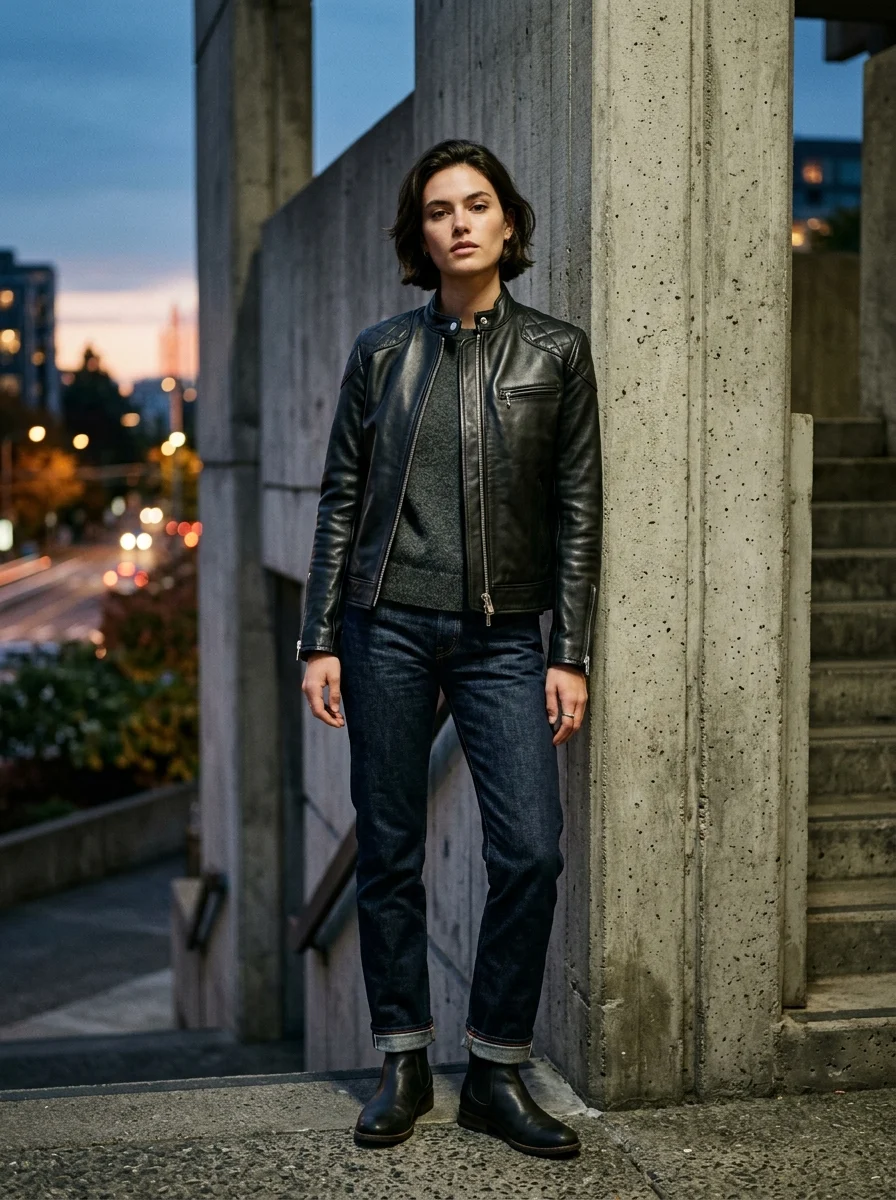
How to Style Alpinestars Leather Jackets: Streetwear Proportions, Layering, and Silhouette Guide [2026]
Master how to style Alpinestars leather jackets for streetwear in 2026. Pro guide on balancing moto jacket cropped proportions, wide-leg denim, and layering.
How to Style Alpinestars Leather Jackets: Streetwear Proportions, Layering, and Silhouette Guide [2026]
Key Takeaways
- Streetwear Silhouette Equilibrium: Pairing the cropped, aggressive architecture of technical moto leather jackets with wide-leg bottoms and elongated base layers creates an authentic, fashion-forward visual balance.
- Armor Demarcation & Casual Drape: Removing rigid CE composite shoulder and elbow armor transforms track-oriented jackets into fluid, comfortable luxury outerwear suited for daily urban wear.
- High-Contrast Layering Architecture: Combining technical 1.3 mm bovine leather with soft organic textures—such as heavyweight French terry hoodies and brushed wool knits—adds textural depth and tactile dimension.
- Footwear Proportional Grounding: Grounding technical outerwear with substantial lug-sole boots or archival vulcanized footwear anchors the substantial upper-body visual mass.
- Bespoke Made-to-Measure Freedom: For wearers whose proportions clash with aggressive European track sizing, commissioning a bespoke custom racer from Lux Wearz provides authentic motorsport heritage with customized streetwear comfort.
Artisan Independence & Trademark Notice: Lux Wearz is an independent bespoke leathercraft atelier. All brand names, logos, and trademarks mentioned in this article (including Alpinestars® and related trademarks) belong exclusively to their respective trademark holders. Lux Wearz is not an authorized distributor, licensee, or affiliated partner of these brands. All brand references and historical retrospectives are made strictly for educational, comparative, and sizing review purposes under Fair Use. Lux Wearz specializes in custom-tailored, heirloom-grade genuine leather outerwear handcrafted individually in our private workshop.
How Do You Style an Alpinestars Leather Jacket for Modern Streetwear?
Alpinestars leather jackets achieve balanced streetwear proportions when aggressive track-inspired silhouettes are counterweighted against relaxed raw selvedge denim, heavyweight French terry hoodies, and chunky lug-sole boots. Contemporary styling neutralizes rigid ergonomic race cuts by contrasting cropped waistlines with elongated oversized base layers and high-fashion utilitarian accessories.
The Evolution of Motorsport Outerwear: From Asolo Circuit to Milan Runway
Founded in 1963 in the Alpine town of Asolo, Italy, by master leather craftsman Sante Mazzarolo, Alpinestars established an indelible legacy in competitive motorsport. For decades, the brand's primary mandate focused entirely on high-velocity biomechanical protection: shielding Grand Prix motorcycle racers, motocross champions, and track enthusiasts from high-speed abrasions and catastrophic impacts. Every seam, gusset, and composite panel was engineered to survive the violent realities of asphalt friction.
Over the past decade, however, an unprecedented cultural convergence occurred. Global streetwear culture, energized by the "moto-core" phenomenon, began recontextualizing technical motorsport equipment into modern avant-garde street wardrobes. High-fashion creative directors and archival fashion collectors recognized that the aggressive lines, heavy-gauge leather finishes, and structural ergonomics of racing jackets possess a kinetic energy unmatched by traditional civilian outerwear.
Yet styling a high-performance motorcycle leather jacket for everyday street wear presents unique sartorial challenges. True racing jackets are cut for a forward-tilted riding crouch, featuring sharply pre-curved sleeves, compressed torso lengths, forward-rotated shoulder seams, and dense protective padding. If thrown carelessly over mundane skinny jeans and a generic crewneck, the wearer often looks top-heavy, stiff, and awkwardly costumed.
Mastering the styling of these iconic garments requires an understanding of silhouette architecture, textural contrast, and proportional calibration. When executed with precision, an authentic leather racing jacket becomes the ultimate centerpiece of a modern luxury wardrobe—exuding raw kinetic power, architectural sharpness, and uncompromising artisanal authority.
Archival Silhouettes & Fit Architecture
To style motorsport outerwear successfully, one must dissect the underlying geometry of motorcycle jacket cuts. Factory riding gear is categorized by distinct functional silhouettes, each dictating how the garment interacts with modern clothing layers.
The track-spec racing cut is built around maximum aerodynamic compression. It sits high on the hip—often finishing above the beltline when standing upright—with rigid elbow flex channels and a tight, tapered waist designed to prevent wind flapping at 180 mph. Conversely, café racer and urban retro cuts incorporate a more relaxed vertical drape, mandarin snap collars, and straight waist profiles, making them substantially easier to integrate into casual street ensembles.
| Silhouette Model | Cut & Fit Type | Shoulder / Chest Offset | Ideal Body Profile | Leather Weight & Temper |
|---|---|---|---|---|
| Track-Spec Circuit Racer | Extreme Aerodynamic Crop | 0.0 to +1.5 Inches Ease | Athletic / Lean Proportions | 1.3 mm Race-Grade Bovine Hide, Very Firm Temper |
| Heritage Café Racer | Straight Waist Silhouette | +2.0 to +3.5 Inches Ease | Slim to Muscular Builds | 1.2 mm Aniline Cowhide, Semi-Firm Temper |
| Urban Scrambler Bomber | Relaxed Hybrid Fit | +3.5 to +5.0 Inches Ease | All Body Morphologies | 1.1 mm Drum-Dyed Milled Leather, Soft Temper |
| Technical All-Weather Hybrid | Modular Pre-Curved Cut | +2.5 to +4.0 Inches Ease | Broad / Tall Frames | 1.2 mm Bovine with Stretch Polyamide Inserts |
| Bespoke Custom Atelier Racer | Anatomical Street Silhouette | Calibrated to Personal Ease | Any Tailored Dimensions | 1.3 mm Virgin Full-Grain Hide, Supple Street Temper |
The structural table above underscores why standard European racing sizing often confounds casual streetwear enthusiasts. Factory race jackets feature minimal chest ease. If you intend to wear substantial winter layers underneath your jacket, you must factor in chest circumference displacement. Wearing a thick cotton hoodie under a jacket with only one inch of ease will compress the chest and restrict arm circulation. Collectors seeking effortless everyday comfort frequently choose bespoke custom tailoring or deliberately size up one to two increments.
Leather Hide & Hardware Durability Matrix
The visual and physical presence of a motorcycle jacket depends fundamentally upon hide selection, tannage method, and hardware metallurgy. A high-performance racing jacket utilizes hides engineered for extreme mechanical resistance, creating a structured aesthetic that behaves very differently from soft fashion lambskin.
| Component / Hide | Leather Grade & Tannage | Thickness (mm) | Weather Resistance | Expected Longevity | Maintenance Needs |
|---|---|---|---|---|---|
| Race-Grade Bovine Shell | Full-Grain Chrome-Tanned Cowhide | 1.2 mm – 1.4 mm | High (Water & Friction Resistant) | 30+ Years with Conditioning | Annual lipid replenishment, horsehair buffing, seam checks |
| High-Friction Flex Inserts | High-Tenacity Polyamide Stretch | Synthetic Non-Leather | Moderate (Breathable & Flexible) | 15–20 Years | Spot-cleaning with mild textile cleanser, zero oil exposure |
| Internal Armor Pockets | 3D Breathable Mesh & Bio-Armor | Technical Polymer Inserts | High Impact Absorption | 10–15 Years (Foam Degrades) | Remove armor before laundering or casual street wear |
| Heavy-Duty Metal Zippers | Cast Steel & Brass (#8/10 YKK) | High-Tensile Metallic Alloy | Exceptional (Tensile Tested) | 40+ Years | Dry paraffin wax lubrication, regular debris evacuation |
| Perforated Cooling Panels | Die-Cut Punched Leather | 1.2 mm Bovine Matrix | Low Water Resistance | 25+ Years | Gentle vacuuming of perforation holes, avoid wax buildup |
Understanding these material characteristics is crucial for styling. Heavy 1.3 mm full-grain cowhide holds its own sculptural shape even when unzipped, creating sharp vertical lines that frame the torso. Perforated airflow panels add subtle technical texture, catching ambient light differently from solid panels. When paired with matte textiles like raw denim or brushed wool, the subtle sheen of chrome-tanned bovine hide creates a rich, layered visual dialogue.
Color Palette Strategy: Tonal Harmonies for Motorsport Leather
A successful motorsport-inspired streetwear outfit relies on thoughtful chromatic coordination. Motorcycle jackets often feature contrasting leather panels, reflective stripes, or aggressive multi-tone color blocking. Selecting the right complementary palette ensures the outfit feels cohesive and sophisticated rather than disjointed:
1. The Monochromatic Black-out (Noir Architecture)
Combining a jet-black leather jacket with varying shades of charcoal, slate, and deep onyx creates a visually arresting, textured aesthetic. By mixing matte textures (such as brushed cotton, cashmere knits, and coarse raw denim) with the semi-gloss sheen of finished leather, you avoid a flat, uniform appearance. This palette accentuates the sculptural silhouette and metallic zipper hardware without visual distraction.
2. Earth-Toned Contrast (Industrial Americana)
Pairing rich black or deep espresso brown leather jackets with olive drab, desert khaki, camel, and warm sand creates an organic, utilitarian feel. A camel-colored chunky knit sweater or an olive military trouser softens the stark athletic edge of motorcycle leather, grounding the garment in classic heritage outerwear aesthetics.
3. Heritage Two-Tone Racing Palettes
When styling a vintage or contemporary jacket that features bold heritage color blocking (such as black with crimson, royal blue, or white racing stripes), allow the jacket to serve as the singular focal point. Keep all base layers, trousers, and footwear completely neutral. Pairing a multi-colored racing jacket with loud patterned pants or vibrant sneakers creates visual clutter; framing it with pristine black denim or neutral wool trousers lets the artisanal leathercraft take center stage.
Five Master Streetwear Aesthetics for Motorsport Outerwear
Transitioning a technical motorcycle jacket from the racetrack to the urban pavement requires deliberate aesthetic curation. Here are five proven styling blueprints developed by luxury streetwear stylists:
1. The Neo-Brutalist Urban Moto (The Architectural Uniform)
- The Concept: A dark, moody, minimalist ensemble emphasizing clean lines, industrial textures, and razor-sharp proportions.
- The Core Outerwear: A black technical café racer or track jacket with armor removed for a relaxed drape.
- The Layering: An elongated, raw-hem charcoal heavyweight cotton crewneck T-shirt that extends two to three inches below the cropped jacket hem, creating a clean vertical tier.
- The Trousers: Wide-leg black Japanese raw selvedge denim or heavyweight wool-blend cargo trousers with subtle tactical pocket detailing.
- The Footwear: Chunky Vibram-soled combat boots or polished black lug-sole Chelsea boots.
- The Key Rule: Keep all metal finishes consistent. If the jacket features silver hardware, ensure belt buckles and jewelry mirror that brushed chrome tone.
2. The High-Contrast Heritage Layer (Casual Luxury)
- The Concept: Softening the aggressive demeanor of leather through opulent knitwear and relaxed sportswear elements.
- The Core Outerwear: A classic black or oxblood leather riding jacket with quilted shoulder accents.
- The Layering: A dense, heather-grey 450 GSM French terry pullover hoodie worn under the jacket. Pull the hood completely over the jacket's low mandarin collar to create a plush, comfortable frame around the neck.
- The Trousers: Relaxed-fit ecru or off-white washed carpenter pants, providing high visual contrast against the dark leather shell.
- The Footwear: Low-profile archival skate sneakers or vintage court sneakers in monochromatic white and grey leather.
- The Key Rule: Ensure the hoodie cuffs extend past the jacket sleeves by half an inch to soften the wrist transitions.
3. The Tailored Subversion (Runway Formalism Meets Moto-Core)
- The Concept: Juxtaposing high-velocity leather outerwear with traditional sartorial tailoring for an unexpected high-fashion aesthetic.
- The Core Outerwear: A clean, unadorned black leather motorcycle jacket.
- The Layering: A fine-gauge black or dark charcoal merino wool turtleneck sweater worn tucked cleanly into the trousers.
- The Trousers: High-waisted, double-pleated charcoal flannel or pinstriped trousers with a generous break over the shoe.
- The Footwear: Square-toed black leather zip boots or chunky commando-sole penny loafers.
- The Key Rule: The high waistline of the pleated trousers perfectly aligns with the cropped hemline of the motorcycle jacket, visually elongating the legs and creating a commanding statuesque silhouette.
4. The Vintage Track Scramble (Rugged Americana Reimagined)
- The Concept: Channeling 1970s desert racing and dirt-track heritage with warm earth tones, rugged textures, and vintage-washed elements.
- The Core Outerwear: A patina-rich brown or distressed black leather racing jacket.
- The Layering: A vintage-washed waffle-knit thermal long-sleeve tee paired beneath an unbuttoned brushed flannel workshirt in muted rust or forest green tones.
- The Trousers: Straight-leg vintage indigo denim with authentic natural roping fade at the hems.
- The Footwear: Heavy Goodyear-welted leather service boots or roughout suede moc-toe boots.
- The Key Rule: Allow the flannel shirt hem to peek out naturally beneath the jacket for an effortless, road-worn aesthetic.
5. The Feminine Moto-Femme Silhouette (Sharp Proportions)
- The Concept: Highlighting feminine contours by contrasting the structured, masculine armor lines of a cropped moto jacket with fluid, delicate fabrics.
- The Core Outerwear: A tailored, cropped women's leather jacket with articulated shoulder lines.
- The Layering: A ribbed modal tank top or silk camisole in champagne or deep onyx.
- The Trousers / Skirt: A high-waisted bias-cut satin midi skirt or high-rise wide-leg palazzo trousers.
- The Footwear: Pointed-toe stiletto boots or chunky architectural platform mules.
- The Key Rule: The stark juxtaposition between heavyweight rigid leather and fluid, shimmering silk creates instant runway drama.
Seasonal Adaptation: Year-Round Moto Styling Dynamics
Adapting heavy-gauge motorcycle outerwear to changing seasonal weather requires smart thermal management and strategic textile pairings:
Spring & Summer Streetwear Dynamics
During warmer months, heavyweight leather can easily become stifling if styled incorrectly. Maximize comfort by selecting perforated models or wearing the jacket fully unzipped. Layer over ultra-breathable, lightweight supima cotton tees or sleeveless athletic tanks. Pair with cropped linen-blend trousers or relaxed vintage denim shorts (jorts) and low-profile leather sneakers for an effortless warm-weather European street aesthetic.
Autumn & Winter Layering Systems
In freezing temperatures, a leather jacket acts as an exceptional windproof outer shell, but genuine hides offer minimal innate thermal insulation. Build a modular multi-tier layering system: start with a technical merino wool base layer next to the skin, add an insulating mid-layer such as a dense fleece or an ultralight down gilet, and top with your structured leather jacket. Complete the look with heavy cashmere scarves, ribbed wool beanies, and shearling-lined leather gloves to stay warm without sacrificing sartorial elegance.
Curated Collection: Iconic Motorsport Outerwear at Lux Wearz
Exploring our hand-curated collection of motorsport apparel reveals how performance engineering translates into striking street presence. Review these iconic models available on Lux Wearz:
- Alpinestars Dusk Airflow Leather Jacket: Engineered with precision-punched ventilation panels across the chest and torso. The Dusk Airflow represents the pinnacle of warm-weather moto styling, pairing effortlessly with minimalist white tees, light-wash denim, and clean luxury trainers for a fresh summer street aesthetic.
- Alpinestars Women's Stella Maver-X Leather Jacket: Anatomically profiled specifically for the female form. The Stella Maver-X features a tailored waist cinch, articulated elbow gussets, and premium bovine leather that creates an unforgettable silhouette when paired with tailored trousers or flowing satin skirts.
- Alpinestars Revern Leather Jacket: A modern masterpiece of understated café racer design. Devoid of distracting logos or loud color blocks, the Revern's rich black hide and refined collar line make it the most versatile jacket in the lineup for smart-casual tailoring and dark-palette streetwear.
- Alpinestars GP Force V2 Leather Suit: The undisputed benchmark of full-circuit track performance. Built from 1.3 mm bovine hide with integrated aerodynamic back humps and knee sliders, this professional suit serves as the ultimate design muse for bespoke streetwear racers seeking authentic track provenance.
Discover our full range of riding gear, sizes, and protective equipment by exploring the Alpinestars Brand Catalog. For track-inspired silhouettes across all heritage makers, browse our dedicated Racing Jackets Collection and luxury Men's Leather Jackets.
Pre-Owned Moto Leather Buying Realities: What to Inspect
If you are evaluating vintage or pre-owned motorsport outerwear across secondary market platforms, you must look beyond basic exterior photos. Motorsport jackets are frequently subjected to intense track use, crashes, and aggressive weather exposure. Conduct this thorough five-point pre-purchase inspection:
1. Asphalt Abrasion vs Decorative Patina
Light surface scuffs along outer seams add character and vintage charm. However, deep asphalt abrasion compromises structural integrity. If road rash has shredded the outer grain down to the inner reticular layer or severed the top-stitched structural threads, that panel is compromised and may split under tension.
2. CE Armor Deterioration and Powdering
Older jackets from the 1990s and early 2000s utilized polyurethane and composite foam shoulder and elbow armor. Over twenty years, these foam compounds undergo hydrolytic degradation, turning into a brittle, crumbly powder trapped inside the lining pockets. Always unzip the armor compartments and inspect the pads. If they crumble upon touch, dispose of them immediately and clean the mesh linings.
3. Sweat Salt Crystallization in Armhole Linings
Motorcycle racing is physically demanding. Over years of spirited riding, heavy perspiration accumulates within the underarm lining and leather backing. When perspiration evaporates, acidic sodium chloride crystals remain embedded in the leather pores, desiccating the fibers and causing the hide to turn rock-hard and brittle. Reject jackets with stiff, white-tinted salt encrustations along the inner armpits.
4. Heavy-Gauge Zipper Pin Fatigue
Track jackets require massive tensile strength from their primary front zippers. Carefully inspect the bottom reinforcement box and insertion pin. If the fabric tape around the insertion pin is frayed or split, the zipper slider will continuously jam or derail. Replacing a heavy-gauge zipper in a multi-layered leather jacket with internal armor pockets is a complex, costly atelier repair.
5. Track Alterations and Non-Factory Tailoring
Riders frequently took jackets to local cobblers to shorten sleeves or sew sponsor patches. Amateur alterations often use weak household cotton thread rather than high-tensile bonded nylon, creating weak seams that tear under daily wear. Check the underside of all seams for inconsistent thread gauge or crooked stitch lines.
Master Break-in Protocol: Softening Heavy Race Leather for Daily Wear
A brand-new 1.3 mm full-grain bovine leather jacket feels extraordinarily rigid upon first arrival. To transform this stiff protective shell into a supple, body-hugging streetwear staple without damaging the hide, follow our atelier break-in method:
Phase 1: Mechanical Stress and Gentle Flexion
Wear the jacket indoors for two to three hours daily while relaxing, working at your desk, or reading. Repeated flexion of the elbows, shoulders, and back panels naturally stretches the collagen bundles in accordance with your personal anatomical movement.
Phase 2: Micro-Conditioning with Lanolin Balm
Apply a microscopic film of natural lanolin or jojoba-based leather cream to high-friction areas: the elbow creases, shoulder caps, and underarm gussets. Do not saturate the hide; a sheer layer provides the necessary lubrication for collagen fibers to slide smoothly past one another without micro-tearing.
Phase 3: The Ambient Temperature Warm-up
Store the jacket in a warm, comfortable room (around 70°F). Avoid cold storage areas, which cause natural leather waxes and oils to solidify, rendering the leather stiff and unyielding. With continuous wear over three to four weeks, the jacket will mold permanently to your physique, creating custom comfort and a breathtaking natural drape.
The Bespoke Handcrafted Advantage: Custom Atelier Racing Outerwear
While original track jackets boast genuine motorsport provenance, their severe functional compromises can make daily streetwear wear frustrating. Standard factory riding jackets are often cut uncomfortably short in the front, excessively tight around the biceps, and overly stiff through the collar when sitting in an office, dining at a restaurant, or walking through the city.
For style-conscious connoisseurs who demand the aggressive kinetic aesthetic of a motorsport jacket—without the awkward track ergonomics, stale odors, and restrictive fit—Lux Wearz offers a custom bespoke atelier program. Through our Custom Bespoke Tailoring Atelier, you can commission a handcrafted racing jacket built to your exact anatomical proportions.
Why Choose a Bespoke Custom Racer from Lux Wearz:
- Tailored for Streetwear Proportions: We eliminate uncomfortable forward-crouch arm angles and overly compressed waist crops. Your custom jacket will hang with natural, flattering elegance over hoodies, tees, or knitwear.
- Virgin Full-Grain Bovine or Supple Lambskin: Choose from heavy 1.3 mm American full-grain steerhide for maximum sculptural structure, or buttery 1.1 mm European drum-dyed lambskin for effortless lightweight drape right out of the box.
- Ergonomic Armor-Free Comfort: Enjoy the striking visual aesthetic of padded diamond-quilted shoulders and elbow panels without being weighed down by rigid, bulky plastic impact cups.
- Custom Hardware & Lining Personalization: Select genuine YKK #10 antiqued brass or polished chrome zippers, heavy-duty snap closures, and luxurious interior silk-satin linings in bespoke colorways with tailored internal smartphone pockets.
Before designing your bespoke piece, consult our Comprehensive Size and Measurement Guide to capture your shoulder width, chest circumference, and sleeve lengths accurately. You can also review our expert Leather Care and Maintenance Guide for professional conditioning tips, or explore our complete outerwear lineup in the Lux Wearz Full Product Catalog.
Mastering the Art of Moto-Streetwear Fusion
A technical leather motorcycle jacket represents one of the most powerful, commanding garments in menswear and womenswear history. It bridges the gap between adrenaline-fueled athleticism and high-fashion avant-garde expression. By respecting proportional balance, pairing cropped silhouettes with substantial base layers and relaxed trousers, and choosing either pristine factory pieces or bespoke made-to-measure craftsmanship, you transform track-proven engineering into an iconic personal style statement.
Step into the world of luxury leathercraft and experience the transformative difference of master artisanal tailoring with Lux Wearz Custom Orders.
Explore The Full 2026 Leather Outerwear Collection
Vegetable-tanned full-grain cowhide, buttery New Zealand lambskin, and heritage Melton wool. Free express delivery across the USA with 30-day hassle-free returns.