
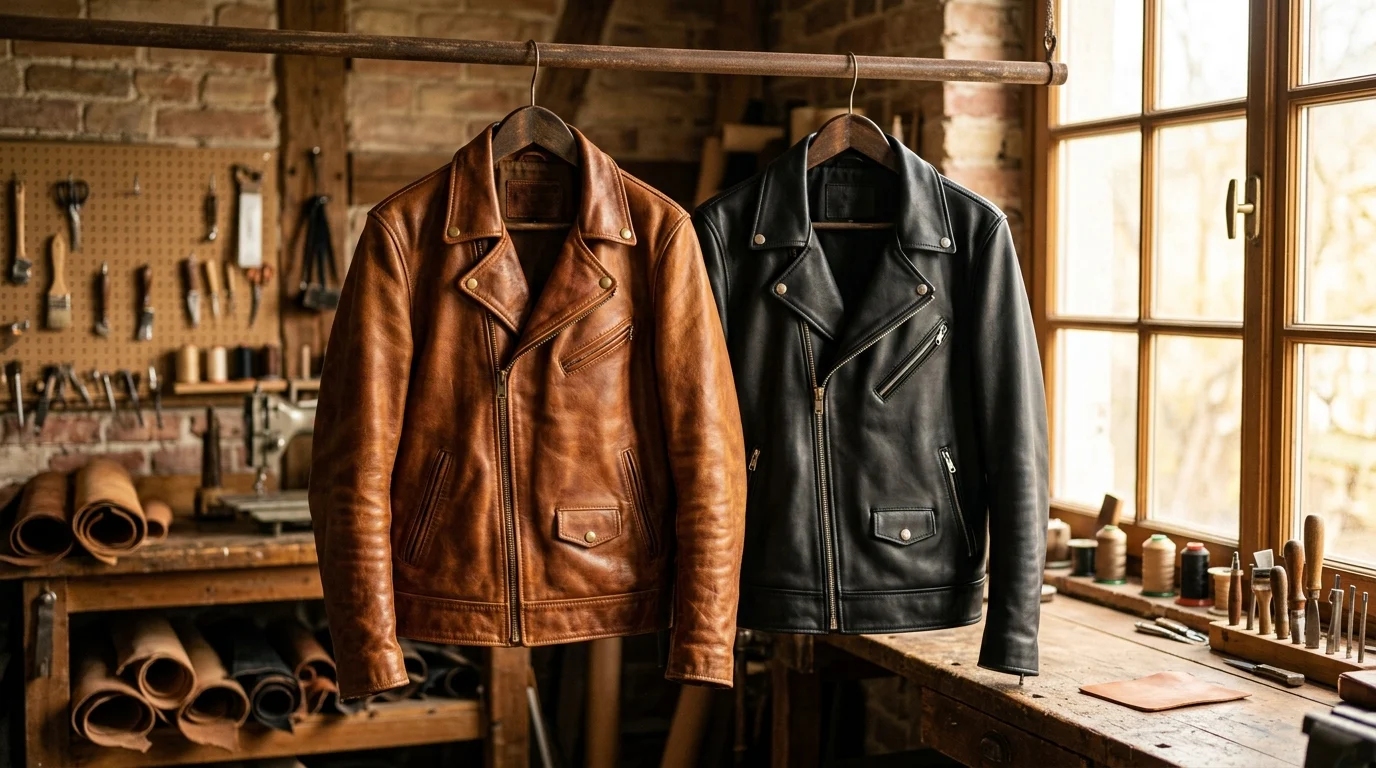
Vegetable Tanned vs Chrome Tanned Leather Jackets Which to Buy
Discover the core differences between vegetable tanned and chrome tanned leather jackets. Compare patina, hide durability, break-in timelines, and styling.
Choosing an artisan leather jacket represents one of the most enduring wardrobe investments an outerwear collector will ever make. While exterior styling catches the eye, the true lifespan, tactile drape, and aging personality of your jacket stem entirely from the chemical tanning chemistry applied to the raw animal hide. Understanding how tanneries process hide fibers separates passing fast fashion from a true heirloom garment that will mold to your frame for thirty years.
Two contrasting methodologies dominate the modern leather craft: time-honored artisanal vegetable tanning and precision chemical chrome tanning. Each technique alters raw bovine, ovine, and caprine hides on a cellular level, creating fundamentally distinct tactile qualities, weather resistance profiles, and visual characteristics. By dissecting the nuances between vegetable tanned and chrome tanned outerwear, you can confidently invest in a silhouette that aligns with your daily routine, regional climate, and sartorial philosophy.
Key Takeaways
- Artisan Heritage vs Industrial Speed: Vegetable tanning relies on organic plant polyphenols over sixty days of vat soaking, whereas chrome tanning utilizes mineral chromium salts to transform hides within forty-eight hours.
- Aging Dynamics and Patina: Vegetable-tanned leather oxidizes into a rich, caramel-toned personal patina through exposure to UV light and skin oils, while chrome-tanned leather maintains saturated, uniform dye retention across decades.
- Tactile Break-In Curve: Chrome-tanned lambskin and cowhide offer immediate buttery suppleness with zero stiffness, whereas vegetable-tanned hides demand an active thirty-day physical break-in period to contour to torso proportions.
- Weather and Moisture Resilience: Mineral chromium bonds grant chrome jackets superior natural moisture resistance and thermal stability, whereas porous vegetable-tanned skins require dedicated conditioning and rain protection.
- Craft Investment Profile: Expect to invest higher upfront capital for artisanal vegetable-tanned outerwear due to intensive hand labor, while chrome tanning delivers exceptional durability across versatile commercial price points.
What Is Vegetable Tanned Leather and How Is It Made?
Vegetable-tanned leather represents an ancient artisanal tanning methodology that utilizes organic plant extracts, tree barks, leaves, and roots to stabilize raw animal hides without synthetic chemicals. Over a rigorous sixty-day barrel immersion process, natural tannins bond directly with hide collagen fibers, producing a dense, biodegradable, and wonderfully aromatic leather that softens and molds gracefully over decades of active wear.
Artisans have practiced vegetable tanning across European tanneries for millennia, refining recipes passed down through generations of master leather crafters. Unlike industrial chemical processing, vegetable tanning relies exclusively on condensed tannins harvested from chestnut wood, quebracho trees, mimosa bark, and tara pods. The process begins with meticulous beamhouse preparation, where master tanners de-hair, flesh, and soak selected cowhide and goatskin hides in pure fresh water to restore natural hydration.
The hides then transition through a series of progressively concentrated tanning liquor pits over six to eight weeks. In the earliest vats, mild tannin solutions gently penetrate the exterior epidermis without shocking or contracting the delicate grain surface. As the skins absorb the plant tannins, artisans transfer them to richer, denser baths where the organic astringents displace water molecules and cross-link the collagen fibers into an extraordinarily dense, non-putrescible matrix.
This slow, unhurried infusion preserves the authentic natural grain markings, healed barbed-wire scratches, and authentic growth ripples of the original hide. Because the tanning solution contains no harsh synthetic bleaching agents, vegetable-tanned hides emerge with an earthy, biscuit-tan natural undertone and an unmistakable sweet, woody aroma that synthetic processing cannot replicate. Discerning outerwear collectors frequently select vintage leather jackets crafted from vegetable-tanned hides precisely because each garment showcases an entirely unique, unvarnished natural grain architecture.
What Is Chrome Tanned Leather and Why Does Modern Fashion Rely on It?
Chrome-tanned leather represents a modern industrial tanning method that utilizes soluble chromium sulfate mineral salts to rapidly stabilize raw hides within twenty-four to forty-eight hours. This efficient chemical reaction yields an exceptionally soft, flexible, and pliable hide with high tensile tear strength, excellent water resistance, and an extraordinary capacity to absorb vibrant dye pigments evenly across large panels.
Developed in the mid-nineteenth century, chrome tanning revolutionized the global outerwear landscape by replacing weeks of vat soaking with rapid mechanical drum milling. Tanneries pickle raw skins in an acid bath of salt and sulfuric acid to lower the internal pH below three, allowing trivalent chromium ions to penetrate deeply between the structural collagen fibrils. Once the chromium compounds saturate the fibers, chemists raise the pH, fixing the mineral cross-links securely in place.
This chemical bond creates what tanners call "wet blue" leather, named for the pale powder-blue cast of the stabilized wet hides. From this stable foundation, artisans re-tan, lubricate, and dye the skins in revolving heated drums with specialized fatliquors. The resulting leather possesses remarkable dimensional stability, lightweight drape, and resistance to thermal shrinkage, withstanding boiling water tests that would curl and ruin untreated plant-tanned hides.
Modern fashion designers favor chrome tanning for mens classic leather jackets and lightweight womens leather jackets because the finished skins drape effortlessly around feminine and masculine contours without requiring painful break-in periods. Furthermore, chrome processing accepts an infinite spectrum of permanent pigments, from deep midnight black and oxblood red to delicate pastels and metallic sheens. The vast majority of modern streetwear, luxury runway blazers, and urban outerwear rely on high-grade chrome tanning to deliver reliable softness and uniform color fastness.
Silhouette & Styling Comparison
| Outerwear Silhouette | Primary Tanning Match | Best Body Proportions | Dominant Aesthetic | Formality Level | Shoulder Ease & Drape | Price Range USD |
|---|---|---|---|---|---|---|
| Heritage Cafe Racer | Vegetable-Tanned Cowhide | Athletic, Broad Shoulders | Vintage Moto & Rugged Utility | Smart Casual to Rugged | Structured 1.5-inch chest ease | USD 249-399 |
| Asymmetrical Biker | Chrome-Tanned Cowhide | Lean, Rectangular, Hourglass | Edgy Rock-and-Roll Streetwear | Casual Weekend | Flexible 2.0-inch torso ease | USD 249-399 |
| Tailored Leather Blazer | Chrome-Tanned Lambskin | Slim, Oval, Tall Silhouettes | Modern Sartorial Power Dressing | Business Casual to Formal | Precision 1.0-inch tailored drape | USD 249-399 |
| Aviator Flight Jacket | Mixed Chrome & Veg Cowhide | Inverted Triangle, Broad Torso | Mid-Century Aviation Military | Casual Heritage | Roomy 2.5-inch ribbed chest ease | USD 349-599 |
| Minimalist Shacket | Chrome-Tanned Goatskin | Petite to Tall Average Frames | Contemporary Urban Layering | Smart Casual Everyday | Relaxed 2.0-inch drop shoulder | USD 149-249 |
How Does Patina Development Compare Between Vegetable and Chrome Tanning?
Patina development describes the gradual transformation of genuine leather as natural sunlight, friction, body oils, and environmental exposure darken and enrich the exterior grain. Vegetable-tanned leather develops an intensely dramatic, multi-tonal vintage patina over years of wear, whereas chrome-tanned leather maintains its factory color saturation, developing subtle crease contours while resisting drastic shade shifts.
The scientific catalyst behind vegetable-tanned patina lies in the chemical reactivity of open plant tannins. Because vegetable tanning does not seal the hide with synthetic topcoats, the organic polyphenol compounds remain photosensitive. When you wear a cognac or tan vegetable-tanned jacket outdoors, UV radiation gently tans the leather just like human skin, darkening amber tones into deep, lustrous chestnut and mahogany shades.
Concurrently, the natural oils from your palms, wrists, and neck transfer directly into the absorbent grain layer. Areas subjected to continuous mechanical movement—such as the inner elbow honeycombs, cuff edges, zipper plackets, and lapel folds—burnish naturally through daily friction. This abrasion polishes the microscopic surface fibers, creating high-contrast highlights on raised seams and rich, darker shadows in recessed folds. Every scratch, raindrop mark, and highway breeze leaves an indelible signature, transforming your outerwear into an authentic autobiographical tapestry.
In contrast, chrome-tanned leather behaves like a stable synthetic polymer barrier. The chromium ions form tight coordinate covalent bonds with the collagen carboxyl groups, preventing oxidation and blocking UV discoloration. Tanneries typically seal chrome-tanned garments with micro-pigmented finishes or flexible polyurethane emulsion topcoats to ensure color fastness. As a result, mens leather jackets produced via chrome tanning retain their pristine, store-bought depth of black or dark espresso brown across ten to twenty years. While chrome leather will form soft, comfortable wear ripples behind the elbows, it will never develop the dramatic, amber-burnished antique finish that defines heirloom vegetable-tanned garments.
Which Tanning Process Offers Superior Durability and Weather Resistance?
Durability in outerwear encompasses hide tensile strength, puncture resistance, tear resilience, and long-term tolerance to rain and ambient humidity. Vegetable-tanned leather delivers superior long-term structural tensile strength and fiber density, while chrome-tanned leather provides vastly superior out-of-the-box water resistance, stain repellency, and resistance to cracking when exposed to variable weather elements.
The tight cellular density of vegetable tanning gives the hide extraordinary rigidity and puncture resistance. When artisans harvest heavy steerhide and cowhide for rugged outerwear, the unhurried two-month tanning cycle ensures that tannins thoroughly saturate every fibril without degrading the inherent protein chains. When properly conditioned with natural tallow and beeswax, a vegetable-tanned garment will easily endure fifty to seventy years of abrasive contact without unraveling. However, vegetable-tanned leather suffers from one major vulnerability: water sensitivity. Because open plant tannins are hydrophilic, standing water can wash out essential lubricating fats, leaving the hide stiff, brittle, and water-spotted if left untreated.
Chrome tanning, conversely, provides built-in hydrophobic protection. The mineral chromium matrix exhibits natural resistance to moisture absorption, preventing rainwater droplets from penetrating deep into the dermal structure. If you get caught in a sudden urban downpour while wearing a chrome-tanned motorcycle jacket, water beads cleanly on the surface rather than soaking into the core fibers. After a simple wipe-down with a dry cloth, chrome leather dries quickly without warping, shrinking, or losing its pliable hand.
Furthermore, chrome-tanned leather resists ambient thermal shock and dry interior heat far more effectively than vegetable-tanned skins. In modern heated apartments and air-conditioned offices, vegetable-tanned hides dry out faster and require regular re-hydration via conditioning balms. Chrome tanning locks internal moisture within the fiber bundles, making it exceptionally reliable for high-mileage urban commuters who navigate wet winters and humid summers.
Craftsmanship & Material Durability Matrix
| Material & Craft Attribute | Vegetable-Tanned Cowhide | Chrome-Tanned Lambskin | Chrome-Tanned Cowhide | Vegetable-Tanned Goatskin |
|---|---|---|---|---|
| Hide Thickness (mm) | 1.1-1.4mm for cowhide | 0.9-1.2mm for lambskin | 1.1-1.4mm for cowhide | 0.8-1.0mm for goatskin |
| Hardware Specifications | YKK brass zippers | YKK brass zippers | YKK brass zippers | YKK brass zippers |
| Interior Lining Construction | Polyester satin lining | Polyester satin lining | Polyester satin lining | Polyester satin lining |
| Seam Assembly Method | Hand-stitched seams | Hand-stitched seams | Hand-stitched seams | Hand-stitched seams |
| Artisan Experience Standard | Master artisans with 20+ years | Master artisans with 20+ years | Master artisans with 20+ years | Master artisans with 20+ years |
| Standard Lead Time | 3-5 business days | 3-5 business days | 3-5 business days | 3-5 business days |
| Custom Order Production | 7-14 business days | 7-14 business days | 7-14 business days | 7-14 business days |
| Nationwide Delivery | Free shipping across the USA | Free shipping across the USA | Free shipping across the USA | Free shipping across the USA |
| Warranty & Return Guarantee | 1-year warranty, 30-day returns | 1-year warranty, 30-day returns | 1-year warranty, 30-day returns | 1-year warranty, 30-day returns |
| Retail Price Range USD | USD 249-399 | USD 249-399 | USD 149-249 | USD 249-399 |
What Are the Break-In Differences and Daily Comfort Levels?
Breaking in an artisan leather jacket marks the sensory divide between vegetable and chrome tanning, determining how comfortable outerwear feels during initial weeks. Chrome-tanned leather jackets provide immediate, cloud-like softness and fluid body comfort on day one, whereas vegetable-tanned jackets feel stiff and armor-like initially, requiring several weeks of dedicated wear to mold into a custom second skin.
When you slide into a brand-new vegetable-tanned cowhide jacket, the dense plant-tanned fibers resist flexion. The armholes may feel snug, the chest panels remain flat rather than curved, and moving your elbows produces audible creaks from the taut leather grain. This initial resistance often surprises first-time buyers who mistake structural stiffness for poor sizing. However, this rigidity serves a critical functional purpose: as your natural body warmth radiates into the hide, the fibers soften and stretch selectively across your high-stress pressure points.
Over thirty to sixty hours of active movement, the leather memorizes the exact contours of your shoulder blades, the curve of your biceps, and your natural posture while seated. Once broken in, a vegetable-tanned jacket achieves a level of personalized ergonomic harmony that no mass-manufactured garment can duplicate. It transforms from a stiff outer shell into a bespoke anatomical envelope that supports your torso while feeling remarkably natural.
Chrome-tanned outerwear skips this rigorous break-in ritual entirely. Because chromium salts create elastic cross-links that allow fibers to slide smoothly past one another, chrome-tanned hides arrive buttery, draping, and completely pliable. You can wear a chrome lambskin bomber or cafe racer immediately on an eight-hour flight or road trip without experiencing pinch points, restricted arm movement, or neck chafing. For travelers and professionals who value immediate comfort, exploring versatile casual jackets made from supple chrome-tanned skins eliminates break-in fatigue entirely.
How Do Sizing, Silhouette Structure, and Drape Compare on the Body?
Sizing and drape behavior dictate how your leather jacket silhouette flatters your physique across diverse wardrobe layers. Vegetable-tanned leather creates an architectural, structured drape that maintains clean lines and muscular definition, whereas chrome-tanned leather generates a fluid, forgiving drape that wraps smoothly around body contours without adding unnecessary visual bulk.
Because vegetable-tanned leather possesses superior temper and tensile stiffness, it excels at garments that require crisp silhouette architecture. If you seek a heritage flight jacket or vintage trench with upright collar presence, sharp lapels, and strong waist definition, vegetable tanning holds those clean angular forms indefinitely. When choosing your garment dimensions, consulting a detailed size & fit guide proves essential, as vegetable-tanned hides stretch only marginally across high-tension seams and will not forgive an undersized chest measurement.
Conversely, chrome-tanned hides excel at tailored, form-fitting, and fluid silhouettes. A lightweight chrome leather overshirt or cropped moto jacket drapes over knitwear, hoodies, and collared shirts without tenting or buckling at the lower hem. For individuals with athletic or asymmetrical body proportions who struggle with off-the-rack fits, chrome leather stretches comfortably across broader shoulders while clinging gently to narrower waists.
To achieve ideal fit harmony with either tanning method, examine how the jacket interacts with your foundational wardrobe. If you plan to layer thick cashmere sweaters beneath your outerwear during cold months, order a size that provides 2.0 to 2.5 inches of torso ease. If you prefer a streamlined European cut worn strictly over fitted t-shirts, select a tailored cut with 1.0 to 1.5 inches of chest clearance. Understanding the structural differences between full-grain vs top-grain leather jackets further clarifies how hide grade influences drape and silhouette longevity.
How Should You Clean and Maintain Vegetable vs Chrome Tanned Outerwear?
Cleaning and conditioning routines must match the chemical composition of your leather to prevent premature fiber dehydration or surface finish damage. Vegetable-tanned leather demands deep-penetrating natural lipid balms and meticulous water avoidance, whereas chrome-tanned leather requires gentle surface cleansing, neutral pH foam conditioners, and lightweight moisture-barrier sprays.
Because vegetable-tanned leather lacks synthetic topcoats, applying the wrong chemical cleaner can permanently stain the open pores. Never use alcohol wipes, petroleum-based solvents, or silicone spray on vegetable-tanned hides. Instead, maintain the leather by buffing the exterior once a month with a soft horsehair brush to remove abrasive dust particles from stitch lines. Every six to twelve months, massage a pea-sized amount of all-natural beeswax and jojoba oil conditioner across the panels in small circular motions. Allow the hide to absorb the lipids overnight, then buff with a clean flannel cloth to restore natural sheen.
If you encounter unexpected rain, never place wet vegetable-tanned leather near radiators, heating vents, or direct hair dryers. High heat will shrink the natural collagen fibrils, causing catastrophic surface cracking. Instead, follow professional advice on how to care for a leather jacket by padding the interior with dry cotton towels, placing the jacket on a contoured wooden hanger, and allowing it to air-dry at room temperature.
Maintaining chrome-tanned outerwear proves far simpler. You can wipe away surface road grime, city soot, and light rain stains using a damp microfiber cloth moistened with lukewarm distilled water. For routine conditioning, select a water-based emulsion designed specifically for fashion leather, which replenishes softness without clogging the chromium-stabilized pores. Reviewing our dedicated leather care guide ensures your cleaning routine preserves factory color saturation across all leather styles.
Vegetable Tanned vs Chrome Tanned Leather Jackets Which One Should You Buy?
Deciding between vegetable-tanned and chrome-tanned leather jackets hinges on whether you value evolving personal patina and artisan heritage or immediate cloud-soft comfort and low-maintenance weather resistance. Heritage outerwear purists who relish breaking in an heirloom should choose vegetable tanning, while everyday urban commuters seeking immediate softness, rain resilience, and vibrant colors should select chrome tanning.
To evaluate which option matches your lifestyle, examine your daily wearing habits. If you ride motorcycles, work outdoors, or collect vintage workwear, vegetable-tanned cowhide delivers unmatched tactile character. You will take immense pride in watching the rich cognac tones darken around your wrists and cuffs, celebrating the scratches and wear marks that document your travels. The jacket becomes a living diary, gaining aesthetic value with every passing season. Furthermore, vegetable-tanned hides pair effortlessly with rugged heritage leather bags and crafted leather accessories for a unified aesthetic.
If your lifestyle centers around urban commuting, executive office settings, or evening social gatherings, chrome-tanned leather offers superior practicality. You receive a jacket that feels sumptuously soft on day one, resists unexpected drizzle without frantic panicking, and pairs seamlessly with fine trousers or designer denim. You can explore iconic mens bomber flight jackets or classic mens biker moto jackets in supple chrome cowhide that look sharp from the very first outing.
You can also explore alternative textures like velvety nap mens suede jackets that blend specialized tanning and buffing methods for distinct tactile depth. Before making your final selection, verify hide authenticity by consulting our guide on how to spot real vs fake leather. Both tanning methods produce exceptional luxury outerwear when executed by master artisans using premium full-grain raw hides. Read through real customer reviews to see how fellow outerwear enthusiasts style their jackets, and consult master craftsmen to select bespoke sizing for your dream piece.
Explore The Full 2026 Leather Outerwear Collection
Vegetable-tanned full-grain cowhide, buttery New Zealand lambskin, and heritage Melton wool. Free express delivery across the USA with 30-day hassle-free returns.