
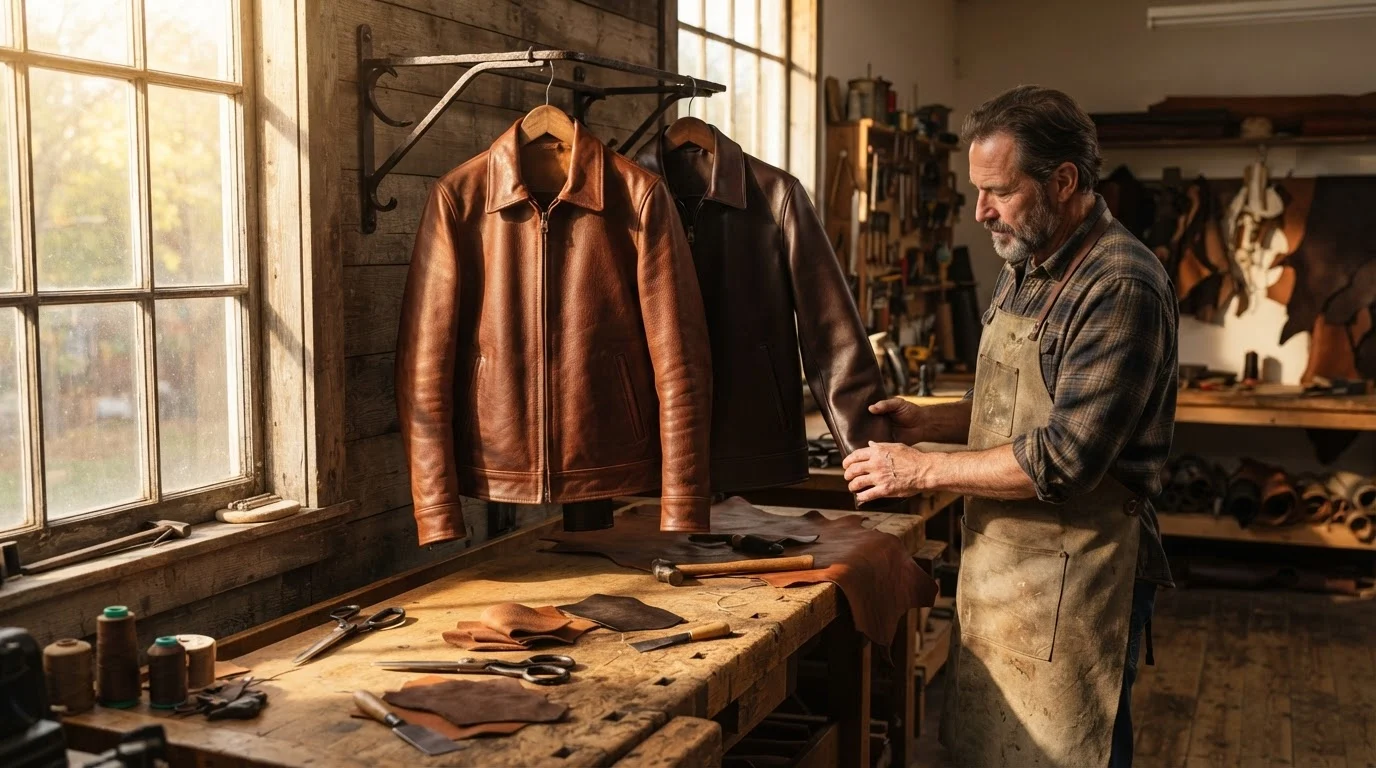
Should You Invest in a Full Grain Cowhide Leather Jacket? [2026 Guide]
Discover why full-grain cowhide leather jackets outlast all other outerwear. Learn hide thickness specs, break-in timelines, and heirloom care tips for 2026.
Investing in premium outerwear requires balancing upfront expenditure against decades of enduring performance, protection, and aesthetic character. A full-grain cowhide leather jacket stands as the undisputed benchmark of heritage leathercraft, representing the pinnacle of tensile strength and generational durability. Unlike fast-fashion synthetics or heavily corrected split leathers that peel and crack after a few seasons, authentic full-grain bovine hides evolve with the wearer, softening over time and developing an irreplaceable personalized patina. For discerning individuals seeking a true buy-it-for-life wardrobe cornerstone, understanding hide biology, thickness specifications, break-in stages, and artisan tailoring reveals why cowhide remains worth every dollar.
Key Takeaways & Investment Principles
- Unmatched Tensile Integrity: Full-grain cowhide retains the complete, un-split epidermal grain layer, offering unmatched puncture resistance and 30+ years of operational longevity.
- The Patina Dividend: While synthetic coatings deteriorate, full-grain hides absorb natural oils and ambient light, growing richer, softer, and more visually complex with each passing year.
- Optimal Hide Caliber: Master artisans calibrate premium cowhide outerwear to 1.1 to 1.4 millimeters thick, providing robust wind protection without sacrificing mobility.
- The Break-In Reality: Expect a structured initial break-in period of four to eight weeks as natural body heat and joint flexion soften the dense biological collagen matrix.
- Cost-Per-Wear Superiority: An investment of 249 to 399 USD across three decades of wear yields a negligible daily cost-per-wear ratio compared to replacing cheap split-leather garments every few years.
Why Does Full Grain Cowhide Outlast Every Other Outerwear Material?
Full-grain cowhide outlasts all competing outerwear materials because its surface preserves the dense, tightly interwoven collagen fiber network found exclusively in the outermost layer of the epidermis. By eliminating the sanding, buffing, and chemical coating processes used on inferior hides, full-grain leather retains its organic biological armor, delivering unmatched resistance against punctures, tears, and environmental abrasion.
To understand the immense physical resilience of full-grain cowhide, one must examine the histological structure of bovine skin. Animal hides comprise three distinct vertical strata: the grain layer (epidermis), the junction zone, and the corium (dermis). The grain layer contains the highest concentration of tightly packed, cross-linked collagen bundles. In lesser grades—such as top-grain or corrected-grain leather—tanneries mechanically shave off this top layer to remove surface scars, substituting synthetic polyurethane pigments to mimic a uniform texture. This sanding process severs the hide's strongest fibers, rendering it fragile and susceptible to surface cracking over time.
Full-grain leather leaves this protective barrier completely untouched. Minor field marks, healed insect bites, and natural stretch lines remain visible, serving as indelible hallmarks of authenticity. Because the natural pores remain open and unobstructed by plastic coatings, the leather breathes dynamically, regulating interior moisture and preventing sweat accumulation during active wear. During the drum tanning process, deep aniline penetrating dyes soak through the entire cross-section of the hide rather than resting as a painted surface film. When treated with proper conditioning waxes, these dense fibers resist moisture ingress and flex hundreds of thousands of times without tearing or peeling.
Discerning connoisseurs exploring our comprehensive mens leather jackets catalog quickly realize that true durability cannot be simulated. While lightweight fashion leathers may feel butter-soft on a retail display rack, they lack the structural fortitude required to withstand wind, rain, motorcycle friction, and decades of urban commuting. Full-grain cowhide is built for survival, maintaining structural tenacity across harsh winters and highway headwinds.
How Does Hide Thickness Influence Weight, Warmth, and Mobility?
Hide thickness directly determines the structural heft, thermal insulation, windproofing capacity, and overall flexibility of a leather jacket during active daily wear. Premium full-grain cowhide calibrated between 1.1 and 1.4 millimeters strikes the optimal balance for three-season and winter outerwear, providing substantial wind blockage and impact defense while allowing comfortable articulation across the shoulders and elbows.
Tanneries measure leather gauge using either millimeters or ounces (where one ounce equals approximately 0.4 millimeters of thickness). Understanding these caliber tiers prevents purchasing a garment unsuited to your climate or lifestyle:
- Ultra-Lightweight (0.6 to 0.8 mm): Typically utilized for fashion shirts and delicate gloves; lacks the abrasion resistance required for protective outerwear.
- Mid-Weight Garment Leather (0.9 to 1.1 mm): Common in lightweight lambskin and goatskin blazers; offers immediate drape but limited protection against extreme elements.
- Heavy-Duty Bovine Outerwear (1.1 to 1.4 mm): The master standard for heirloom flight bombers, motorcycle jackets, and field coats; blocks freezing drafts and endures decades of wear.
- Industrial Track Armor (1.4 to 1.6+ mm): Reserved for professional racetrack suits; excessively stiff and heavy for casual daily wear without motorized airflow.
At Lux Wearz, our master craftsmen carefully select hides measuring 1.1 to 1.4 millimeters for bovine outerwear patterns. This specific gauge guarantees that the jacket possesses sufficient physical substance to drape cleanly without unsightly flimsiness, while remaining pliable enough for driving, walking, and desk work. The physical weight of such a garment—typically weighing between four and seven pounds—provides a comforting, armor-like presence that shields against biting autumn gales.
To balance warmth and weight effectively, pairing dense cowhide with high-density polyester satin linings ensures smooth layering over wool knitwear. If you are assessing personal proportion requirements across different hide thicknesses, consult our comprehensive Lux Wearz Size Guide.
How Does the Break-In Timeline Transform Full Grain Cowhide?
The break-in process transforms a stiff, newly stitched full-grain cowhide jacket into a supple, anatomical second skin through regular exposure to body heat and joint articulation. Spanning four to eight weeks of consistent wear, the dense collagen fibers gradually relax at primary flex points, creating permanent personalized creases around the elbows, shoulders, and waist that mirror your exact movements.
Understanding the chronological phases of leather break-in prevents buyer remorse during the initial weeks of ownership:
Phase 1: The Armor Stage (Days 1 to 14)
When your jacket first arrives from our artisan workshop, the hide feels rigid and unyielding. The collar may feel stiff against your neck, and raising your arms requires conscious effort. This rigidity is completely normal and indicates virgin, un-compromised full-grain leather. Wear the jacket during daily walks, short drives, and casual desk work to introduce early flex memory along the sleeves and back yoke.
Phase 2: The Softening Transition (Weeks 3 to 6)
Under the influence of internal body warmth and ambient humidity, the natural tanning oils within the hide begin to migrate into high-friction zones. Deep horizontal folds establish themselves around the inner elbows (creating beautiful honeycomb creases similar to raw denim), while the shoulder panels begin to drape naturally over the acromion bones. The jacket ceases to feel like an external shell and begins to move in harmony with your torso.
Phase 3: The Custom Second Skin (Month 2 and Beyond)
By the end of the second month, the hide has achieved anatomical equilibrium. The leather along the chest and back lies flush against your frame, while the cuffs drape cleanly over your wrists. The garment now slips on with effortless comfort, providing tailored ease that off-the-rack synthetic jackets can never match.
For riders and commuters seeking classic road silhouettes during their break-in journey, explore our dedicated mens biker moto jackets collection.
How Do Full Grain Cowhide Jackets Compare Across Outerwear Silhouettes?
Comparing full-grain cowhide jackets across classic bomber, biker, field coat, and vest silhouettes highlights how hide temper and pattern engineering dictate occasion versatility and aesthetic impact. While asymmetrical motorcycle jackets emphasize aggressive hardware and road protection, flight bombers prioritize thermal ease, and clean utility field jackets deliver understated utilitarian sophistication for urban professionals.
Choosing the proper silhouette ensures your investment aligns seamlessly with your daily wardrobe rotation. A rugged double-rider moto jacket commands attention with chrome hardware and lapel snaps, making it ideal for casual weekends, concerts, and motorcycle riding. However, its rebellious visual intensity may prove difficult to integrate into conservative corporate office environments.
Conversely, a classic leather flight bomber featuring a clean center zip, storm flap, and tailored rib-knit cuffs offers exceptional versatility. It pairs effortlessly with raw indigo denim on Saturday afternoons, yet transitions smoothly over tailored flannel trousers and merino wool sweaters for casual Fridays at work. Field jackets and car coats provide extended torso coverage, protecting suits and sports jackets from inclement weather.
The following comprehensive comparison table details how full-grain cowhide performs across primary outerwear silhouettes:
| Silhouette Model | Target Physique & Frame | Dominant Style Aesthetic | Formality Rating | Shoulder Offset & Chest Ease | Price Range USD |
|---|---|---|---|---|---|
| Classic Cafe Racer | Athletic, Lean, Medium Frames | Minimalist Road Heritage | Smart Casual to Nightlife | Exact Zero Offset, +2 to +3 Inches Ease | 249 to 399 |
| Asymmetric Double Rider | Broad Shoulder, Athletic Build | Edgy Rock & Motorcycle | Casual to Streetwear | +0.5 Inch Offset, +2.5 to +3.5 Inches Ease | 249 to 399 |
| A-2 Aviation Flight Bomber | Universal, Athletic, Broad | Timeless Military Utility | Casual to Smart Casual | +1.5 Inches Dropped, +4 to +5 Inches Ease | 249 to 399 |
| Utilitarian Field Coat | Tall, Medium, Broad Builds | Rugged Country & Workwear | Smart Casual to Outdoor | +1.0 Inch Offset, +3.5 to +4.5 Inches Ease | 249 to 399 |
| Heavyweight Leather Vest | Muscular, Broad Torso | Biker Club & Layering | Casual Everyday Utility | Sleeveless Armhole, +1.5 to +2.5 Inches Ease | 149 to 249 |
| Handcrafted Shearling Aviator | Tall, Athletic Frames | Alpine Heavyweight Luxury | Winter Casual Luxury | +2.0 Inches Dropped, +4 to +6 Inches Ease | 349 to 599 |
Enthusiasts seeking timeless aviation cuts will find enduring value in our curated mens bomber flight jackets, while riders seeking tailored body armor can examine our master mens classic leather jackets.
What Workshop Specifications Define an Authentic Heirloom Leather Jacket?
Evaluating authentic workshop specifications separates genuine artisan leathercraft from corner-cutting commercial production that relies on cheap hardware and bonded split hides. True heirloom garments require hand-matched full-grain bovine hides, bonded continuous filament nylon thread, reinforced pocket bags, and forged brass zipper assemblies designed to withstand decades of relentless friction.
At Lux Wearz, every jacket is built individually in our private atelier by master artisans boasting over twenty years of leatherworking experience. We never purchase pre-bonded leather sheets or outsourced commercial sub-assemblies. Every hide is inspected by hand across twelve physical criteria before pattern cutting begins, ensuring uniform grain density and zero structural imperfections.
The following authentic durability and materials matrix outlines the verifiable standards governing every piece produced in our workshop:
| Outerwear Category | Hide Origin & Grade | Leather Thickness | Hardware Architecture | Interior Lining Build | Production Lead Time | Craftsmanship Guarantee |
|---|---|---|---|---|---|---|
| Entry Genuine Leather Jacket | Genuine Bovine Hide | 1.1 to 1.4 mm Cowhide | YKK Brass Zippers | Polyester Satin Lining | 3 to 5 Business Days | 1-Year Craftsmanship Warranty |
| Premium Full-Grain Jacket | Full-Grain Cowhide or Lambskin | 1.1 to 1.4 mm Cowhide, 0.9 to 1.2 mm Lambskin | YKK Brass Zippers | Polyester Satin Lining | 3 to 5 Business Days | 1-Year Craftsmanship Warranty |
| Custom Made-to-Order Jacket | Bespoke Choice: Cowhide, Lambskin, Goatskin | 1.1 to 1.4 mm Cowhide, 0.9 to 1.2 mm Lamb, 0.8 to 1.0 mm Goat | YKK Brass Zippers | Polyester Satin Lining | 7 to 14 Business Days | 1-Year Craftsmanship Warranty |
| Shearling & Aviator Jacket | Heavy Full-Grain Leather Outer with Wool Shearling | 1.1 to 1.4 mm Cowhide with Genuine Shearling | YKK Brass Zippers | Genuine Shearling Lining | 3 to 5 Business Days | 1-Year Craftsmanship Warranty |
Every seam in our workshop is secured using heavy-gauge bonded nylon thread that resists rot, mildew, and ultraviolet degradation. Structural stress points—such as the underarm gussets, pocket welts, and collar bases—receive double-needle lockstitching and internal reinforcing tape to prevent seam elongation. Internal pocket linings are constructed from heavy cotton duck twill rather than flimsy synthetic acetate, ensuring that everyday carry essentials like keys, pocket knives, and smart devices never wear through the lining. Our master artisans hand-fit each solid brass YKK zipper track to ensure effortless glide and lifelong tooth retention. For detailed insights into how bovine hides compare against softer goat and sheep skins, study our technical guide on lambskin vs cowhide vs goatskin leather jackets.
How Does Full Grain Cowhide Evolve Its Signature Natural Patina?
Developing an authentic patina represents the ultimate aesthetic reward of owning a full-grain cowhide leather jacket. Unlike painted synthetic finishes that dull and flake, vegetable-tanned and drum-dyed full-grain leather behaves like an organic visual archive, absorbing ultraviolet rays, natural skin oils, and ambient humidity to reveal lighter golden undertones across high-wear zones.
The chemical and physical dynamics of patina formation involve three primary environmental mechanisms:
- Mechanical Friction: Daily bodily movements cause the surface grain to rub against itself and underlying garments. This gentle abrasion buffs the outer fibers, creating a lustrous, satin-like sheen across the shoulder yoke, cuffs, and pocket flaps.
- Oil and Wax Migration: Premium hides undergo hot-drum oil infusions during the tanning phase. As body heat warms the leather during wear, these internal lipids migrate toward points of tension, creating the coveted pull-up effect where flexed areas lighten into rich amber tones.
- Oxidation and Light Exposure: Natural sunlight gently oxidizes tanning polyphenols within the hide, deepening baseline dye tones into nuanced shades of espresso, mahogany, and warm cognac.
This organic evolution means that no two full-grain jackets ever look identical after five years of wear. Your jacket becomes an authentic personal artifact, recording your travels, commutes, and adventures in its grain. While synthetic garments lose value the moment they leave the store, an expertly maintained cowhide jacket commands higher admiration and character with each passing decade.
Explore versatile layering silhouettes suited for diverse climates in our mens leather vests and rugged workwear jackets collections.
What Are the Essential Care Protocols to Preserve Cowhide for Decades?
Preserving a heavyweight full-grain cowhide leather jacket across multiple decades requires straightforward, consistent maintenance focused on moisture balance, gentle surface cleaning, and proper seasonal storage. Because cowhide contains dense natural collagen structures, neglect can cause fibers to desiccate and stiffen, while over-conditioning with cheap chemical sprays can saturate pores and foster mildew blooms.
Adhering to these four artisan care rules guarantees your jacket remains supple and structurally sound for a lifetime:
1. Regular Dusting and Gentle Surface Cleansing
After wearing your jacket through dusty urban streets or highway commutes, wipe down the exterior with a clean, dry microfiber cloth. If road salt, mud, or grease splatters occur, dampen the cloth with lukewarm distilled water and a few drops of pH-neutral saddle soap. Gently massage the soiled area using light circular motions, then wipe clean with a dry towel. Never submerge leather in water or machine wash.
2. Semi-Annual Conditioning Protocols
Apply a high-grade leather conditioner enriched with natural lanolin and beeswax twice per year—once before winter cold sets in, and once in early spring. Work a nickel-sized amount into one panel at a time using your fingertips or a soft applicator sponge. Allow the hide to absorb the natural lipids for thirty minutes, then buff the surface thoroughly with a horsehair brush to restore an organic luster.
3. Proper Drying After Rain Exposure
If caught in an unexpected downpour, never panic and never place the soaked jacket near an artificial heat source such as a radiator, blow dryer, or fireplace. Forced heat evaporates essential moisture from the collagen matrix, causing the leather to shrink, curl, and crack permanently. Instead, blot excess water with a clean cotton towel, hang the jacket on a broad wooden hanger, and allow it to dry naturally in a well-ventilated room.
4. Breathable Seasonal Wardrobe Storage
Store your jacket in a cool, dry closet away from direct window sunlight. Always use a contoured wooden hanger that supports the full width of the shoulder yoke; thin wire hangers will gouge into the damp leather and leave permanent shoulder indentations. Enclose the garment in a breathable cotton garment bag to repel dust while permitting ambient airflow. For an exhaustive, step-by-step master handbook, study our complete Lux Wearz Leather Care Guide.
To discover broader styling inspirations and compare protective silhouettes across men's and women's wardrobes, consult our recent analysis on womens leather scuba jacket styling rules for clean chic, or review transitional season layers in is an unlined leather jacket worth buying for warm weather.
Why Is Made-to-Order Bespoke Tailoring the Smartest Way to Buy Cowhide?
Choosing made-to-order bespoke tailoring represents the smartest path to purchasing a full-grain cowhide leather jacket because heavyweight bovine hides offer zero mechanical stretch across structural seams. In lightweight knitwear or stretch denim, slight pattern discrepancies can be forgiven; in a 1.3-millimeter leather jacket, an ill-fitting armhole or tight back yoke permanently restricts movement and causes physical discomfort.
Mass-manufactured off-the-rack jackets are designed for hypothetical median bodies, resulting in sleeves that hang past the knuckles, shoulders that sag awkwardly, or torsos cut with excessive boxy volume. Altering a finished leather jacket at a local tailor is prohibitively expensive and frequently compromises seam integrity, as needle holes cannot be erased from natural hides.
When you commission a bespoke jacket through our atelier, our master patternmakers construct the garment from scratch according to your exact anatomical measurements:
- Individualized Shoulder Yoke Width: Tailored acromion-to-acromion sizing eliminates excess shoulder overhang.
- Calibrated Torso Drop and Hem Length: Pattern drafting that hits precisely at your belt line or mid-hip according to your preferred silhouette.
- Personalized Sleeve Lengths: Sleeves measured to break cleanly at your wrist bone, ensuring unhindered hand mobility.
- Custom Hardware and Pocket Configurations: Selection of antiqued solid brass or polished nickel YKK zippers paired with tailored internal EDC pockets.
Every bespoke commission includes a direct sizing consultation with our workshop artisans, ensuring 100% fit accuracy before leather cutting begins. You can read first-hand verified reviews from our international clients by visiting the Lux Wearz Customer Testimonials gallery. If you have unique sizing questions or wish to discuss leather selection directly with our master craftsmen, please Contact Our Artisans today.
Explore our complete range of handcrafted outerwear across the Lux Wearz Catalog, or review specialized outerwear styles in our mens leather coats, rugged mens canvas field jackets, high-performance racing jackets, and complete men collection.
Explore The Full 2026 Leather Outerwear Collection
Vegetable-tanned full-grain cowhide, buttery New Zealand lambskin, and heritage Melton wool. Free express delivery across the USA with 30-day hassle-free returns.