
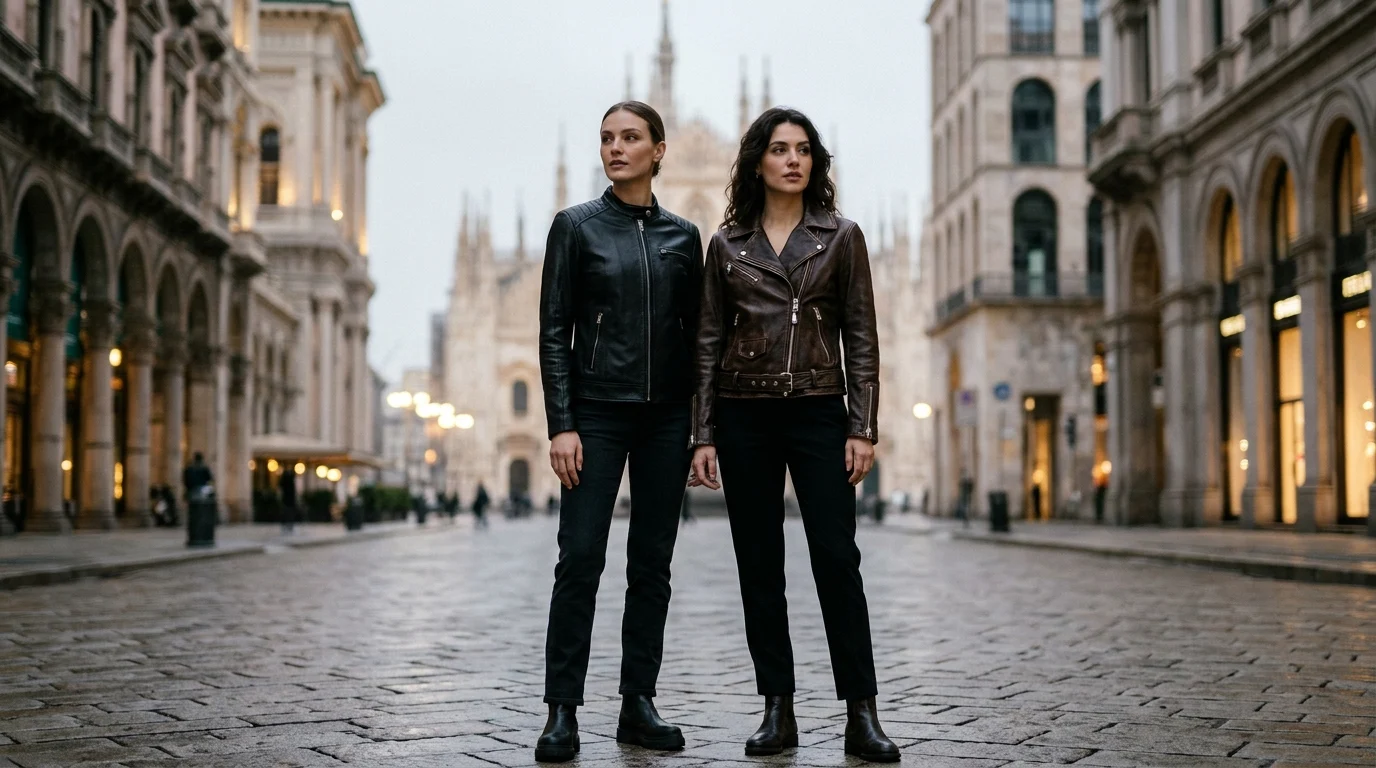
Racing Jacket vs Biker Jacket Which Outerwear Should You Buy
Compare racing jackets versus biker jackets. Discover collar differences, asymmetrical zips, leather durability, styling formulas, and artisan buying value.
Key Takeaways
- Collar Architecture: Racing jackets feature an aerodynamic snap-tab mandarin collar, whereas classic biker jackets utilize wide notched lapels that snap flat against the chest.
- Closure Orientation: A racing jacket secures with a symmetrical center front zipper, while a biker jacket features an asymmetrical diagonal zipper with overlapping wind flaps.
- Silhouette and Aesthetic: Racing jackets provide a minimalist, streamlined athletic profile suited for smart casual dressing, while biker jackets project bold, rebellious rock-and-roll attitude.
- Material Durability: Full-grain 1.1-1.4mm cowhide provides heavy-duty road and wind abrasion defense, while 0.9-1.2mm lambskin offers lightweight, supple agility for daily streetwear.
- Tailoring Value: Handcrafted made-to-order leather construction guarantees exact chest ease, bicep circumference, and sleeve lengths without high-street fashion markups.
Deciding between a leather racing jacket and a classic biker jacket represents one of the most iconic crossroads in menswear and womenswear outerwear. Both garments share deep historical roots within twentieth-century motorcycle culture, yet each silhouette evolved to serve distinctly different functional demands and sartorial aesthetics. As leather trends in 2026 embrace both high-octane motorsport streetwear and timeless rock-inspired tailoring, outerwear buyers frequently debate which cut best complements their personal wardrobe, body proportions, and lifestyle. Understanding the architectural differences in collars, zipper alignments, leather weights, and styling versatility ensures you invest in the perfect leather jacket for years of wear.
What Is the Difference Between a Racing Jacket and a Biker Jacket?
The primary difference between a racing jacket and a biker jacket lies in collar geometry, zipper placement, and hardware complexity. A racing jacket features a minimalist mandarin band collar with a center front zipper and clean panels, whereas a biker jacket features wide notched lapels, an asymmetrical diagonal zipper, and metallic waist hardware.
The racing jacket, often categorized as a café racer or sport moto jacket, originated in post-World War II Britain among young motorcyclists who raced stripped-down bikes between transport cafés. These riders required an aerodynamic, unencumbered leather garment that eliminated excess wind flap at high speeds. Consequently, designers removed bulky collars, chest flaps, and protruding belt buckles, producing a streamlined jacket with a snap-tab throat latch and vertical front zipper that hugs the torso cleanly.
The classic biker jacket, immortalized as the asymmetrical double-rider, traces its lineage to Irving Schott’s 1928 creation designed specifically for cross-country cruiser motorcyclists. This design prioritized maximum weather protection over minimalist aerodynamics. The diagonal front zipper allows the left and right front panels to overlap across the rider’s torso, creating a two-fold barrier of thick hide that blocks freezing highway winds. Broad lapels fold open during warm weather rides or snap shut up to the neck when temperatures plunge, accented by utility coin pockets, shoulder epaulets, and heavy buckled waist belts. When exploring our dedicated collection of racing jackets alongside rugged mens biker moto jackets, these structural differences immediately define how each piece drapes on the body.
How Did Racing and Biker Jackets Evolve Through Motorsport History?
Motorcycle racing jackets evolved from British café racer culture in the nineteen-fifties, while biker jackets originated from American motorcycle touring in the late nineteen-twenties. The British rockers demanded lightweight, stripped-down speed gear to race between London transport cafés, while American riders required heavy-duty weather armor to endure cross-country road trips.
In nineteen-twenties America, motorcyclists rode exposed to harsh gravel roads, engine grease, and freezing crosswinds without windshields. Irving Schott recognized this vulnerability and designed the famous Perfecto jacket for a Long Island motorcycle distributor, naming it after his favorite cigar. The asymmetrical front zipper represented a breakthrough in apparel engineering because it prevented wind from penetrating the center seam when riders leaned forward. The diagonal overlap sealed out rain and dirt, while the integrated kidney belt supported rider posture during marathon highway journeys. Hollywood adoption by Marlon Brando in The Wild One permanently cemented the double-rider as the uniform of rebellion.
Across the Atlantic during the nineteen-fifties, British youth culture took a radically different approach to motorcycling. The ton-up boys modified single-cylinder British motorcycles, stripping away fenders, heavy seats, and fairings to achieve the elusive one-hundred-mile-per-hour mark between the Ace Café and the Busy Bee. They rejected the heavy, belt-laden American biker jackets because bulky buckles scratched aluminum fuel tanks and broad lapels fluttered violently at high velocity. British leather artisans developed the café racer: a pure, unembellished leather skin featuring a tight mandarin snap collar, a smooth center zip, and zippered forearm gussets. This functional split created the two distinct design philosophies that define modern leather outerwear today.
Which Jacket Provides Better Wind Protection and Riding Utility?
A traditional double-rider biker jacket provides superior chest wind protection due to its overlapping front leather panels, whereas a racing jacket delivers better aerodynamic stability and neck freedom. The asymmetrical construction of a biker jacket seals the chest cavity against driving wind shear, while the low-profile band collar of a racing jacket prevents irritating collar slap against your helmet.
Functional wind deflection depends on how air flows over the jacket's exterior surface at velocity. On an asymmetrical biker jacket, the overlapping front leather shields your sternum and chest organs from freezing wind chill. However, at sustained highway speeds, the wide lapels can catch turbulence if they are not firmly snapped flat to the chest studs. The heavy waist belt and lower metal buckles can also scratch motorcycle fuel tanks if the rider leans forward aggressively over clip-on handlebars.
Conversely, a racing jacket shines when the wearer adopts a forward-leaning, athletic riding posture. The clean front surface offers zero protruding hardware to buff against motorcycle paintwork. The low stand-up collar eliminates neck chafing when checking blind spots or tucking behind a sportbike windscreen. Many modern motorsport jackets incorporate pre-curved sleeves and accordion leather stretch panels behind the shoulders to facilitate unrestricted arm reach. Riders looking for specialized motorcycle apparel should review our comparative breakdown on motorcycle riding jackets vs fashion biker jackets to understand CE armor integration and abrasion resistance ratings.
Outerwear Silhouette & Architecture Matrix
| Architectural Feature | Leather Racing Jacket | Classic Double-Rider Biker Jacket |
|---|---|---|
| Collar Construction | Mandarin stand-up band with snap tab | Wide notched lapels with press studs |
| Zipper Orientation | Symmetrical centered vertical zip | Asymmetrical diagonal off-center zip |
| Front Wind Barrier | Single-layer hide with interior storm placket | Double-layer overlapping hide panels |
| Hardware Profile | Minimalist, recessed brass zippers | Heavy metallic zips, snaps, and waist belt |
| Torso Silhouette | Athletic, straight, slim-tapered drape | Structured, slightly cropped, V-tapered chest |
| Sleeve Detailing | Gusseted zip cuffs, optional racing stripes | Bi-swing shoulder gussets, zippered wrists |
| Everyday Formality | Smart casual, minimalist, versatile | Bold streetwear, edgy rock-and-roll |
| Price Range USD | $249 - $399 | $249 - $399 |
How Do Collar and Zipper Placements Change Everyday Styling?
Collar and zipper placements completely dictate the visual formality and layering ease of each jacket in daily civilian outfits. The centered vertical zipper of a racing jacket creates an elongated, slimming vertical line that pairs naturally with tailored trousers and fine knitwear, while the asymmetrical zip of a biker jacket creates a dynamic, rugged statement piece.
A racing jacket operates as the ultimate chameleon of leather outerwear. When fully zipped, the clean band collar frames the jawline without visual clutter, functioning much like a sleek bomber or minimalist track jacket. When worn unzipped, the front panels fall in straight, parallel vertical lines that reveal your base layers cleanly. This streamlined geometry allows wearers to pair a café racer with a crisp Oxford cotton button-down shirt, a cashmere crewneck, or tailored wool slacks without feeling over-accessorized in professional work environments.
In contrast, a biker jacket commands immediate visual dominance. The asymmetrical zipper and folded lapels draw the eye diagonally across the upper torso, creating the illusion of broader shoulders and a narrower waistline. When left unzipped, the heavy lapels fold back naturally against the chest, creating dramatic layered lapel wings that frame casual graphic t-shirts or heavyweight hooded sweatshirts. However, this expansive hardware makes the biker jacket inherently informal. Pairing a heavily studded double-rider with tailored corporate suiting creates a stark aesthetic clash that rarely works outside creative fashion industries. Women styling dynamic silhouettes can explore our dedicated womens biker jackets and racing jackets womens biker jackets to discover tailored proportions that balance rugged hardware with feminine lines.
Material & Durability Comparison Table
| Leather Hide Type | Hide Thickness | Puncture & Tear Resistance | Natural Suppleness | Daily Abrasion Life | Price Range USD |
|---|---|---|---|---|---|
| Full-Grain Cowhide | 1.1 - 1.4 mm | Maximum Heavy Duty | Structured, Breaks In With Wear | 20+ Years Rugged Wear | $249 - $399 |
| Full-Grain Lambskin | 0.9 - 1.2 mm | High Tensile Strength | Buttery Soft Immediate Drape | 10-15 Years Daily Wear | $249 - $399 |
| Full-Grain Goatskin | 0.8 - 1.0 mm | Superior Tear Resistance | Pliable Pebbled Grain | 15-20 Years Active Wear | $249 - $399 |
| Genuine Standard Leather | 1.1 - 1.4 mm | Dependable Everyday Shield | Moderate Initial Firmness | 8-12 Years Standard Wear | $149 - $249 |
Reviewing our expert guide on how to spot real vs fake leather details how authentic drum-dyed full-grain hides withstand surface friction compared to synthetic polyurethane alternatives that peel and crack.
Which Leather Hide and Thickness Is Best for Racing vs Biker Jackets?
Full-grain cowhide measuring 1.1 to 1.4 millimeters provides the ideal durability and structure for rugged biker jackets, while 0.9 to 1.2 millimeter lambskin delivers the flexible comfort favored in casual racing jackets. Choosing between cowhide, lambskin, and goatskin depends on whether you seek heavy-duty abrasion defense or effortless lightweight mobility.
Cowhide remains the undisputed king of protective leather outerwear. At 1.1 to 1.4 millimeters thick, full-grain cowhide possesses dense collagen fiber bundles that resist high-friction wear, sharp branches, and abrasive surfaces. A classic biker jacket cut from robust cowhide feels like a suit of armor; it hangs with authoritative drape and creases permanently around your elbow breaks and waistline as it molds to your frame. While cowhide requires a break-in period of several weeks, the resulting heirloom patina rewards the owner with unmatched character.
Lambskin measuring 0.9 to 1.2 millimeters caters to individuals who prioritize immediate out-of-the-box comfort, silky surface texture, and lightweight city mobility. A lambskin racing jacket wraps the shoulders softly, permitting complete range of motion without the stiffness associated with heavier steerhides. For riders and motorists seeking athletic performance, goatskin measuring 0.8 to 1.0 millimeters offers a brilliant compromise. Goatskin contains natural lanolin that keeps the hide pliable while offering higher tensile strength per millimeter of thickness than cowhide, which is why military aviator jackets and motorsport racing suits frequently utilize goat leather.
How Should a Racing Jacket Fit Compared to a Biker Jacket?
A racing jacket should fit close to the torso with 1.0 to 1.5 inches of chest ease, while a biker jacket accommodates 1.5 to 2.5 inches of ease for layering. Because racing jackets emphasize sleek aerodynamics, excess sleeve fabric or torso fullness detracts from the garment’s intended athletic silhouette.
Fit geometry differs fundamentally between the two silhouettes:
- Shoulder Seam Alignment: On a racing jacket, the shoulder seam must terminate precisely at the tip of your acromion shoulder bone. If the seam drops down the upper arm, the sleeve loses its sharp cylindrical shape. On a biker jacket, a quarter-inch drop is acceptable because the wide lapels and epaulets visually ground a slightly broader shoulder profile.
- Armhole and Bicep Circumference: Racing jackets incorporate high-cut armholes designed to keep the jacket body anchored to your ribs when you lift or extend your arms. Biker jackets often incorporate bi-swing pleated back shoulders that expand outward when reaching forward, providing mechanical ease without enlarging the chest circumference.
- Hemline Termination: Both jackets are traditionally cropped to sit at or slightly below your belt line (twenty-four to twenty-six inches in back length). This high hemline prevents the jacket from bunching upward across your stomach when sitting in an automobile or riding a motorcycle. If you have a longer torso, bespoke custom sizing ensures the hem hits exactly where desired.
Before finalizing your sizing choice, consult our dedicated Lux Wearz size and fit guide to take accurate anatomical measurements.
What Hardware Details Distinguish Master Artisan Moto Jackets?
Genuine YKK antique brass zippers, heavy-gauge snap closures, and reinforced pocket welts distinguish master artisan moto jackets from flimsy mass-produced imitations. High-stress closure points require solid brass teeth and reinforced leather backing plackets that prevent zipper separation under heavy tension.
Examine the hardware and closure points before investing in either silhouette:
- Zippers: Quality racing and biker jackets utilize genuine YKK #8 or #10 antique brass or oxidized nickel zippers. Main front closures must feature heavy-duty pull tabs that operate smoothly without catching on the interior lining. Sleeve cuffs should feature zippered gussets that open to slide over heavy gloves and zip shut to seal the wrists against wind. Commuters should explore our technical comparison of leather racing gloves vs street gloves to coordinate wrist closures with protective handwear.
- Snaps and Buckles: Collar snap tabs and lapel studs should feature dual-prong brass construction that snaps with a reassuring, positive click. Biker jacket waist buckles should be cast from solid metal rather than hollow pot metal that snaps under pressure.
- Seams and Thread: Look for high-tensile bonded nylon or polyester thread sewn at seven to eight stitches per inch. Critical impact zones—such as shoulders, elbows, and side seams—should feature double-needle or flat-felled stitching to eliminate raw leather edges and prevent blowouts.
- Lining Material: A smooth, breathable polyester satin lining ensures that the jacket glides effortlessly over knitwear, flannel shirts, and cotton tees without generating static friction or clinging to base garments.
Motorcycle enthusiasts looking for track-ready protection can browse our full range of motorcycle riding gear and high-performance motogp style jackets engineered with reinforced seam zones.
How to Choose Between Racing and Biker Jackets for Your Body Type
Selecting between a racing jacket and a biker jacket depends heavily on your shoulder width, torso length, and overall body proportions. Understanding how vertical versus diagonal zip lines interact with your physique ensures you select a jacket that accentuates your natural frame.
Consider how each silhouette balances different physical builds:
- Broad Shoulders and Muscular Chests: Athletic builds look exceptionally sharp in minimalist racing jackets. The vertical center zipper and band collar emphasize muscular upper-body taper without adding redundant bulk. Conversely, an overly studded biker jacket with thick shoulder epaulets can make very broad shoulders appear boxy and disproportionate.
- Slender and Narrow Frames: Individuals with lean or narrow frames benefit immensely from the structural architecture of a double-rider biker jacket. The wide, folded lapels and horizontal waist belt create visual breadth across the chest, adding masculine presence and structural weight to the upper body.
- Shorter Torso and Petite Heights: A café racer jacket provides an unbroken vertical line from neck to waist, visually lengthening the torso and making the wearer appear taller. Biker jackets with wide belts and dropped flap pockets can cut the body horizontally, visually shortening the frame unless paired with high-waisted trousers.
- Fuller Midsections: A racing jacket cut with slight waist taper and dual side-adjustment tabs allows wearers to relax the lower hem while keeping the chest streamlined. The centered zipper draws the eye up and down, minimizing horizontal breadth across the stomach.
4 Complete Outfit Formulas for Racing and Biker Jackets
Styling a racing or biker jacket effectively requires understanding whether your outfit calls for sleek modern minimalism or rugged, textured attitude. Choosing the right complementary trousers, base layers, and footwear transforms either jacket into an everyday wardrobe powerhouse.
Here are four field-tested outfit formulas for men and women:
1. The Minimalist Urban Racer (Smart Casual)
Pair a sleek black or chocolate brown lambskin racing jacket with a charcoal fine-knit merino wool rollneck sweater, tailored slim-straight grey wool trousers, and polished black leather Chelsea boots. The clean band collar and vertical center zip keep the look polished and understated, making this combination ideal for upscale dinner dates, office presentations, and gallery visits.
2. The Classic Rebel Biker (Downtown Streetwear)
Layer a heavyweight full-grain black cowhide biker jacket over a vintage washed-grey graphic t-shirt, distressed black slim-fit denim, and heavy-duty Goodyear-welted leather combat boots. Leave the jacket unzipped to let the wide lapels and silver hardware frame the chest, projecting effortless downtown edge. Men looking for everyday style staples can explore our broader collection of mens leather jackets.
3. The High-Octane Moto Track Look (Contemporary Athleisure)
Combine a racing jacket featuring contrast leather arm stripes with a crisp white heavyweight cotton tee, tapered black technical cargo pants, and retro low-top leather sneakers. Complete the look with protective leather racing gloves for weekend morning rides or spirited canyon drives.
4. The Feminine Edge Biker Ensemble
Drape a tailored black or oxblood leather biker jacket over a cream ribbed knit midi dress and sleek pointed-toe ankle boots. The masculine structural hardware of the double-rider contrasts beautifully against the soft, fluid knitwear, creating a balanced silhouette that flatters the waist and lengthens the legs. Women can discover diverse seasonal cuts across our curated womens leather jackets.
How to Clean and Maintain Your Moto Leather Jacket for Decades of Wear
Maintaining a racing or biker jacket requires regular wiping with a damp microfiber cloth, prompt drying away from direct heat sources, and conditioning every six months. Regular artisan care preserves the hide's natural oils and prevents the collar, elbows, and zipper tracks from drying out or stiffening.
Follow these proven leather maintenance rules to safeguard your outerwear investment:
- Surface Cleaning: After riding or commuting through dusty environments, wipe the exterior hide with a soft, clean microfiber cloth dampened with distilled water. Remove bug splatters or road grime promptly before organic acids penetrate the grain.
- Conditioning: Apply a small amount of premium, wax-free leather conditioner to a clean applicator sponge twice per year. Work the conditioner into high-movement zones including elbow creases, shoulder caps, and the collar band. Allow the oils to penetrate for twenty-four hours before gently buffing away excess residue.
- Zipper Maintenance: If zipper sliders feel stiff, rub a small piece of natural beeswax or paraffin along the metal teeth. Zip and unzip the closure several times to distribute the wax, ensuring smooth, effortless glide without snagging.
- Storage: Always hang your jacket on a wide, contoured wooden hanger that supports the full width of the shoulder yoke. Never use thin wire hangers that poke unsightly bumps into the leather. Store in a cool, dry, well-ventilated closet away from dampness.
Consult our detailed leather care guide for comprehensive cleaning protocols and stain-removal advice from master tanners.
Why Custom Bespoke Sizing Delivers the Ultimate Moto Jacket Experience
Choosing made-to-order custom tailoring guarantees that your racing or biker jacket matches your exact shoulder width, arm length, and chest taper without the fit compromises of off-the-rack sizing. Custom crafting ensures that sleeves do not bunch over your wrists and chest panels do not pull tightly across your ribs.
Standard retail sizing assumes an average proportional ratio that rarely matches athletic or distinctive body frames. Riders with broad shoulders often find standard sizes too loose around the waist, while taller individuals struggle with cropped hemlines that ride up when seated. Lux Wearz eliminates these issues through personalized custom tailoring, where our artisan tailors draft custom paper patterns based on your exact body dimensions.
Through our bespoke service, you can also select your preferred leather hide, lining weight, hardware finish, and specialized pocket placements. Whether you desire a minimalist racing jacket in buttery lambskin or a heavy-duty cowhide double-rider built for highway journeys, our artisans build your heirloom piece to perfection. Explore our custom made-to-order jackets to begin your bespoke design journey.
Looking for this trending silhouette? Explore our complete collection of handcrafted leather jackets with complimentary shipping across the USA. If you have questions regarding leather weights or fit specifications, consult our frequently asked questions for comprehensive ordering details.
Explore The Full 2026 Leather Outerwear Collection
Vegetable-tanned full-grain cowhide, buttery New Zealand lambskin, and heritage Melton wool. Free express delivery across the USA with 30-day hassle-free returns.