
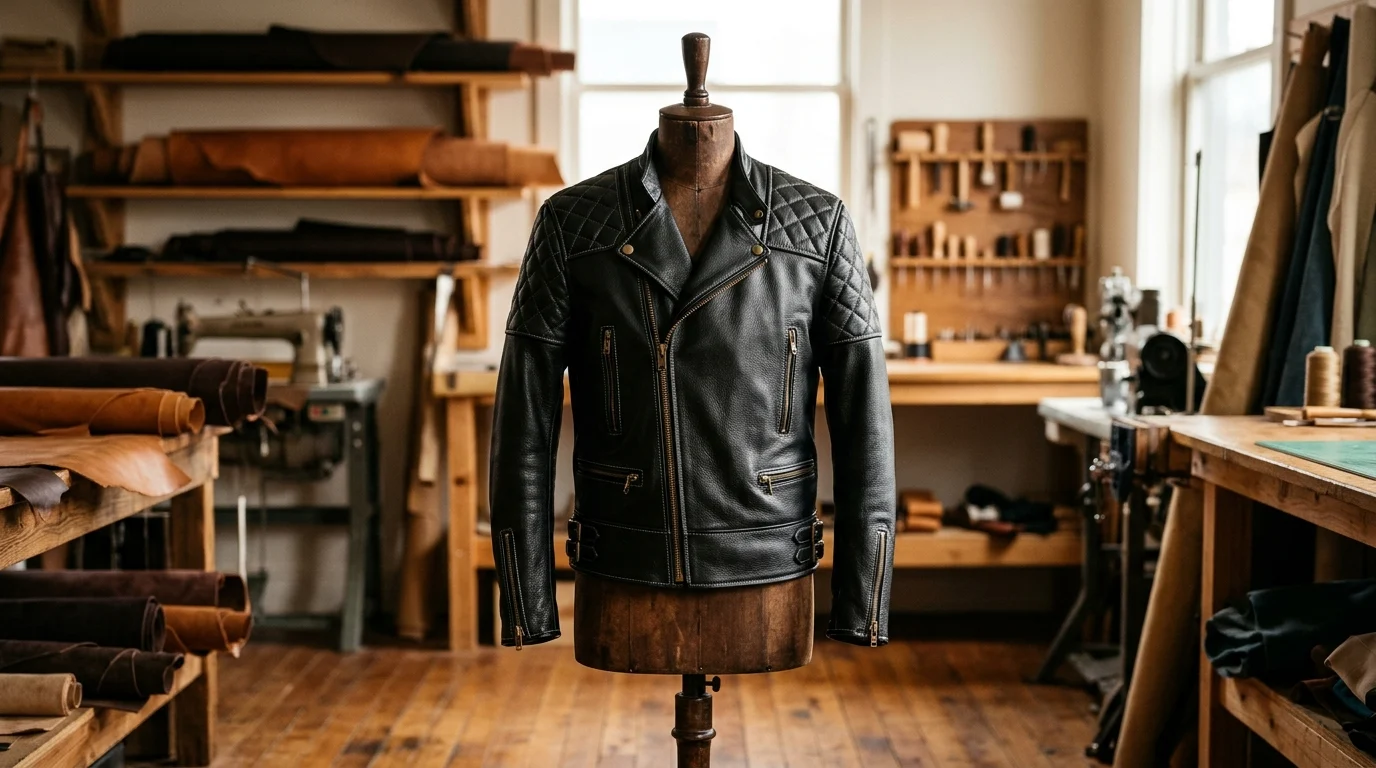
Pelle Pelle Leather Jackets: Archival Silhouettes & Sizing Guide [2026]
Explore archival Pelle Pelle leather jackets silhouettes, quilted craftsmanship, sizing geometry, and custom bespoke alternatives in our complete 2026 guide.
Pelle Pelle Leather Jackets: Archival Silhouettes & Sizing Guide [2026]
Key Takeaways
- Silhouette Heritage & Cut Proportions: Archival Pelle Pelle jackets are engineered with distinct relaxed-drop shoulder geometry, oversized chest allowances (+4 to +6 inches over true chest), and cropped elasticated waistbands characteristic of late 1980s and 1990s urban outerwear.
- Intricate Quilted Engineering: Authentic high-loft quilted panels demand dense foam backing and bonded nylon v69 or v92 thread tensioned at 8 to 10 stitches per inch to resist tensile puckering across joint contours.
- Hide Metallurgy & Temper: Original collector pieces utilized drum-dyed, heavyweight top-grain or full-grain cowhide (1.2mm to 1.4mm) with high natural oil content, contrasting with lighter commercial lambskins commonly seen in fast-fashion reproductions.
- Pre-Owned Vulnerabilities: Secondhand vintage garments frequently suffer from concealed polyurethane foam rot, hardened shoulder leather from improper wire hanger storage, and thread rot along lower sleeve quilting seams.
- Bespoke Artisan Alternative: Ordering a custom-tailored made-to-measure piece from an independent atelier like Lux Wearz guarantees uncompromised virgin full-grain hides, anatomical pattern drafting, and modern hardware longevity without vintage decay risks.
Artisan Independence & Trademark Notice: Lux Wearz is an independent bespoke leathercraft atelier. All brand names, logos, and trademarks mentioned in this article (including Pelle Pelle® and related trademarks) belong exclusively to their respective trademark holders. Lux Wearz is not an authorized distributor, licensee, or affiliated partner of these brands. All brand references and historical retrospectives are made strictly for educational, comparative, and sizing review purposes under Fair Use. Lux Wearz specializes in custom-tailored, heirloom-grade genuine leather outerwear handcrafted individually in our private workshop.
How Does Pelle Pelle Leather Jacket Sizing and Quilted Craftsmanship Compare to Modern Outerwear?
Pelle Pelle leather jackets feature an archival oversized boxy silhouette engineered with a +4 to +6 inch chest ease, dropped shoulder seams, and a tapered ribbed waistband, diverging significantly from modern slim-fit motorcycle jackets. Their distinctive multi-density diamond quilting requires 1.2mm drum-dyed full-grain cowhide stitched with bonded nylon thread to preserve dimensional loft without seam stretching.
For modern collectors and outerwear enthusiasts, understanding this archival architecture is essential when navigating vintage markets or commissioning a bespoke modern alternative. In the contemporary luxury menswear ecosystem, standard sizing charts rarely capture the three-dimensional volume, collar stance, and heavy hide drape of these iconic urban garments. As we analyze the metallurgical properties of heirloom hides and the engineering precision behind complex quilted outerwear, this comprehensive guide provides the historical, structural, and practical knowledge required to evaluate, fit, and preserve archival leather masterpieces.
Historical Heritage & The Evolution of Urban Leathercraft
The story of statement leather outerwear in late twentieth-century fashion is inextricably linked to the birth of luxury streetwear in Detroit and New York. Founded in 1978 by designer Marc Buchanan, the label emerged from a vision to transform functional leather jackets into canvas-like tapestries of high-density embroidery, sculpted applique, and intricate quilted leather geometry. During an era when traditional luxury leather was dominated by conservative European blousons, minimalist flight bombers, and rigid equestrian coats, this urban leather movement introduced bold multi-panel compositions that resonated deeply with the burgeoning hip-hop culture, athletic elites, and discerning fashion pioneers.
Throughout the 1980s and 1990s, the brand established a visual vocabulary that defined a generation. Outerwear was no longer merely a shield against inclement winter weather; it was an unequivocal declaration of cultural prestige, craftsmanship, and economic triumph. Iconic recording artists, championship athletes, and neighborhood trendsetters adopted these heavy-leather silhouettes, turning stadium jackets and plush-embroidered bombers into collector artifacts. The visual signature relied heavily on bold color blocking, hand-set crystal studs, plush chenille patches, and monumental embossed leather crests that required hundreds of thousands of precision embroidery stitches directly through virgin cowhide hides.
The cultural impact extended far beyond aesthetics. Crafting an intricately quilted leather bomber demanded an entirely new tier of manufacturing expertise. Traditional tailor shops struggled to sew complex geometric shapes through dual layers of dense leather separated by high-resilience foam batting without tearing the leather grain or snapping heavy machine needles. The manufacturing solutions developed during this golden era—including customized walking-foot industrial sewing machines, Teflon-coated needles, and heat-stabilized bonded threads—fundamentally modernized heavy-garment leather manufacturing globally.
As the brand evolved across four decades, several distinct aesthetic eras emerged:
- The Pioneer Era (1978–1987): Focused primarily on tailored leather varsity jackets, two-tone leather blousons, and subtle shoulder pleating with traditional brass YKK zippers.
- The Golden Era of Embellishment (1988–1999): Characterized by explosive multi-color leather marquetry, plush chenille shoulder crests, expansive cityscapes, and high-density diamond quilting across back yokes and sleeves.
- The Millennium Luxury Era (2000–2010): Refined cuts incorporating exotic embossed leather finishes (croc and ostrich prints), oversized collar lapels, heavy fur trims, and sophisticated collegiate colorways.
- The Archival Retrospective Era (2020–Present): A powerful resurgence driven by vintage connoisseurs, archive fashion curators, and bespoke ateliers recreating the weight and proportions of late-century leather artistry for modern wardrobes.
Understanding this trajectory reveals why these garments maintain such enduring allure. They represent a rare moment in fashion history where unapologetic artistic grandeur, heavyweight industrial leathercraft, and street-level authenticity converged into an unmistakable garment silhouette.
The Anatomy of Quilted Craftsmanship: Leather Engineering, Stitch Tension, and Foam Loft
To appreciate the construction complexity of a premier quilted leather jacket, one must examine the internal layers that give the garment its structural presence. Unlike simple unlined leather shells or flat-sewn motorcycle jackets, a high-loft quilted panel is a multi-component composite engineered to resist mechanical deformation, shear stress, and thermal contraction over decades of wear.
The Multi-Layer Cross-Section Architecture
A true artisan quilted leather panel consists of four distinct internal layers assembled in strict sequence:
- The Outer Leather Face (1.1mm to 1.3mm Full-Grain Cowhide): The exterior hide provides abrasion resistance, wind impermeability, and the structural grain that defines the tactile finish. It must possess balanced temper—neither excessively stiff (which causes surface cracking at stitch points) nor overly pliable (which causes sagging around quilt channels).
- The Thermal & Dimensional Interlining (High-Resilience Closed-Cell or Open-Cell Foam): Ranging between 4mm and 8mm in uncompressed thickness, this substrate creates the iconic pillow effect. Artisan workshops utilize high-density polyurethane or wool felt batting that rebounds after compression rather than flattening permanently under elbow flexion.
- The Scrim Backing Fabric (Non-Woven Spunbond Polyester or Cotton Muslin): Positioned immediately beneath the foam layer, this stabilization scrim prevents sewing machine feed dogs from dragging or shredding the soft foam while stabilizing the stitch line against tension deformation.
- The Interior Lining Textile (Heavyweight Poly-Satin, Bemberg Cupro, or Quilted Taffeta): The final visible layer against the wearer's clothing, engineered for friction-free movement, moisture absorption, and thermal retention.
Stitch Geometry and Tensile Physics
The longevity of quilted leather is determined primarily by stitch tension and stitch density. In leather tailoring, every puncture created by a sewing needle is permanent; leather does not self-heal like woven fabrics. If stitches are spaced too closely (e.g., exceeding 12 stitches per inch), the needle punctures effectively perforate the hide like a postage stamp, creating a severe failure line that will tear under torsional stress when the wearer reaches forward.
Conversely, if stitch density is too loose (fewer than 6 stitches per inch), the quilt panels lose their crisp definition, allowing the underlying foam to shift, bunch, and create unsightly hollow pockets. The golden standard in high-end leather ateliers is precisely 8 to 10 stitches per inch (SPI) executed with a heavy-duty needle (System 134-35 LR or S point, size 120/19 to 140/22) featuring a specialized cutting blade designed to slice through dense hide fibers at a 45-degree angle without splitting the surrounding epidermis.
Thread selection is equally critical. Low-grade cotton or spun-polyester threads deteriorate within 5 to 7 years due to natural leather tanning acids and atmospheric moisture. Bespoke leathercraft ateliers exclusively employ bonded continuous-filament nylon (v69 or v92) or high-tensile lubricated polyester thread (such as Coats Dabond or Gütermann Tera). Bonded nylon threads offer remarkable breaking strengths (11 to 14 lbs per single strand) and superior elasticity (18% to 22% elongation at break), allowing the stitches to flex dynamically as the wearer flexes their arms without snapping under peak strain.
Archival Silhouette and Fit Architecture Matrix
The following matrix contrasts the primary archival silhouette models engineered within urban leathercraft traditions, providing sizing offsets, body profile recommendations, and hide temper specifications:
| Silhouette Model | Cut & Fit Type | Shoulder / Chest Offset | Ideal Body Profile | Leather Weight & Temper |
|---|---|---|---|---|
| NYC Boro Heavyweight Bomber | Oversized Boxy Cut | +5.5 inches chest ease, 2.0 inch shoulder drop | Broad shoulders, muscular or athletic builds | 1.3mm Full-Grain Cowhide; Firm Temper |
| Detroit Quilted Flight Jacket | Classic Raglan / Semi-Boxy | +4.0 inches chest ease, structured armholes | Average to stocky frames; cold-weather layering | 1.2mm Drum-Dyed Cowhide; Semi-Firm Temper |
| Picasso Plush Statement Cut | Voluminous Draped Bomber | +6.0 inches chest ease, deep armscye | Tall or broad frames; statement streetwear styling | 1.1mm Naked Milled Lambskin/Cowhide; Soft Milled Temper |
| America Heritage Varsity | Structured Collegiate Hybrid | +3.5 inches chest ease, tailored waist rib | Athletic to slender profiles seeking clean lines | 1.4mm Heavy Steerhide Sleeves, Wool Body; Rigid Temper |
| 1978 Archival Anniversary Blouson | Vintage Relaxed Blouson | +4.5 inches chest ease, extended sleeve outseam | Universal builds; versatile all-season wear | 1.2mm Oil-Pullup Cowhide; Medium-Soft Temper |
| Bespoke Atelier Made-to-Measure | Anatomically Drafted Custom | Calibrated precisely to client posture & ease | Custom mapped to individual chest, bicep & torso | 1.2mm to 1.4mm Virgin Cowhide or Lambskin; Client Choice |
Notice the consistent trend across authentic heritage models: chest allowances routinely exceed modern off-the-rack outerwear standards by 3 to 6 full inches. For example, a modern US Men's Size Large typically measures 42 to 44 inches across the exterior chest circumference. In contrast, an archival vintage Large will frequently measure 48 to 50 inches around the pit-to-pit circumference. This dramatic ease was intentionally engineered to accommodate heavy fleece hoodies, ribbed knit sweaters, and the broad-shouldered drape celebrated in late-twentieth-century urban fashion. When ordering contemporary custom outerwear from the Lux Wearz Size Guide, determining your preferred chest ease is the single most important calculation in achieving your desired silhouette.
Hide Metallurgy and Material Integrity: Full-Grain Cowhide vs. Commercial Lambskin
In the vocabulary of fine leathercraft, the term "hide metallurgy" describes the biomechanical and physical characteristics of animal skins transformed through tanning chemistry. Understanding the fundamental distinctions between cowhide, steerhide, lambskin, and calfskin is vital when evaluating vintage outerwear or selecting materials for a bespoke commission.
Full-Grain Cowhide (The Gold Standard of Durability)
Full-grain leather represents the outermost layer of the hide, directly beneath the hair. Because the epidermis remains completely intact and unbuffed, it retains the natural, tightly packed collagen fiber bundles that provide maximum structural density.
- Tensile & Tear Resistance: Full-grain cowhide yields a tear resistance exceeding 120 N/mm, making it virtually impervious to accidental snags, abrasions, and seam slippage.
- Grain Pattern & Breathability: Natural grain pores remain open, permitting micro-transpiration that prevents interior moisture condensation while developing a lustrous, oil-rich patina over years of wear.
- Weight Specifications: Typically measured in ounces per square foot or millimeters, premium heavy jackets utilize 2.5 to 3.25 oz (1.0mm to 1.3mm) cowhide, providing a reassuring heft of 5 to 7 pounds for a completed garment.
Lambskin and Nappa (Tactile Suppleness with Structural Compromise)
Lambskin is derived from younger sheep and features a significantly finer, more delicate fiber weave. While it offers unmatched buttery softness and an immediate broken-in drape right out of the box, it lacks the tensile density of bovine leather:
- Puncture Sensitivity: Lambskin can tear under moderate localized pressure (tear resistance averaging 35 to 50 N/mm). Sharp corners, chain jewelry, or abrasive denim seams can permanently score the hide.
- Quilting Deformation: Over extended periods, high-loft quilting in lambskin can sag or stretch permanently around flex points (such as elbows and back shoulders), losing the razor-sharp geometric definition inherent to cowhide.
- Ideal Application: Lambskin excels in formal urban blousons, lightweight spring outerwear, and luxury jackets prioritizing featherweight comfort over rugged outdoor longevity.
Tanning Formulations: Chrome vs. Vegetable Re-Tan
The chemical formulation used during hide tanning dictates how the leather responds to humidity, heat, and age:
- Full Chrome Tanning: Utilizes basic chromium sulfate salts to rapidly stabilize collagen fibers. Chrome-tanned leather is supple, thermally stable, resistant to water spotting, and retains vibrant dyes (such as electric blue, crimson red, and bright orange) across decades without color fading.
- Vegetable Re-Tanning (Semi-Veg Finish): Combines an initial chromium bath with a secondary retannage using organic bark tannins (mimosa, quebracho, or chestnut). This hybrid approach creates the ideal leather for statement outerwear: it delivers the soft flexibility of chrome tanning while imparting the dimensional firmness, burnishing capability, and rich aromatic scent of vegetable-tanned hides.
Component, Leather Grade, and Hardware Durability Matrix
To systematically analyze the structural longevity of heavy leather outerwear, the matrix below breaks down every key component, from shell hides to lining textiles and metallurgical fasteners:
| Component / Subsystem | Leather Grade & Tannage | Thickness / Spec | Weather Resistance | Expected Longevity | Maintenance Protocols |
|---|---|---|---|---|---|
| Primary Exterior Shell | Full-Grain Drum-Dyed Cowhide (Semi-Veg) | 1.2mm – 1.4mm | High (water-repellent with wax emulsion finish) | 35+ Years (indefinite with proper care) | Bi-annual conditioning with pH-neutral leather cream; avoid silicones |
| Quilted Shoulder & Back Panels | Full-Grain Cowhide over 6mm High-Density PU Foam | 1.2mm leather + 6mm foam backing | Moderate to High (stitch punctures require conditioning) | 25 to 30 Years (foam longevity dependent on UV/humidity) | Keep away from direct radiator heat; air dry naturally if soaked |
| Rib-Knit Collar, Cuffs & Hem | 100% Heavyweight Worsted Wool or Acrylic-Poly Blend | 2x2 Tubular Double-Knit (650 g/m²) | Moderate (breathable, wind-resistant) | 10 to 15 Years (wool may require de-pilling) | Hand clean with damp sponge; professional wool sweater comb for pilling |
| Main Front Zipper Fastener | Solid Brass / Antiqued Brass Teeth on Poly Tape | #8 or #10 YKK Heavy-Duty Metal Fastener | Exceptional (corrosion-resistant brass metallurgy) | 40+ Years (exceeds lifetime of garment) | Lubricate teeth annually with natural paraffin wax or graphite stick |
| Sleeve Quilt Accent Zippers | Solid Brass / Nickel-Plated Zinc Alloy | #5 YKK / Talon Vintage Spec | High (shielded by leather storm fly) | 25+ Years | Clear debris from slider channel; avoid forcing misaligned sliders |
| Interior Lining Textile | 100% Heavy Poly-Satin or Bemberg Cupro | 120 g/m² Jacquard Weave | Low (moisture-wicking, friction-free) | 12 to 18 Years (subject to underarm friction) | Spot clean interior with mild diluted soap; hang on wide wooden hanger |
| Applique Embroidery Patches | Embroidered Twill & Milled Leather Marquetry | Multi-layer bonded with v69 nylon thread | Moderate (susceptible to snagging if thread degrades) | 20+ Years | Soft horsehair brush cleaning to dislodge dust from embroidery valleys |
This technical breakdown illustrates why hardware and thread specifications are just as crucial as the leather itself. A jacket constructed from the finest virgin cowhide will still fail prematurely if assembled with zinc die-cast zipper sliders or brittle monofilament threads. At Lux Wearz, every custom-crafted jacket utilizes genuine heavy-gauge solid brass YKK zippers, reinforced double-layer storm plackets, and industrial bonded nylon threads to ensure structural harmony across all components.
Vintage Outerwear Inspection Protocol and Common Pre-Owned Flaws
For fashion collectors navigating the pre-owned vintage marketplace, purchasing a thirty-year-old statement leather jacket involves significant financial and structural risks. While high-grade leather can survive over half a century when impeccably preserved, neglected garments frequently hide catastrophic internal damage that cannot be restored through simple surface conditioning.
The Five Critical Inspection Checkpoints
1. Polyurethane Foam Dry-Rot and Internal Crumbling
The single greatest hidden hazard in vintage quilted leather jackets is the spontaneous hydrolysis and oxidation of the internal foam batting. Over 20 to 30 years, standard polyurethane foams break down chemically into an acidic orange powder.
- The Tactile Pinch Test: Pinch a quilted diamond panel firmly between your thumb and index finger, then roll your fingertips together. If the panel feels springy and rebounds immediately, the foam is intact. If you feel a crunching, gritty sensation, or if the panel remains permanently compressed and hollow, the internal foam has disintegrated into dust.
- Restoration Economics: Replacing disintegrated foam inside dozens of individually stitched quilted channels requires unpicking every single decorative seam, scraping out caustic foam residue, inserting new batting, and hand-aligning needle holes. This labor-intensive process routinely costs upwards of $600 to $900 in professional atelier labor, frequently exceeding the garment's market value.
2. Acidic Thread Rot Along Cuff and Shoulder Seams
Vintage garments were frequently exposed to sweat, body oils, and environmental humidity. The salts in human perspiration degrade organic cotton threads over time. Inspect the high-stress armscye seams (the seam joining the sleeve to the torso) and the lower cuff quilt lines. Tug gently on adjacent panels in opposite directions; if you hear faint popping sounds or observe gaps forming between stitch penetrations, the thread has rotted and the seam will split under active wear.
3. Leather Hardening and "Cardboard" Epidermis
When leather is subjected to dry atmospheric conditions or stored in an attic subjected to summer heat waves, the microscopic oils binding the collagen fibers evaporate. The hide undergoes desiccation, causing the fibers to shrink and lock together permanently.
- The Flexibility Test: Flex the sleeve leather 90 degrees. If fine micro-cracks appear along the surface grain, or if the leather feels rigid and stiff like corrugated cardboard, the hide has suffered irreversible collagen desiccation. Surface conditioners cannot re-lubricate deeply bonded dry-fiber clusters, and the leather will crack through its entire thickness when worn.
4. Oxidation and Tooth Separation on Heavy Brass Zippers
Inspect the zipper insertion pin and box at the base of the jacket. Because vintage bombers feature heavy leather shells, wearers frequently pulled the zipper slider forcefully at an angle, fracturing the lower brass stop or tearing the woven polyester zipper tape. If the fabric tape next to the starter pin is frayed or shredded, the entire zipper assembly must be completely excised and replaced.
5. Lingering Musty Odors and Mold Spores
Leather is an organic, porous substrate that absorbs environmental volatile organic compounds. Garments stored in damp basements absorb mold, mildew, and stale tobacco smoke deep into the fibrous corium layer. Ozone treatments and enzymatic sprays can temporarily neutralize surface smells, but as soon as the jacket warms up against your body heat, deep-seated odors will re-emerge. Always verify that a pre-owned garment has been stored in a climate-controlled, smoke-free environment.
If an archival piece fails more than two of these inspection checkpoints, investing in vintage restoration is rarely economical. Discerning collectors increasingly opt to commission a freshly tailored heirloom piece built to their exact measurements, utilizing virgin full-grain hides that offer decades of pristine, trouble-free longevity.
Sizing Architecture and Fit Conversion Blueprint: How to Measure for Vintage and Contemporary Cuts
Achieving an impeccable fit in statement leather outerwear requires mastering the four foundational body measurements and translating them through the lens of archival garment geometry. Standard off-the-rack sizing labels (S, M, L, XL, 2XL, 3XL) vary drastically between eras and manufacturers, making physical tape measurements non-negotiable.
The Four Essential Garment Measurements
To evaluate an existing jacket or commission a custom bespoke piece, obtain a flexible tailor's tape and measure a well-fitting jacket laid flat on a firm table:
- Chest Width (Pit-to-Pit): Measured straight across the garment chest 1 inch below the armpit seams. Double this number for total chest circumference.
- Shoulder Span: Measured straight across the upper back from the apex of the left shoulder seam to the apex of the right shoulder seam.
- Sleeve Length: Measured from the top shoulder seam down the outer edge of the sleeve to the tip of the wrist cuff.
- Back Length: Measured down the center back from the lower collar seam (base of neck) straight down to the bottom of the waistband ribbing.
Deciphering Chest Ease for Urban Silhouettes
The difference between your actual bare-chest circumference and the jacket's exterior chest circumference is known in tailoring as "ease":
- Tailored / Slim Fit (+2.0 to +2.5 inches ease): Hugs the torso closely. Only permits a light t-shirt or dress shirt underneath. Unsuitable for heavy leather bombers or quilted statement jackets.
- Standard Regular Fit (+3.5 to +4.0 inches ease): Balanced everyday silhouette. Accommodates a light sweater without chest binding while maintaining a defined shoulder line.
- Archival Relaxed / Bomber Fit (+5.0 to +6.5 inches ease): The authentic late-80s and 90s urban silhouette. Allows complete freedom of movement, provides dramatic upper-body drape, and comfortably accommodates heavyweight fleece hoodies and oversized knitwear.
When consulting the official Lux Wearz Size Guide, you can cross-reference your exact body measurements against our standardized atelier size patterns or select custom sizing for an individually tailored cut.
Featured Silhouette Retrospective and Curated Collection
To illustrate how these iconic design elements, high-density quilting techniques, and bold color compositions are executed in contemporary craftsmanship, we examine five standout silhouettes currently curated within the Lux Wearz collection. Each piece represents a specific chapter in the evolution of statement leather outerwear, combining archival aesthetic DNA with virgin full-grain leather construction.
1. The Metropolitan Athletic Tribute: Pelle Pelle x FISLL for the City of Knicks Jacket – Black / Orange / Royal
This striking metropolitan design celebrates the energetic sports culture of New York City through a high-contrast tri-tone palette of deep obsidian black, vibrant tangerine orange, and royal athletic blue. Constructed from premium drum-dyed cowhide, the garment features multi-layered leather applique lettering across the chest and back, accented by precision satin-stitched embroidery. The ribbed wool-blend collar, waistband, and cuffs are knitted with high-elasticity elastane cores to ensure they hug the wrists and waist snugly without bagging out over time. It represents the quintessential cross-pollination of professional basketball heritage and luxury urban outerwear.
2. The Wearable Art Masterpiece: Pelle Pelle Picasso Plush
Widely regarded by vintage curators as one of the most daring and collectible artistic expressions in modern outerwear history, the Pelle Pelle Picasso Plush features an avant-garde mosaic of abstract leather panels, hand-cut geometric shapes, and ultra-plush dimensional embroideries. The jacket utilizes exceptionally supple milled leather hides that drape naturally across the shoulders despite the substantial weight of the decorative appliqués. The interior is lined with a high-density thermal jacquard lining that provides exceptional winter insulation while gliding effortlessly over textured knitwear.
3. The Urban Architectural Icon: PELLE PELLE NYC BORO QUILTED JACKET
A masterclass in technical quilted leather construction, the PELLE PELLE NYC BORO QUILTED JACKET pays homage to the five boroughs of New York City. The piece showcases dense diamond quilting across the upper chest, reinforced shoulder yokes, and articulated sleeve ribs. Each quilted cell is backed by resilient closed-cell foam that maintains its three-dimensional relief through years of active movement. Fitted with a heavy-duty antiqued brass front zipper and deep welted fleece-lined handwarmer pockets, this jacket embodies the rugged winter practicality and commanding aesthetic presence demanded by urban streetscapes.
4. The Industrial Heart of Detroit: PELLE PELLE DETROIT QUILTED JACKET
Drawing direct inspiration from the brand's midwestern automotive and industrial roots, the PELLE PELLE DETROIT QUILTED JACKET emphasizes clean structural lines, heavyweight cowhide durability, and precision channel-quilted sleeves. The deep black semi-veg cowhide develops an extraordinary depth of patina with continued wear, highlighting the raised ridges of the quilting. Heavy-gauge metal hardware and reinforced storm plackets shield the wearer against biting winter drafts, making it one of the most functional and durable cold-weather leather garments in the catalog.
5. The Patriotic Statement Bomber: PELLE PELLE AMERICA QUILTED JACKET
Rounding out this retrospective is the legendary PELLE PELLE AMERICA QUILTED JACKET, an audacious emblem of bold 1990s styling. Featuring monumental stars-and-stripes leather marquetry, raised embossed lettering, and dynamic contrast stitching across the back and sleeves, this piece demands attention. The balance between heavy cowhide durability and soft interior padding ensures that the jacket commands physical volume without feeling unwieldy. It serves as an enduring testament to an era when statement leather outerwear was crafted with monumental scale and uncompromising craftsmanship.
The Modern Artisan Alternative: Bespoke Tailoring at the Lux Wearz Atelier
While archival retrospectives celebrate the historic milestones of iconic brands, today's discerning leather outerwear connoisseurs increasingly choose bespoke made-to-measure craftsmanship over searching through degraded vintage secondary markets. The Lux Wearz atelier was founded on a simple, uncompromising philosophy: every jacket should be handcrafted individually from virgin, hand-selected hides, customized to the client's exact anatomical proportions, and built to last a lifetime.
Why Bespoke Outperforms Mass-Market and Pre-Owned Outerwear
1. Flawless Individual Sizing and Ergonomic Calibration
Off-the-rack garments are built around generalized median sizing molds that inevitably compromise on shoulder span, sleeve length, or torso drop. If you have broad shoulders and a narrow waist, standard jackets will either pinch across your deltoids or billow awkwardly around your midsection. Through our custom tailoring service at Lux Wearz Custom Orders, you submit your specific measurements—including chest circumference, bicep girth, sleeve outseam, and preferred back length—ensuring a drape that flatters your body while maintaining complete mobility.
2. Hand-Selected Virgin Full-Grain Hides
Mass-produced commercial garments routinely cut costs by utilizing corrected-grain leathers—inferior hides with natural surface blemishes mechanically buffed away and replaced with stamped artificial grain prints and synthetic polyurethane topcoats. In our workshop, master leathercutters hand-inspect every hide, selecting only virgin full-grain cowhides and supple lambskins that retain their organic strength and natural beauty. Because these hides are fresh from premier tanneries, they possess their full reservoir of natural collagen oils, ensuring decades of supple flexibility without the dry-rot risks inherent to pre-owned vintage garments.
3. Bespoke Customization of Hardware and Linings
When you commission a custom piece through our atelier, you control every design decision:
- Hardware Metallurgy: Select from solid antiqued brass, polished chrome, gunmetal matte, or oxidized black YKK and Riri industrial fasteners.
- Lining Materials: Choose between breathable Bemberg cupro for multi-season comfort, heavy quilted thermal poly-satin for harsh winter protection, or personalized tartan wools.
- Pocket Architecture: Configure internal zippered passport pockets, reinforced smartphone holsters, and deep micro-fleece handwarmer cavities tailored to your daily carry requirements.
To explore our full spectrum of handcrafted outerwear silhouettes or to view curated seasonal collections, browse our complete catalog at Lux Wearz View All Products and discover our specialized Men's Leather Jackets archive.
Long-Term Preservation, Conditioning, and Patina Maintenance
A high-grade full-grain leather jacket is a biological heirloom. Just like living skin, tanned collagen fibers require periodic moisture, lipid replenishment, and thoughtful environmental protection to maintain their suppleness and tensile strength. By adopting a disciplined maintenance routine, you can ensure that your jacket develops a magnificent, lustrous patina rather than succumbing to premature aging or leather fatigue.
The Seasonal Maintenance Schedule
1. Routine Dusting and Micro-Fiber Brushing (Monthly)
Environmental dust particles are abrasive. When dust settles into the valleys of quilted seams and natural leather grain pores, it acts like microscopic sandpaper, wearing away the delicate top finish as the jacket flexes. Once a month during the active wearing season, brush down your jacket with a premium soft natural horsehair brush. Pay special attention to quilted diamond crevices, under-collar folds, and sleeve cuffs where particulate matter accumulates.
2. pH-Balanced Conditioning (Bi-Annually)
Twice a year—ideally at the start of autumn before winter wear and in the spring before seasonal storage—apply a thin, even coat of high-grade, pH-balanced leather conditioner.
- Formulation Guidelines: Always choose conditioners based on natural waxes (beeswax, carnauba) and cosmetic-grade oils (jojoba oil, lanolin, or light neat's-foot oil). Strictly avoid products containing liquid silicone, heavy petroleum distillates, or artificial aerosol propellants. Silicones create an impermeable plastic barrier that suffocates the hide, preventing natural moisture exchange and accelerating internal fiber brittleness.
- Application Technique: Apply a dime-sized amount of conditioner to a lint-free cotton cloth—never directly onto the leather. Massage gently in circular motions across one panel at a time. Allow the hide to absorb the lipids for 30 minutes, then buff gently with a clean dry microfiber towel to reveal a soft, natural satin glow. For detailed step-by-step instructions, consult our atelier's Leather Care Guide.
3. Proper Storage Geometry and Climate Control
Never hang a heavy leather jacket on a thin wire or plastic coat hanger. The concentrated weight of 5 to 7 pounds pressing down on a narrow hanger edge will permanently stretch the shoulder leather, creating unsightly "hanger bumps" and tearing the internal shoulder pads. Always utilize a wide, contoured hardwood coat hanger with a minimum shoulder spread of 1.75 to 2.0 inches.
Store your garment in a cool, well-ventilated closet away from direct sunlight, heating radiators, and air conditioners. Protect the jacket from dust using a breathable 100% cotton garment bag; never store leather in sealed plastic or vinyl bags, which trap ambient humidity and foster mold and mildew growth. By respecting these simple preservation principles, your bespoke leather investment will remain supple, radiant, and structurally sound for generations to come.
Comprehensive Purchasing Summary and Final Verdict
Whether you are an avid vintage fashion collector researching the archival origins of iconic urban outerwear or a discerning modern gentleman seeking a commanding, high-performance leather jacket, understanding the intersection of silhouette architecture, hide metallurgy, and artisanal construction is essential.
Archival statement jackets will forever hold an honored place in streetwear history as symbols of cultural innovation, bold artistic vision, and monumental craftsmanship. However, navigating the modern vintage market requires extreme vigilance to avoid common pitfalls such as crumbling polyurethane foam, rotted stitching, and desiccated leather.
For comprehensive instructions on preserving archival leather hides and vintage embroidery, consult our detailed Pelle Pelle Leather Care and Conditioning Atelier Guide.
For those who desire the unmistakable presence, bold proportions, and intricate quilting of classic urban leathercraft without the compromises and fragile decay of decades-old pre-owned garments, bespoke made-to-measure tailoring represents the pinnacle of modern luxury:
- Explore the complete brand-curated catalog: Pelle Pelle Collection at Lux Wearz
- Commission your custom-tailored bespoke jacket: Lux Wearz Custom Order Atelier
- Verify your exact chest and shoulder measurements: Lux Wearz Size Guide
- Discover our full collection of genuine leather outerwear: Lux Wearz All Products
- Master the art of hide preservation: Lux Wearz Leather Care Guide
Explore The Full 2026 Leather Outerwear Collection
Vegetable-tanned full-grain cowhide, buttery New Zealand lambskin, and heritage Melton wool. Free express delivery across the USA with 30-day hassle-free returns.