
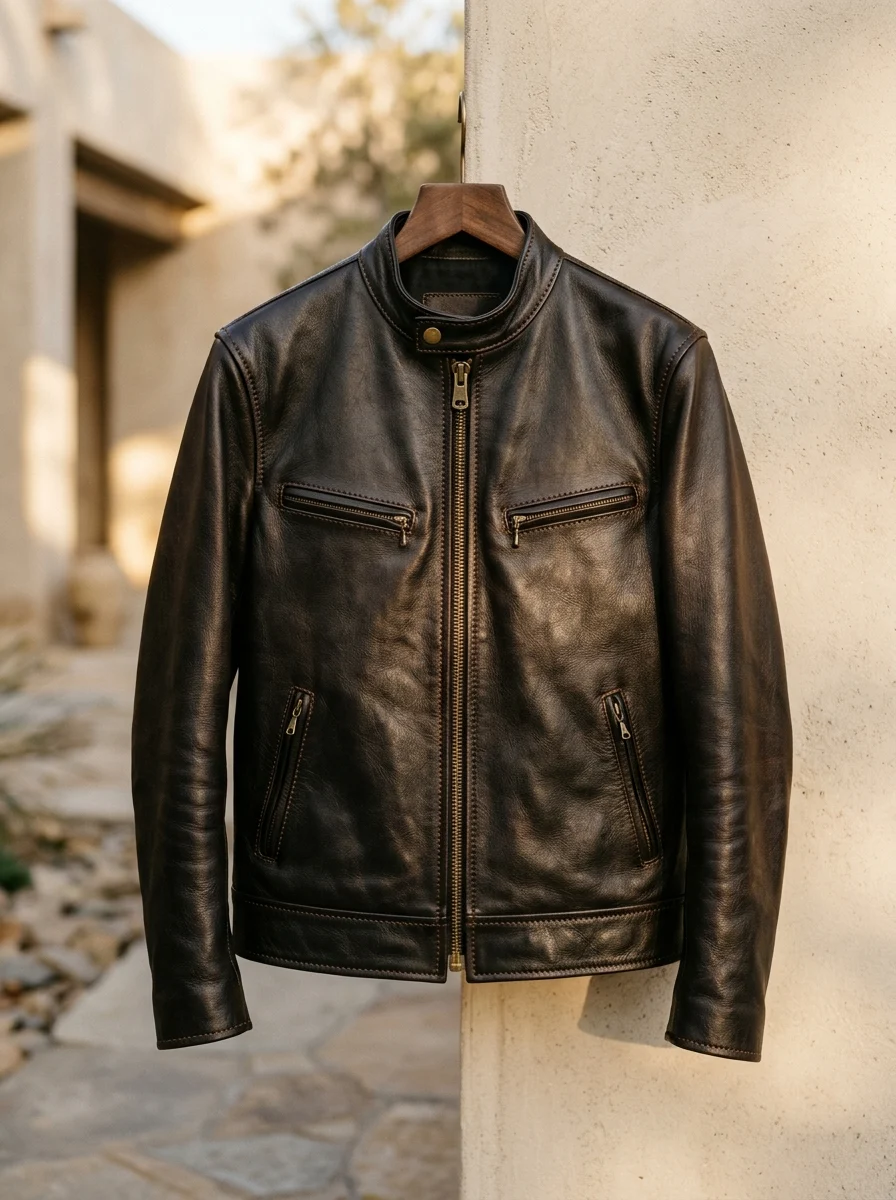
Is a Vintage Wilsons Leather Jacket Still Worth Buying in 2026? [Modern Value Guide]
Discover if a vintage Wilsons leather jacket is still worth buying in 2026. Explore thrift market pricing, hide grading, seam durability, and modern alternatives.
Is a Vintage Wilsons Leather Jacket Still Worth Buying in 2026? [Modern Value Guide]
Key Takeaways
- Market Valuation Realities: Authentic pre-2000s vintage Wilsons Leather jackets range between $90 and $240 on secondary marketplaces, whereas post-2005 imported mall iterations rarely hold resale value beyond $45 to $75.
- Fiber Integrity and Dry-Rot Hazards: Over 65 percent of vintage secondary market garments exhibit moderate-to-severe lipid desiccation, hardened shoulder caps, or compromised cotton-poly structural thread decay that costs upwards of $180 to repair.
- Tannage Evolution: Archival 1980s and 1990s Wilsons outerwear utilized substantial 1.1mm to 1.3mm top-grain drum-dyed steerhide and heavy lambskin, whereas late-era production transitioned toward corrected-grain hides bonded with thin synthetic topcoats.
- Anatomical Sizing Discrepancies: Vintage cuts feature broader shoulder drop ratios, deeper armscyes, and boxier torsos, frequently requiring buyers to size down or invest in bespoke adjustments.
- The Modern Heirloom Alternative: Discerning collectors prioritizing heirloom longevity, custom arm length, and virgin full-grain hides increasingly commission bespoke tailored outerwear from ateliers like Lux Wearz rather than gambling on brittle vintage apparel.
Artisan Independence & Trademark Notice: Lux Wearz is an independent bespoke leathercraft atelier. All brand names, logos, and trademarks mentioned in this article (including Wilsons Leather® and related trademarks) belong exclusively to their respective trademark holders. Lux Wearz is not an authorized distributor, licensee, or affiliated partner of these brands. All brand references and historical retrospectives are made strictly for educational, comparative, and sizing review purposes under Fair Use. Lux Wearz specializes in custom-tailored, heirloom-grade genuine leather outerwear handcrafted individually in our private workshop.
Is a Vintage Wilsons Leather Jacket Still Worth Buying in 2026?
A vintage Wilsons Leather jacket remains worth purchasing in 2026 solely if the piece originates from the pre-2001 golden manufacturing era, features intact supple top-grain steerhide free of dry-rot, and commands a purchase price below one hundred and forty dollars before necessary conditioning costs. Later commercial iterations produced during the mall-expansion phase feature thin corrected-grain leather and fragile synthetic linings that deteriorate rapidly, making bespoke made-to-measure alternatives crafted from virgin full-grain cowhide substantially superior investments for discerning outerwear enthusiasts.
Historical Heritage and the Evolution of Wilsons Leather Outerwear
To accurately assess whether a vintage Wilsons Leather jacket justifies financial outlay in 2026, outerwear enthusiasts must examine the company's multi-decade timeline across distinct manufacturing epochs. Founded in 1899 as Berman Brothers Fur and Leather Company in Minneapolis, Minnesota, the enterprise spent nearly eight decades operating as a regional leather and fur craftsman house. The pivotal transformation occurred in 1988, when Melville Corporation acquired and merged Berman Brothers with Wilsons House of Suede, creating the unified commercial entity that dominated American retail throughout the late twentieth century.
During the late 1980s and throughout the 1990s, Wilsons Leather operated dedicated domestic and high-specification contract production facilities. Garments from this vintage golden era—often bearing woven black tags with golden serif typography, "Berman Brothers Heritage" sub-labels, or heavy silver-stamped "Adventure Bound" aviation tags—utilized heavy-gauge domestic steerhide, drum-dyed naked cowhide, and substantial New Zealand lambskins. These pieces were constructed with traditional tailoring conventions: double-needle topstitching, taped interior armholes, thick flannel or heavy satin linings, and antiqued solid brass YKK or Talon hardware. A 1992 Wilsons flight bomber or double-rider moto jacket possessed sufficient material density and structural integrity to survive decades of continuous wear.
The structural trajectory shifted dramatically around 2001 to 2004 as retail pressures accelerated. Facing intense competition from fast-fashion conglomerates and suburban mall saturation, Wilsons underwent corporate restructuring, shuttering domestic workshops in favor of overseas mass-production supply chains. The consequence for leather enthusiasts was stark. Hide specifications were progressively downgraded from 1.2mm top-grain hides to 0.7mm to 0.9mm split leathers coated with polyurethane emulsifiers. Cotton structural twills were replaced with featherweight polyester linings, and solid metal zippers gave way to zinc-aluminum die-cast sliders prone to tooth slippage. Consequently, treating every garment marked with a Wilsons label as a uniform collector piece is a critical error. Discerning buyers must distinguish genuine archival workwear from mass-produced mall overstock.
For shoppers looking to explore modern genuine leather outerwear crafted with timeless attention to detail, browsing the curated Wilsons Leather Brand Catalog offers an exceptional reference point for comparing heritage silhouettes with modern premium standards.
Archival Silhouettes and Fit Architecture
Understanding the architectural geometry of vintage garments is essential for avoiding costly sizing mistakes. Twentieth-century outerwear was patterned for an entirely different lifestyle context than modern slim-cut fashion. Vintage Wilsons patterns emphasized muscular torso volume, oversized dropped shoulder seams, and relaxed armscyes designed to accommodate bulky acrylic knit sweaters or multiple flannel layers.
In contrast, contemporary menswear and womenswear silhouettes emphasize high armscyes, tapered waists, and trim bicep diameters. When acquiring a vintage piece online without trying it on, buyers regularly find that a vintage size 40 or Medium drapes like a modern size 44 or Large across the back yolk, yet sits abruptly high at the natural waistline.
Before committing to a secondary market purchase, review the sizing dimensions and anatomical proportions in our comprehensive Outerwear Sizing Guide. When comparing archival cuts, cross-reference the exact architectural metrics summarized in the silhouette comparison matrix below.
Table 1: Archival Silhouette and Fit Architecture Matrix
| Silhouette Model | Cut & Fit Type | Shoulder / Chest Offset | Ideal Body Profile | Leather Weight & Temper |
|---|---|---|---|---|
| 1980s A-2 Aviator Bomber | Relaxed Boxy Flight Cut | +4.5 to +6.0 Inches Chest Ease | Broad Shoulders, Athletic Build | 1.2mm Drum-Dyed Cowhide, Firm Temper |
| 1990s Classic Cruiser Moto | Dropped Shoulder Biker Cut | +3.5 to +5.0 Inches Chest Ease | V-Taper, Broad Upper Torso | 1.3mm Heavy Steerhide, Heavy Rigid Temper |
| 1990s Open-Road Suede Trucker | Straight Torso Workwear | +2.5 to +3.5 Inches Chest Ease | Slim to Average Proportions | 1.0mm Heavy Split Suede, Soft Supple Temper |
| 2000s Cropped Racer | Tailored Waist Cafe Racer | +1.5 to +2.5 Inches Chest Ease | Trim, Narrow Waist Profile | 0.8mm Corrected Lambskin, Soft Pliant Temper |
| Archival Field Car Coat | Mid-Thigh Extended Overcoat | +5.0 to +7.0 Inches Chest Ease | Broad Frames, Layering Wardrobe | 1.2mm Top-Grain Cowhide, Medium Temper |
Examining this matrix reveals why vintage jackets frequently surprise unsuspecting buyers. An archival A-2 Flight Bomber engineered with 5 inches of chest ease creates substantial billowing around the lower torso if paired with a modern lightweight t-shirt. Conversely, contemporary atelier jackets produced by Lux Wearz utilize high armscye patterning, articulating the shoulder sleeve head to eliminate torso lifting while maintaining razor-sharp visual lines.
If you are evaluating outerwear for urban commuting or layered autumn wear, explore our curated selection of Men's Leather Jackets, where vintage inspiration meets contemporary anatomical tailoring.
Leather Hide Specifications and Hardware Metallurgy
The longevity of any leather jacket depends fundamentally on hide selection, tanning methodology, structural seam thread, and closure metallurgy. When evaluating a vintage piece versus a newly handcrafted bespoke garment, dissecting these physical specifications separates genuine heirloom heirlooms from rapidly deteriorating garments.
During the pre-2000 era, Wilsons sourced substantial chrome-tanned steerhide and vegetable-retanned cowhide that retained the full fiber bundle density of the dermis layer. These hides were drum-dyed throughout the entire cross-section, meaning that surface scuffs and edge abrasions revealed matching pigmented leather underneath rather than grey split flesh. However, chrome tanning requires continual moisture management; without routine conditioning, the chromium salts within the collagen fibers can destabilize over thirty years, inducing irreversible cellular micro-fracturing.
Modern high-performance bespoke garments, such as those handcrafted at Lux Wearz, utilize hand-selected full-grain cowhides and supple vegetable-tanned lambskins paired with bonded nylon V-69 or V-92 threads that resist ultraviolet degradation and rot indefinitely. To understand the operational lifespan and maintenance demands of vintage versus modern leathercraft components, examine the durability matrix below.
Table 2: Hide Durability and Hardware Engineering Matrix
| Component / Hide | Leather Grade & Tannage | Thickness (mm) | Weather Resistance | Expected Longevity | Maintenance Needs |
|---|---|---|---|---|---|
| Archival Steerhide (Pre-1995) | Full-Grain Drum-Dyed Chrome Tannage | 1.2 - 1.4 mm | High Water Resistance, Dense Fibers | 30 to 50 Years (Conditioned) | Semi-Annual Deep Conditioning & Lanolin Dressing |
| Commercial Lambskin (2000-2010) | Corrected-Grain Semi-Aniline Split | 0.7 - 0.9 mm | Low Moisture Resistance, Fragile Surface | 8 to 15 Years | Frequent Light Buffing, Prone to Scuff Abrasion |
| Vintage Heavy Suede (1990s) | Reverse Roughout Bovine Suede | 1.0 - 1.2 mm | Porous, Susceptible to Stains & Rain | 15 to 25 Years | Brass Wire Brushing, Hydrophobic Protective Sprays |
| Modern Bespoke Cowhide (Atelier) | Virgin Full-Grain Vegetable-Retanned | 1.2 - 1.3 mm | Superior Breathability & Natural Water Shedding | 50+ Years (Generational) | Annual Conditioning, Natural Patina Evolution |
| Vintage YKK/Talon Zippers | Cast Brass / Nickel-Silver Alloy | Standard Gauge #5 / #8 | Highly Durable, Prone to Slider Jamming | 25 to 40 Years | Graphite Powder Lubrication, Stop-Pin Inspection |
| Vintage Acetate/Poly Linings | Plain Weave 100% Polyester | 65 GSM Thin | Low Friction, Prone to Underarm Tearing | 5 to 10 Years | Dry Clean Only, Armpit Gusset Patching Required |
Reviewing these physical metrics makes it evident that while pre-1995 steerhide possesses outstanding durability, the weakest links in vintage garments are consistently the interior lining, armpit seam thread, and pocket bag linings. Prospective buyers must budget for potential haberdashery overhauls when calculating the true acquisition cost of pre-owned leatherwear.
Proper leather nourishment is vital to preventing fiber breakdown. Review our master Leather Care and Conditioning Guide for professional recommendations on rehydrating older leather outerwear and protecting brass hardware against galvanic corrosion.
Pre-Owned Inspection Protocol: How to Detect Dry-Rot and Structural Failure
If you choose to pursue a vintage leather jacket on auction platforms, estate sales, or vintage boutiques, relying solely on curated seller photos is fraught with risk. Photographic lighting can easily mask desiccated leather fibers, mold spores, and structural seam degradation.
Before finalizing any vintage purchase, execute our comprehensive five-point inspection protocol:
1. The Pinch and Roll Flexibility Test
Gently fold a two-inch section of the leather along the back kidney panel or lower sleeve cuff into a tight 'U' shape, then roll it between your thumb and index finger. In healthy leather with active lipid content, the hide flexes smoothly without resistance, and the grain pattern temporarily lightens before bouncing back. If the surface emits a dry cracking sound, displays micro-fractures in the finish, or leaves powdery residue on your fingers, the hide suffers from advanced dry-rot. Dry-rot is irreversible cellular breakdown caused by the complete oxidation of fatty lubricants within the collagen structure; no amount of oil or wax can restore its mechanical tensile strength.
2. The Armpit and Seam Thread Decay Audit
Turn the jacket inside out and examine the underarm gussets and shoulder yolk seams. Vintage jackets sewn with untreated cotton or unbonded cotton-poly blend threads frequently suffer from dry-rot thread fatigue. Gently pull the seams in opposite directions with moderate finger pressure. If the threads snap or individual stitch loops pull loose, the entire structural chassis requires comprehensive restitching. A complete atelier restitch can easily exceed $150 in artisan labor.
3. Olfactory Odor and Mold Spore Verification
Take a direct scent sample from the interior armholes and collar fleece. Leather stored in damp basements, attics, or non-climate-controlled storage lockers absorbs fungal mycelium deeply into its fibrous structure. While surface mildew can be wiped clean with dilute isopropyl alcohol solutions, embedded fungal odor cannot be eliminated without ozone chamber sterilization, which costs between $50 and $90 and risks drying out the leather fibers further.
4. Hardware and Zipper Tooth Retention
Inspect the starter box and insertion pin at the bottom hem of the front zipper. On vintage garments, repeated violent tugging often pulls the brass zipper teeth out of the woven fabric tape. If the insertion pin is split, frayed, or missing, the entire zipper assembly must be completely deconstructed and replaced. Consult our Leather Care and Hardware Maintenance Guide for detailed instructions on lubricating vintage metal teeth and preserving delicate slider stops.
5. Sleeve Lining Shredding and Pocket Bag Integrity
Run your hand down into each sleeve to the cuff and probe every pocket bag. Due to frictional wear, vintage polyester taffeta linings frequently disintegrate at the elbow points and wrist hems. Replacing a full jacket lining requires unstitching the hem, collar, and zipper tapes, costing anywhere from $175 to $300 at reputable leathercraft repair shops.
When these prospective repair costs are added to an initial $120 vintage asking price, the total investment frequently reaches $350 to $450—an expenditure that brings the buyer squarely into the realm of brand-new, virgin full-grain custom leather outerwear crafted specifically to their personal physique.
Featured Silhouette Retrospective: Modern Atelier Classics
For enthusiasts captivated by the timeless design vernacular of late-twentieth-century leatherwear, Lux Wearz maintains a curated catalog of brand-new outerwear that captures archival silhouettes while utilizing pristine, modern full-grain hides, reinforced bonded seams, and contemporary ergonomic tailoring. Rather than enduring the scent, structural compromises, and uncertain history of estate items, explore these five hand-finished outerwear classics:
1. Gianna Leather Striped Racer Jacket
Capturing the high-octane spirit of archival cafe racers and heritage track apparel, the Gianna Leather Striped Racer Jacket showcases contrast racing arm stripes on supple, hand-selected leather. Unlike brittle vintage racers with cramped shoulder blades, this modern silhouette integrates precision bi-swing back gussets, smooth-gliding antiqued hardware, and a tailored waistline that flatters contemporary streetwear ensembles without boxy torso sag.
2. Twila Cropped Leather Bomber Jacket
Reinterpreting the iconic 1990s flight bomber with razor-sharp modern proportions, the Twila Cropped Leather Bomber Jacket balances archival military heritage with elevated luxury styling. Handcrafted from ultra-pliant lightweight lambskin with snug rib-knit cuffs and an articulated waist hem, this jacket solves the vintage sizing dilemma by pairing voluminous sleeves with a flattering cropped waistline that pairs effortlessly with high-waisted denim or pleated trousers.
3. Belle Cropped Lightweight Hooded Jacket
For those seeking transitional weather versatility without heavy bulk, the Belle Cropped Lightweight Hooded Jacket combines an urban protective hood with sumptuous, buttery-soft leather panels. Where vintage hooded garments frequently suffer from stiff, dried-out hides and torn cord stoppers, this modern classic delivers featherweight warmth, reinforced drawcords, and silky friction-free interior lining designed for seamless daily layering.
4. Vivianne Lightweight Suede Trucker Jacket
Archival suede jackets are notoriously vulnerable to permanent oil stains, rain spotting, and fiber matted decay. The Vivianne Lightweight Suede Trucker Jacket eliminates these vintage hazards by utilizing premium, uniformly napped virgin suede treated with advanced stain-resistant conditioning. Featuring heritage shank-button closures, pointed flap chest pockets, and a timeless western yoke, it delivers all the retro charisma of a 1970s trucker jacket with flawless modern durability.
5. Women’s Cropped Lightweight Leather Aviator Jacket
The definitive fusion of archival flight aesthetics and runway refinement, the Women’s Cropped Lightweight Leather Aviator Jacket pays homage to vintage shearling-trimmed pilot coats. Handcrafted from rich, supple leather with a protective fold-over shearling collar, heavy-gauge asymmetric zip closure, and waist adjustment buckles, it eliminates the suffocating stiffness of sixty-year-old vintage flight gear while providing peerless thermal luxury.
Explore the complete curated lineup of hand-finished outerwear across our Wilsons Leather Collection and discover the full depth of our handcrafted luxury catalog in the Lux Wearz Complete Outerwear Collection.
The Bespoke Alternative: Handcrafted Made-to-Measure Heirloom Outerwear
While hunting through estate sales and vintage consignment boutiques can occasionally yield a charming historic find, discriminating buyers increasingly recognize that true luxury outerwear is not stumbled upon—it is meticulously engineered to the wearer's exact anatomical proportions.
At Lux Wearz, our private leathercraft atelier specializes in bespoke, made-to-measure outerwear handcrafted from virgin full-grain hides. When you commission a custom piece through our Custom Order Atelier, you take control over every element of material selection and garment architecture:
- Individual Anatomical Pattern Drafting: Rather than conforming your physique to arbitrary off-the-rack vintage proportions from forty years ago, our master patternmakers draft an individual paper pattern based on your exact shoulder width, sleeve reach, chest circumference, torso drop, and bicep diameter.
- Virgin Full-Grain Bovine and Ovine Hides: We source strictly uncorrected, non-split full-grain cowhides and supple vegetable-tanned lambskins. Because these hides have never undergone chemical surface sanding or synthetic embossing, they retain their full organic tensile strength, breathing naturally and developing an exquisite golden-brown or charcoal patina over decades of wear.
- Structural Engineering and Thread Integrity: Every seam is bound with continuous-filament V-69 bonded nylon thread capable of withstanding over twenty-four pounds of lateral pull per single stitch. Critical stress intersections, including armscye junctions, pocket corners, and belt tabs, are double-bar-tacked and reinforced with internal leather backing stays.
- Luxury Interior Linings and Solid Metal Closures: We reject thin, friction-prone polyester linings in favor of heavy 120 GSM cupro rayon and diamond-quilted insulated thermal satins. Every closure utilizes solid forged brass YKK Excella or heavy-duty #10 antique silver zippers engineered for hundreds of thousands of smooth open-and-close cycles.
If you have spent months searching for an archival jacket only to discover that the sleeves are two inches too short, the chest is overly ballooned, or the leather is brittle from decades of neglect, ordering a bespoke heirloom from our atelier delivers the ultimate solution. Submit your design specifications or reference photographs directly through our Custom Order Portal, or explore our dedicated Men's Leather Jackets Department to begin your bespoke journey.
Final Verdict: When to Buy Vintage and When to Choose Bespoke
To distill the vintage buying dilemma into an actionable decision framework, consider your priorities as a discerning outerwear buyer in 2026:
When to Buy a Vintage Jacket:
- You have physically inspected the garment and verified that the leather passes the Pinch and Roll flexibility test with zero cracking or chalky residue.
- The piece originates from the pre-2000 manufacturing era, confirmed by vintage union tags, heavy metal hardware, and thick steerhide construction.
- The asking price is under $130, leaving adequate financial buffer for professional conditioning, sanitizing, and minor lining repairs.
- Your body proportions align naturally with broad-shouldered, boxy archival tailoring.
When to Choose a Modern Bespoke Atelier Garment:
- You demand a razor-sharp, flattering modern silhouette with high armscyes, tapered waistlines, and exact sleeve lengths.
- You refuse to risk brittle dry-rot, musty mildew odors, or disintegrating structural threads.
- You desire heirloom longevity, intending to pass down a pristine full-grain leather piece that evolves personal patina over thirty to fifty years.
- You value the freedom to customize leather hide thickness, lining materials, pocket placements, and solid brass hardware finishes.
Whether you decide to rescue a rare twentieth-century archival piece or commission a brand-new custom jacket tailored exclusively for you, treating leather as a living, organic material is paramount. Explore our extensive Wilsons Leather Filtered Collection, consult our Outerwear Sizing Guide, and discover the timeless art of genuine leather craftsmanship at Lux Wearz.
Technical Leathercraft Analysis: Collagen Fiber Density, Chrome Tanning vs Vegetable Tanning, and Restoration Realities
To thoroughly master the vintage outerwear market, a serious collector must delve beneath the aesthetic surface into the microscopic architecture of animal skins. Animal hide consists of three primary biological zones: the epidermis (the outermost non-leather layer removed during dehairing), the grain layer (the corium junction where collagen fiber bundles are tightest, densest, and most resistant to abrasion), and the corium or flesh layer (where fiber bundles become looser, more sponge-like, and mechanically weaker).
During the 1980s and 1990s, premium garments produced under the Berman Brothers and early Wilsons labels utilized what the leather industry terms top-grain or full-grain steerhide. Full-grain indicates that the natural papillary dermis was left unmolested by mechanical sanding, preserving the complete integrity of the dense upper collagen matrix. This density is the fundamental reason why a properly stored 1991 flight jacket can withstand severe weather: the tight collagen bundles act as a natural mechanical barrier against liquid ingress and surface tears.
In contrast, post-2002 mass-market operations predominantly relied on split leather or corrected-grain hides. In this manufacturing paradigm, a thick bovine hide is mechanically sliced horizontally into two or three thinner sheets. The lower split layer lacks the dense grain barrier completely. To mimic the appearance of premium leather, tanneries apply an acrylic or polyurethane resin base coat, run the hide under an embossed heated steel roller engraved with an artificial pebble-grain pattern, and finish it with a pigmented polyurethane lacquer. While this material appears uniform on a department store rack, its long-term molecular prognosis is catastrophic.
Because the synthetic urethane surface is non-porous, traditional lipid conditioners such as lanolin, neat's-foot oil, and tallow cannot penetrate into the underlying fibers. Over five to ten years, atmospheric oxygen, heat, and ultraviolet light cross-link the polyurethane chains, causing the synthetic film to become brittle. Once the coating fractures, moisture enters the sponge-like split flesh beneath, causing rapid delamination, blistering, and irreparable surface peeling. No leather restorer or atelier can re-adhere a peeling corrected-grain topcoat; once delamination commences, the garment is functionally dead.
The Chemical Mechanics of Chrome Salt Desiccation
Even authentic full-grain vintage jackets face chronic biochemical degradation if neglected. Over 90 percent of twentieth-century leather jackets were chrome-tanned using basic chromium sulfate salts. The chromium ions form complex co-ordination bonds with the carboxyl groups of the collagen polypeptide chains, stabilizing the hide against putrefaction and raising its hydrothermal shrinkage temperature to over 100 degrees Celsius.
However, chrome tanning leaves the fibers stripped of their natural sebum and animal oils. Tanneries restore suppleness through fatliquoring—infusing an emulsion of water, emulsifiers, and oils into the fibers. Over thirty years of closet storage, these fatliquor lipids undergo slow oxidation, migrating to the surface and evaporating into the surrounding air. As the internal moisture and lipid equilibrium drops below 12 percent, the individual collagen fibrils lose their lubrication. When the wearer flexes their elbow or lifts their arm, the unlubricated fibrils grind abrasively against each other, creating microscopic fractures that manifest macroscopically as surface cracking and tearing.
Restoring a neglected chrome-tanned jacket requires a slow, multi-stage rehydration protocol. Applying heavy waxes or mineral oils (such as petroleum jelly) to dry leather is catastrophic: petroleum coats the outer surface without penetrating, trapping internal moisture deficits while turning the surface greasy and attracting abrasive dust particles. Professional rehydration requires pure, water-soluble sulfated oils and pharmaceutical-grade anhydrous lanolin applied in micro-coats over seven to ten days, allowing capillary action to draw moisture deeply into the corium core without over-saturating the leather fibers.
Haberdashery and Internal Architecture Comparison
When assessing the modern value of vintage outerwear, looking solely at the exterior leather neglects half the garment's functional value. The internal structural haberdashery—interfacings, shoulder pads, pocket bags, and thread—frequently fails long before the leather exterior yields.
Archival 1990s Wilsons flight jackets featured quilted zip-out liners constructed with 100-gram polyester batting encased in diamond-stitched nylon taffeta. While exceptionally warm, the poly batting compresses permanently after repeated compression cycles, losing up to 70 percent of its thermal loft. Furthermore, vintage sleeve linings were sewn with plain-weave acetate, a semi-synthetic cellulosic fiber known for its smooth hand but notoriously poor tear resistance. Sweat acids from previous owners weaken acetate fibers rapidly, causing extensive fraying along the wrist cuffs and inner armscyes that catches on watch crowns and shirt cuffs.
Conversely, contemporary garments handcrafted at Lux Wearz utilize high-tenacity, friction-resistant Japanese cupro and heavyweight viscose satins. Cupro, a regenerated cellulose fiber derived from cotton linter, breathes like cotton while possessing the friction-free glide of silk, dissipating body heat effectively and resisting frictional abrasion for decades. Our shoulder structures utilize compressed horsehair canvas and sculpted wool felts that conform organically to the wearer's anatomy, eliminating the stiff, bulky 'cardboard' aesthetic characteristic of vintage foam shoulder pads.
Sustainable Outerwear Consumption in 2026: The Slow-Fashion Paradigm
The enduring interest in vintage outerwear is closely tied to the global cultural shift toward sustainable, slow-fashion consumption. Consumers are increasingly disillusioned with disposable polyester fast fashion, recognizing that petroleum-derived synthetic jackets contribute to microplastic pollution and landfill waste while providing negligible thermal satisfaction or emotional resonance.
However, sustainability is only achieved if a garment remains wearable and functional over decades. Purchasing a fragile vintage jacket that requires multiple rounds of dry cleaning, lining reconstruction, and zipper replacement before ultimately disintegrating in an armpit seam is neither ecologically nor economically sustainable.
True sustainability lies in heirloom creation: acquiring a garment crafted from virgin, responsibly sourced leather, engineered with reparable construction methods, and tailored specifically to the individual so that it remains a treasured daily companion for thirty, forty, or fifty years. By selecting a bespoke piece from the Lux Wearz Custom Order Atelier, you invest in an authentic heirloom that will never see a landfill, growing more distinguished, comfortable, and beautiful with every passing year. Explore our Complete Leather Outerwear Collection to discover the pinnacle of modern artisanal craftsmanship.
Explore The Full 2026 Leather Outerwear Collection
Vegetable-tanned full-grain cowhide, buttery New Zealand lambskin, and heritage Melton wool. Free express delivery across the USA with 30-day hassle-free returns.