
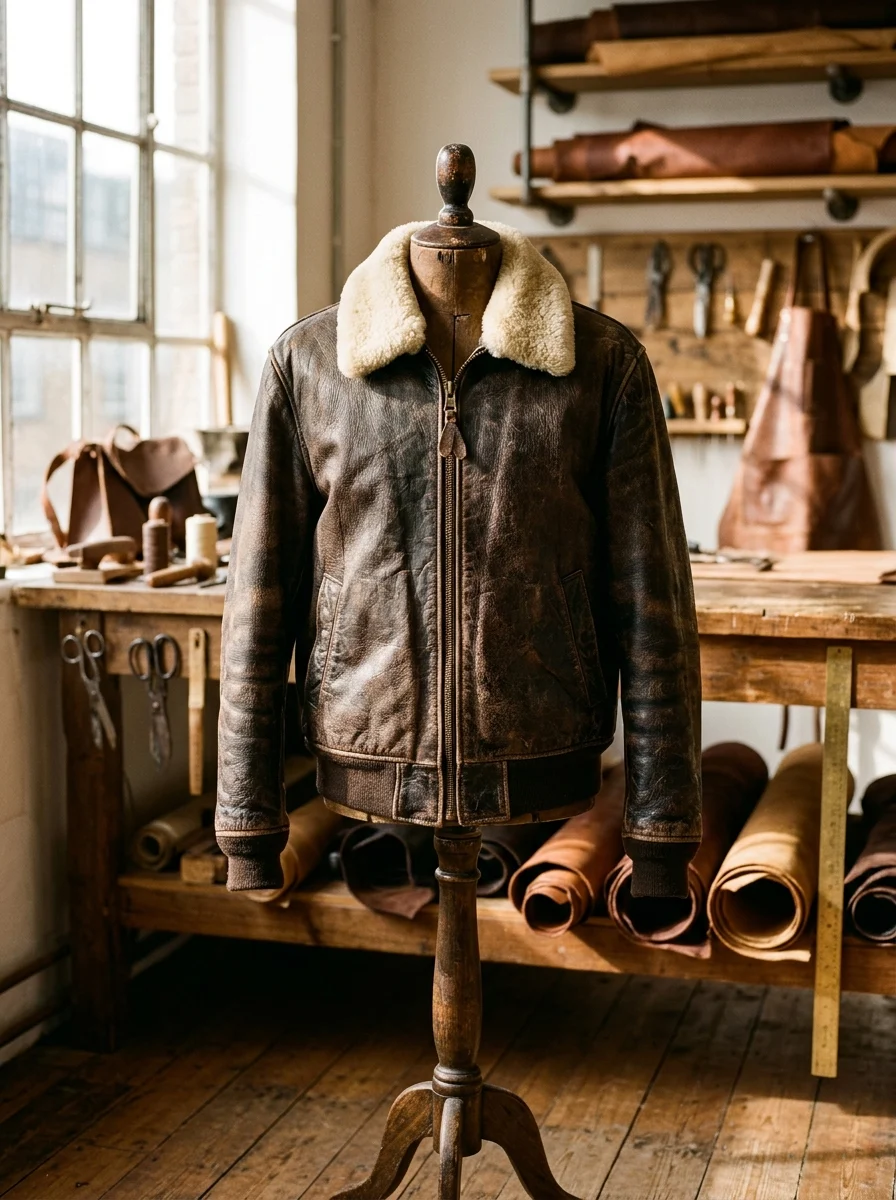
Is a Vintage Wilsons Leather Jacket Still Worth Buying in 2026? Modern Value and Alternative Guide
Key Takeaways
- Vintage Structural Variance: Wilsons Leather garments span four distinct manufacturing eras, shifting from heavy American steerhide in the 1980s to lighter imported lambskin after 2002.
- Secondary Market Pricing Realities: Pre-owned vintage pieces generally range between $45 and $120, yet restoration costs for dried hides, blown linings, or broken sliders regularly exceed $150.
- Fit Profile Divergence: Vintage cuts feature broader shoulder drop, boxy torsos, and deeper armholes, contrasting sharply with modern athletic silhouettes.
- Material Fatigue Risks: Unconditioned vintage jackets frequently suffer from irreversible fiber embrittlement, stitch dry-rot, and oxidation on alloy zippers.
- The Bespoke Alternative: Handcrafted made-to-measure leather jackets from Lux Wearz eliminate sizing gambles, utilizing 100% virgin full-grain cowhide and lifetime hardware.
Artisan Independence & Trademark Notice: Lux Wearz is an independent bespoke leathercraft atelier. All brand names, logos, and trademarks mentioned in this article (including Wilsons Leather® and related trademarks) belong exclusively to their respective trademark holders. Lux Wearz is not an authorized distributor, licensee, or affiliated partner of these brands. All brand references and historical retrospectives are made strictly for educational, comparative, and sizing review purposes under Fair Use. Lux Wearz specializes in custom-tailored, heirloom-grade genuine leather outerwear handcrafted individually in our private workshop.
Is a Vintage Wilsons Leather Jacket Still Worth Buying in 2026?
A vintage Wilsons Leather jacket remains worth buying in 2026 only if the hide demonstrates supple fiber integrity without dry-rot, the original YKK or Ideal hardware operates cleanly, and the resale price sits below $80 to account for inevitable conditioning costs. However, discerning outerwear collectors increasingly commission handcrafted bespoke alternatives tailored to exact modern dimensions from virgin full-grain cowhide.
The secondary market for vintage leather outerwear has expanded dramatically, driven by heritage fashion revivals, thrift culture, and the search for substantial, durable materials. Wilsons Leather stands as one of the most prolific names in American leather retail history. During the final three decades of the twentieth century, almost every major shopping center in North America housed a Wilsons Leather storefront. Millions of bombers, cafe racers, trench coats, and motorcycle jackets passed through their counters into American wardrobes.
Today, secondary platforms such as eBay, Poshmark, Depop, and local vintage boutiques are flooded with surviving Wilsons pieces. For prospective buyers navigating this vintage landscape, the central question is whether these garments represent an authentic vintage bargain or an impending restoration sinkhole. Evaluating vintage leather requires separating nostalgic aesthetic value from underlying hide longevity, structural seam integrity, and modern ergonomic wearable comfort.
The Archival Evolution of Wilsons Leather Outerwear
To accurately assess any pre-owned jacket bearing a Wilsons label, one must first recognize that the brand underwent multiple radical transformations in ownership, tannery sourcing, pattern grading, and manufacturing philosophy between 1970 and the present day.
The company traces its roots back to Bermans The Leather Experts, founded in 1930 in Minneapolis. Through aggressive retail expansion and subsequent corporate consolidation, Bermans merged with Wilsons House of Suede in 1988, officially forming Wilsons The Leather Experts. During the 1980s and early 1990s, the brand operated at peak manufacturing specifications. The jackets produced during this golden era featured substantial domestic and South American chrome-tanned steerhide, robust heavy-gauge brass closures, and heavyweight satin linings. These garments were hefty, weighing between four and six pounds, engineered to withstand rugged everyday use.
A pronounced shift occurred around 1998 to 2002. As corporate retail pressures demanded faster turnarounds and lighter off-the-rack garments, Wilsons progressively relocated production overseas. Leather selections transitioned from dense, naked steerhide and heavyweight split cowhide toward thinner, corrected-grain hides, pigment-coated pigskin, and fragile New Zealand lambskin. While lambskin provided instant buttery softness on retail hangers without requiring a break-in period, it sacrificed the structural tensile strength and decades-long resilience that defined vintage heritage outerwear.
Understanding these historical eras is crucial when inspecting pre-owned pieces today. A 1991 Bermans-era Wilsons flight jacket represents an entirely different class of material construction compared to a 2008 shopping mall lambskin blazer. The former can often be revitalized through professional conditioning, whereas the latter frequently suffers from peeling polyurethane topcoats and irreparable fiber degradation.
Silhouette and Fit Architecture: Vintage Cut vs Modern Profiles
One of the greatest obstacles collectors face when purchasing vintage leather outerwear is pattern grading. Vintage silhouettes from the 1980s and 1990s were designed around completely different layering expectations and body proportions than modern garments.
During the late twentieth century, jackets were routinely patterned with exaggerated drop shoulders, extremely low-cut armholes, and cylindrical, boxy torsos. This roomy construction allowed wearers to bundle thick wool sweaters, bulky flannel shirts, or oversized sweatshirts beneath the outer shell. When worn over contemporary lightweight clothing, such as a single t-shirt or modern collared shirt, these vintage patterns often appear excessively bulky, pooling excess leather around the chest and armpits while bunching awkwardly at the lower hem.
Modern leather jacket architecture, by contrast, prioritizes clean vertical lines, higher armhole scyes, natural shoulder slope alignment, and an anatomical taper from chest to waist. High armholes allow full arm articulation without lifting the entire body of the jacket, a critical functional advantage that vintage boxy cuts fundamentally lack.
| Silhouette Model | Cut & Fit Type | Shoulder / Chest Offset | Ideal Body Profile | Leather Weight & Temper |
|---|---|---|---|---|
| Vintage Chris Flight Bomber | Boxy Relaxed Vintage Fit | +4 to +6 Inches Over Chest | Broad Shoulders, Stocky Torso | 3.5 to 4.5 oz Heavy Cowhide, Firm Temper |
| Sean Vintage Cafe Racer | Classic Straight Moto Cut | +2 to +3 Inches Over Chest | Athletic, Lean to Broad Frame | 3.0 to 3.5 oz Naked Steerhide, Medium Temper |
| Ace Shearling Collar Aviator | Extended Thermal Flight Cut | +4 to +5 Inches Over Chest | Broad or Tall Layering Profile | 4.0 oz Heavyweight Cowhide, Rigid Temper |
| Gianna Striped Racer | Contoured Biker Silhouette | +1.5 to +2.5 Inches Over Chest | Slim to Athletic Frame | 2.5 to 3.0 oz Supple Lambskin, Soft Temper |
| Jonah Vintage Shirt Jacket | Straight Overshirt Drape | +2 to +3 Inches Over Chest | Medium Build, Casual Layering | 2.2 to 2.8 oz Vegetable-Washed Cowhide |
| Monty Shirt Collar Zip | Semi-Structured Casual Cut | +3 to +4 Inches Over Chest | All Body Types, Clean Lines | 2.8 to 3.2 oz Milled Cowhide, Balanced Temper |
When evaluating sizing on secondary market listings, buyers must never rely on vintage numerical tags such as Medium, Large, or 42. A vintage 1992 Size Medium frequently measures 23 to 24 inches from pit to pit, equaling a modern Size Extra Large in chest circumference. For accurate measurement protocols, review our Comprehensive Outerwear Sizing Architecture before committing to any sizing decision.
Leather Hide and Hardware Durability Matrix
The durability and lifespan of any leather jacket depend entirely on the initial hide grading, tanning chemistry, thread composition, and zipper metallurgy. Over its commercial lifespan, Wilsons Leather deployed an extensive range of materials, each demonstrating distinct aging behaviors.
| Component / Hide Category | Leather Grade & Tannage | Thickness (mm) | Weather & Tear Resistance | Expected Functional Longevity | Maintenance & Restoration Needs |
|---|---|---|---|---|---|
| Pre-1995 American Steerhide | Full-Grain Chrome-Tanned Steer | 1.3 mm - 1.5 mm | Exceptional Tear & Abrasion Resistance | 35 to 50+ Years with Proper Care | Deep Oil Conditioning Every 12 Months |
| Mid-1990s Naked Milled Cowhide | Top-Grain Aniline / Semi-Aniline | 1.1 mm - 1.3 mm | High Tensile Strength, Supple Flex | 25 to 35 Years | Lanolin Creams, Wax Water Repellents |
| 2000s Imported Lambskin | Corrected-Grain Drum-Dyed Nappa | 0.7 mm - 0.9 mm | Moderate; Prone to Surface Scuffs | 10 to 18 Years; Fiber Weakening | Delicate Leather Balms, Microfiber Buffing |
| Split Suede & Pigskin | Corrected Suede Split Fibers | 0.8 mm - 1.0 mm | Poor Water Resistance; Water Spots | 8 to 15 Years; Matting Risk | Specialized Suede Brushes, Steam Revitalization |
| Original YKK / Ideal Brass Zippers | Stamped Brass & Nickel Teeth | Heavy Gauge #8 - #10 | High Resistance to Mechanical Shear | 20 to 35 Years; Stop Pin Wear | Paraffin Wax Lubrication, Stop Realignment |
| Modern Bespoke Virgin Cowhide | Artisan Hand-Selected Full-Grain | 1.2 mm - 1.4 mm | Maximum Abrasion & Weather Barrier | 50+ Years (Heirloom Grade) | Annual Conditioning via Bespoke Leather Care |
The degradation curve of leather fibers is irreversible once deep dry-rot takes hold. Animal hides consist of intertwined collagen protein fibrils stabilized by tanning salts and natural lubrication oils. When a jacket sits unconditioned in a hot attic, damp basement, or sealed plastic garment bag for fifteen years, atmospheric moisture and oxidation extract those lubricating lipids. The microscopic collagen strands dry, contract, and snap under flexing pressure.
No surface conditioner or leather balm can re-knit snapped collagen fibrils. When dry-rot sets into a vintage garment, stress areas along the elbows, shoulder caps, and kidney panels will tear open like cardboard under minimal tension.
Comprehensive Vintage Inspection Checklist: Red Flags vs Salvageable Flaws
Before finalizing the purchase of any vintage Wilsons jacket from an online seller or antique merchant, systematic inspection across six critical vulnerability zones is essential.
1. The Collagen Tensile Bend Test
Gently fold a hidden section of the leather, such as the inner hem facing or underarm gusset, grain-side outward into a tight bend. Release it immediately and inspect the crease under direct bright light. If the finish displays fine micro-cracks, microscopic white chalky lines, or flaking pigment, the leather is entering advanced desiccation. If the hide feels stiff and brittle like thick cardstock, pass on the purchase immediately. Healthy vintage leather should yield smoothly under thumb pressure and rebound without surface fracturing.
2. Olfactory and Mold Spore Evaluation
Leather is intensely porous and permanently absorbs atmospheric chemicals and biological spores. Musty mildew aromas indicate fungal growth within the cellular core of the hide. Fungal hyphae feed on remnant animal proteins, steadily weakening tensile strength from within. While surface ozone treatments can temporarily mask mild smells, deeply rooted mold in vintage linings and foam chest interlinings can never be completely eradicated without total garment deconstruction.
3. Structural Seam and Thread Integrity
Examine the load-bearing seams across the shoulders, armholes, and back yoke. Vintage production frequently utilized cotton-core or unbonded synthetic thread. Over thirty years, friction and acidic atmospheric pollutants dissolve thread tensile strength. Pull gently on either side of the main back seam. If stitches separate, loosen, or expose daylight between leather panels, restitching will be required. Restitching leather is costly because technicians must hand-align needles with existing stitch holes to avoid perforating new perforations that weaken the hide.
4. Hardware and Zipper Mechanics
Inspect the insertion pin and starter box at the base of the front zipper. On high-wear vintage bombers, the fabric tape adjacent to the starter box frequently frays or splits. Once the zipper tape tears, the entire zipper must be replaced. Replacing a heavy-duty separating zipper on a lined leather jacket requires unpicking waist ribbing, facing facings, and inner linings, a procedure that typically costs between $60 and $95 at specialized leather tailoring shops.
5. Lining and Pocket Bag Condition
Turn the jacket sleeves inside out and inspect the armpit lining seams. Body perspiration contains salts and urea that degrade synthetic acetate, taffeta, and polyester linings over time. Shredded armpit linings or blown pocket bags necessitate extensive repair work.
6. Collar and Cuff Elastic Ribbing Tension
On flight bombers and varsity jackets, knit ribbing at the cuffs and hem stabilizes heat and waist silhouette. Vintage acrylic and wool ribbing frequently suffers from insect damage or stretched-out elastic bands. Loose, lifeless ribbing destroys the silhouette drape and allows draft penetration.
Featured Silhouette Retrospective and Curated Collection
For enthusiasts seeking the iconic aesthetics of vintage outerwear without the structural deterioration and hygiene risks of thirty-year-old pre-owned apparel, exploring thoughtfully curated models constructed with modern engineering standards provides the ideal solution. Review these five standout silhouettes representing classic heritage profiles:
1. Chris Leather Bomber Jacket
The Chris Leather Bomber Jacket captures the quintessential American aviator silhouette that defined late-twentieth-century street fashion. Engineered with substantial hand-selected genuine cowhide, this jacket features a clean laydown collar, broad chest welt pockets, smooth-gliding industrial front zipper hardware, and elasticized leather waistband inserts that flatter the natural waistline. Unlike brittle vintage predecessors, this modern execution provides supple, pliable hide movement immediately upon first wear while maintaining structural integrity for decades.
2. Sean Vintage Leather Racer Jacket
Embodying the stripped-back minimalism of mid-century cafe racer motorcycling culture, the Sean Vintage Leather Racer Jacket emphasizes clean vertical lines, an upright snap tab collar, and ergonomic sleeve articulation. The jacket features an artisanal vintage wash treatment applied over premium full-grain hide, replicating the authentic visual patina of three decades of natural road wear without compromising the cellular strength of virgin leather fibers. Zippered gusset cuffs and exterior handwarmer pockets complete an aggressive, timeless moto aesthetic.
3. Gianna Leather Striped Racer Jacket
Showcasing the vibrant speedway aesthetics of heritage track racing, the Gianna Leather Striped Racer Jacket incorporates bold color-blocked racing stripes across the chest and sleeves. Tailored with a contoured, form-fitting cut, this jacket utilizes exceptionally supple leather that molds quickly to the torso. It delivers high-impact motorsport styling suitable for contemporary urban layering, proving that retro racing silhouettes remain modern fashion staples when constructed with precise pattern ergonomics.
4. Jonah Vintage Leather Shirt Jacket
Bridging the boundary between rugged outerwear and refined indoor layering, the Jonah Vintage Leather Shirt Jacket offers an exceptionally versatile transitional piece. Built with lightweight, supple washed leather, this design features a tailored shirt collar, snap-down front placket, dual flap chest pockets, and button-cuff closures. It layers effortlessly over henleys, hoodies, or knit sweaters during crisp autumn mornings and cool spring evenings, delivering authentic vintage character without excessive weight.
5. Monty Shirt Collar Zip Jacket
The Monty Shirt Collar Zip Jacket represents timeless mid-century workwear refinement. Featuring a balanced zip-front closure beneath a crisp structured shirt collar, this jacket balances utilitarian practicality with executive polish. Deep slash hand pockets, clean shoulder panels, and a silky interior lining make this piece an essential daily companion for both formal city commutes and casual weekend outings.
To browse our complete archive of curated outerwear models, explore the dedicated Wilsons Leather Outerwear Showcase and discover the breadth of our genuine leather collection.
The Economic Reality: Vintage Thrift vs Artisan Bespoke Handcrafted
Purchasing vintage clothing is frequently motivated by perceived economic savings. However, when buying vintage leather outerwear, initial purchase price represents only a fraction of total investment.
Consider the real-world accounting of acquiring a vintage jacket from an online marketplace:
- Initial purchase price on secondary auction platform: $65 to $110
- Insured shipping and handling charges: $18 to $25
- Professional deep leather cleaning and ozone deodorization: $45 to $70
- Intensive multi-stage lipid conditioning balm application: $25 to $35
- Replacement of oxidized, sticking front zipper mechanism: $65 to $90
- Tailoring adjustments to reduce oversized 1990s shoulder drop: $85 to $140
- Total Realized Vintage Investment: $303 to $470
After investing nearly five hundred dollars, the buyer still possesses a garment constructed from aged, stressed leather fibers, assembled with vintage pattern geometry that may feel awkward across modern shoulders.
| Evaluation Metric | Secondary Market Vintage Wilsons | Artisan Bespoke Custom Atelier |
|---|---|---|
| Leather Origin & Grade | Variable; often dried, corrected, or aged 25+ years | 100% Virgin Hand-Selected Full-Grain Cowhide or Lambskin |
| Structural Seam Thread | Degraded vintage cotton/poly susceptible to dry-rot | High-tensile bonded nylon (v69/v92) rot-proof thread |
| Hardware Longevity | Oxidized alloy sliders, fatigued brass teeth | Commercial heavy-gauge YKK #8 / #10 solid metal zippers |
| Fit and Proportions | Fixed boxy 1990s drop shoulders; high tailoring cost | Precision patterned to 12+ individual personal body measurements |
| Hygiene & Aroma | Absorbed vintage must, smoke, or locker aromas | Pure, fresh, hypoallergenic vegetable/chrome tanned aroma |
| Interior Lining Quality | Thin polyester or torn vintage acetate satin | Breathable, anti-static, reinforced luxury quilted lining |
| Usable Lifespan in 2026 | 3 to 10 years before catastrophic seam/tear failure | 40 to 60+ years; authentic heirloom generational longevity |
Choosing a handcrafted bespoke alternative eliminates every element of uncertainty. Rather than hoping an anonymous thrift piece will survive regular winter wear, commissioning a custom piece guarantees superior material provenance, modern structural ergonomics, and an exact custom fit.
The Lux Wearz Bespoke Tailoring Experience
At Lux Wearz, we believe that an exceptional leather jacket should be built specifically for the individual who wears it. Outerwear is an armor of personal identity, deserving of master craftsmanship, exacting measurements, and premium materials.
Our bespoke tailoring process departs entirely from mass-market production assembly lines:
1. Virgin Full-Grain Material Selection
We source our hides exclusively from top-tier ethical tanneries. Every hide undergoes rigorous inspection for fiber density, grain uniformity, and tensile suppleness. Whether you prefer the rugged, heavy drape of 1.3 mm drum-dyed full-grain cowhide or the featherweight luxury of velvety Italian lambskin, your garment is crafted from pristine, uncompromised leather that develops a breathtaking, individualized patina over decades of wear.
2. Anatomical Made-to-Measure Pattern Drafting
Forget standardized off-the-rack sizing charts. Through our Custom Outerwear Atelier, our master patternmakers draft an individualized blueprint based on your specific anatomical dimensions. We account for chest circumference, shoulder width, sleeve length, bicep ease, torso length, and postural slope. The result is a flattering, athletic silhouette that provides unrestricted arm articulation without excess billowing or bunching.
3. Industrial-Grade Reinforced Assembly
Every structural seam in a Lux Wearz garment is assembled using heavyweight bonded nylon thread rated for extreme tensile strain. Crucial stress points, including pocket corners, shoulder yokes, and cuff closures, are reinforced with concealed internal bar-tacks and stay-tape. Our hardware consists solely of authentic, heavy-gauge solid metal zippers and snaps engineered to deliver effortless closure over tens of thousands of cycles.
4. Comprehensive Personal Customization
From interior pocket layouts tailored for modern smartphones and everyday carry gear to custom lining fabrics, removable thermal vests, contrast stitching, and customized hardware finishes (antiqued brass, gunmetal matte, or polished nickel), every design detail is tailored to your exact creative direction.
Discover our full catalog of premium genuine leather outerwear across our Men's Genuine Leather Collection and explore our complete inventory of styles at our Lux Wearz Master Catalog.
Preserving Your Leather Outerwear Investment
Whether you maintain a carefully preserved vintage jacket or invest in a brand-new custom bespoke creation, proper long-term stewardship determines whether leather lasts five years or fifty years.
Temperature and Humidity Regulation
Never store leather in humid basements, damp closets, or hot attics. Excessive humidity invites active mildew colonies, while extreme heat dehydrates the hide's core oils. The optimal storage environment maintains temperatures between 60°F and 72°F (15°C to 22°C) with relative humidity levels between 45% and 55%.
Hanger Architecture
Never suspend a leather jacket from thin wire or sharp plastic hangers. Heavy leather will rapidly stretch and deform under its own weight, causing permanent shoulder puckering. Always use a broad, contoured wooden coat hanger with minimum two-inch flared shoulder pads.
Breathable Garment Enclosures
Never seal leather outerwear inside non-porous plastic dry-cleaning bags. Leather must breathe to maintain microscopic equilibrium with surrounding air. Seal your jacket exclusively inside breathable woven cotton or non-woven fabric garment bags to block environmental dust while permitting continuous air circulation.
Routine Cleaning and Conditioning Protocols
Wipe dust and surface road grit from your jacket monthly using a barely damp microfiber cloth. Apply a high-grade lipid conditioning cream formulated with natural beeswax and lanolin once or twice annually. Avoid silicone-heavy waterproofing sprays, which create an impermeable synthetic film across the grain that suffocates the hide and accelerates interior dry-rot. For comprehensive step-by-step instructions, consult our Official Leather Care and Maintenance Guide.
Final Verdict: Balancing Vintage Nostalgia with Bespoke Excellence
A vintage Wilsons Leather jacket represents a fascinating artifact of American shopping culture and late-twentieth-century street fashion. If you happen upon a well-preserved 1980s or early 1990s heavy steerhide flight jacket in your exact size for under seventy-five dollars, and the hide passes the bend and sniff tests with flying colors, it can serve as a charming casual layering piece.
However, for discerning individuals seeking a primary leather jacket to serve as their signature daily outerwear in 2026 and beyond, navigating secondary market sizing inconsistencies, brittle dry-rot risks, and costly alteration fees rarely delivers genuine value. Investing in a precision-tailored, made-to-measure bespoke leather jacket from Lux Wearz provides undeniable peace of mind, uncompromised hide durability, and a flawless custom fit engineered to last a lifetime.
Take the definitive step toward timeless outerwear perfection. Design your personalized masterpiece today through our Custom Leather Tailoring Atelier, or explore our curated Wilsons Leather Heritage Showcase to experience genuine artisan leathercraft at its finest.
Explore The Full 2026 Leather Outerwear Collection
Vegetable-tanned full-grain cowhide, buttery New Zealand lambskin, and heritage Melton wool. Free express delivery across the USA with 30-day hassle-free returns.