
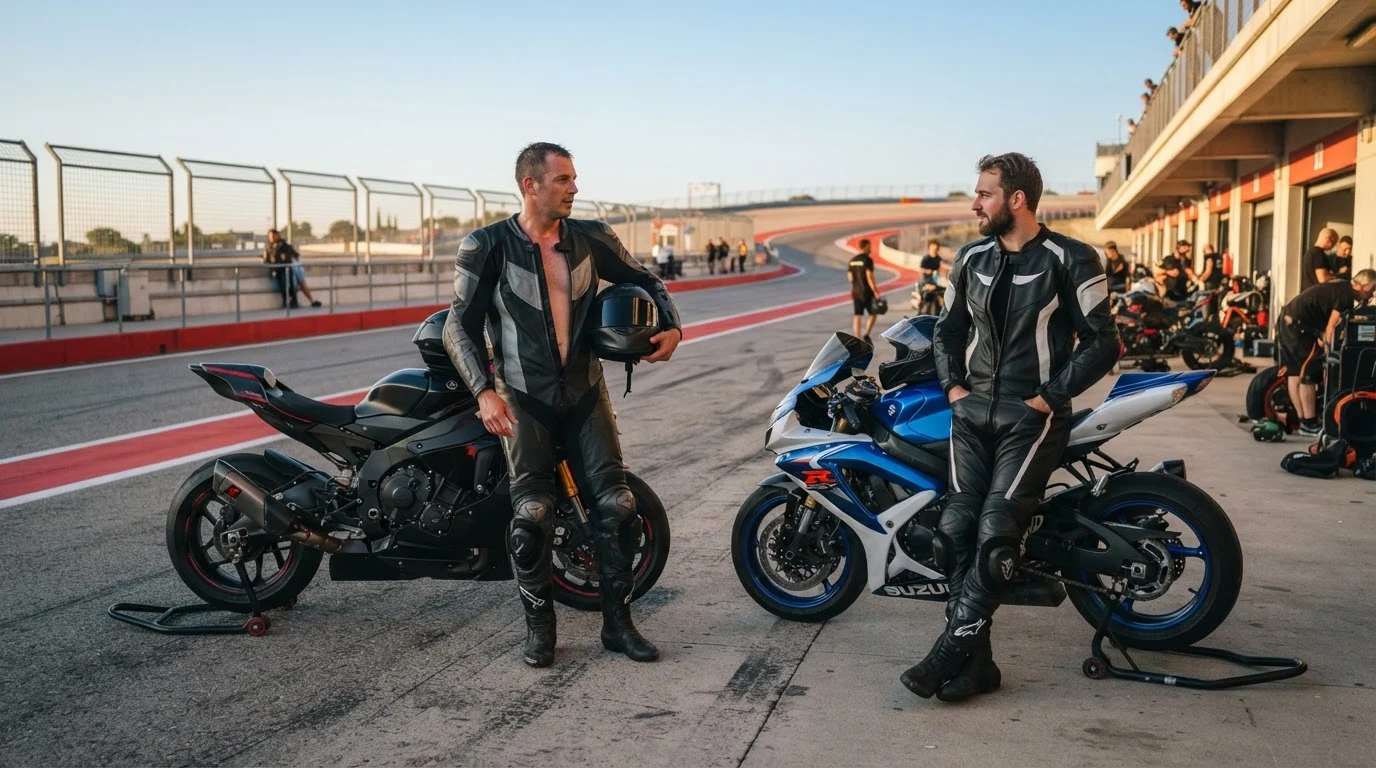
Is a Vintage Alpinestars Leather Jacket Still Worth Buying in 2026? Modern Value and Alternative Guide
Evaluating the modern value, collectible pricing, structural aging, and dry-rot risks of vintage Alpinestars leather jackets in 2026. Discover restoration economics and custom bespoke racing leather alternatives.
Key Takeaways & Executive Evaluation
- Collector Valuation in 2026: Archival racing jackets trade between $350 and $950, but hidden restoration costs (armor replacement, zipper repair, seam re-stitching) frequently add $200 to $400 to the total investment.
- Armor & Polymer Degradation: Internal polyurethane and EVA armor pads manufactured over 15 years ago suffer from hydrolytic degradation, turning into brittle powder that provides zero impact attenuation.
- European Athletic Cut vs American Fit: Vintage Italian-designed sport cuts feature aggressive pre-curved sleeves and narrow waist tapers that fit poorly on broad or relaxed body types.
- Leather Hide Integrity: While 1.3 mm track cowhide is inherently robust, improper storage causes collagen desiccation and micro-cracking across high-flex zones.
- The Bespoke Custom Solution: Commissioning a made-to-measure custom leather jacket delivers virgin full-grain cowhide, modern CE armor accommodation, and exact anatomical alignment with zero vintage structural liability.
Artisan Independence & Trademark Notice: Lux Wearz is an independent bespoke leathercraft atelier. All brand names, logos, and trademarks mentioned in this article (including Alpinestars® and related trademarks) belong exclusively to their respective trademark holders. Lux Wearz is not an authorized distributor, licensee, or affiliated partner of these brands. All brand references and historical retrospectives are made strictly for educational, comparative, and sizing review purposes under Fair Use. Lux Wearz specializes in custom-tailored, heirloom-grade genuine leather outerwear handcrafted individually in our private workshop.
Is a Vintage Alpinestars Leather Jacket Still Worth Buying in 2026?
Vintage Alpinestars leather jackets remain highly collectible for style enthusiasts and paddock fashion purists in 2026, but their functional safety for high-speed riding is often severely compromised by aged brittle seam threads, desiccated internal foam armor, and stiffened leather hides that demand substantial restoration investments.
As the Y2K aesthetic and vintage motorsport outerwear continue to dominate modern streetwear, prices for archival leather track jackets have reached historic highs on secondary resale platforms. However, deciding whether to purchase an aging 1990s or early 2000s garment requires separating nostalgic styling from structural realities. Below is an exhaustive technical guide evaluating collector economics, material longevity, and custom leathercraft alternatives.
The Golden Era of Italian Racing Leathers: Veneto Heritage and Track Innovation
Founded in the scenic foothills of Asolo, Northern Italy, in 1963, Alpinestars derived its name from the resilient alpine star flower (Stella Alpina). Initially manufacturing revolutionary motocross boots that replaced fragile lace-up footwear with protective steel-buckled shin plates, the atelier soon expanded its leathercraft mastery into road racing and Grand Prix motorcycle competition.
Throughout the 1980s, 1990s, and 2000s, Italian racing leathers established the global benchmark for track ergonomics. Collaborating closely with world champions across 500cc and MotoGP circuits, designers pioneered articulated accordion stretch zones, external thermoplastic shoulder sliders, aerodynamic speed humps, and precision pre-curved sleeves designed to match aggressive full-tuck track postures.
These technical breakthroughs permanently transformed motorcycle safety apparel from heavy, boxy touring coats into high-performance kinetic second skins. Today, garments from this golden era carry profound cultural weight, evoking the golden age of two-stroke Grand Prix racing. Yet, when acquiring these archival garments decades after their manufacture, collectors must navigate the inevitable physical degradation of organic leather and synthetic polymer components.
Archival Silhouette Matrix: Racing Cuts, Track Ergonomics, and Fit Architecture
Unlike relaxed cruiser jackets engineered for upright highway riding, sportbike and racing leathers utilize an aggressive athletic chassis. Sizing errors are common when collectors fail to account for European drop measurements and forward sleeve rotation. The table below outlines the structural specifications across iconic performance cuts.
| Silhouette Model | Cut & Fit Type | Shoulder / Chest Offset | Ideal Body Profile | Leather Weight & Temper |
|---|---|---|---|---|
| Full-Tuck Track Racing Jacket | Ultra-Fitted Aggressive European Cut | +1.0 to +2.0 inches Chest Ease | Athletic / Lean, Deep Forward Reach | Heavyweight Full-Grain Cowhide (1.3 mm), Firm Temper |
| Hybrid Airflow Street Jacket | Semi-Sport Perforated Commuter Cut | +2.0 to +3.0 inches Chest Ease | Lean to Medium Build, Neutral Sport Posture | Perforated Milled Cowhide (1.2 mm), Medium Temper |
| Vintage Neo-Retro Cafe Jacket | Streamlined Athletic Road Cut | +2.5 to +3.5 inches Chest Ease | Athletic to Standard Build, Upright Riding | Supple Drum-Dyed Cowhide (1.1 - 1.2 mm), Medium-Soft Temper |
| One-Piece Professional Race Suit | Skin-Tight Anatomical Track Suit | 0 to +1.0 inch Ease (Base Layer Only) | Pro-Track Physique, Maximum Lean Angle | 1.3 mm Racing Cowhide / Kangaroo Leather, Rigid Form |
| Women's Technical Sport Jacket | Tailored Hourglass Ergonomic Cut | +1.5 to +2.5 inches Chest Ease | Female Riders, Articulated Waist Taper | Supple Full-Grain Cowhide (1.1 - 1.2 mm), Soft-Medium Temper |
When purchasing European-sized outerwear, always verify whether measurements correspond to chest circumference or flat garment width. A size EU 52, for example, is engineered around a 41-42 inch chest with a tight 34-36 inch waist taper. To calibrate your body measurements accurately against international standards, review our Comprehensive Size Guide.
Kangaroo Leather vs Bovine Full-Grain Hide: Tensile Shear Mechanics at 160 MPH
In the highest echelons of professional motorcycle racing, material selection is dictated by the microscopic structure of animal hides. While standard commercial sport jackets utilize bovine (cowhide) leather, premier racing suits frequently incorporate Australian kangaroo hide along high-abrasion impact zones.
The cellular morphology of kangaroo leather differs fundamentally from bovine hide. Bovine collagen fibers are organized in complex multidirectional bundles that exhibit a vertical angle of braid. Under high-speed friction against coarse asphalt, these vertical fibers can shear and separate. In contrast, kangaroo hide features an intensely dense, parallel cross-hatched collagen matrix with very little sweat gland interruption. This uniform micro-structure provides exceptional tensile tear strength and puncture resistance at significantly reduced thickness.
Consequently, an artisan tailor can utilize 0.9 mm to 1.0 mm kangaroo hide to achieve the equivalent slide protection and abrasion threshold of 1.3 mm to 1.4 mm cowhide. For the competitive rider, this 30% reduction in hide thickness translates directly into substantial weight savings, decreased rider fatigue during 45-minute track sessions, and unparalleled tactile flexibility when reaching for handlebar controls. However, kangaroo hide requires specialized tanning and conditioning, as its dense grain structure demands lightweight lipid penetrants rather than heavy waxy greases.
Kinetic Mechanics: Forward Sleeve Rotation, Accordion Flex Panels, and Comfort Realities
The defining engineering feature of competition motorcycle outerwear is forward sleeve rotation. In pattern-making terms, the sleeve cylinder is drafted rotated forward at a 35 to 45-degree angle relative to the torso axis, perfectly matching the posture of a rider gripping low clip-on handlebars. While this design provides unmatched comfort and zero fabric bunching when crouched over a gas tank, it feels restrictive and unnatural when standing upright or walking through city streets.
When wearing a true track-spec leather jacket in a standing position, the front of the shoulders is pulled forward, causing the chest to cave slightly and creating tension across the upper shoulder blades. Additionally, vintage leather racing suits incorporate heavy-gauge accordion stretch leather along the lower back, knees, and above the elbows. Over twenty years of environmental exposure, the internal natural rubber elastic threads powering these accordion pleats frequently dry out and lose tension, causing the leather folds to sag loosely rather than retracting snugly against the body.
CE Armor Certification Standards Explained: EN 1621-1 vs EN 1621-2 Impact Attenuation
A major vulnerability of vintage motorcycle garments lies in obsolete impact absorption technology. In modern motorcycle safety apparel, armor inserts are rigorously tested and certified under European Committee for Standardization (CE) norms: EN 1621-1 for limb protectors (shoulders, elbows, knees) and EN 1621-2 for central back protectors.
Under EN 1621-1 testing, a 5-kilogram drop-weight delivers an impact energy of 50 Joules onto the protector. To achieve Level 1 certification, the armor must limit the transmitted force to a maximum peak of 35 kiloNewtons (kN). To earn Level 2 certification—the gold standard for track and high-speed road riding—the armor must attenuate the force down to an average transmitted peak under 18 kN (and under 9 kN for back protectors under EN 1621-2).
Vintage jackets from the 1990s and early 2000s were manufactured either before these strict standards were established or utilized primitive closed-cell polyethylene foam blocks. Over decades of oxidation and thermal cycles, these vintage foam pads lose their viscoelastic dampening properties, solidifying into rigid plastic slabs that transmit nearly 100% of impact energy directly into the rider's clavicle, humerus, or elbow joints. Upgrading any vintage jacket with modern viscoelastic memory foam (such as CE Level 2 inserts that remain flexible until instantaneous molecular hardening under kinetic impact) is an absolute safety necessity.
Material Longevity, Polymer Hydrolysis, and Restoration Economics Matrix
Prospective buyers must understand how the various components of a high-performance motorcycle jacket age over a 20- to 30-year lifecycle. While full-grain leather can survive for half a century with proper care, synthetic components degrade much more rapidly due to environmental hydrolysis and oxidation.
| Component / Material | Original Function | Degradation Mode After 15-25 Years | Safety Impact | Restoration Feasibility & Cost |
|---|---|---|---|---|
| 1.3 mm Racing Cowhide | Primary Abrasion Barrier | Fiber Stiffening, Grain Desiccation | Moderate (Safe if Flex Fissures are Absent) | High: Deep Lipid Conditioning ($50 - $120) |
| Polyurethane Internal Armor | Impact Shock Absorption | Chemical Hydrolysis (Crumbles to Powder) | Severe (Zero Impact Attenuation) | High: Replace with Modern CE Level 2 Armor ($80 - $150) |
| Nylon/Polyester Seam Threads | Structural Panel Assembly | UV Decay, Sweat Acid Rot | Critical (Risk of Seam Burst on Impact) | Moderate: Full Panel Restitching ($150 - $350) |
| Stretch Kevlar/Polyamide Panels | Underarm & Inseam Articulation | Elasticity Loss, Heat Degradation | Low to Moderate (Drafting & Fit Sag) | Low: Complex Panel Replacement ($200+) |
| Metal Main Zipper (YKK/Riri) | Front Closure Containment | Tooth Wear, Slider Jamming | High (Jacket Can Blow Open at Speed) | Moderate: Professional Zipper Replacement ($60 - $110) |
| Polyester Mesh/Satin Lining | Comfort & Perspiration Management | Tearing, Acid Discoloration, Odor | Minor (Purely Aesthetic & Comfort) | High: Complete Atelier Relining ($120 - $220) |
As demonstrated by this economic matrix, purchasing a vintage racing jacket for $450 that requires armor updates, seam reinforcement, and zipper repair can quickly escalate into an $800 to $1,000 project. For guidance on assessing leather hydration and preventing fiber brittleness, refer to our Leather Care Guide.
The Collector's Archival Inspection Protocol: 5 Critical Checks Before You Buy
If you are actively scouting vintage marketplaces for authentic 1990s or 2000s track leathers, use this professional 5-step checklist to avoid costly mistakes:
1. The Foam Armor Powder Check
Unzip the internal armor pockets located at the elbows, shoulders, and back protector sleeve. Feel the internal pads. If the foam feels crunchy, rock-hard, or leaves a fine yellow/grey powder on your fingers, the polyurethane has undergone complete chemical hydrolysis. Never ride with decomposed armor; it must be extracted and replaced immediately.
2. The Elbow Flex Pinch Test
Pinch the leather hide firmly along the outer elbow and shoulder caps. If the surface feels like cardboard or emits a faint crackling sound, the natural lipids have evaporated completely. Look closely under bright light: if microscopic white fissures appear across the grain valleys, the leather has suffered fiber desquamation and cannot be restored to full tensile strength.
3. Underarm Seam Tensile Inspection
Underarm seams absorb heavy perspiration during spirited riding. The acidic salts in human sweat degrade polyester threads over time. Gently pull the underarm panels in opposing directions; if the seam separates or reveals loose, looping threads, the seam requires immediate structural restitching.
4. Collar and Cuff Neoprene Decay
Many sport jackets feature comfortable neoprene or microfiber trim along the collar and wrist cuffs. Over decades, synthetic neoprene turns sticky, gummy, or brittle, adhering uncomfortably to skin and ruining shirts. Check that cuff edgings remain soft, pliable, and non-tacky.
5. Zipper Stop and Insertion Pin Health
Examine the bottom metal insertion pin on the main front zipper. If the surrounding fabric tape is frayed, frayed threads will jam in the slider box, leading to sudden zipper blow-outs while riding. Replacing the entire zipper track requires delicate surgery through multiple leather facings.
Curated Retrospective: Featured High-Performance Models in the Lux Wearz Catalog
For enthusiasts who love the kinetic lines, aggressive color-blocking, and track-tested pedigree of motorsport outerwear, the Lux Wearz catalog features genuine, authentic leather models ready for road and street wear. Explore five standout pieces currently available:
1. Alpinestars Revern Leather Jacket
The Alpinestars Revern Leather Jacket bridges track-proven protection with refined urban styling. Handcrafted from premium 1.3 mm bovine leather, this jacket features low-profile CE Nucleon Flex Plus armor, subtle tonal branding, and articulated shoulder gussets that provide relaxed all-day mobility without sacrificing high-speed abrasion resistance.
2. Alpinestars Dusk Airflow Leather Jacket
Engineered for high-intensity warm-weather riding, the Alpinestars Dusk Airflow Leather Jacket incorporates localized micro-perforation zones across the chest and torso. Its supple full-grain chassis delivers maximum airflow while maintaining a certified slide barrier, making it an essential option for summer streetfighter riders.
3. Alpinestars Dyno Leather Jacket
Paying homage to archival paddock coats of the 1980s, the Alpinestars Dyno Leather Jacket showcases bold heritage chest stripes and a classic cafe racer collar. Crafted from ultra-supple treated cowhide with integrated thermal vest lining, it provides timeless vintage appeal backed by contemporary internal armor.
4. Alpinestars Women's Stella Maver-X Leather Jacket
Specifically engineered around the female athletic form, the Alpinestars Women's Stella Maver-X Leather Jacket combines an hourglass ergonomic silhouette with heavy-duty bovine hide. High-stretch accordion inserts at the waist and shoulder blades accommodate aggressive forward riding positions while flattering natural curves.
5. Alpinestars GP Tech V4 Leather Suit
For competitive circuit riders, the Alpinestars GP Tech V4 Leather Suit represents the pinnacle of Grand Prix racing technology. Integrating virgin kangaroo and bovine hide with external elbow and knee sliders, Kevlar reinforcement zones, and seamless Tech-Air airbag compatibility, it represents the gold standard of professional track safety.
To explore our full curated inventory of motorsport apparel and racing leather jackets, browse the official Alpinestars Brand Catalog.
The Bespoke Custom Alternative: Handcrafted Racing Leathers Tailored to Your Body
When weighing the compromises of aged vintage garments against the steep price of brand-new off-the-rack racing suits, discerning motorcyclists increasingly choose the bespoke custom route. At Lux Wearz, our bespoke atelier crafts individual, made-to-measure leather jackets that combine vintage aesthetic charisma with uncompromising modern construction.
1. Virgin 1.3 mm to 1.5 mm Full-Grain Leather Selection
Unlike pre-owned coats with unknown histories of sun damage or sweat rot, every bespoke commission begins with hand-selected virgin full-grain cowhide or drum-dyed lambskin. Preserving the complete natural grain layer ensures maximum tensile tear resistance, supple flexibility, and a stunning organic appearance that molds to your body from day one.
2. High-Tensile Tex 90 Bonded Nylon Assembly
Every seam in a Lux Wearz bespoke garment is sewn with premium Tex 90 bonded nylon thread. Load-bearing stress zones at the shoulders, elbows, and hips feature internal leather backing strips and double-row safety lap stitching that will never burst during highway friction.
3. Modern Ergonomics with Individual Anatomical Drafting
Instead of forcing your body into a generic European athletic mold, our master patternmakers draft an exclusive individual pattern from 14 of your unique anatomical measurements. Whether you need extra room across broad shoulders, custom sleeve lengths, or a tailored waist drop, your jacket is sculpted to fit your physique flawlessly.
4. Customizable Linings and Hardware
Tailor your creation with personalized interior details: luxury breathable cupro linings, diamond-quilted thermal insulation, internal concealed carry or smartphone pockets, and heavy-duty antiqued brass or black oxide YKK zippers. Start your custom bespoke journey today by submitting your measurements at our Custom Order Atelier.
Sizing Architecture: How to Measure for Sport and Racing Leather Outerwear
Achieving an impeccable fit in technical riding leathers requires exacting measurements. Unlike casual fashion apparel, technical outerwear must keep protective armor cups securely seated against your joints during motion.
Step-by-Step Measurement Protocol:
- Chest Measurement: Wrap a flexible tailor's tape horizontally around your chest at nipple level, keeping arms relaxed at your sides. Sport jackets generally require 2.0 to 3.0 inches of ease over true chest circumference for adequate mobility.
- Waist & Beltline Circumference: Measure at your natural waistline, approximately two inches above your hips. European racing jackets feature a pronounced waist drop; ensure the waist measurement provides a snug closure over your riding pants.
- Shoulder Span: Measure straight across the back from the tip of the left shoulder bone to the tip of the right. Correct shoulder width keeps sleeve armor aligned over the elbow joints.
- Pre-Curved Sleeve Length: With your arm bent at a 90-degree angle, measure from the outer shoulder tip down over the point of the elbow to the wrist bone. This measurement guarantees adequate wrist coverage when reaching for sportbike clip-ons.
For complete sizing tables, international conversion charts, and visual measuring guides, visit our Comprehensive Size Guide.
Long-Term Maintenance: Preserving Suppleness and Preventing Leather Dry-Rot
To ensure your leather outerwear survives for decades of reliable service, establish a consistent seasonal conditioning routine. Proper maintenance preserves essential moisture and keeps leather fibers flexible under road stress.
1. Cleaning Road Grime
After spirited rides through dust, rain, or insect swarms, wipe down your jacket using a microfiber cloth dampened with distilled water. For persistent oil or road film, use a specialized pH-neutral leather foam. Never saturate the leather or immerse it in water.
2. Conditioning and Hydration
Apply a small amount of lanolin- or beeswax-based leather conditioner twice annually. Massage the cream gently into the hide, focusing on high-movement zones such as the shoulders, elbows, and collar. Allow the conditioner to absorb for 24 hours before gently buffing away any remaining surface residue.
3. Climate-Controlled Off-Season Storage
Store your leather jacket on a wide, contoured wooden hanger to preserve the shoulder structure. Never enclose leather in non-breathable plastic bags, which trap ambient humidity and promote mold growth. Keep garments in a cool, dark, well-ventilated space away from heating ducts. Read our complete instructions in the Leather Care Guide.
Explore Premium Leather Outerwear at Lux Wearz
From authentic curated archival racing pieces to one-of-a-kind bespoke leather jackets handcrafted to your exact personal measurements, Lux Wearz provides world-class leathercraft for discerning riders and collectors. Explore our full range of offerings today:
- Curated Brand Apparel: Shop genuine brand garments in our Alpinestars Brand Catalog.
- Handcrafted Bespoke Commissions: Design your dream custom leather riding jacket with virgin hides and personalized hardware via our Custom Order Atelier.
- Anatomical Sizing Assistance: Find your ideal fit across all cuts and silhouettes with our Comprehensive Size Guide.
- Artisan Leather Care: Learn how to clean, condition, and protect your investment via our Leather Care Guide.
- Explore All Jackets: Discover our full lineup of classic outerwear in Men's Leather Jackets or browse our complete collection at View All Products.
Explore The Full 2026 Leather Outerwear Collection
Vegetable-tanned full-grain cowhide, buttery New Zealand lambskin, and heritage Melton wool. Free express delivery across the USA with 30-day hassle-free returns.