
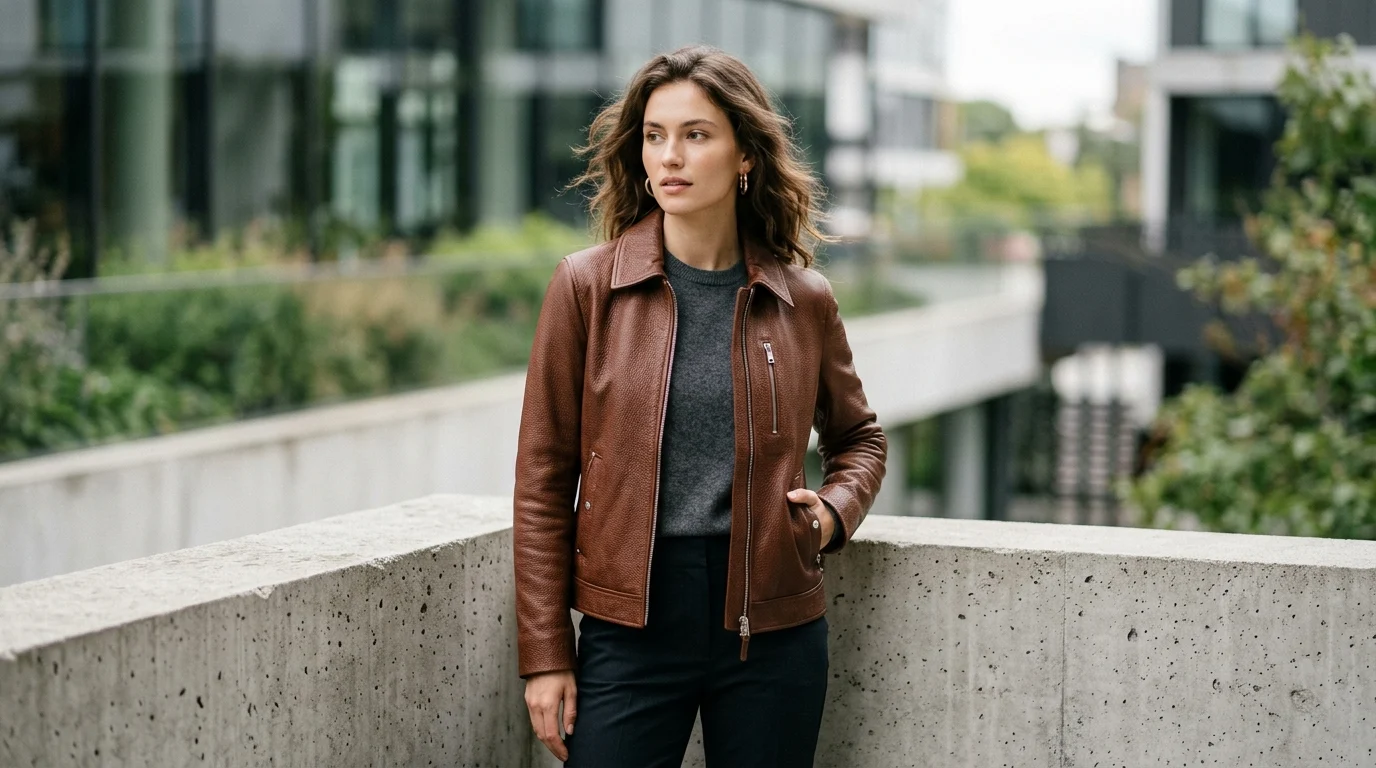
Is a Goatskin Leather Jacket Worth Buying for Daily Wear in 2026
Is a goatskin leather jacket worth buying for daily wear in 2026? Discover natural pebble grain, lanolin water resistance, tensile strength, and heirloom value.
Is a Goatskin Leather Jacket Worth Buying for Daily Wear in 2026
Key Takeaways
- High Strength-to-Weight Ratio: Full-grain goatskin measuring 0.8 to 1.0 millimeters delivers superior tensile tear resistance per millimeter of hide thickness compared to cowhide, offering lightweight all-day comfort without sacrificing durability.
- Natural Lanolin Weather Defense: Goatskin hides contain natural lanolin wax and tight surface pores that naturally repel light rain, road mist, and surface stains, preventing water spots and leather stiffening.
- Immediate Break-in Comfort: Full-grain goatskin features a supple, pliable grain structure that molds immediately to the wearer’s frame out of the box, completely eliminating the stiff break-in period required by heavy steerhides.
- Distinctive Pebble Grain Aesthetics: A natural, pronounced pebbled pebble texture provides luxurious tactile depth and conceals minor daily scuffs, aging gracefully into an authentic vintage patina over decades of wear.
- Artisan Custom Tailoring: Handcrafted made-to-order sizing guarantees tailored sleeve lengths, precise chest ease, and bespoke hardware choices for everyday commuters and leather connoisseurs alike. If your priority is maximum abrasion resistance and heavy armor-like heft, explore our complete full grain cowhide leather jacket investment guide.
Investing in a genuine leather jacket is one of the most rewarding wardrobe decisions an individual can make, yet choosing the correct hide often causes intense buyer hesitation. While heavy cowhide and buttery lambskin dominate fashion discussions, experienced leather craftsmen and military aviators have long revered full-grain goatskin as the ultimate sweet spot between featherweight mobility and rugged abrasion resistance. As outerwear trends in 2026 shift toward utilitarian quiet luxury, tactile pebble grain textures, and functional all-weather versatility, prospective buyers increasingly ask whether a goatskin leather jacket justifies its place as an everyday outerwear staple. Understanding the fibrous architecture, tensile tear strength, water-repellent properties, and distinctive aging characteristics of goatskin ensures you invest in an heirloom piece that outlasts fast-fashion trends by decades.
What Is a Goatskin Leather Jacket and How Is the Hide Characterized?
A goatskin leather jacket is a premium outerwear garment crafted from the tanned hide of mature goats, characterized by a prominent pebbled grain, lightweight flexibility, and exceptional tensile fiber density. Unlike corrected split leathers, authentic full-grain goatskin preserves the natural epidermal surface, showcasing organic grain variations and natural lanolin oils.
The distinct tactile personality of goatskin stems from the unique biological environment in which goats thrive. Grazing on rugged terrains and mountainous landscapes, goats develop dense, interlocked collagen fiber networks beneath their epidermis to protect against thorny brambles and extreme weather fluctuations. This biological adaptation produces a hide that is remarkably light yet astonishingly resistant to tearing and surface punctures. When examining full-grain goatskin under close magnification, one immediately notices a tight, ridged pebble pattern known as pebble grain or morocco grain. This textured topography imparts a handsome, three-dimensional depth that catches ambient light with a refined low-sheen luster. When browsing our comprehensive collection of mens leather jackets, you can observe how authentic natural grain structures distinguish master-crafted garments from artificial surface prints.
Furthermore, goatskin naturally retains significant concentrations of natural lanolin wax within its fiber matrix. Tanners preserve these protective waxes through specialized drum-dyeing processes, ensuring that the leather remains supple, soft, and flexible for decades without drying out into brittle fissures. This inherent pliability allows goatskin jackets to bend, fold, and flex effortlessly across high-movement zones such as elbows, armpits, and shoulder yokes. For fashion enthusiasts seeking classic military and civilian outerwear silhouettes, our curated range of mens classic leather jackets demonstrates how supple full-grain hides adapt seamlessly to structured collar architecture.
Why Did Military Aviators Historically Favor Goatskin for Flight Jackets?
Military aviators historically favored goatskin because the hide provided superior tear resistance, lightweight mobility, and water repellency in cramped cockpits during World War II. The United States Navy and Marine Corps officially standardized goatskin for the legendary M-422A and G-1 naval flight jackets because cowhide proved too heavy and stiff for high-altitude cockpit maneuvers.
Military aviation uniforms during the nineteen-thirties and nineteen-forties required uncompromising material engineering. Combat pilots operating Grumman Hellcats and Vought Corsairs flew in unpressurized, freezing cockpits where cabin temperatures plummeted, while hydraulic fluids, engine oil, and sea spray posed constant hazards. Heavy steerhide flight jackets absorbed engine moisture, froze into rigid boards at high altitudes, and constricted the pilot's arm movement when manipulating flight control sticks and rudder pedals. Naval aviation quartermasters discovered that drum-dyed goatskin solved every operational vulnerability.
Goatskin provided exceptional wind blocking and thermal defense while remaining completely pliable in freezing temperatures. Because goatskin fibers interlock diagonally rather than horizontally, the leather withstood the violent abrasion of parachute harnesses and cockpit bulkheads without shredding or blowing out seams. The natural lanolin content deflected salt spray and rain on aircraft carrier flight decks, allowing pilots to wipe away grime with a damp rag without rotting the leather. Even today, the United States military continues to specify genuine goatskin for official aviator issue. Enthusiasts interested in heritage military patterns and cockpit outerwear should explore our dedicated aviator jackets and mens bomber flight jackets to experience time-tested aviation design.
How Does Goatskin Compare to Cowhide and Lambskin for Everyday Wear?
Full-grain goatskin combines the rugged tear defense of heavy cowhide with the lightweight flexibility of soft lambskin, making it the most balanced leather for daily wear. While cowhide feels like heavy protective armor and lambskin feels like a delicate luxury glove, goatskin delivers durable all-day comfort without feeling heavy on the shoulders.
Evaluating hide characteristics side by side reveals distinct performance profiles:
- Hide Thickness and Weight: Full-grain cowhide measures 1.1 to 1.4 millimeters thick, weighing heavily on the body and providing heavy road armor for high-speed motorcycling. Full-grain lambskin measures 0.9 to 1.2 millimeters, offering buttery softness with a lightweight luxury drape. Goatskin measures 0.8 to 1.0 millimeters in thickness, delivering an astonishingly light feel that allows wearers to navigate crowded subway commutes, office environments, and cross-country flights without fatigue.
- Tensile Strength per Millimeter: Despite its lower millimeter thickness, goatskin possesses a higher tensile breaking strength per millimeter than cowhide. The interwoven protein fibers distribute localized pulling tension across a broader surface area, making goatskin nearly impossible to rip with everyday snagging hazards like doorknobs or car doors.
- Pebble Texture vs Smooth Grain: Lambskin typically features an ultra-smooth, delicate micro-grain that can scratch easily if grazed against brick walls or textured plaster. Cowhide presents a smooth to pronounced grain that softens with age. Goatskin features an organic, high-relief pebble pattern that naturally camouflages micro-scuffs, surface scratches, and daily wear marks, keeping the garment looking pristine with minimal upkeep.
Outerwear shoppers seeking a deeper comparative analysis between sleek sports silhouettes and rugged road gear can read our comprehensive guide on racing jacket vs biker jacket to explore collar geometries and zipper placements across different hide weights.
Goatskin Outerwear Silhouette & Architectural Matrix
| Silhouette Style | Collar Construction | Hide Thickness Target | Closure Mechanism | Pocket Architecture | Everyday Utility | Aesthetic Vibe | Price Range USD |
|---|---|---|---|---|---|---|---|
| G-1 Aviator Bomber | Mouton or shearling collar with throat tab | 0.8 - 1.0 mm goatskin | Center YKK brass zip with wind flap | Dual button-flap front patch pockets | Heavy all-weather utility | Heritage naval aviation | $249 - $399 |
| Cafe Racer Moto | Mandarin snap-tab band collar | 0.8 - 1.0 mm goatskin | Vertical center YKK brass closure | Zippered chest and slash waist pockets | Streamlined city commuting | Minimalist modern streetwear | $249 - $399 |
| Classic Double-Rider | Wide notched lapels with press studs | 0.8 - 1.0 mm goatskin | Asymmetrical diagonal brass zip | Angled utility zips and snap coin pocket | Dynamic weekend streetwear | Rebellious rock-and-roll | $249 - $399 |
| Tailored Field Shacket | Fold-down shirt collar with stand | 0.8 - 1.0 mm goatskin | Antique brass snap-front placket | Quad bellows pockets with snap flaps | Multi-season layering | Rugged outdoor utility | $249 - $399 |
Does a Goatskin Leather Jacket Provide Natural Water and Weather Resistance?
A full-grain goatskin leather jacket provides remarkable natural water and weather resistance due to tight epidermal pores and natural lanolin wax embedded in the hide. While leather should never be submerged in water, raindrops and light snowfall bead up on goatskin surfaces and roll off without soaking into the leather core.
Understanding the water-deflecting properties of goatskin protects your outerwear investment:
- Lanolin Barrier Protection: Lanolin is a natural waxy lipid synthesized by goat sebaceous glands to waterproof their fleece and skin against relentless mountain rainfall. During premium vegetable and chrome tanning, master tanners retain these hydrophobic waxes within the leather matrix. When light precipitation strikes the jacket, the natural wax forces the water droplets to maintain high surface tension, forming spherical beads that glide off the surface rather than saturating the underlying fibers.
- Resistance to Hardening and Stiffening: When standard bovine leather is repeatedly exposed to rainwater and dries out, the water evaporates alongside the hide's natural tanners oils, leaving the collagen fibers brittle, stiff, and prone to cracking. Goatskin's lanolin reserves prevent moisture displacement, ensuring that once the jacket dries at ambient room temperature, the hide remains just as soft, pliable, and supple as before the rainstorm.
- Wind Sealing Capabilities: The dense, interlocked fiber grain creates an impenetrable windbreak. In sub-zero autumn breezes or brisk motorcycle rides, a goatskin jacket halts wind chill instantly, preserving your core body warmth when paired with insulating thermal or wool knit layers underneath.
To master long-term hide preservation and prevent water spotting, review our comprehensive artisan leather care guide for step-by-step cleaning protocols.
Material & Durability Matrix
| Leather Hide Type | Hide Thickness | Hardware Specification | Interior Lining Material | Handcrafted Construction | Shipping & Delivery | Warranty & Returns | Price Range USD |
|---|---|---|---|---|---|---|---|
| Full-Grain Goatskin | 0.8 - 1.0 mm | Heavy-duty YKK brass zippers | Polyester satin lining | Master artisan hand-stitched seams | Free USA shipping, 3-5 business days | 30-day returns, 1-year warranty | $249 - $399 |
| Full-Grain Lambskin | 0.9 - 1.2 mm | Heavy-duty YKK brass zippers | Polyester satin lining | Hand-stitched artisan seams | Free USA shipping, 3-5 business days | 30-day returns, 1-year warranty | $249 - $399 |
| Full-Grain Cowhide | 1.1 - 1.4 mm | Genuine YKK brass zippers | Polyester satin lining | Reinforced double-needle artisan seams | Free USA shipping, 3-5 business days | 30-day returns, 1-year warranty | $249 - $399 |
| Genuine Standard Leather | 1.1 - 1.4 mm | Sturdy antique brass hardware | Polyester satin lining | Precision machine and hand assembly | Free USA shipping, 3-5 business days | 30-day returns, 1-year warranty | $149 - $249 |
| Bespoke Custom Made-to-Order | Hand-selected hides | Custom YKK brass hardware finishes | Breathable polyester satin lining | Bespoke pattern drafted to exact measurements | Ships in 7-14 business days | 30-day returns, 1-year warranty | $299 - $499 |
| Genuine Shearling & Aviator | Heavyweight hide | Reinforced YKK brass hardware | Genuine natural shearling fleece lining | Heavy-duty bound shearling seam construction | Free USA shipping, 3-5 business days | 30-day returns, 1-year warranty | $349 - $599 |
How Does Goatskin Age and Develop Patina Over Decades of Wear?
Goatskin ages with exceptional grace, developing a subtle, luminous luster and gentle softening around natural flex points without stretching out of shape or losing its pebble texture. High-friction areas such as elbow breaks, cuffs, and pocket welts burnish naturally, revealing warm undertones and rich color depth over years of daily wear.
The maturation of full-grain goatskin is one of its most alluring attributes:
- Burnished High Points: As you wear a drum-dyed goatskin jacket through daily routines, the natural friction against car seats, desk edges, and armrests gently polishes the raised crowns of the pebble grain. Over three to five years, these high-contact areas take on a rich, mellow sheen that contrasts against the darker, matte valleys between the pebbles. This multi-tonal dimensional patina creates an unmistakable heirloom appearance that synthetic polyurethane jackets can never replicate.
- Dimensional Creasing Without Sagging: Thick cowhide develops rigid, accordion-like creases across the forearms that can feel stiff against the skin, while thin lambskin can sometimes stretch permanently if subjected to excessive tension. Goatskin strikes the perfect balance: it forms soft, organic micro-creases that conform exactly to your elbow flexion and shoulder movement, yet the elastic collagen matrix springs back into shape when the jacket is hung, preventing sloppy bagging across the elbows or lower hem.
- Fade Resistance: Aniline and semi-aniline drum-dyed goatskin hides absorb color pigments deep into the fibrous core rather than receiving a heavy surface coat of synthetic paint. As a result, the jacket does not peel, crack, or flake when exposed to sun and atmospheric friction; instead, the hide mellows softly, deepening in tone like a fine leather binding or vintage saddle.
To discover how vintage leather silhouettes and heirloom aging principles fit into modern minimalist dressing, our guide on how to style capsule wardrobe leather essentials outlines essential outerwear longevity strategies.
Is Goatskin Suitable for Motorcycle Riding and Road Abrasion Defense?
Goatskin provides dependable abrasion defense and tear resistance for city riding and casual cruiser motorcycling, although heavy-duty track racing requires 1.2 to 1.4 millimeter cowhide. Because goatskin resists puncture and friction tearing better than lambskin, it serves as an outstanding material for urban commuters seeking protective styling without excessive weight.
Motorcycle riders must evaluate safety requirements against their riding style:
- Urban Commuting and Highway Cruising: For speeds up to forty-five to fifty-five miles per hour around city streets and scenic highways, full-grain goatskin provides excellent slide and tear resistance. The tight collagen structure prevents the hide from shredding upon initial surface impact with asphalt. Riders commuting to work appreciate that a goatskin moto jacket looks sharp and refined in professional settings while providing legitimate wind defense and road protection during the journey.
- High-Velocity Track Racing Limitations: On competitive racing circuits where slide speeds exceed seventy miles per hour, riders require thick, armor-reinforced 1.2 to 1.4 millimeter full-grain cowhide or kangaroo hide. Cowhide's greater physical thickness absorbs extreme friction heat generated during sustained fifty-yard slides without burning through to the skin. If your primary goal is track racing, full-grain cowhide remains the gold standard.
- Mobility and Control: Goatskin offers superior tactile dexterity and upper-body range of motion. Riders with aggressive clip-on handlebars or upright touring postures experience zero arm constriction when reaching for brake levers and throttles. Exploring our dedicated collections of mens biker moto jackets and womens biker jackets offers riders diverse protective silhouettes tailored for two-wheeled adventures.
How to Style a Goatskin Leather Jacket for 2026 Streetwear and Smart Casual
Styling a goatskin leather jacket leverages its distinctive pebble grain and soft drape to anchor sophisticated streetwear and polished smart-casual ensembles. Pairing textured goatskin against smooth wool trousers, raw selvedge denim, and crisp cotton basics creates effortless tactile harmony for any occasion.
Here are four field-tested outfit formulas for men and women:
1. The Minimalist Urban Commuter (Smart Casual)
- Outerwear: A dark espresso or black goatskin cafe racer jacket with a low band collar and antique brass YKK zippers.
- Base Layer: A charcoal grey fine-knit merino wool crewneck sweater.
- Bottoms: Tailored slim-straight navy blue wool dress trousers.
- Footwear: Polished black leather Chelsea boots.
- Accessories: A minimalist leather briefcase and brushed silver watch. The subtle pebble texture elevates the monochrome palette, creating an upscale look ideal for client meetings and fine dining. Explore our refined racing jackets for clean, minimalist necklines.
2. The Heritage Streetwear Specialist (Casual Downtown)
- Outerwear: A rich cognac brown goatskin G-1 aviator bomber jacket with a soft ribbed wool hem and dual utility patch pockets.
- Base Layer: A heavyweight off-white waffle-knit henley shirt.
- Bottoms: Straight-leg fourteen-ounce raw selvedge indigo denim.
- Footwear: Rugged Goodyear-welted leather work boots in tobacco brown.
- Accessories: A brass-buckled full-grain leather belt. This outfit celebrates heritage military roots with rugged, durable textures built for brisk autumn afternoons. Discover relaxed everyday silhouettes in our versatile casual jackets.
3. The Contemporary High-Low Street Style
- Outerwear: An oversized or relaxed-fit black goatskin biker jacket with wide notched lapels and asymmetric zips.
- Base Layer: A heavyweight grey cotton fleece hoodie with the hood resting cleanly over the leather collar.
- Bottoms: Tapered black relaxed-fit cargo pants or washed black skate denim.
- Footwear: Retro low-profile leather trainers or chunky designer sneakers.
- Accessories: A matte black leather crossbody sling bag. To understand how relaxed proportions interact with modern tailoring, explore our comprehensive breakdown on oversized vs fitted leather jackets.
4. The Feminine Texture-Rich Evening Look
- Outerwear: A cropped tailored black or caramel goatskin moto jacket hitting at the natural waistline.
- Base Layer: A fluid champagne satin slip dress or pleated knit skirt.
- Footwear: Sleek pointed-toe leather ankle booties with a modest heel.
- Accessories: Delicate gold hoops and a structured leather clutch. The contrast between the tactile pebbled hide and fluid silk fabric creates a captivating feminine silhouette. Women can discover diverse seasonal cuts across our dedicated womens leather jackets and womens classic leather jackets.
How Should a Goatskin Leather Jacket Fit Across Your Frame?
A goatskin leather jacket should fit close to the body with 1.0 to 2.0 inches of chest ease, providing a clean silhouette that accommodates light layering without restricting arm mobility. Because goatskin is naturally supple from day one, you do not need to buy an oversized size to compensate for leather stiffness.
Follow these artisan fitting rules when choosing your goatskin jacket:
- Shoulder Seam Alignment: The shoulder seam should sit squarely on the edge of your acromion bone. Because goatskin is pliable, an exact shoulder fit frames your posture cleanly without collapsing.
- Chest and Torso Ease: When fully zipped, the jacket should contour comfortably over your chest and ribs. You should be able to cross your arms forward comfortably without feeling pinching or seam strain across the upper shoulder blades.
- Sleeve Length and Wrist Break: With your arms hanging naturally at your sides, the sleeve cuffs should rest exactly at the base of your thumb. This length ensures that your wrists stay covered when reaching forward to drive a car or ride a motorcycle.
- Hemline Termination: Bomber and cafe racer styles should hit right at or one inch below your beltline (twenty-four to twenty-six inches in back length), elongating your legs and preventing bunching when seated.
Before finalizing your sizing choice, consult our dedicated Lux Wearz size and fit guide to capture accurate body measurements.
Why Handcrafted Custom Tailoring Delivers the Ultimate Goatskin Jacket
Selecting custom made-to-order tailoring ensures your goatskin leather jacket matches your exact anatomical dimensions, sleeve lengths, and styling preferences with zero off-the-rack compromises. Bespoke tailoring guarantees that the distinctive pebble grain is hand-matched across all garment panels for a harmonious visual flow.
Standard retail sizing charts assume an average body ratio that rarely aligns with real human physiques. Tall individuals frequently find that standard sleeves are too short and hemlines ride up their torsos, while broad-shouldered athletes struggle with tight armholes and oversized waists. Because goat hides are naturally smaller in surface area than bovine hides, pattern cutting requires artisan expertise to align grain density across chest panels, sleeves, and back yokes cleanly.
Lux Wearz solves these fit challenges through bespoke custom crafting:
- Hand-Matched Pebble Grain: Master cutters examine each full-grain goatskin pelt individually, matching pebble size, luster, and thickness across every visible seam.
- Anatomical Pattern Drafting: We draft custom paper patterns based on your exact neck, shoulder, chest, bicep, and torso measurements.
- Hardware and Pocket Customization: Choose between antique brass, brushed nickel, or gunmetal YKK heavy-duty zippers paired with customized interior security pockets.
- Complimentary Sizing Consultation: Every custom made-to-order jacket includes an individualized sizing consultation to review your dimensions and styling goals with our artisan team.
Design your heirloom piece today by exploring our custom made-to-order jackets crafting portal.
Looking for this trending silhouette? Explore our complete collection of handcrafted leather jackets with complimentary shipping across the USA. If you have questions regarding sizing specifications or leather selections, consult our frequently asked questions for comprehensive ordering details.
Explore The Full 2026 Leather Outerwear Collection
Vegetable-tanned full-grain cowhide, buttery New Zealand lambskin, and heritage Melton wool. Free express delivery across the USA with 30-day hassle-free returns.