
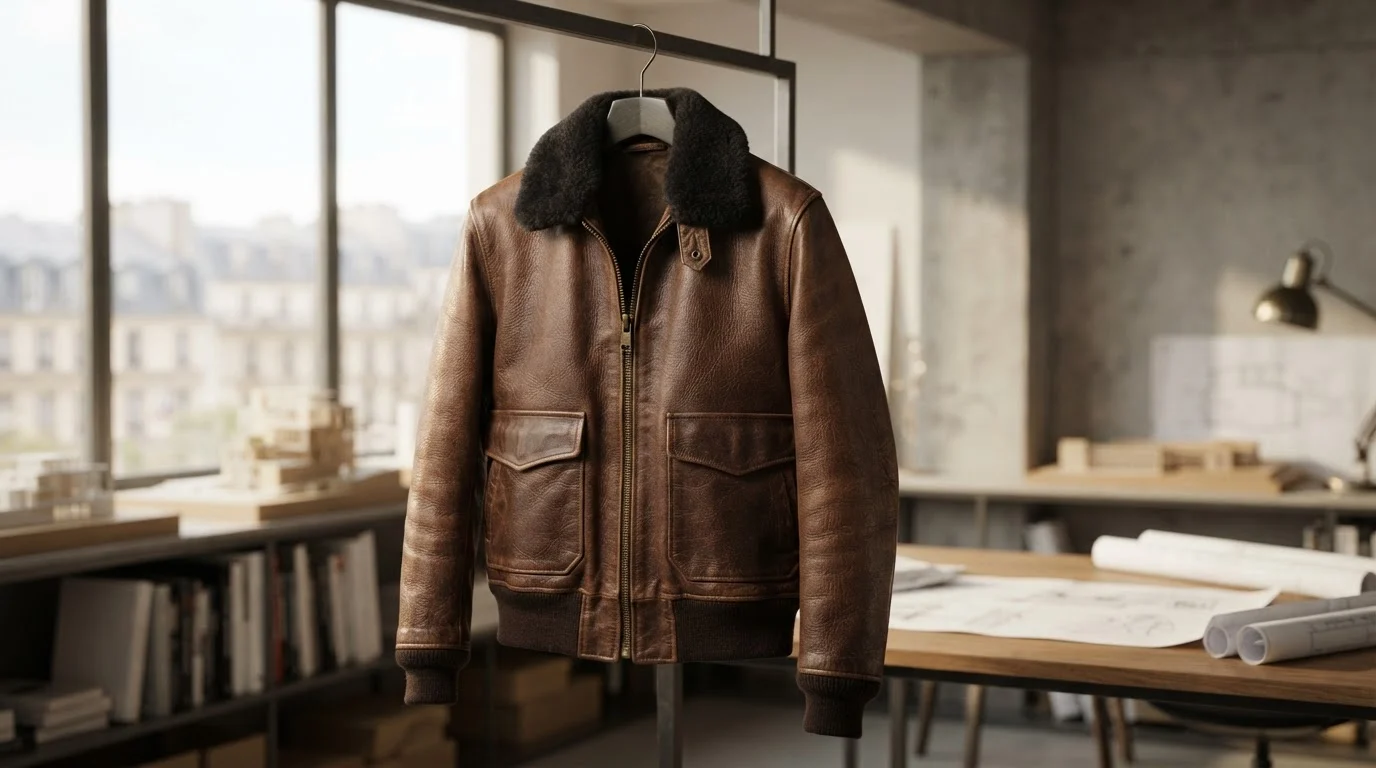
Avirex Leather Jackets Sizing, Fit Architecture, and Style Heritage Guide
Comprehensive Avirex leather jacket sizing and style heritage guide. Master vintage vs modern flight jacket fit, A-2 and G-1 silhouettes, goatskin durability, and custom tailoring.
Key Takeaways for Collectors and Leather Enthusiasts
- Avirex leather jackets represent an iconic intersection of twentieth-century military aviation specifications and 1990s urban streetwear culture, celebrated for heavy antique cowhides, iconic flight silhouettes, and intricate appliqué embroidery.
- Archival vintage sizing follows historical military and relaxed 1990s streetwear proportions with oversized chest dimensions and dropped shoulder seams, often requiring modern wearers to size down by one full size for a fitted silhouette.
- Authentic vintage flight jackets frequently feature heavy wool rib-knit cuffs and waistbands that are susceptible to moth damage, fiber fatigue, and loss of elastic recovery after decades of storage.
- Military-spec aviation hides historically utilized goatskin and heavyweight steerhide with vegetable-chrome retannage, whereas modern commercial reproductions often substitute lighter corrected top-grain hides.
- Outerwear connoisseurs seeking the authentic commanding presence of aviation classics without vintage fit compromises increasingly commission custom leather jacket tailoring mapped directly to their personal anatomical measurements.
Artisan Independence & Trademark Notice: Lux Wearz is an independent bespoke leathercraft atelier. All brand names, logos, and trademarks mentioned in this article (including Avirex® and related trademarks) belong exclusively to their respective trademark holders. Lux Wearz is not an authorized distributor, licensee, or affiliated partner of these brands. All brand references and historical retrospectives are made strictly for educational, comparative, and sizing review purposes under Fair Use. Lux Wearz specializes in custom-tailored, heirloom-grade genuine leather outerwear handcrafted individually in our private workshop.
How Do Avirex Leather Jackets Fit Across Vintage and Modern Collections?
Avirex leather jackets feature vintage aviation and military-spec sizing architecture characterized by generous shoulder drops, deep armholes, and relaxed chest circumferences, requiring buyers of archival bombers to size down one full size for a contemporary tailored fit, while modern bespoke leather tailoring achieves anatomical precision through personalized measurement drafting.
Navigating the sizing, material grades, and historical evolution of aviation-inspired outerwear requires understanding how military functional requirements were transformed into high-fashion luxury streetwear. Whether you are inspecting a rare vintage find or considering an heirloom custom commission, this comprehensive guide dissects every dimension of the craft.
The Archival Heritage of Avirex Aviation Outerwear
The story of the Avirex label began in 1975 when founder Jeff Clyman set out to recreate authentic, military-specification flight jackets that had been discontinued by the United States Armed Forces following the Second World War. Armed with original Department of Defense technical drawings, historical patterns, and procurement specifications, Clyman revived classic aviation outerwear with obsessive historical fidelity.
During the late 1970s and early 1980s, Avirex became an official supplier of A-2 leather flight jackets to the United States Air Force and supplied military-spec outerwear for major cinematic productions, most notably the 1986 blockbuster film Top Gun. The global cultural explosion of flight jackets that followed elevated military aviation apparel into mainstream international fashion.
However, the brand's most profound cultural transformation occurred in the early 1990s on the streets of New York City. Hip-hop icons, DJs, and streetwear tastemakers adopted oversized Avirex leather bombers as the ultimate symbol of street prestige and luxury armor. Models like the iconic leather varsity bomber, the All-American series, and intricate graphic-paneled aviator jackets became definitive style statements. Collectors interested in exploring available pieces in our curated Avirex collection will find that understanding this dual heritage—utilitarian cockpit engineering fused with flamboyant urban street luxury—is essential for appreciating the architecture of each design.
Deconstructing the Iconic Archival Silhouettes
Aviation and streetwear leather outerwear encompasses several fundamentally distinct silhouette families, each engineered with specific functional objectives that directly dictate fit and drape.
The A-2 Flight Jacket: The Army Air Forces Standard
Standardized in May 1931, the Type A-2 jacket is the quintessential American flight jacket. Designed for open cockpits and cramped bomber stations, original military patterns featured a relatively trim torso, a snap-down collar, hidden throat hook-and-eye closures, two front flap pockets with hidden snap closures, shoulder epaulets, and one-piece back construction to prevent seam chafing against aircraft seats. The silhouette is boxy through the upper chest but sits relatively high on the waist, designed to terminate directly at the wearer's beltline so it would not bunch while seated.
The G-1 Naval Aviator Jacket: The Marine Corps and Navy Icon
Adopted by the United States Navy in 1938 and officially designated the G-1 in 1947, this naval flight jacket is instantly recognizable by its plush mouton sheepskin fur collar and bi-swing pleated back. The bi-swing back incorporates elasticated internal webbing and deep shoulder gussets that allow complete, unrestricted forward arm reach—essential for naval pilots wrestling mechanical flight controls. The G-1 also features underarm aerators (perforated brass grommets) and button-closure front patch pockets with a distinctive curved flap on the left side.
The B-3 Heavy Winter Bomber: The High-Altitude Fortress
Engineered in 1934 for high-altitude B-17 and B-24 bomber crews operating in unpressurized, sub-zero cabins at 25,000 feet, the Type B-3 is constructed from heavyweight shearling sheepskin rather than cowhide. The interior of the jacket consists of dense, natural wool fleece that remains attached to the leather hide, while the exterior is treated with a weatherproof poly-acrylic lacquer coating. The B-3 features an oversized shearling collar with double buckled throat straps, side waist adjustment buckles, and zero knitted ribbing, resulting in an imposing, bulky silhouette designed strictly for extreme cold weather.
The 1990s Icon Streetwear Bomber: Urban Luxury Re-Imagined
Departing from strict military minimalism, the 1990s streetwear bomber retained the heavy rib-knit cuffs and hem of flight jackets but expanded the torso volume dramatically. Designers introduced exaggerated dropped shoulders, oversized armholes, and expansive chest circumferences to allow seamless layering over heavy fleece hoodies. The exterior was transformed into an elaborate collage of drum-dyed leather appliqués, chenille patches, and direct embroidery celebrating aviation insignia, athletics, and metropolitan pride.
Sizing and Silhouette Fit Architecture Matrix
To understand how each model drapes on modern frames, consult the detailed architectural matrix below before checking our official size guide.
| Silhouette Model | Cut & Fit Type | Shoulder / Chest Offset | Ideal Body Profile | Leather Weight & Temper |
|---|---|---|---|---|
| Archival Type A-2 Flight Jacket | Classic Military Boxy Cut | +1.5 in Shoulder / +4 to +5 in Chest Ease | Athletic to trim frames; sits directly at beltline | 1.2 to 1.4 mm Heavy Vegetable-Tanned Goatskin or Steerhide; Firm Temper |
| Type G-1 Naval Aviator Jacket | Bi-Swing Action Back Fit | +2.0 in Shoulder / +5 to +6 in Chest Ease | Broad-shouldered builds requiring full shoulder mobility | 1.1 to 1.3 mm Drum-Dyed Goatskin with Mouton Shearling Collar; Supple Temper |
| Type B-3 Heavy Winter Bomber | Bulky Extreme Cold Insulation Cut | +3.0 in Shoulder / +8 to +10 in Chest Ease | Heavy frames; winter layering over thermal knitwear | 15 to 20 mm Natural Sheepskin Shearling; Heavyweight Soft-Pliant Temper |
| 1990s Icon Streetwear Bomber | Exaggerated Oversized Street Fit | +3.5 to +4.5 in Drop Shoulder / +10 to +12 in Chest Ease | Broad frames; intentional baggy urban streetwear aesthetic | 1.3 to 1.5 mm Heavy Drum-Dyed Cowhide; Medium-Firm Temper |
| Modern Tailored Aviator Blouson | Contemporary Semi-Slim Cut | +0.5 to +1.0 in Shoulder / +3.5 to +4.5 in Chest Ease | Modern everyday metropolitan style; trim waist | 1.1 to 1.3 mm Full-Grain Lambskin or Soft Calfskin; Supple Malleable Temper |
| Lux Wearz Bespoke Custom Aviator | Laser-Calibrated Anatomical Cut | Exactly 0.0 in Shoulder Offset / Calibrated Custom Ease | Custom-drafted paper pattern matching unique personal measurements | 1.2 to 1.4 mm Virgin Full-Grain Steerhide or Italian Lambskin; Bespoke Temper |
Sizing Guide: Vintage Label vs Modern Measurements
One of the most frequent mistakes outerwear buyers make when purchasing archival leather jackets is relying on the stamped tag size. A vintage size 40 or Medium manufactured in 1994 measures vastly larger than a modern off-the-rack Medium from a contemporary designer label.
The Historical Cause of Sizing Discrepancies
During the 1980s and 1990s, outerwear patterns included significant functional ease. Military jackets were intended to be worn over thick wool uniform shirts, sweaters, and parachute harnesses. When streetwear culture adopted these garments in the 1990s, fashion demanded an oversized, slouchy drape. Consequently, an archival jacket labeled Size L (Large) often possesses a pit-to-pit chest measurement of 26 to 27 inches, corresponding to a total chest circumference of 52 to 54 inches. On a modern man with a 40-inch chest, this creates twelve to fourteen inches of excess fabric, resulting in drooping shoulders, excess fabric folding under the armpits, and sleeves that extend past the knuckles.
How to Measure Your Body for Leather Outerwear
To determine your true sizing requirements, use a flexible tailor's tape measure and record the following critical dimensions:
- Chest Circumference: Wrap the tape around the fullest part of your chest, keeping the tape level directly under the armpits and across the shoulder blades. Take a normal breath; do not puff out your chest or suck in your stomach.
- Shoulder Breadth: Measure across the top of your back from the outer tip of your left acromion shoulder bone straight across to the outer tip of your right acromion bone.
- Sleeve Length: With your arm resting naturally at your side with a slight elbow bend, place the tape at the tip of the shoulder seam and measure down the outside curve of the arm to the prominent wrist bone.
- Back Torso Length: Measure vertically down your spine from the base of the collar seam (the prominent C7 vertebra) down to where you want the jacket waistband to terminate (typically just below the beltline).
The Sizing Conversion Strategy
- If you desire an authentic, period-accurate 1990s oversized streetwear aesthetic with generous room for heavy hoodies, order your normal tag size.
- If you desire a contemporary, sharp tailored fit that flatters your silhouette over a light t-shirt or fine knit sweater, size down by one full size (for example, if you normally wear a 42, select a vintage 40 or 38).
- If you want zero sizing guesswork and a garment engineered to your exact shoulder width, sleeve length, and torso drop, choose custom tailored outerwear.
Leather Hide and Hardware Durability Matrix
The lifespan and weather resistance of flight and bomber jackets depend directly on hide selection, tannage methods, and structural component metallurgy. The table below outlines technical specifications for core outerwear materials.
| Component / Hide | Leather Grade & Tannage | Thickness (mm) | Weather Resistance | Expected Longevity | Maintenance Needs |
|---|---|---|---|---|---|
| Military-Spec Goatskin (MIL-J-7823) | Chrome-Tanned Drum-Dyed Full-Grain Goatskin | 1.1 to 1.3 mm | Superior natural water repellency; pebble grain sheds rain effortlessly | 50+ Years; exceptional abrasion resistance | Biannual light conditioning with neutral leather cream |
| Antique Heavyweight Steerhide | Vegetable-Chrome Re-Tanned Steerhide with Pull-Up Oil Finish | 1.3 to 1.5 mm | High; paraffin oil infusion creates natural moisture barrier | 40 to 60 Years; develops extraordinary high-contrast patina | Annual deep nourishment with beeswax-lanolin leather balm |
| Natural Shearling Sheepskin | Full-Thickness Sheepskin with Intact Wool Fleece (B-3 Grade) | 15 to 20 mm (including fleece) | Moderate; natural fleece insulates against sub-zero cold; exterior requires protection | 30 to 45 Years; requires humidity-controlled storage | Professional suede/shearling cleaning; keep away from soaking rain |
| Italian Nappa Lambskin | Chrome-Tanned Aniline Nappa Hide | 0.9 to 1.1 mm | Low to Moderate; ultra-luxurious silky hand-feel | 20 to 30 Years; ideal for metropolitan lightweight outerwear | Quarterly delicate conditioning; avoid abrasive contact |
| Heavy-Duty Brass Scovill / YKK Zipper | Solid Brass Alloy No. 8 & No. 10 Track with Cotton-Poly Tape | Heavy Industrial Gauge | 100% rustproof; self-lubricating teeth resist oceanic salt air | 50+ Years; withstands hundreds of pounds of lateral pull | Occasional paraffin wax lubrication along zipper teeth |
| 100% Worsted Wool Rib-Knit Trim | Double-Ply Heavy Worsted Wool Tubular Knit | Heavy Gauge Elastic Knit | Moderate; provides snug wind seal at cuffs and waistband | 10 to 15 Years; vulnerable to moth damage and friction wear | Cedar block storage protection; gentle hand-wash if detached |
Hide Analysis: Goatskin vs Steerhide vs Shearling
Flight outerwear historically utilized three distinct hide varieties, each chosen for specialized military environments. Understanding their metallurgical and cellular characteristics allows collectors and buyers to choose the ideal hide for their lifestyle.
Military-Specification Goatskin
For naval aviators flying off aircraft carrier decks, goatskin was the mandated hide under United States Navy specification MIL-J-7823. Goatskin possesses an exceptionally tight, interlocking grain structure with a distinctive pebble-like surface texture. Because goatskin contains natural lanolin fats deeply embedded within its fibers, it is naturally water-resistant and remarkably flexible even at extreme low temperatures. Furthermore, goatskin has the highest tensile strength-to-weight ratio of any commercial leather hide; a 1.1 mm goatskin jacket provides greater puncture and tear resistance than a 1.4 mm cowhide jacket while remaining significantly lighter and more supple on the wearer's shoulders.
Heavyweight Steerhide and Antique Cowhide
When civilian fashion labels adapted military patterns, steerhide and heavy cowhide became the materials of choice. Steerhide is derived from mature cattle and offers substantial heft, often weighing between 3.5 and 5.5 pounds for a complete jacket. Steerhide provides an impenetrable wind-blocking barrier, making it ideal for open-air motorcycling, cold winter walking, and rugged everyday wear. When treated with vegetable oils and pull-up waxes, steerhide exhibits stunning visual depth; as the leather bends and creases, oils migrate beneath the surface, revealing lighter golden-brown undertones underneath a rich dark chocolate exterior.
Natural Shearling Sheepskin
Used exclusively in heavy cold-weather flight jackets like the B-3 and RAF Coastal Command bombers, shearling is not a hide lined with wool; rather, it is the complete sheepskin pelt tanned with the natural wool fleece still firmly rooted in the dermal layer. This natural construction provides the highest thermal efficiency of any natural material known to textile science. The hollow fibers of the wool trap millions of micro-pockets of still air, creating an insulating thermocline that keeps the wearer comfortable in temperatures dipping well below zero degrees Fahrenheit. However, shearling requires diligent care; the exterior leather suede or napa finish must be protected from prolonged rain immersion to prevent wool matting and hide stiffening.
Pre-Owned Inspection Checklist for Archival Jackets
Acquiring a vintage aviation or urban leather jacket requires careful inspection. Decades of storage and active wear leave distinct signatures on natural materials. Follow this five-point diagnostic checklist before finalizing any pre-owned acquisition:
Checkpoint 1: Wool Rib-Knit Degradation and Moth Infestation
Inspect the knitted cuffs and waistband under bright light. Because vintage jackets utilized pure worsted wool ribbing, they were prime targets for clothes moths during summer storage. Look for tiny pinholes, severed yarn loops, or fraying along the folded cuff edge. Repairing small holes requires specialized darning by an artisan tailor; extensive rot requires complete ribbing replacement, which necessitates unpicking the lining and leather waist facing.
Checkpoint 2: Shearling Collar Root Integrity
For garments featuring a sheepskin collar (such as the G-1 or B-3), gently run your fingers through the wool fleece with light pulling pressure. If tufts of wool pull away easily from the leather backing with powdery white dust, the pelt has suffered chemical wool slippage or insect damage. Once sheepskin fleece loses root cohesion, bald patches will rapidly develop across the collar.
Checkpoint 3: Main Zipper Insertion Pin and Retainer Box
Examine the base of the front zipper. In vintage garments, the fabric tape adjacent to the metal insertion pin is the first component to fail from repeated forceful engagement. If the fabric tape is frayed, split, or missing its plastic reinforcement, the slider will misalign, causing the zipper teeth to jam and separate. Replacing a heavy-gauge flight jacket zipper requires an experienced leather specialist who can match the original stitch holes without creating a double-perforation track that weakens the front leather facings.
Checkpoint 4: Leather Dryness and Fiber Fracture
Pinch a fold of leather along the upper shoulder cap and back yoke, where sunlight and heat exposure are most intense. The hide should feel pliant, cool, and supple. If the leather feels rigid like dried cardboard or produces an audible crackling sound when flexed, the internal moisture content has fallen below critical levels. If fine hairline cracks are visible across the grain, the leather has suffered irreversible fiber breakdown.
Checkpoint 5: Odor and Storage Contamination
Smell the garment thoroughly, paying particular attention to the armpits and inner neck lining. Musty basement odors indicate active mold or fungal spores deep inside the fibrous corium layer. Chemical dry-cleaning odors indicate that previous owners improperly submerged the leather in volatile solvents, which strips away essential natural oils and leaves the hide brittle.
The Bespoke Advantage: Why Lux Wearz Handcrafts the Ultimate Custom Flight Jacket
While vintage flight jackets possess rich historical nostalgia, discerning modern outerwear enthusiasts often find that pre-owned pieces cannot meet their daily performance expectations. Compromised fits, deteriorating knitwear, musty odors, and fragile thirty-year-old hides make vintage garments difficult to wear with confidence.
At Lux Wearz, we resolve this dilemma by combining legendary aviation silhouettes with modern bespoke artisan construction. Through our private custom order atelier, you can commission a mastercrafted leather jacket designed to your exact specifications.
What Sets Lux Wearz Apart
- Individual Anatomical Pattern Drafting: We do not alter pre-made stock jackets. Every bespoke order begins with a brand-new paper pattern drafted exclusively to your unique measurements. We calibrate chest circumference, shoulder slope, sleeve length, bicep width, and torso drop to ensure your jacket drapes with sculptural perfection over your body.
- Virgin Full-Grain Leather Selection: We source only premium, hand-selected virgin full-grain cattle hides, goatskins, and Italian lambskins from ethical tanneries. Our hides are drum-dyed with natural aniline dyes and nourished with organic beeswax, ensuring breathtaking grain texture, supple hand-feel, and decades of beautiful patina development.
- Heavy-Duty Solid Brass Hardware: We exclusively install genuine solid brass zippers (industrial YKK No. 8 and No. 10 gauge), heavy-duty antiqued brass snaps, and solid-milled steel buckles. Our hardware is engineered for a lifetime of smooth, reliable operation under the most demanding conditions.
- Custom Lining and Insulation Architectures: Personalize your interior lining to match your climate. Choose ultra-breathable Cupro Bemberg for four-season comfort, heavy yarn-dyed cotton twill for rugged heritage warmth, or request a detachable genuine shearling collar or vest liner for adaptable cold-weather protection.
- Generational Longevity and Craftsmanship Guarantee: Every seam is sewn on industrial walking-foot machinery with bonded nylon thread that will never rot or snap. We reinforce high-stress zones with concealed stay-tape and backtack every critical junction.
Explore our extensive selection of men's leather jackets or browse our complete luxury outerwear collection to discover the unparalleled elegance of genuine bespoke leathercraft.
Modern Styling Blueprint: Mastering the Aviation Silhouette
The timeless, masculine architecture of the flight jacket makes it one of the most versatile garments in menswear. By pairing your jacket with deliberate wardrobe staples, you can seamlessly navigate casual, rugged, and sophisticated environments.
The Refined Metropolitan Aesthetic
Combine an unbranded dark walnut brown full-grain leather aviator jacket featuring a shearling collar with an ivory cable-knit fisherman sweater, tailored charcoal flannel trousers, and dark brown Goodyear-welted leather Chelsea boots. The tactile contrast between the rich pebble grain of the leather, the soft depth of the knitwear, and the clean drape of the trousers creates an effortlessly sophisticated ensemble suitable for fine dining or executive travel.
The Rugged Heritage Blueprint
For weekend outdoor pursuits or urban exploration, style an antique brown steerhide flight jacket over a heavy indigo chambray work shirt, a heavyweight slub cotton henley, dark raw selvedge denim jeans, and rugged leather service boots. The substantial weight of the jacket balances the raw texture of the denim, creating a functional, timeless heritage aesthetic that only improves with dirt, rain, and honest wear.
The High-Contrast Streetwear Edge
To channel the iconic 1990s urban look with contemporary refinement, wear an oversized black full-grain leather bomber jacket over a heavyweight heather grey loopback cotton hoodie, relaxed-fit black cargo trousers, and pristine retro leather high-top sneakers. Keep the hardware clean and unadorned, allowing the dramatic silhouette and luxurious grain texture of the leather to serve as the undeniable focal point of your outfit.
Essential Maintenance and Storage for Aviation Outerwear
Proper maintenance guarantees that your bespoke or archival leather jacket will survive for generations. Follow these fundamental preservation principles:
- Use a Heavy-Duty Contoured Wooden Hanger: The substantial weight of a leather flight jacket (often exceeding 4 pounds) requires robust structural support. Never use wire or thin plastic hangers, which focus pressure on narrow points and create permanent shoulder bumps. Choose a contoured cedar or hardwood hanger with a shoulder flare of at least two inches.
- Store in Breathable Natural Fabrics: Always store your jacket inside a breathable 100% cotton garment bag in a cool, dark, climate-controlled closet. Never seal leather inside synthetic plastic bags, which trap ambient humidity and induce mold growth while suffocating the hide.
- Address Moisture Promptly: If caught in rain or snow, gently wipe off standing water with a dry cotton cloth and allow the jacket to air-dry naturally on its wooden hanger at room temperature. Never place a damp leather jacket near a fireplace, heating radiator, or use a hair dryer; forced artificial heat desiccates natural oils and causes irreversible leather shrinkage.
- Routine Conditioning: Once per year, apply a light, even layer of natural beeswax-and-lanolin leather balm to replenish depleted oils and maintain hide suppleness. For detailed maintenance techniques and recommended conditioning formulations, read our complete leather care guide.
Final Considerations: Choosing Your Outerwear Legacy
Whether you are captivated by the storied history of twentieth-century military aviation or drawn to the bold swagger of 1990s urban streetwear, an authentic leather flight jacket remains an indispensable foundation of any serious wardrobe.
While vintage garments offer irreplaceable nostalgia, bespoke custom craftsmanship offers the ultimate luxury: a jacket built from virgin full-grain hides, engineered with solid brass hardware, and cut specifically to your unique anatomical measurements. At Lux Wearz, we invite you to experience the difference that dedicated artisan craftsmanship makes.
Begin designing your heirloom custom leather jacket today at our custom order studio, or explore our complete catalog of handcrafted leather outerwear at Lux Wearz.
Explore The Full 2026 Leather Outerwear Collection
Vegetable-tanned full-grain cowhide, buttery New Zealand lambskin, and heritage Melton wool. Free express delivery across the USA with 30-day hassle-free returns.