
Avirex Leather Jackets Care & Conditioning: Patina Guide [2026]
Complete atelier guide to Avirex leather jacket care, conditioning, and patina preservation. Learn how to clean vintage flight hides, restore oils, and protect patches.
Avirex Leather Jackets Care & Conditioning: Patina Guide [2026]
Key Takeaways
- Preserving Hide Collagen: Authentic aviation and heavyweight streetwear leather requires routine nourishment with pH-neutral, wax-lanolin conditioning balms to maintain fiber tensile strength and prevent irreparable micro-cracking.
- Knit Ribbing Protection: Wool and acrylic blend cuffs and waistbands are highly vulnerable to moth larvae, sebum staining, and mechanical elasticity loss; treat them with cedar repellant and dry steam rather than liquid conditioners.
- Vintage Appliqué Maintenance: Multi-layered leather patches and direct-embroidered chenille badges require targeted perimeter masking and specialized horsehair brush detailing to prevent wax accumulation in stitch grooves.
- Dry-Rot Detection: Irreversible chemical rot occurs when moisture-depleted hides suffer cellular breakdown; testing leather flexibility via the 90-degree fold test identifies whether an archival jacket is restorable or structurally compromised.
- Bespoke Artisan Alternative: When vintage jackets suffer terminal leather fatigue, commissioning a handcrafted made-to-measure leather jacket from the Lux Wearz private atelier guarantees virgin full-grain hides, modern tailoring, and lifetime durability.
Artisan Independence & Trademark Notice: Lux Wearz is an independent bespoke leathercraft atelier. All brand names, logos, and trademarks mentioned in this article (including Avirex® and related trademarks) belong exclusively to their respective trademark holders. Lux Wearz is not an authorized distributor, licensee, or affiliated partner of these brands. All brand references and historical retrospectives are made strictly for educational, comparative, and sizing review purposes under Fair Use. Lux Wearz specializes in custom-tailored, heirloom-grade genuine leather outerwear handcrafted individually in our private workshop.
How Do You Clean, Condition, and Maintain an Avirex Leather Jacket?
Caring for an Avirex leather jacket requires gentle surface dust removal with a horsehair brush, targeted pH-neutral cleansing, and regular deep conditioning with natural beeswax and lanolin emulsions. Avoiding alcohol-based solvents, high-heat drying, and direct sunlight preserves the dense collagen fiber network, prevents dry-rot, and nurtures rich, lustrous patina across vintage flight cowhide.
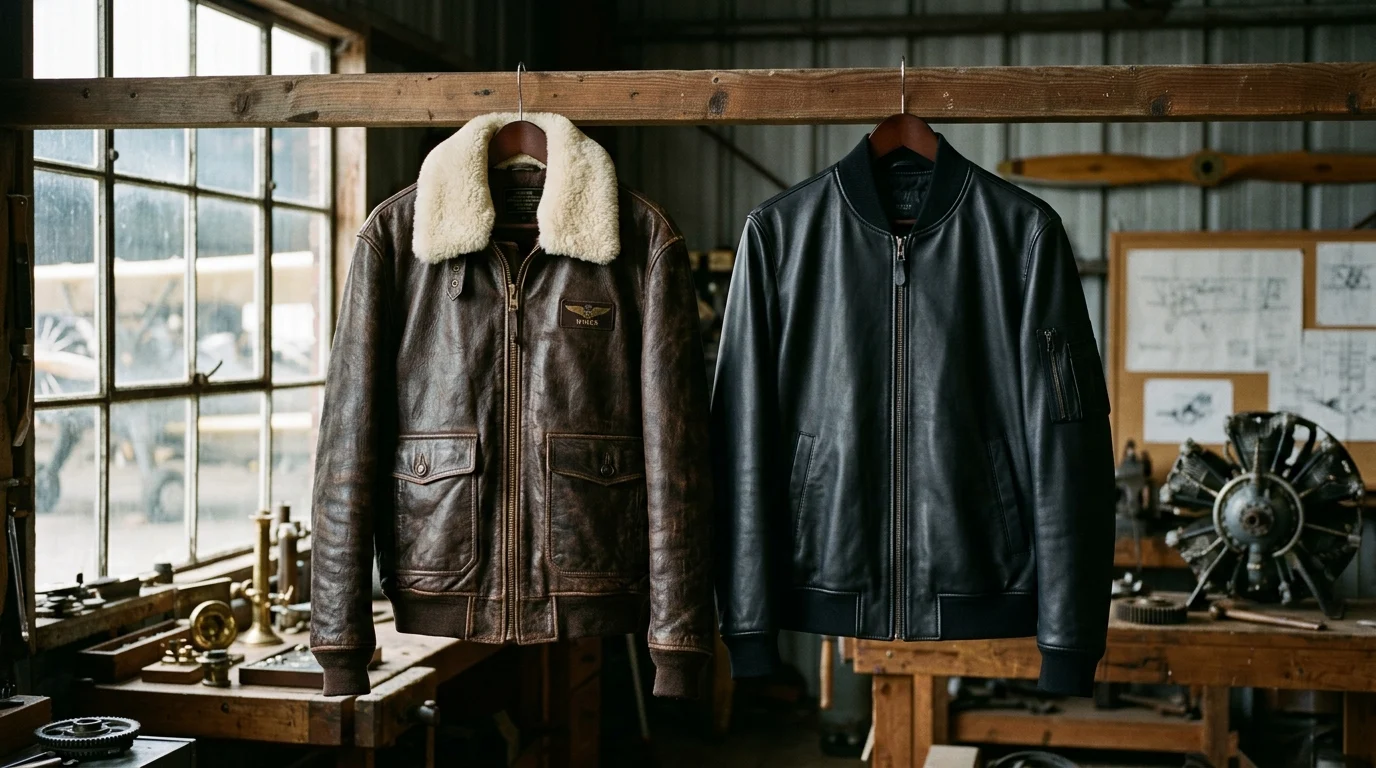
Few outerwear garments command the historical gravitas, cultural presence, and tangible physical heft of an authentic aviation-inspired leather jacket. Built with generous proportions, heavy-gauge antiqued brass hardware, and thick steerhide or lambskin panels, these jackets were originally drafted to withstand sub-zero cockpit drafts and decades of rigorous military service. During the 1990s and early 2000s, these rugged flight garments transitioned into the pantheon of iconic urban streetwear, celebrated for their multi-layered leather appliqués, bold color blocking, and commanding boxy drape.
However, the very characteristics that make these jackets iconic—thick full-grain hides, intricate embroidered leather patches, and ribbed wool knit trimmings—also make them uniquely demanding to maintain. Neglected leather loses its natural tallow and oils, causing the dense collagen fibers to stiffen, crack, and eventually suffer terminal dry-rot. Conversely, improper cleaning techniques using aggressive household detergents or excessive oils can saturate the hide, promote bacterial mildew, and permanently warp the garment's silhouette.
This master atelier guide details the exact science of leather preservation, step-by-step restoration protocols, hardware maintenance, and seasonal storage strategies required to keep your aviation and streetwear leather in museum-grade condition for generations.
The Chemical Anatomy of Flight Hides: Collagen, Tannins, and Moisture Balance
To properly care for heirloom leather outerwear, one must first understand what genuine leather actually is at a biological level. Animal skin is composed of a three-dimensional matrix of intertwined collagen protein fibrils. During the tanning process, raw hides are treated with either vegetable tannins (derived from tree bark and polyphenols) or chromium salts to halt organic decomposition and permanently stabilize the protein structure.
Once stabilized, the hide requires a precise equilibrium of two elements to retain its legendary strength and supple drape:
- Bound Moisture (12% to 15% Internal Equilibrium): Natural humidity trapped within the microscopic capillary network that allows the collagen fibers to slide across one another without shearing.
- Fatliquors and Lubricating Lipids: Emulsified natural tallows, oils, and waxes introduced during drum processing that coat the fibrils, preventing them from adhering to each other when dry.
Over time, exposure to dry atmospheric air, central indoor heating, vehicle cabin drafts, and ultraviolet sunlight evaporates this internal lipid reserve. When the lubricating fats deplete, the microscopic collagen fibrils grind directly against one another under mechanical stress, causing surface creasing to deepen into micro-fractures, which ultimately develop into visible surface tears.
Proper conditioning is not merely about making the jacket look shiny; it is a vital chemical recharge that replenishes depleted lipids deep inside the corium layer while leaving the protective epidermis breathable and resilient.
Step-by-Step Atelier Cleaning Protocol: From Dust Removal to Deep Cleansing
Routine cleaning should be performed every three to six months depending on environmental exposure, while deep cleaning is reserved for end-of-season maintenance or post-weather restoration. Always follow this four-phase protocol in exact sequence:
Phase 1: Mechanical Dry Dusting with 100% Horsehair
Never apply liquid cleaners or conditioners to a dusty leather jacket. Environmental dust contains microscopic silica particles with razor-sharp edges. Wiping a wet cloth across a dusty jacket grinds these abrasive crystals directly into the leather grain, scratching the delicate top finish.
- Take a soft, 100% genuine horsehair brush and brush the jacket systematically from top to bottom.
- Pay special attention to hidden dust traps: underneath the fold-down collar, inside the storm flap folds, around the zipper track tape, and within the deep pocket bellows.
- For multi-layered leather patches and appliqués, use a circular buffing motion to lift particulate debris trapped along the perimeter stitching.
Phase 2: Spot Cleaning and pH-Neutral Foam Washing
If the leather exhibits surface soil, street salt stains, or light oil smudges, treat only the affected zones using a specialized pH-balanced leather cleanser (pH 5.0 to 5.5). Avoid saddle soaps with high alkalinity (pH 8.0+), which strip natural tanning agents and cause accelerated drying.
- Moisten a high-density cosmetic sponge or closed-cell foam pad with distilled water—never use hard mineral tap water, which leaves calcium water rings.
- Work a dime-sized amount of leather cleanser into a rich, dry foam on the sponge before touching the jacket.
- Gently massage the foam into the soiled hide using light, overlapping circular motions. Do not scrub or saturate the leather.
- Immediately wipe away the lifted residue using a clean, dry microfiber cloth. Allow the treated area to air-dry naturally at room temperature for at least two hours.
Phase 3: Deodorizing and Cleansing the Internal Fabric Lining
Vintage aviation jackets frequently feature acetate satin, quilted polyester, or breathable cotton twill linings that absorb human sweat, skin oils, and ambient smoke. Because the leather shell cannot be submerged in water or dry-cleaned using standard chemical solvents, lining maintenance requires targeted dry-steam and enzyme misting:
- Turn the jacket inside out, supporting the heavy leather shoulders on a wide, padded wooden hanger.
- Lightly mist the armpit zones and neck lining with an equal mixture of distilled water and isopropyl alcohol (70%) blended with two drops of tea tree oil. The alcohol sanitizes odor-causing bacteria and evaporates rapidly without dampening the underlying leather hide.
- For heavy body odors, place the inside-out jacket in an enclosed garment bag with an open container of activated charcoal granules for seventy-two hours to absorb ambient volatile organic compounds.
Conditioning Chemistry: Choosing Between Balms, Milks, and Heavy Waxes
Applying the wrong conditioner is one of the quickest ways to ruin high-grade outerwear. Different leather tannages and finishing methods require distinct lipid viscosity levels:
1. High-Viscosity Beeswax and Lanolin Balms (For Heavy Steerhide and Antiqued Flight Leather)
Heavyweight aviation jackets built from 1.2 mm to 1.4 mm full-grain cowhide or distressed steerhide thrive on rich balms containing natural beeswax, USP-grade lanolin, and pure almond oil:
- How They Work: Lanolin possesses unique molecular properties that mimic the hide's natural tallow, penetrating deeply into the dense corium fibrils. The beeswax forms a breathable, semi-permeable exterior shield that repels rain while allowing moisture vapor to escape.
- Application Technique: Warm a hazelnut-sized portion of balm between your palms until it melts from body temperature. Work the warmed balm into the leather panels using your fingertips, starting at high-wear stress zones: elbows, shoulder seams, collar folds, and waistline edges.
2. Low-Viscosity Leather Conditioning Milks (For Nappa Lambskin and Lightweight Hoodies)
Garments constructed from ultra-soft 0.8 mm to 1.0 mm lambskin, calfskin, or buttery plongé nappa must never be treated with heavy wax balms. Heavy waxes clog the ultra-fine pores of lambskin, resulting in a sticky, waxy film that attracts lint and darkens delicate pastel dyes unevenly:
- How They Work: Formulated with light jojoba esters, water-soluble oils, and botanical triglycerides, leather milks absorb instantly into thin hides without adding grease or altering the supple, fluid drape.
- Application Technique: Apply the milk onto a plush microfiber cloth, fold the cloth to distribute the lotion evenly, and wipe across the lambskin panels with gentle, continuous strokes. Allow to absorb for thirty minutes, then buff lightly with a clean horsehair brush.
Table 1: Silhouette and Fit Architecture Matrix
Aviation and streetwear leather outerwear encompasses distinct historical cuts, from World War II military specifications to oversized 1990s hip-hop urban icons. Understanding the architectural differences between these silhouettes ensures proper maintenance and wardrobe pairing:
| Silhouette Model | Historical Archetype & Cut | Shoulder / Torso Architecture | Ideal Body Profile | Leather Weight & Characteristic Temper | Atelier Maintenance & Storage Demands |
|---|---|---|---|---|---|
| Classic A-2 Flight Bomber | WWII USAAF Standard Military Cut | Clean Boxy Torso, High Waistband, Snap Collar | Slim, Athletic, and Average Builds | 1.2 mm – 1.3 mm Firm Vegetable-Tanned Steerhide | Keep shoulder seams aligned on contoured wooden hangers; condition collar crease semi-annually. |
| G-1 Naval Aviator Jacket | US Navy Carrier Cockpit Spec | Bi-Swing Back Pleats, Mouton Fur Collar | Broad Shoulders, Muscular Athletic Builds | 1.3 mm – 1.4 mm Pebble-Grain Goatskin / Steerhide | Clean shearling collar with natural lanolin spray; exercise bi-swing accordion gussets to prevent leather stiffening. |
| Oversized Icon Street Bomber | 1990s Archival Hip-Hop Oversized Cut | Dropped Shoulders, Ultra-Deep Chest, Heavy Cuffs | Broad, Heavy, and Voluminous Streetwear Frames | 1.3 mm – 1.5 mm Heavy Drum-Dyed Cowhide | Requires extra-wide 2.5-inch coat hanger to prevent shoulder dimpling; delicate brushwork around embroidered patches. |
| N-2B Snorkel Flight Bomber | Cold-Weather Arctic Sub-Zero Parka | Relaxed Heavy Torso, Fur-Trimmed Split Hood | Universal Cold-Weather Layering Profiles | 1.1 mm – 1.2 mm Weatherized Waxed Cowhide | Hood zipper track requires regular paraffin lubrication; store uncompressed in breathable cotton garment bag. |
| Modern Nappa Leather Hoodie | Contemporary Luxury Crossover Cut | Slouchy Drop-Shoulder, Integrated Leather Hood | Modern Streamlined and Urban Profiles | 0.9 mm – 1.0 mm Ultra-Supple Lambskin | Avoid heavy waxes; condition exclusively with featherweight leather milks to preserve drape and hood fluidity. |
Leather Hide Metallurgy and Hardware Durability Matrix
The lifespan of an aviation jacket depends equally on the longevity of its hide and the mechanical integrity of its metal and textile closures. The durability matrix below outlines the performance thresholds of primary outerwear components:
| Outerwear Component | Material Grade & Specification | Thickness / Gauge | Wear-Resistant Profile | Expected Service Lifespan | Atelier Maintenance and Restoration Protocol |
|---|---|---|---|---|---|
| Antiqued Full-Grain Steerhide | Chrome-Tanned Drum-Dyed Bovine | 1.3 mm – 1.4 mm | Extreme Abrasion; Severe Wind Resistance | 35+ Years with Routine Care | Annual hydration with lanolin balm; buffing with horsehair brush to develop high-gloss friction patina. |
| Plongé Lambskin / Nappa | Aniline-Dyed Virgin New Zealand Hide | 0.9 mm – 1.0 mm | Moderate Windbreak; Vulnerable to Sharp Snags | 15–20 Years | Semi-annual conditioning with lightweight leather lotion; immediate water droplet blotting with microfiber. |
| Wool-Blend Ribbed Knit Trims | 70% Worsted Wool, 30% Acrylic Core | 2.5 mm Double-Knit Rib | High Elastic Memory; Susceptible to Moth Larvae | 8–12 Years (Replaceable) | Never apply leather conditioners; clean with dry steam; store with natural cedar blocks to prevent moth holes. |
| Heavy-Duty Brass Zippers | Antiqued Solid Brass (#10 Gauge) | 10 mm Interlocking Teeth | High Burst Tensile; Completely Rust-Proof | 30+ Years | Apply microcrystalline wax or bee-wax pencil along zipper teeth twice yearly to prevent slider binding. |
| Industrial Snap Fasteners | Reinforced Brass Base with Enamel Cap | 15 mm Diameter Grip | Resists Repeated High-Tension Pulls | 25+ Years | Inspect inner snap spring prongs; clean oxidized green verdigris using cotton swab moistened with white vinegar. |
Preserving and Restoring Ribbed Knit Cuffs, Waistbands, and Wool Accents
The weakest link on vintage flight jackets is rarely the leather itself; it is the knitted wool ribbing at the wrists and waist. These knit cuffs were engineered to seal body heat inside unpressurized cockpits, but after years of friction, sweat, and exposure, they exhibit three primary failure modes:
1. Moth Damage and Fiber Hole Prevention
Natural wool contains keratin, which is the primary food source for clothes moth larvae. If an aviation jacket is stored in a warm, dark closet without protective precautions, moth larvae will eat through the cuffs within weeks:
- Store your jacket exclusively with aromatic American red cedar blocks or lavender sachets. Avoid chemical mothballs, whose toxic paradichlorobenzene gases permanently contaminate leather hides with an unpleasant odor.
- If you discover active moth holes, isolate the garment immediately and place the knit sections in a sealed plastic bag inside a sub-zero freezer for forty-eight hours to neutralize any remaining insect larvae or microscopic eggs.
2. Restoring Stretched, Sagging Elasticity
Over time, wrists and waistbands lose their elasticity from repeated stretching over gloves and hips. You can partially re-energize stretched ribbing using controlled thermal contraction:
- Wet a clean cotton hand towel with warm distilled water and wrap it tightly around the stretched knit cuff.
- Hold a steam iron one inch above the towel, allowing penetrating steam to saturate the wool fibers without touching the hot iron plate directly to the knit.
- Remove the damp towel and gently reshape the cuff with your hands, pressing the ribs inward. Allow the cuff to dry completely on a flat towel away from sunlight. The heat and moisture cause the coiled wool fibers to contract back toward their original tension.
Pre-Owned Inspection Checklist and Common Vintage Flaws
The secondary market for vintage aviation and hip-hop leather jackets is thriving, with rare pieces commanding thousands of dollars among collectors. However, decades of neglect or improper storage can inflict terminal damage that no conditioner can reverse. Use this diagnostic inspection protocol before purchasing any pre-owned piece:
1. The 90-Degree Fold Test: Diagnosing Dry-Rot
Dry-rot is the irreversible chemical breakdown of collagen proteins within the hide. It occurs when a dehydrated jacket is stored in extreme heat or dampness, allowing acidic decomposition to consume the fibrous core:
- Gently fold a discreet section of leather (such as the interior pocket flange or lower rear hem) to a sharp 90-degree angle.
- If the leather folds smoothly and springs back without resistance, the hide fibers are healthy and fully salvageable.
- If the fold produces audible crunching sounds, visible surface spider-web cracks, or powdery orange leather dust, the hide is suffering from terminal dry-rot. Do not buy the jacket; rotten leather cannot be healed and will tear like wet paper under stress.
2. Checking Multi-Layered Embroidered Appliqués
Archival statement jackets feature elaborate multi-piece leather patches stitched across the chest, back, and sleeves:
- Inspect the borders of each patch. High-speed industrial embroidery machines often punch needle holes too close together, creating a perforated line. Over decades, shrinkage in the main leather body can cause the perimeter stitching to rip through the hide.
- Verify whether the leather patches are genuine top-grain leather or synthetic polyurethane. Cheap reproductions from the late 2000s frequently used thin vinyl appliqués that peel, flake, and bubble, creating unsightly cosmetic flaws that cannot be repainted.
3. Hardware Seizure and Green Brass Verdigris
Solid brass snaps and zipper pulls naturally react with atmospheric moisture and sweat salts to form a powdery green patina known as verdigris:
- While verdigris confirms genuine brass metallurgy, heavy encrustation can freeze zipper sliders and seize snap buttons.
- If green verdigris has spread from the brass teeth onto the surrounding cotton zipper tape, check whether the fabric tape has rotted. If the zipper tape is torn or rotted through, the entire front zipper assembly must be painstakingly unstretched and replaced by a professional leather tailor.
Featured Silhouette Retrospective & Curated Collection
To see how iconic aviation silhouettes and statement streetwear designs embody these structural principles, explore these five standout models from the Lux Wearz catalog. Each garment represents a unique blend of heritage pattern drafting and premium leather selection:
1. The Undisputed Urban Statement: Avirex Icon Jacket – Jet Black
Representing the pinnacle of archival streetwear authority, the Avirex Icon Jacket – Jet Black is built with an uncompromising heavyweight stance. Featuring substantial drum-dyed full-grain leather, prominent contrast lettering, and heavy-gauge ribbed wool cuffs, this flagship model demands meticulous maintenance. Regular conditioning with a beeswax-lanolin balm preserves its deep obsidian luster and ensures the substantial multi-layered leather appliqués remain supple. When styling this piece, counterbalance its voluminous torso with relaxed Japanese selvedge denim and chunky leather lug-sole boots.
2. Timeless WWII Heritage: Avirex Vintage Flight A2 Jacket – Black
For enthusiasts who appreciate authentic military aviation history, the Avirex Vintage Flight A2 Jacket – Black captures the essence of classic cockpit utility. Engineered with a crisp fold-down shirt collar, snap-down storm flap, and clean front patch pockets, it exemplifies vintage pattern cutting. Constructed from dense, oil-tanned steerhide, this jacket breaks in over years of wear to develop personalized high-friction marbling across the elbows and shoulder yoke. Pair it with tailored charcoal wool trousers and Goodyear-welted service boots for a commanding heritage look.
3. Contemporary Urban Crossover: Avirex Script Nappa Leather Hoodie – Black
Blending luxury athletic leisure with artisan leatherwork, the Avirex Script Nappa Leather Hoodie – Black reimagines streetwear casuals in ultra-supple nappa leather. Featuring an integrated drawstring hood, split kangaroo front pockets, and delicate scripted embroidery, this garment requires gentle care. To preserve the butter-soft drape and cloud-like hand of its lambskin shell, treat exclusively with featherweight leather conditioning milks. Style it effortlessly over monochrome knitwear, pleated chinos, and minimalist low-top leather sneakers.
4. Extreme Cold-Weather Utility: Avirex N-2B Snorkle Flight Bomber Jacket – Black
Engineered to combat brutal sub-zero arctic winds, the Avirex N-2B Snorkle Flight Bomber Jacket – Black combines dense leather paneling with heavy thermal insulation and a fur-trimmed split zip hood. The split hood construction allows the collar to lie flat across the shoulders when unzipped, creating dramatic architectural drape. Keep the heavy center zipper lubricated with paraffin wax and store the jacket uncompressed on a wide wooden hanger to maintain insulation loft throughout the spring and summer months.
5. Archival Cultural Collaboration: Avirex X Starter Super Bowl LX Leather Jacket – Black
A masterclass in celebratory sportswear leathercraft, the Avirex X Starter Super Bowl LX Leather Jacket – Black features intricate championship embroidery, multi-colored leather inlays, and heavy striped athletic ribbing. Because this collectible piece combines multiple leather finishes with dense thread embroidery, cleaning requires delicate spot work with cosmetic sponges and soft horsehair brushes. It stands as an authentic heirloom centerpiece for discerning streetwear collectors worldwide.
Bespoke Handcrafted Custom Tailoring Alternative: The Lux Wearz Private Workshop
While vintage aviation jackets boast storied heritage, sourcing an authentic pre-owned piece in pristine condition has become increasingly difficult in 2026. Buyers frequently encounter stiffened hides, stretched-out cuffs, lingering storage odors, and awkward vintage boxy cuts with disproportionately wide sleeves.
The Lux Wearz Bespoke Atelier Solution
At the Lux Wearz private workshop, our master leather artisans offer an uncompromising alternative: brand-new, heirloom-quality leather jackets hand-tailored to your exact anatomical measurements, constructed from virgin full-grain hides, and finished with master-level precision.
- Flawless Virgin Hide Selection: We reject cheap corrected-grain leathers and thin bonded scraps. Every bespoke jacket is hand-cut from virgin European bovine hides, rugged American steerhides, or ultra-supple New Zealand lambskins tanned specifically for durability and rich patina formation.
- Made-to-Measure Anatomical Drafting: Rather than relying on generic off-the-rack sizing, we draft an individual paper pattern calibrated to your chest circumference, shoulder width, torso drop, and precise sleeve length. You achieve the commanding presence of an aviation bomber with modern, flattering proportions.
- Custom Hardware and Personalized Linings: Select from heavyweight solid antiqued brass, blackened steel, or polished nickel YKK zipper tracks. Personalize your interior with quilted Japanese cupro, thermal houndstooth wool, or custom-printed silk linings, complete with interior zippered phone pockets tailored to your modern lifestyle.
If you are looking to invest in a statement leather jacket that will last a lifetime without the hidden defects of vintage wear, discover our custom atelier program and commission your bespoke piece today.
Conversion Action Center & Curated Internal Navigation
Equip your outerwear collection with our handcrafted styles, sizing guides, and bespoke leathercraft services:
- Explore our complete collection of Avirex Archival Outerwear to browse available styles and sizes.
- Commission an individually hand-tailored heirloom leather jacket through Lux Wearz Bespoke Custom Orders.
- Ensure a flawless fit across all outerwear styles with our comprehensive Outerwear Sizing and Fit Architecture Guide.
- Master proper hide hydration, stain removal, and patina development with our Professional Leather Care and Conditioning Manual.
- Browse our comprehensive selection of luxury leather jackets, bombers, and coats in the Lux Wearz Complete Catalog.
- Discover timeless handcrafted outerwear in our signature Men's Genuine Leather Jackets Collection.
Explore The Full 2026 Leather Outerwear Collection
Vegetable-tanned full-grain cowhide, buttery New Zealand lambskin, and heritage Melton wool. Free express delivery across the USA with 30-day hassle-free returns.