
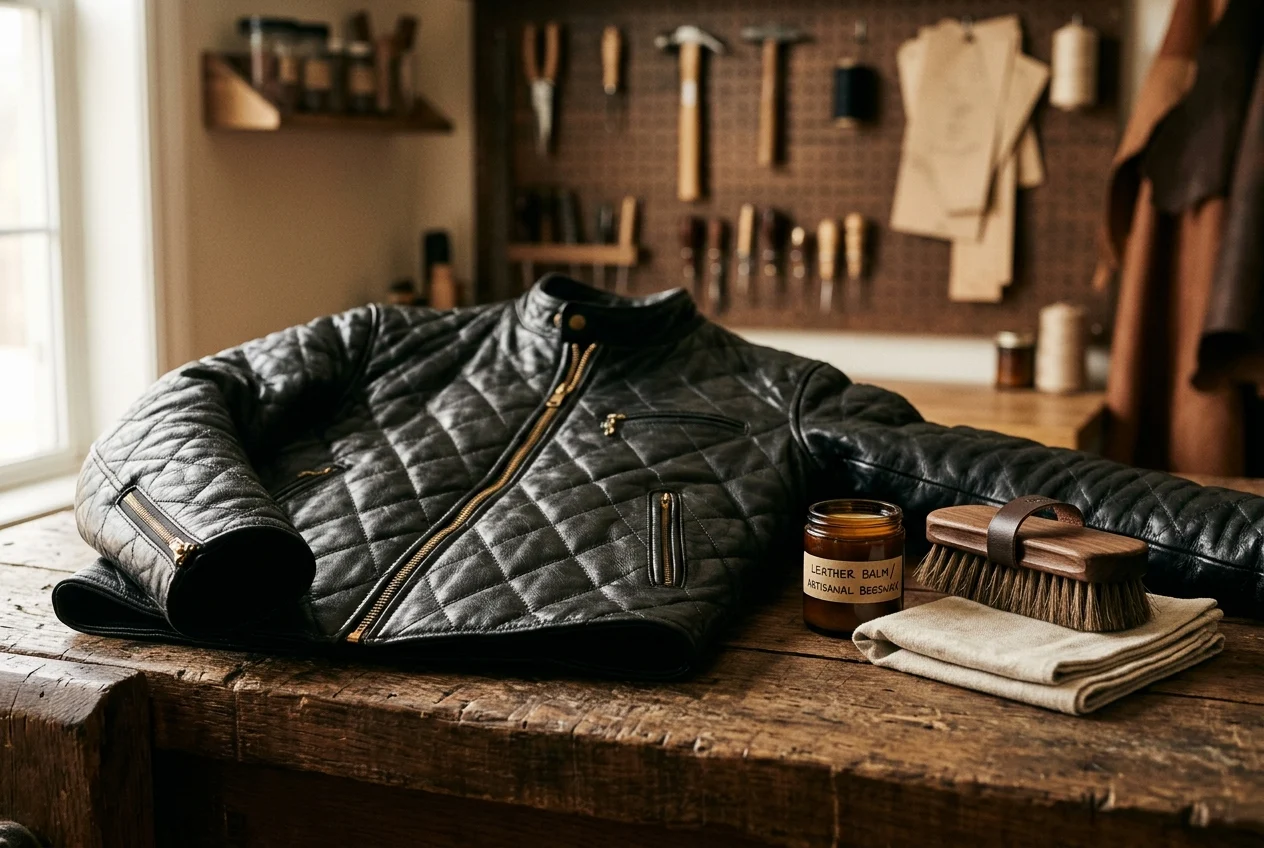
Pelle Pelle Leather Jackets Leather Care, Conditioning, and Patina Maintenance: Atelier Guide
Master Pelle Pelle leather care, conditioning, and patina preservation. Atelier guide covering hide biology, quilted baffle cleaning, and bespoke custom tailoring.
Pelle Pelle Leather Jackets Leather Care, Conditioning, and Patina Maintenance: Atelier Guide
Mastering the long-term preservation, leather care, and conditioning of a Pelle Pelle leather jacket requires an in-depth understanding of high-density bovine hides, delicate nappa finishes, and complex quilted baffle architecture. At Lux Wearz, our master artisans have spent over two decades handcrafting, restoring, and tailoring luxury leather outerwear in our independent workshop. When preserving an iconic statement piece—whether an archival vintage treasure or a modern handcrafted silhouette—understanding the dermatological requirements of genuine leather ensures that your jacket develops a rich, supple patina rather than succumbing to premature drying, fiber cracking, or hardware corrosion. For general hide maintenance across everyday garments, you can also consult our comprehensive master leather care guide.
Key Takeaways & Preservation Summary
- Hydration Over Saturation: Treat full-grain bovine leather with pH-balanced beeswax or lanolin balms semi-annually; never oversaturate quilted jackets, as excess oils can seep into internal polyester batting and cause dampness.
- Avoid Synthetic Sealants: Strictly avoid aerosol silicone waterproofing sprays, petroleum-based polishes, and commercial alcohol wipes that strip natural tanning oils and suffocate leather pores.
- Baffle-Safe Cleaning Protocol: Clean intricate quilted channels and embroidered appliqués using a dry horsehair brush and a lightly dampened microfiber cloth; avoid heavy circular rubbing on raised seams.
- Metal Stud & Hardware Care: Protect antiqued brass, nickel, and enamel studs by hand-buffing with a dry microfiber cloth to prevent verdigris oxidation and discoloration of adjacent leather panels.
- Breathable Storage Standard: Always suspend your jacket on a wide, contoured wooden coat hanger inside a breathable 100% cotton garment bag; never enclose genuine leather in non-porous plastic garment bags.
- Custom Artisan Alternative: If vintage jackets suffer from irrecoverable dry-rot or altered proportions, commissioning a bespoke made-to-measure alternative ensures flawless anatomical fit and virgin hide longevity.
Artisan Independence & Trademark Notice: Lux Wearz is an independent bespoke leathercraft atelier. All brand names, logos, and trademarks mentioned in this article (including Pelle Pelle®, Alpinestars®, Harley-Davidson®, Avirex®, Kawasaki®, Vanson®, Wilsons Leather®) belong exclusively to their respective trademark holders. Lux Wearz is not an authorized distributor, licensee, or affiliated partner of these brands. All brand references and historical retrospectives are made strictly for educational, comparative, and sizing review purposes under Fair Use. Lux Wearz specializes in custom-tailored, heirloom-grade genuine leather outerwear handcrafted individually in our private workshop.
How Should You Properly Clean, Condition, and Maintain a Pelle Pelle Leather Jacket?
Proper Pelle Pelle leather jacket care requires semi-annual cleaning with a damp microfiber cloth, gentle surface nourishment using a pH-balanced beeswax or lanolin leather balm, and complete avoidance of petroleum solvents or silicone waterproofing sprays. Store on a wide contoured wooden hanger inside a breathable cotton garment bag away from direct sunlight to prevent dry rot and leather stiffening.
Because authentic Pelle Pelle designs incorporate heavyweight drum-dyed cowhide, plush lambskin appliqués, and multi-layered padded quilting, haphazard cleaning methods can permanently mar the leather surface. Unlike plain biker jackets with flat panels, quilted outerwear traps particulate matter along recessed seam channels. Furthermore, aggressive chemical cleaners deteriorate the tensile strength of the stitching thread, leading to seam unraveling. By establishing an atelier-level maintenance cadence, you protect the structural collagen network of the hide while cultivating a luminous, natural patina.
The Historical Heritage and Archival Craftsmanship of Pelle Pelle Outerwear
To care for a garment effectively, one must appreciate how it was constructed. Founded in Detroit in 1978 by designer Marc Buchanan, Pelle Pelle fundamentally transformed urban outerwear from utilitarian workwear into high-fashion luxury status symbols. Prior to Buchanan's innovations, leather jackets were predominantly austere: black motorcycle double-riders, brown military flight jackets, or simple car coats. Pelle Pelle shattered this convention by treating full-grain leather as a vibrant, three-dimensional artistic canvas.
Buchanan pioneered intricate leather-on-leather appliqué techniques, multi-needle channel quilting, airbrushed pictorial motifs, and lavish metal studding. Throughout the golden era of 1990s and early 2000s hip-hop culture, the brand became synonymous with swagger and prosperity. Worn by iconic artists, athletes, and cultural pioneers across New York, Detroit, Atlanta, and Chicago, these jackets were cut with unapologetically bold proportions: dropped shoulder seams, voluminous chest ease, deep armholes, and tightly ribbed elasticized waistbands that ballooned over baggy denim.
From a leathercraft perspective, the construction of these jackets was extraordinarily ambitious. A single flagship varsity or quilted bomber could incorporate up to fifty individual pattern pieces, requiring hours of precise hand-skiving (thinning the leather edges) so that multiple overlapping layers could be stitched without creating unmanageable bulk. Understanding this architectural complexity explains why vintage pieces command high collector premiums—and why maintaining their structural integrity requires specialized artisanal care. If you appreciate rugged American outerwear design, explore our historical retrospective on biker, cafe racer, and bomber jackets.
The Dermatological Anatomy of Plush Leather: Understanding Hide Biology and Tannage
Genuine leather is not an inert synthetic plastic; it is a complex, bio-organic matrix composed of densely intertwined collagen protein fibrils. During the tanning process, raw animal hides are treated with chromium salts or natural vegetable tannins to stabilize the collagen network, preventing organic decomposition while imparting softness, strength, and thermal resilience.
Pelle Pelle jackets historically utilized two primary categories of leather:
1. Heavyweight Milled Bovine Cowhide (1.2mm to 1.4mm)
Used for primary body chassis panels and varsity sleeves, this leather undergoes mechanical milling—tumbling in large wooden drums—to soften the dense grain fibers and create a distinctive, pebble-textured surface. Bovine hide possesses extraordinary tensile strength (exceeding 25 MPa), making it remarkably abrasion-resistant. However, its dense fibrous structure requires periodic lipid replenishment to maintain internal flexibility.
2. Full-Grain Plongé and Nappa Lambskin (0.9mm to 1.1mm)
Used for plush quilted bombers, intricate collar linings, and decorative face appliqués, lambskin is prized for its whisper-soft hand feel, silky drape, and natural elasticity. Because lambskin possesses a finer collagen matrix with thinner epidermal layers, it is more vulnerable to surface abrasions, moisture dehydration, and chemical damage than cowhide.
When leather loses its natural internal moisture and tanning oils through atmospheric evaporation, exposure to central heating, or direct ultraviolet radiation, the microscopic collagen fibrils contract and stiffen. Without lipid lubrication, the fibers scrape against one another during normal arm bending and torso twisting, eventually snapping at a microscopic level. This phenomenon manifests macroscopically as surface checking, micro-cracks, and eventually irreversible tearing.
Table 1: Archival Silhouette Architecture & Fit Specifications
The following engineering reference table compares the fit architecture, shoulder geometry, chest ease, and leather temper across iconic brand cuts:
| Silhouette Model | Cut & Fit Architecture | Shoulder / Chest Offset | Ideal Body Profile | Leather Weight & Temper | Primary Lining & Insulation |
|---|---|---|---|---|---|
| Encrusted Varsity Plush | Oversized drop-shoulder boxy cut | +6.0 to +8.0 inches chest ease | Athletic, broad-shouldered frames | 1.2–1.3 mm Milled Cowhide; medium temper | Heavy diamond-quilted polyester satin |
| American Soda Club Bomber | Voluminous torso with tapered waistband | +5.0 to +7.0 inches chest ease | Universal street styling; layering ease | 1.1–1.2 mm Nappa Lambskin; soft temper | Thermal bonded fiberfill with smooth cupro |
| Detroit Quilted Biker | Structured motorcycle racer silhouette | +3.5 to +5.0 inches chest ease | Slim to muscular athletic frames | 1.2–1.4 mm Full-Grain Bovine; firm temper | Poly-twill lining with windbreak flap |
| NYC Boro Quilted Jacket | Horizontal baffle puffer construction | +5.5 to +7.5 inches chest ease | High-volume streetwear layering | 1.0–1.1 mm Supple Lambskin; buttery soft | Down-blend insulation with anti-static satin |
| Picasso Plush Art Bomber | Dramatic archival statement drape | +6.0 to +8.5 inches chest ease | Tall, statement-focused silhouettes | 1.1–1.3 mm Aniline Cowhide & Lamb appliqué | Premium heavyweight lustrous satin |
Understanding these anatomical clearances allows collectors and buyers to calculate the correct garment drape. For detailed sizing measurement instructions, consult our size and fit architecture guide.
Table 2: Leather Hide & Hardware Durability Matrix
The durability of luxury leather outerwear depends on the chemical compatibility of the hides, sewing threads, and metal fasteners. The matrix below outlines the physical properties and longevity benchmarks of these components:
| Component / Raw Hide | Leather Grade & Tannage | Caliper / Thickness | Moisture & Weather Resistance | Expected Longevity | Recommended Atelier Care Cycle |
|---|---|---|---|---|---|
| Full-Grain Bovine Cowhide | Chrome-tanned with aniline drum dye | 1.2 – 1.4 mm | High natural wind resistance; moderate water repellency | 30+ Years with regular conditioning | Deep conditioning balm every 6 months |
| Plongé Lambskin Nappa | Vegetable-chrome semi-aniline tannage | 0.9 – 1.1 mm | Moderate; vulnerable to water spotting | 15–25 Years under careful wear | Light cream conditioning every 4 months |
| Channel-Quilted Baffles | Multi-needle padded hide assembly | 1.0 – 1.2 mm leather + polyfill | Moderate; traps dirt in recessed thread rows | 20+ Years; thread inspection required | Horsehair dry brushing monthly; no oil soak |
| Antiqued Brass YKK Closures | Heavy-duty solid brass YKK #8 / #10 | Standard tooth gauge | Exceptional; natural corrosion resistance | Lifetime (40+ Years) | Beeswax glide application annually |
| Bonded Nylon Seam Thread | Continuous filament Tex 90 / v92 | Heavy tensile thread | Completely immune to rot and mildew | 25+ Years under kinetic stress | Clean dry wiping; keep free of solvents |
| Wool-Blend Ribbed Trims | 70% Worsted wool / 30% poly elastane | Heavy gauge double-knit | Absorbs moisture; subject to moth damage | 10–15 Years before elasticity fades | Cedar storage; dry-clean spot treatment |
Step-by-Step Atelier Cleaning & Conditioning Protocol
Preserving the supple luster and structural strength of a leather jacket requires a methodical, five-phase protocol practiced by professional leather artisans. Never rush this process, and always perform maintenance in a well-ventilated space at moderate room temperature (65°F to 72°F).
Phase 1: Dry Dusting and Surface Inspection
Before introducing any moist cleansers or conditioning lotions, eliminate dry particulate matter:
- Lay the jacket flat across a clean, padded work table.
- Using a 100% natural horsehair brush with soft bristles, sweep across every panel in long, fluid strokes. Pay meticulous attention to recessed quilting channels, underarm seams, and pocket welts where atmospheric grit accumulates.
- For intricate leather appliqués and studded lettering, use an unused, soft-bristled artist's paint brush to gently dislodge micro-dust from the crevices surrounding each stud.
- Inspect the leather under bright, indirect light to identify dry zones, water spots, or areas of surface abrasion.
Phase 2: Gentle Surface Decontamination
If the jacket exhibits greasy collar deposits, street grime, or sticky residues, gentle cleansing is essential:
- Dampen a premium lint-free microfiber cloth with distilled water. Wring the cloth vigorously until it is barely damp to the touch—never apply soaking wet fabrics to untreated leather.
- For stubborn grime, prepare a specialized foaming solution using an organic, pH-neutral leather cleanser (pH 5.0 to 6.0, mirroring natural skin acidity). Never use alkaline dish soaps, laundry detergents, or alcohol wipes, as their high pH immediately strips tanning fats and causes the hide to stiffen.
- Apply the foam to the microfiber cloth rather than spraying directly onto the leather. Wipe the surface using light, circular motions without applying aggressive downward pressure.
- Immediately wipe the treated area with a secondary dry microfiber towel to absorb loosened soil and residual moisture. Allow the jacket to air-dry naturally for at least two hours away from heaters or direct sunlight.
Phase 3: Precision Conditioning and Lipid Replenishment
Conditioning restores the vital fats and oils that keep collagen fibers supple:
- Select an artisan-grade conditioning balm formulated with natural ingredients: cosmetic-grade beeswax, refined neatsfoot oil, and lanolin. Strictly avoid conditioners containing silicone, paraffin waxes, or petroleum distillates; while these synthetics produce a superficial artificial shine, they coat the pores with an impermeable plastic film that suffocates the hide over time.
- Scoop a small, dime-sized portion of balm onto a clean cotton applicator cloth. Massage the cloth between your fingers to distribute the balm evenly and warm the waxes with body heat.
- Work in sections, beginning with high-friction zones: the shoulders, outer elbows, collar fold, and pocket entries. Apply the balm in gentle, overlapping circles, allowing the hide to absorb the lipids naturally.
- When conditioning quilted panels, apply the balm sparingly. Never allow heavy blobs of wax to gather in the stitch holes or seams, where it can attract dust and soften the internal batting.
- Let the leather rest undisturbed for 12 to 24 hours in a cool, dry room, giving the collagen matrix ample time to absorb the nourishing oils deeply into the corium layer.
Phase 4: Hardware Maintenance and Metal Stud Preservation
Iconic statement jackets frequently feature substantial metal ornamentation, antiqued brass zippers, and raised studs:
- If metal studs or zipper teeth exhibit greenish verdigris (copper oxidation), gently clean the metal surface using a cotton swab lightly dampened with white vinegar diluted in water (50/50 ratio). Take extreme care not to touch the surrounding leather with the acidic solution.
- Immediately dry the metal with a clean cotton swab.
- To keep heavy-gauge front zippers operating smoothly, run a natural beeswax stick or clear paraffin block along both rows of teeth with the zipper unzipped. Zip and unzip the slider five times to distribute the wax, eliminating friction and preventing premature tooth wear.
Phase 5: Friction Buffing and Patina Activation
The final step elevates the leather's appearance to a luxurious, atelier-finished luster:
- Take a clean, dry horsehair buffing brush.
- Buff each leather panel using brisk, rhythmic back-and-forth strokes. The subtle kinetic friction generates gentle warmth, melting the microscopic beeswax layer and buffing it into a radiant, breathable satin sheen.
- Conclude with a final wipe down using a soft flannel or micro-fiber cloth. The leather should feel supple, hydrated, and dry to the touch—never sticky or greasy.
Pre-Owned Inspection Checklist: Detecting Vintage Flaws Before Purchase
Because vintage Pelle Pelle jackets from the 1990s and early 2000s are highly sought after by collectors, the secondary market is fraught with garments that have suffered decades of neglect or improper storage. Use this diagnostic inspection checklist when evaluating a pre-owned piece:
1. The Flex & Scent Test for Dry Rot
Dry rot occurs when leather has been stored in damp, poorly ventilated basements or desiccated in hot attics. The collagen fibrils degrade irreversibly into a brittle, crumbling state.
- The Scent Test: Smell the interior armpits and back panel. Healthy vintage leather smells rich, earthy, and warm. Dry-rotted leather emits a distinct, pungent vinegar or stale sulfur odor caused by chemical breakdown.
- The Gentle Flex Test: Pinch a small fold of leather on the back shoulder between your fingers and gently roll it. If you hear a faint crackling sound or if fine spiderweb cracks appear on the surface finish, the leather is experiencing internal fiber dry-rot and cannot be restored safely.
2. Seam and Quilt Baffle Inspection
- Inspect the continuous stitch lines across quilted channels. Broken threads allow the internal polyfill to shift, creating unsightly lumpy bulges.
- Examine the leather surrounding heavy metal studs. If the hide around the metal prongs is tearing or stretched thin, securing the hardware will require specialized leather backing patches.
3. Rib-Knit Elasticity and Collar Wear
- Grasp the knit waistband and cuffs. Stretch them gently; they should rebound crisply. If the ribbing remains stretched, wavy, or brittle, the internal elastane threads have dry-rotted.
- Inspect the leather collar band for dark grease saturation caused by body oils and sweat. While mild discoloration can be blended, heavy grease saturation weakens the leather grain over time.
For additional verification techniques on testing leather quality and detecting synthetic substitutes, read our definitive guide on how to spot real vs fake leather.
Featured Silhouette Retrospective: Curated Lux Wearz Brand Collection
At Lux Wearz, we celebrate the monumental design legacy of urban luxury outerwear. Our private atelier curates, restores, and handcrafts selected leather masterpieces constructed with virgin full-grain cowhides and supple nappa lambskin. Explore five standout models currently featured in our store collection:
1. Pelle Pelle x FISLL for the City of Knicks Jacket
This iconic limited collaboration piece merges high-octane sporting heritage with unmistakable urban tailoring. Crafted from premium full-grain leather in an electrifying Black, Orange, and Royal colorway, it features multi-tier dimensional leather chest and back appliqués, precision embroidery, and heavy-duty ribbed trims. Perfect for collectors who demand bold, head-turning metropolitan authority.
2. Pelle Pelle Picasso Plush
Widely regarded as one of the most celebrated wearable art pieces in urban streetwear history, the Picasso Plush features an extraordinary mosaic of hand-cut, multi-colored leather panels. The buttery soft lambskin construction drapes effortlessly over the body, while the internal plush quilting delivers exceptional cold-weather insulation without excessive weight.
3. PELLE PELLE NYC BORO QUILTED JACKET
Paying homage to the five boroughs of New York City, this heavyweight quilted bomber represents the pinnacle of street durability. Constructed with dense milled bovine cowhide and reinforced channel stitching, it boasts substantial wind resistance, antiqued brass hardware, and a tailored drop-shoulder cut engineered to flatter modern urban silhouettes.
4. PELLE PELLE DETROIT QUILTED JACKET
Honoring the Midwestern industrial birthplace of the brand, the Detroit Quilted Jacket emphasizes rugged minimalism and architectural strength. Featuring diamond-stitched torso baffles, heavy-gauge front closures, and an anatomical fit that pairs effortlessly with raw selvedge denim and heavy boots, this piece is built for decades of active wear.
5. Pelle Pelle American Soda Club Jacket
A legendary staple of early-2000s style, the Soda Club jacket showcases iconic arched script lettering, contrasting sleeve striping, and an oversized bomber silhouette. Hand-finished with supple aniline-dyed leather, this model exemplifies the golden era of plush hip-hop outerwear.
Explore our full curated selection by browsing our Pelle Pelle brand catalog on Lux Wearz.
The Custom Bespoke Alternative: Why Commissioning a Handcrafted Piece Outperforms Fragile Vintage
While hunting for original pre-owned vintage outerwear offers undeniable nostalgic appeal, modern collectors frequently face frustrating realities: stiff, brittle hides damaged by thirty years of neglect, moth-eaten wool ribbing, unhygienic vintage linings, and boxy, disproportionate 1990s sizing that swallows contemporary physiques.
At Lux Wearz, our master leathercraft artisans offer an uncompromising modern solution: our bespoke custom order service. We build heirloom-grade leather jackets tailored from scratch to your exact anatomical specifications, capturing the timeless spirit and bold design language of archival silhouettes while utilizing brand-new, virgin luxury materials:
- Virgin Full-Grain Leather Sourcing: We select uncorrected full-grain bovine cowhides (1.2–1.4mm) and silky nappa lambskins (0.9–1.1mm) tanned in world-class ethical facilities. You receive fresh, supple leather that you can break in personally, developing a customized patina over decades of wear.
- Precision Made-to-Measure Tailoring: Instead of settling for rigid off-the-rack sizing, our tailors cut every panel according to your chest circumference, shoulder slope, bicep width, and torso length. You achieve the dramatic, statement drape of an archival bomber with modern, clean proportions that never feel sloppy.
- Museum-Grade Hardware & Stitching: Every bespoke commission is assembled using Tex 90 bonded nylon thread that will never rot, paired with authentic, heavy-gauge YKK solid brass zippers and hand-peened metal rivets.
- Personalized Interior Architecture: Choose from breathable cupro, quilted thermal silk-satin, or genuine wool linings, complete with interior zippered smartphone pockets and personalized monogramming.
- Direct Workshop Pricing ($149 – $399): By operating our own workshop and delivering directly to your door, we eliminate luxury retail markups, offering artisan-level bespoke outerwear at accessible pricing.
To begin designing your dream heirloom jacket, visit our custom order atelier portal to submit your design ideas, leather preferences, and sizing requirements.
Long-Term Climate Storage and Environmental Preservation
Even the most meticulously conditioned leather jacket will deteriorate if stored in adverse conditions. Ensure your investment piece remains in pristine condition year-round by implementing these environmental storage guidelines:
- Hanger Architecture: Never suspend a heavy leather jacket on a thin wire or narrow plastic hanger. The concentrated weight will stretch the leather across the shoulder seam, creating permanent "shoulder horns" and rupturing the collar stitching. Always use a wide, contoured wooden coat hanger with broad shoulder supports (at least 2 inches wide).
- Breathable Enclosures Only: Never seal leather in plastic dry-cleaning bags. Plastic traps ambient humidity, creating an ideal microclimate for mildew and mold growth. Simultaneously, the lack of air circulation desiccates the hide's natural oils. Enclose the jacket in a 100% natural cotton or canvas garment bag that permits continuous air exchange while shielding the hide from dust and airborne pollutants.
- Climate Parameters: Store your jacket in a dark, climate-controlled closet maintained between 60°F and 72°F with relative humidity levels between 45% and 55%. Avoid damp basements (which foster mold) and overheated attics (which evaporate natural leather lubricants).
- Off-Season Rest Periods: Before storing your jacket for the summer season, perform a complete Phase 1 dry dusting and a light Phase 3 conditioning treatment. Allow the jacket to rest for 48 hours to fully absorb the balm before hanging it in storage.
For coordinating seasonal wardrobes and layering strategies, view our style guide on leather and wool wardrobe combinations.
Elevate Your Outerwear Collection with Lux Wearz
At Lux Wearz, we believe genuine leather outerwear is the ultimate sartorial investment—a wearable sanctuary of protection, personal style, and generational durability. Whether you are caring for an archival statement bomber or seeking to commission a brand-new custom tailored piece, our workshop is dedicated to upholding the highest traditions of master leathercraft.
Discover our full collection of handcrafted men's genuine leather jackets, explore archival statement pieces across our complete outerwear catalog, or consult our master artisans to begin your bespoke tailoring journey on our custom order page. For complete chest ease calibration and archival silhouette measurements before conditioning your jacket, consult our comprehensive Pelle Pelle Leather Jackets Sizing, Fit Architecture, and Style Heritage Guide.
Every Lux Wearz purchase is supported by complimentary insured US shipping, hassle-free 30-day returns, and our comprehensive craftsmanship warranty. Experience the difference of authentic, handmade leatherwear engineered to last a lifetime.
Explore The Full 2026 Leather Outerwear Collection
Vegetable-tanned full-grain cowhide, buttery New Zealand lambskin, and heritage Melton wool. Free express delivery across the USA with 30-day hassle-free returns.