
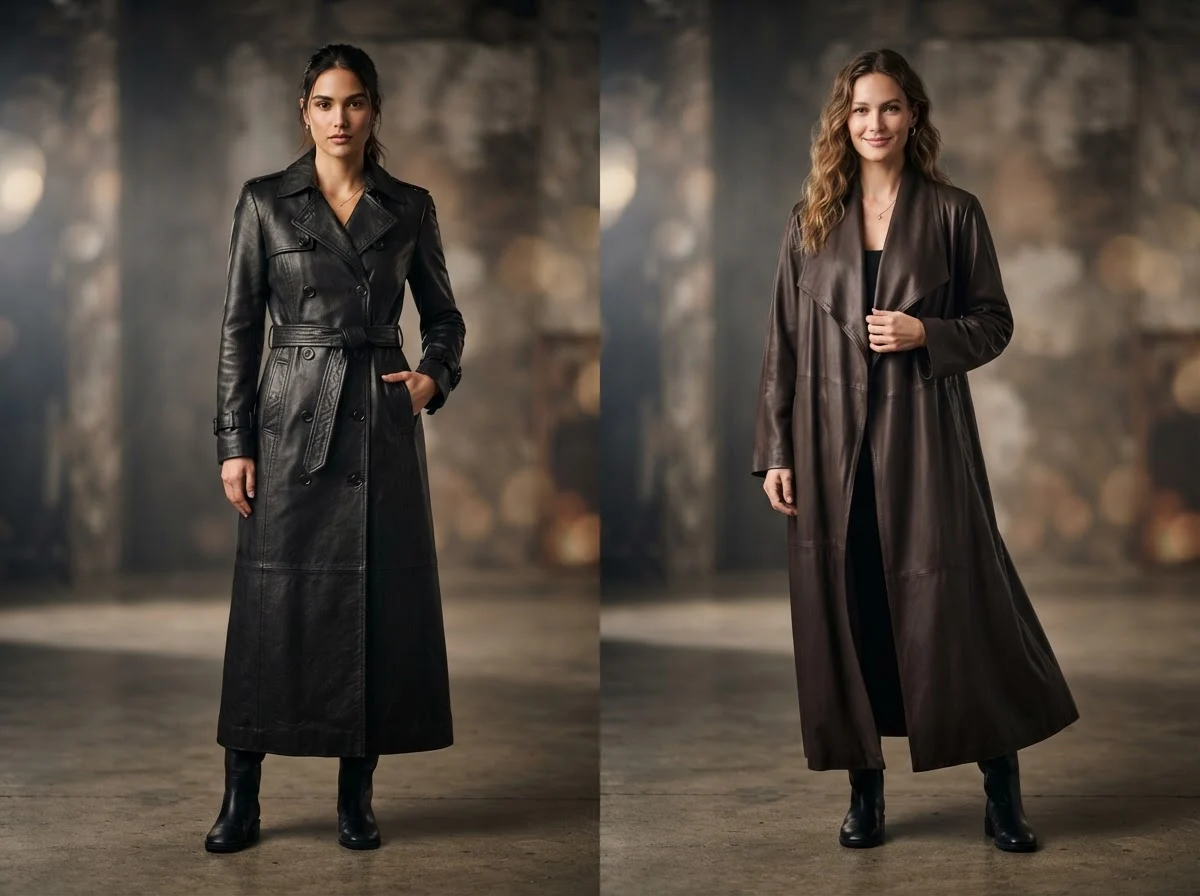
Leather Trench Coat vs Duster Coat Which Silhouette Wins
Compare leather trench coats and duster coats in length, silhouette, weather protection, and 2026 styling to choose the ultimate statement winter outerwear.
Long leather outerwear commands an undeniable presence on modern fashion runways and metropolitan streets in 2026. Discerning style enthusiasts seeking dramatic winter statement pieces frequently encounter a pivotal styling dilemma: choosing between a classic European belted leather trench coat and a sweeping, floor-length Western leather duster coat. Both silhouettes project bold confidence, yet their tailoring architecture, historical origins, and everyday styling versatility diverge substantially.
Selecting the right long silhouette requires understanding how garment drape, body proportions, and climatic conditions intersect. A structured trench coat sculpts a defined hourglass or tailored athletic frame through deliberate waist cinching, whereas an open duster coat creates vertical elongating lines that ripple dramatically with motion. Investing in handcrafted full-grain leather ensures that either silhouette withstands winter winds while developing an exceptional personalized patina across decades of faithful service.
A sweeping leather coat serves as the undisputed centerpiece of any cold-weather wardrobe. Rather than fading into background basics, a full-length silhouette immediately communicates deliberate aesthetic curation and refined sartorial maturity. Understanding how these garments interact with ambient lighting, leather grain textures, and seasonal layering pieces empowers wearers to command presence in any metropolitan environment.
Key Takeaways
- Leather trench coats feature structured double-breasted closures, belted waists, and knee-length cuts designed for formal and smart-casual city environments.
- Leather duster coats feature straight, ankle-length silhouettes, rear riding vents, and optional protective shoulder capes inspired by Western equestrian heritage.
- Hide thickness between 1.1 and 1.4 millimeters provides essential wind resistance and structural posture for sweeping full-length garments.
- Shorter body proportions benefit from the waist definition of a belted trench, while taller frames excel in carrying the expansive volume of an ankle-grazing duster.
- Artisan full-grain cowhide and lambskin construction prevents hemline curling, ensuring graceful fluid movement across decades of winter wear.
What Is the Core Difference Between a Leather Trench and a Duster Coat?
A leather trench coat is a double-breasted, waist-belted outerwear garment that typically terminates at or just below the knee, originating from European military officers in World War I. In sharp contrast, a leather duster coat is an unbelted, ankle-grazing protective garment featuring a deep rear walking vent and high collar, originating from nineteenth-century American frontier horsemen.
Tailoring geometry establishes the primary aesthetic boundary between these iconic outerwear pieces. The leather trench coat utilizes structured tailoring elements, including notched storm lapels, buttoned shoulder epaulettes, and sleeve buckle straps that contour closely to the human torso. The wide fabric or leather belt cinches the natural waistline, creating an unmistakable architectural silhouette that frames professional and formal attire.
Conversely, the leather duster coat emphasizes unrestricted physical mobility and complete weather coverage. Traditional frontier dusters were engineered to shield horseback riders and stagecoach travelers from swirling desert grit, mud, and torrential rain. The straight, boxy torso cut drapes loosely over thick layers, while the extended rear split allows the coat panels to wrap around each leg without binding the knees during movement.
Styling contexts also separate these long outerwear titans across contemporary fashion landscapes. A tailored leather trench transitions seamlessly into corporate boardrooms, evening gallery openings, and high-fashion dinners. A flowing duster leans unapologetically into rugged Americana, dramatic gothic aesthetics, and futuristic streetwear. Explore our men's leather coats collection to compare authentic full-length tailoring details up close.
Furthermore, weight distribution feels distinctly unique when walking in either coat. The cinched belt of a leather trench anchors the garment's mass securely against the wearer's hips, reducing downward pull on the cervical spine. Conversely, a duster relies on balanced shoulder yokes that let the hide flow freely around the lower limbs like a heavy protective cloak.
How Do Hemline Length and Cut Geometry Alter Your Body Proportions?
Hemline length fundamentally alters perceived vertical height and shoulder width when wearing heavy leather outerwear. A leather trench ending precisely at mid-knee establishes a visual horizontal division that anchors the upper body while keeping the lower legs elongated. Conversely, an ankle-length leather duster establishes an unbroken vertical column of rich leather, making the wearer appear commanding and distinctly statuesque.
Travelers and city commuters measuring under five feet nine inches often find that floor-skimming dusters overwhelm their natural proportions. Excess leather volume around the ankles can create visual heaviness that swallows shorter body frames. For petite or modest heights, the adjustable belt of a trench coat pulls focus inward toward the narrowest section of the torso, creating an elongating visual taper.
Taller wearers possess the vertical leverage required to showcase the flowing cinematic drape of a full duster coat. As the wearer walks, the rear vent opens dynamically, revealing underlying trousers and boots without dragging against the pavement. When tailoring either silhouette, sleeve lengths must terminate precisely at the base of the thumb joint to accommodate seasonal wrist gloves.
To understand how various outerwear silhouettes interact with distinct body types, consult our detailed analysis on which leather jacket trends fit your shape. Furthermore, reviewing our official size and fit guide ensures accurate chest, shoulder, and hemline measurements before placing an order.
Which Long Leather Outerwear Style Matches Your Wardrobe Aesthetic?
Matching long leather coats to your personal aesthetic requires evaluating your existing footwear, daily layering habits, and social settings. Urban professionals who frequently wear bespoke wool suits, pleated trousers, and dress derbies gravitate toward the polished authority of a black or deep espresso trench. Casual dressers who live in distressed denim, graphic knitwear, and heavy combat boots find a natural home in the rebellious aura of a duster.
Subcultural influences have elevated both silhouettes into contemporary streetwear staples throughout 2026. The leather trench coat channels sleek European minimalism and cinematic espionage aesthetics when styled with minimalist cashmere turtlenecks. The leather duster coat channels dramatic cyberpunk, neo-Western, and rock-and-roll styling, particularly when executed in weathered or oil-waxed hides.
Sleeve construction and shoulder ease also dictate how comfortably each piece accommodates winter knitwear. Trench coats feature tailored set-in sleeves that provide clean, squared-off shoulder definition. Dusters frequently incorporate raglan sleeves or broader shoulder ease, allowing wearers to slip heavy fleece hoodies and chunky cardigans underneath without restricting arm elevation.
The comparison table below details the tailoring architecture, silhouette proportions, and formality levels across prominent long leather outerwear styles.
| Outerwear Silhouette | Standard Hemline Length | Waist Tailoring & Structure | Best Body Type & Frame | Aesthetic Subculture | Price Range USD |
|---|---|---|---|---|---|
| Double-Breasted Leather Trench | Mid-Knee to Upper Calf | Belted, cinched hourglass | Petite, athletic, average | European formal, quiet luxury | 249 to 399 |
| Full-Length Leather Duster | Mid-Calf to Ankle | Loose, straight drape | Tall, broad-shouldered | Western heritage, cyberpunk | 299 to 499 |
| Classic Leather Car Coat | Mid-Thigh | Relaxed straight cut | All body types | Vintage smart casual | 249 to 399 |
| Leather Peacoat Cut | Lower Hip to Upper Thigh | Double-breasted tailored | Broad-chested, athletic | Maritime heritage | 249 to 399 |
Choosing between these iconic silhouettes ultimately hinges on whether you prefer tailored waist containment or flowing cinematic drama. If your styling leans toward sharp tailoring, review our dedicated guide on how to style a leather trench coat. If you crave rugged sweeping volume, discover our breakdown on viral leather duster coat outfits.
What Collar and Storm Hardware Provide Superior Weather Protection?
Collar architecture and storm closure hardware dictate how effectively long leather outerwear shields the wearer against freezing gusts and freezing rain. A traditional trench coat incorporates a convertible storm collar with dual throat latches, allowing the wide lapels to fold over and seal the neck completely. A duster coat relies on an upright mandarin or stand-up collar with heavy snap fasteners that lock out biting frontier headwinds.
The signature storm flap of a trench coat serves a vital hydro-repellent purpose. Positioned over the right breast on military garments, this dual-layered leather shield prevents rainwater from seeping through the front button placket. The rear storm flap across the upper back allows rain to roll off the coat without soaking into the horizontal back seam.
Duster coats counter harsh weather with an iconic removable shoulder capelet. The capelet provides an auxiliary layer of heavy leather over the shoulders, upper chest, and upper back—the zones most vulnerable to continuous downpours. By deflecting rain outward past the torso seamlines, the capelet ensures that the main coat body remains dry and flexible during extended outdoor exposure.
Button versus zipper closures also influence thermal efficiency in freezing temperatures. Trench coats utilize substantial horn or leather-wrapped buttons backed by interior anchor buttons that prevent hide tearing under tension. Dusters frequently incorporate heavy-gauge two-way YKK brass zippers concealed beneath an exterior storm placket with metal snaps. Inspect our men's classic leather jackets to see these heritage closure mechanisms in detail.
Which Leather Grade and Hide Weight Balances Warmth and Mobility?
Full-grain cowhide measuring 1.1 to 1.4 millimeters represents the ideal material for sweeping outerwear due to its substantial drape, tensile strength, and wind-blocking density. A long coat requires sufficient leather weight to prevent the lower hemlines from flapping wildly in blustery conditions. Conversely, lightweight lambskin measuring 0.9 to 1.2 millimeters provides unmatched liquid drape and supple comfort for formal city walking.
Understanding hide weight dynamics prevents buyers from purchasing coats that feel excessively cumbersome. Because a full-length duster utilizes over fifty square feet of premium leather, using overly thick tooling leather would create an uncomfortably rigid garment weighing over twelve pounds. Master craftsmen carefully select supple, full-grain cowhide that offers structural resilience while breaking in gracefully around the knees and elbows over time.
Lining choices directly dictate winter warmth and internal comfort. Premium long coats feature smooth polyester satin lining through the sleeves and torso, allowing heavy wool blazers to glide in without binding. For harsh winter climates, custom orders can incorporate removable shearling accents or heavier flannel backings that provide auxiliary thermal insulation against sub-zero temperatures.
The material and durability matrix below outlines the authentic production figures, leather thickness metrics, and warranty terms verified across Lux Wearz outerwear.
| Leather Hide Type | Hide Thickness mm | Hardware Specs | Interior Lining | Standard Lead Time | Guarantee & Warranty | Price Range USD |
|---|---|---|---|---|---|---|
| Full-Grain Cowhide | 1.1-1.4mm | YKK brass zippers | Polyester satin lining | Ships in 3-5 business days | 1-year warranty, 30-day returns | 249-399 |
| Full-Grain Lambskin | 0.9-1.2mm | YKK brass zippers | Polyester satin lining | Ships in 3-5 business days | 1-year warranty, 30-day returns | 249-399 |
| Genuine Full-Grain Goatskin | 0.8-1.0mm | YKK brass zippers | Polyester satin lining | Ships in 3-5 business days | 1-year warranty, 30-day returns | 149-249 |
| Bespoke Custom Made Leather | 0.9-1.4mm | YKK brass zippers | Polyester satin lining | Ships in 7-14 business days | 1-year warranty, 30-day returns | 299-499 |
Every long outerwear coat undergoes a rigorous twelve-point artisan inspection before departing our studio. Handcrafted seams receive double-stitching with high-tensile nylon thread, ensuring seam integrity across decades of winter wear. Learn how genuine full-grain leather softens and molds to your movements by studying our expert guide on breaking in artisan leather jackets.
How Should You Style Long Leather Outerwear for Modern Streetwear?
Styling long leather outerwear for contemporary streetwear requires contrasting dramatic outerwear lengths with minimalist casual base layers. For an effortless weekend uniform, drape an unbelted black leather trench over a heavyweight grey cotton hoodie, relaxed raw denim, and clean leather sneakers. The relaxed hood spilling over the trench lapels subverts traditional formal connotations, injecting fresh youthful energy.
Women styling full-length silhouettes can achieve high-fashion balance by playing with contrasting garment volumes. Pair a sleek chocolate brown leather trench from our women's leather jackets catalog over wide-leg ivory trousers and pointed leather ankle boots. For timeless vintage aesthetics, browse our curated women's classic leather jackets to experiment with structured double-breasted tailoring.
Men looking to channel bold streetwear can pair a distressed brown cowhide duster from our men's leather jackets collection with slim black denim and lug-sole Chelsea boots. Keeping the base layers monochromatic allows the texture and movement of the duster to remain the focal point of the outfit. For casual layering options, explore our versatile casual jackets collection.
Women seeking relaxed athletic crossover styles can style a lightweight duster over fitted ribbed knit sets from our casual jackets for women selection. The juxtaposition of soft athleisure textures against rugged leather creates an intentional model-off-duty vibe. If you prefer edgy motorcycle-inspired elements, examine our men's biker moto jackets for rebellious hardware inspiration.
How Do You Care for and Clean a Full-Length Leather Coat at Home?
Maintaining a long leather coat requires seasonal conditioning, dust removal, and careful hanging to prevent shoulder stretching. Because floor-length coats pick up sidewalk debris and moisture along the hemline, wipe the lower six inches with a damp cotton cloth after wearing. Storing the coat on a wide, contoured wooden hanger preserves the natural shoulder slope and prevents unsightly hanger dimples.
Never store a full-length leather coat inside a non-breathable plastic garment bag. Real animal hide requires natural air circulation to maintain its internal moisture balance and prevent mildew colonization. House your trench or duster inside a breathable cotton garment cover in a dark, climate-controlled closet away from radiant heat sources or prolonged direct sunlight.
Annual conditioning with an all-natural lanolin or beeswax cream prevents deep crease cracking around the elbows and waistline. Warm a small dab between your fingertips and massage the cream into the hide using circular motions, paying special attention to high-friction areas. For an exhaustive, step-by-step masterclass on leather preservation, study our dedicated leather care guide.
If your coat encounters a severe downpour, avoid the temptation to speed-dry the leather with hair dryers or space heaters. Forced heat strips the essential oils from the hide, leaving the leather brittle, stiff, and vulnerable to surface cracking. Hang the coat at room temperature away from drafts, allowing the hide to dry slowly before applying a light coat of nourishing conditioner.
What Should You Look for When Ordering a Bespoke Long Leather Coat?
Ordering a custom-tailored leather trench or duster guarantees ideal hemline placement, sleeve length precision, and flattering torso ease. Off-the-rack long coats frequently suffer from mismatched shoulder widths or awkwardly positioned waist belts that compromise the wearer's proportions. A bespoke pattern tailored to your specific measurements ensures an immaculate, comfortable fit across every layer.
When designing a bespoke garment, collaborate directly with seasoned master craftsmen who understand hide grain orientation and drape mechanics. You can initiate a private design consultation through our interactive artisan concierge chat to discuss custom leather finishes, personalized pocket configurations, and monogramming.
Before finalizing your custom commission, review customer reviews and feedback across verified client showcases. Browse real styling photography and read verified reviews on our customer testimonials portal. If you have questions regarding bespoke production timelines, shipping guarantees, or international delivery, consult our detailed frequently asked questions page.
Explore our curated ready-to-wear catalog on our main storefront or browse our complete women's selection for immediate inspiration. Whether you choose the sharp discipline of a belted trench or the untamed freedom of a sweeping duster, handcrafted leather coats represent the pinnacle of cold-weather outerwear luxury.
How Does Wind Resistance and Thermal Insulation Differ Across Long Silhouettes?
Aerodynamic design and thermal efficiency vary substantially between belted double-breasted trenches and loose-fitting dusters during sub-zero winter commutes. The double-breasted front overlap of a leather trench creates two continuous barriers of 1.2 millimeter cowhide across the vital chest and abdominal organs. Cinched tightly with the leather waist belt, the trench traps warm internal body heat while preventing freezing drafts from entering beneath the hem.
In contrast, an open duster coat creates a dynamic thermal chimney that allows air circulation while deflecting direct headwinds. While horseback riders historically appreciated this airflow during physically demanding ranch tasks, urban pedestrians in freezing climates require substantial thermal underlayers when wearing dusters. Layering a dense merino wool sweater or a quilted leather vest beneath an open duster ensures optimal core warmth without restricting leg movement.
Wind turbulence around the lower extremities also presents distinct physical dynamics for long outerwear. The knee-length hem of a trench remains relatively stable against crosswinds, offering predictable movement during city walking. An ankle-length duster catches ambient gusts, billowing outward dramatically like an equestrian sail. For individuals who enjoy cinematic drama, the duster provides unmatched visual impact, while practical commuters in gusty wind tunnels prefer the anchored control of a trench.
What Are the Investment Lifespan and Resale Dynamics of Long Leather Coats?
Heirloom long leather coats retain exceptional residual market value due to the sheer volume of premium hide required in their construction. High-grade cowhide and lambskin coats develop rich surface patinas that vintage collectors and fashion archivists value above brand-new factory leather. Over decades of careful ownership, a well-conditioned trench or duster appreciates in sartorial character, becoming a cherished family heirloom.
Mass-market fast fashion coats crafted from synthetic polyurethane or bonded scraps degrade rapidly, losing one hundred percent of their value within two seasons. Peeling fake leather cannot be restored, repaired, or conditioned, destined inevitably for municipal incinerators. In contrast, full-grain artisan leather coats can be professionally cleaned, redyed, and conditioned across multiple generations of wearers.
When calculating the cost-per-year of long outerwear, handcrafted full-grain leather represents the most economical investment in high-end apparel. A four-hundred-dollar bespoke trench worn thirty times per winter across twenty-five years equates to roughly fifty cents per wear. Compare this to purchasing a flimsy two-hundred-dollar synthetic coat every three years, which quickly accumulates over a thousand dollars in wasted expenses.
By choosing handcrafted leather outerwear from master artisans, you invest in timeless heritage tailoring, ethical material sourcing, and zero-waste longevity. Explore our comprehensive collection of handcrafted leather outerwear to find your definitive winter statement piece, or commission a personalized heirloom through our custom order service.
Explore The Full 2026 Leather Outerwear Collection
Vegetable-tanned full-grain cowhide, buttery New Zealand lambskin, and heritage Melton wool. Free express delivery across the USA with 30-day hassle-free returns.