
Leather Car Coat vs Trench Coat Which One Should You Buy
Compare a leather car coat with a leather trench coat to discover critical differences in hem length, belt structure, styling flexibility, and daily warmth.
Leather Car Coat vs Trench Coat Which One Should You Buy
Key Takeaways
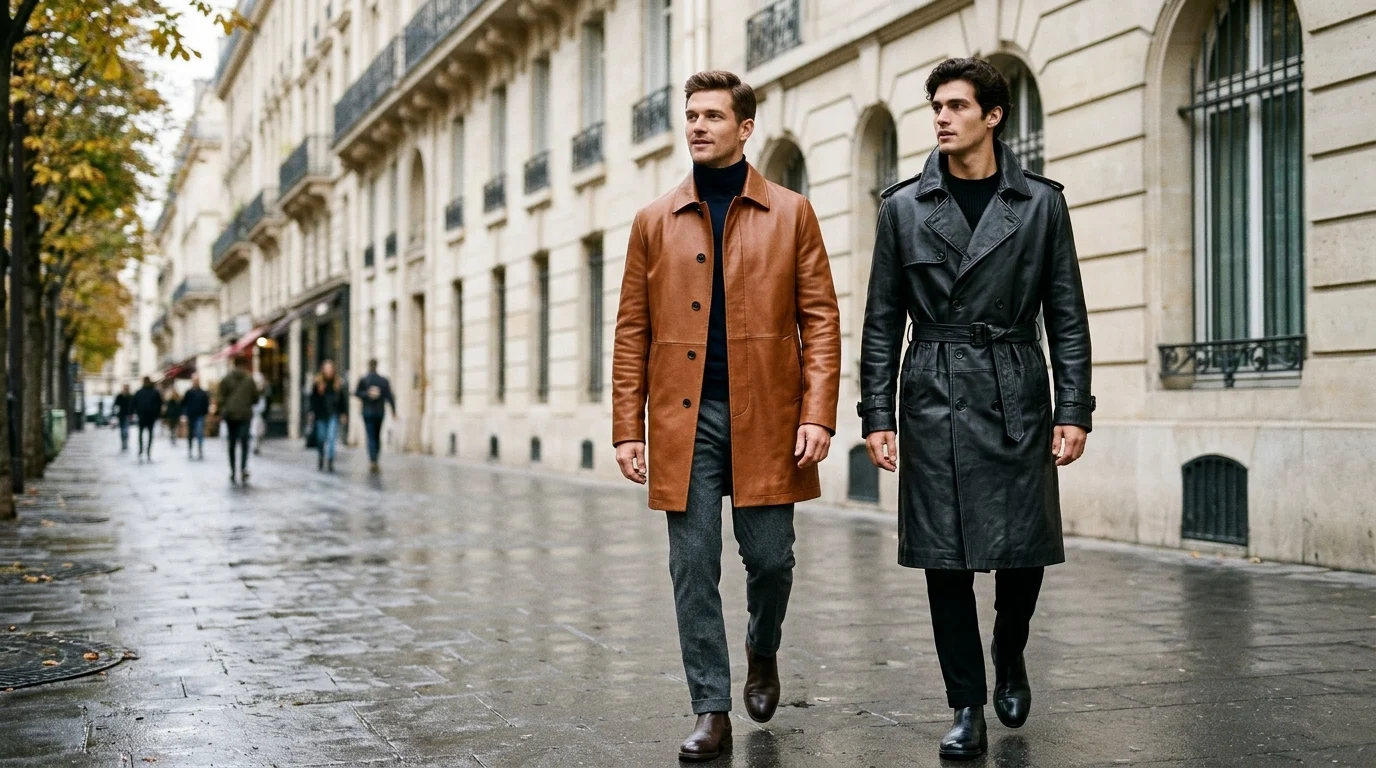
- Core Silhouette Distinction: A leather car coat features an unbelted, single-breasted three-quarter length cut ending mid-thigh, whereas a leather trench coat delivers a dramatic double-breasted longline silhouette cinched with an adjustable waist belt.
- Functional Mobility Factor: Motoring car coats provide unrestricted seated comfort and easy vehicle entry without fabric bunching, while trench coats emphasize maximum storm protection against wind and rain down to the knee or calf.
- Hide Weight and Drape: Car coats utilize structured 1.1 to 1.4 mm full-grain cowhide or lambskin for boxy drape, whereas sweeping trench coats require supple 0.9 to 1.2 mm full-grain lambskin to allow fluid belt gathering.
- Hardware and Styling Accents: Car coats prioritize clean horn or horn-style button closures with minimalist welt pockets, while trench coats incorporate military heritage details including storm flaps, epaulettes, and cuff buckle straps.
- Formality and Everyday Versatility: Car coats transition seamlessly into casual streetwear, smart-casual commuting, and office layering, whereas leather trench coats create high-impact sartorial statements suited for formal tailoring and evening wear. For detailed outfit formulas and professional layering strategies, explore our complete masterclass on how to style a leather car coat for casual and formal settings.
What Is the Difference Between a Leather Car Coat and a Trench Coat?
A leather car coat features a straight, single-breasted mid-thigh cut designed for unrestricted mobility and seated comfort, whereas a leather trench coat features a sweeping, double-breasted knee-length cut with a waist belt built for military weather defense. Choosing between them depends on whether you prioritize everyday throw-on ease or dramatic, high-fashion winter coverage.
Outerwear connoisseurs often debate which longline leather coat best suits modern metropolitan life. Both garments carry prestigious heritage, but their architectural DNA solves entirely different practical problems. When you invest in premium outerwear from our curated men's leather coats archive or our expansive men's leather jackets selection, understanding these foundational distinctions ensures your coat aligns with your lifestyle, climate, and daily wardrobe. To explore broader runway trends and seasonal silhouette rankings, read our complete guide on are leather coats in style in 2026 which silhouettes win.
The primary difference lies in hemline geometry and closure mechanics. A car coat terminates cleanly between the lower hip and mid-thigh, offering adequate thermal protection across the lower back and seat while keeping the knees entirely unobstructed. You never have to gather excess fabric or unfasten cumbersome waist buckles before climbing into a driver's seat or boarding a train. In contrast, a trench coat extends past the knee, wrapping your legs in substantial full-grain hide that shields your trousers from chilly gusts and driving rain.
Furthermore, the closure aesthetic shapes how people perceive each silhouette. The car coat embraces minimalist restraint through a neat single-breasted button placket, lay-down shirt collar, and discreet vertical slash pockets. It projects understated luxury that never screams for attention. Conversely, the leather trench coat commands immediate authority with broad peaked lapels, shoulder epaulettes, a protective storm flap across the back, and a prominent waist belt that cinches your natural midsection into an assertive hourglass form.
Historical Heritage of Automotive Car Coats Versus Battlefield Trench Outerwear
Automotive car coats originated during the early twentieth century as essential protective gear for open-cockpit touring cars, whereas leather trench coats evolved from military officer garments commissioned for wet-weather trench warfare during World War I. Motoring coats protected gentlemen drivers from engine grime and wind drafts, while military trenches shielded combat officers from driving rain and mud.
The dawn of automotive transportation presented harsh physical challenges. Early motor vehicles lacked enclosed passenger cabins, climate controls, or glass windscreens. Wealthy motoring enthusiasts navigating dirt tracks required rugged outer garments that resisted wind penetration without tangling in pedal linkages or gearbox levers. Master artisans crafted durable three-quarter-length coats from heavy cowhide, creating an enduring menswear classic that bridged rugged open-road utility with aristocratic European leisure. Enthusiasts can trace these utilitarian origins in our vintage leather jackets curation.
Simultaneously, European military ministries recognized that heavy wool greatcoats became waterlogged, muddy, and dangerously heavy in sodden battlefield trenches. Designers developed tightly constructed gabardine and waterproofed leather shells equipped with wide double-breasted storm wraps, throat latches, and underarm ventilation eyelets. Combat officers wore these protective shells through brutal winter campaigns, establishing an iconic silhouette that civilian fashion houses later refined into the ultimate symbol of cinematic espionage and post-war power dressing.
Over the ensuing decades, both garments migrated into mainstream popular culture while preserving their original functional identities. Hollywood leading men wore leather car coats to portray pragmatic, grounded detectives and stylish suburban drivers, establishing the garment as an effortless icon of mid-century cool. Concurrently, high-fashion runways embraced the sweeping drama of the leather trench coat, reimagining it as an avant-garde runway staple that radiates cinematic glamour, rebellious confidence, and untouchable sophistication.
Silhouette Architecture: Hemline Proportions, Seated Mobility, and Waist Fit
Silhouette architecture determines how leather car coats and trench coats drape over the human body across active movement, seated postures, and standing repose. A car coat features a relaxed, straight-cut torso with no waist seam or belt, hanging cleanly from the shoulders to the mid-thigh, whereas a trench coat employs an articulated, belted waist with a flared lower skirt that swings dramatically with every stride.
The three-quarter hemline of a leather car coat represents the pinnacle of utilitarian tailoring. By terminating approximately thirty to thirty-four inches from the collar, the hemline covers a tailored suit jacket or heavy cashmere cardigan completely without peeking out beneath. Yet because the fabric ends well above the knee joint, your thighs maintain full articulation. You can step into vehicles, climb metropolitan subway stairs, or ride a bicycle without feeling constricted by heavy leather hems pulling against your legs, an ease explored deeply in our leather car coat buying outfit guide.
Trench coats prioritize full-length weather defense and architectural waist definition. A traditional trench coat measures between forty-four and forty-eight inches in length, enveloping your torso, hips, and calves within a continuous protective envelope. Patternmakers balance this extensive coverage by cutting an expansive rear walking vent equipped with an interior button flap. When unbuttoned, this vent allows the lower skirts to flare outward, granting generous walking room despite the coat's formidable length.
Waist construction represents another fundamental divergence. Car coats maintain a linear, boxy profile that hangs freely over your frame. This unbelted structure makes layering effortless; you can wear bulky knitwear, hoodies, or tailored sport coats underneath without feeling squeezed around the ribs. Trench coats rely entirely on an adjustable leather waist belt anchored by reinforced belt loops and metal D-rings. Cinching the belt transforms a boxy leather garment into an elegant hourglass silhouette, emphasizing shoulder width and narrowing the waistline for high-visual impact.
Leather Selection and Hide Thickness: Structured Cowhide Versus Fluid Lambskin
Hide selection dictates the physical drape, weight distribution, and tactile luxury of longline leather outerwear across varying climates. Car coats excel when constructed from medium-to-heavy 1.1 to 1.4 millimeter full-grain cowhide that retains a boxy architectural shape, while sweeping trench coats demand supple 0.9 to 1.2 millimeter full-grain lambskin to allow effortless waist gathering without bunching stiff leather folds.
Because a car coat hangs in clean vertical planes, it benefits immensely from the substantial hand and natural grain density of premium cowhide. The hide provides rigid wind resistance, shields against brisk northern winds, and develops a rich vintage patina along the collar, elbows, and pocket edges. For those seeking specialized hide finishes, our master artisans provide tailored sizing consultations when you contact our artisans to discuss personalized fit adjustments for your exact build.
Trench coats require a fundamentally different tactile approach. Crafting a full-length, double-breasted trench coat from thick, rigid steerhide would result in an unwieldy garment weighing over ten pounds that resists waist cinching. Master ateliers craft high-end trench coats from buttery-soft full-grain lambskin or lightweight goatskin. Lambskin leather drapes like heavy silk, allowing the waist belt to gather the excess torso volume into neat, fluid ripples that accent your natural waistline rather than creating stiff, protruding leather lumps.
Tanning chemistry also plays a decisive role in long-term satisfaction. Semi-aniline lambskin preserves the hide's natural epidermal pores while providing a microscopic protective barrier against light moisture and road dust. This breathability prevents overheating when entering heated retail stores or corporate offices after walking in freezing exterior conditions. To master the essential distinctions between varied longline coats, consult our detailed analysis on leather trench coat vs duster coat silhouette guide for comprehensive outerwear grounding.
Comparative Silhouette Analysis: Car Coat Versus Trench Coat Architecture
Sartorial silhouette comparison highlights how leather car coats and trench coats balance body proportions, styling formality, and ergonomic ease across modern fashion landscapes. The following data matrix outlines key architectural parameters between these two iconic outerwear silhouettes.
| Silhouette Style | Best Body Type | Aesthetic Vibe | Formality Level | Shoulder Offset & Ease | Price Range USD |
|---|---|---|---|---|---|
| Classic Leather Car Coat | Average, Stocky, and Muscular Builds | Understated Executive Motoring | Smart-Casual to Business-Casual | +1.5 Inches Tailored Ease | USD 249-399 |
| Double-Breasted Trench Coat | Tall, Lean, and Athletic Silhouettes | Cinematic European Statement | Business Professional to Formal | +2.0 Inches Layering Ease | USD 299-499 |
| Minimalist Button Car Coat | Petite and Shorter Torso Frames | Modern Architectural Minimalist | Elevated Everyday Streetwear | +1.0 Inch Clean Cut | USD 249-399 |
| Fluid Belted Trench Duster | Hourglass and Slender Frames | High-Fashion Runway Drama | Avant-Garde Evening Luxury | +2.5 Inches Fluid Gather | USD 299-499 |
| Bespoke Artisan Overcoat | Custom Sized to All Proportions | Heirloom Sartorial Excellence | Tailored Executive Luxury | Tailored to Exact Measurements | USD 299-499 |
Selecting the ideal silhouette requires evaluating your physical stature alongside your daily travel routine. Shorter or broader men and women often find that full-length trench coats overwhelm their proportions, visually cutting their height and creating excessive bulk around the lower legs. For these body types, a streamlined car coat creates an uninterrupted vertical line from the collar down to the mid-thigh, elongating the silhouette and projecting confident, balanced proportions. You can examine classic lines in our men's classic leather jackets collection.
Conversely, taller individuals with long limbs naturally possess the vertical canvas required to carry a sweeping leather trench coat with effortless grace. The broad lapels, military storm flaps, and knee-length hemline balance longer leg proportions, turning dramatic leather volume into a commanding sartorial advantage. Both styles complement diverse styling moods, making them valuable foundational pillars within a discerning leather outerwear collection.
Hardware Specs and Closure Engineering: Minimalist Horn Buttons Versus Military D-Rings
Hardware specifications distinguish executive car coats from military-inspired trench outerwear through collar closures, pocket configurations, and belt mechanisms. Car coats feature concealed button plackets, genuine horn or matte composite buttons, and flush slash pockets, whereas trench coats utilize double-breasted horn buttons, buckled leather wrist straps, throat latches, and signature brass D-rings.
In an executive car coat, hardware design serves functional tranquility. When sitting inside an automobile upholstered with fine semi-aniline leather, protruding metal buckles, exposed zipper teeth, or heavy studs can easily puncture delicate leather seats. Craftsmen eliminate this hazard by utilizing smooth, hand-turned horn buttons sewn with heavy waxed thread and reinforced with interior backing buttons. Many contemporary designs incorporate a concealed fly-front placket, hiding the button line behind a clean leather flap that completely excludes chilly crosswinds.
Trench coats celebrate visible, functional hardware steeped in historical utility. The double-breasted front features ten symmetrical buttons that allow the wearer to button the coat from either left or right depending on wind direction. At the neck, a traditional metal hook-and-eye fastener paired with an adjustable leather throat latch seals the collar tightly against driving squalls. On the shoulders, functional epaulettes secure binoculars, gloves, or umbrella straps, adding visual breadth across the upper chest.
The signature trench coat belt features an authentic leather-covered buckle and metal D-rings originally designed to suspend military canteen flasks, map cases, and equipment pouches. Today, these D-rings provide an authentic heritage aesthetic that separates genuine military trench outerwear from superficial fashion replicas. The sleeve cuffs also carry adjustable buckle straps that cinch tightly around your wrists, preventing cold rain and freezing air from sweeping up your arms during inclement weather commutes.
Weather Resistance, Wind Defense, and Climate Adaptability
Climate adaptability determines how effectively each coat shields the wearer across autumn rain, winter freezing temperatures, and spring transitional breezes. Car coats provide dense wind-blocking insulation over the core body while promoting effortless climate adaptation in heated environments, whereas trench coats deliver complete storm defense from neck to calf against driving sleet, rain, and arctic gusts.
Metropolitan commuters spend substantial portions of their day transitioning between biting outdoor winds, heated train cars, crowded buses, and climate-controlled office buildings. Wearing a heavy, floor-length coat in these dynamic environments often results in uncomfortable overheating and awkward handling. A leather car coat offers the perfect thermal equilibrium. Its dense leather shell blocks one hundred percent of wind chill, while its open hemline and breathable satin lining allow body heat to dissipate naturally, keeping you comfortable during brisk urban walks. Explore versatile layering pieces across our casual jackets archive.
When extreme weather strikes, the trench coat demonstrates why it survived over a century of military and civilian refinement. The double-breasted chest construction creates a double layer of dense leather across your vital organs, doubling thermal insulation over your heart and lungs. When cinched at the waist, closed at the throat, and strapped at the wrists, the trench coat forms an impenetrable barrier that repels harsh headwinds and heavy downpours.
To maintain your coat's natural weather resistance across years of seasonal rain and snow, routine maintenance remains vital. Never expose untreated leather to saturated moisture without applying appropriate water-repellent conditioners. You can review professional conditioning techniques and leather hydration protocols in our dedicated leather care guide to keep your investment supple, water-resistant, and crack-free across decades of use.
Material Craftsmanship and Quality Standards Matrix
Verifiable quality specifications establish objective baselines across hide grades, leather thickness, seam stitching, hardware longevity, and craftsmanship guarantees. The following matrix details verified technical parameters sourced directly from our master leather workshop.
| Garment Category | Leather Hide Type | Hide Thickness | Hardware Specs | Interior Lining | Production Lead Time | Craftsmanship Guarantee | Price Range USD |
|---|---|---|---|---|---|---|---|
| Entry Genuine Leather Jacket | Cowhide, standard sizing | 1.1-1.4mm | YKK brass zippers | Polyester satin lining | Standard 3-5 business days | 1-year warranty and 30-day returns | USD 149-249 |
| Premium Full-Grain Jacket | Full-grain lambskin or cowhide | 0.9-1.2mm lambskin, 1.1-1.4mm cowhide | YKK brass zippers | Polyester satin lining | Standard 3-5 business days | 1-year warranty and 30-day returns | USD 249-399 |
| Custom Made-to-Order Jacket | Bespoke sizing, choice of leather | Tailored to hide selection | YKK brass zippers | Polyester satin lining | Custom 7-14 business days | 1-year warranty and 30-day returns | USD 299-499 |
| Shearling & Aviator Jacket | Genuine shearling lining | Soft and heavy insulating hide | YKK brass zippers | Genuine shearling lining | Standard 3-5 business days | 1-year warranty and 30-day returns | USD 349-599 |
Every coat produced in our atelier undergoes a meticulous twelve-point quality inspection before leaving our workshop. Experienced master artisans possessing more than twenty years of bench experience hand-stitch every critical load-bearing seam, utilizing industrial bonded nylon threads that resist fraying and moisture decay. To ensure flawless torso drape and accurate sleeve lengths before placing your order, review our comprehensive size and fit guide.
Our workshop selects exclusively top-tier full-grain leathers, strictly rejecting cheap bonded vinyls, split leathers, and plastic polyurethane imitations. Full-grain hides retain the animal skin's natural epidermal surface, ensuring unmatched tensile strength, organic grain character, and the ability to breathe naturally during wear. Whether you choose a structured cowhide car coat for everyday urban duty or a buttery lambskin trench for runway glamour, authentic artisan craftsmanship guarantees heirloom durability that improves with age.
How to Style a Leather Car Coat for Smart-Casual and Business Ensembles
Styling a leather car coat requires combining structured sartorial minimalism with tailored contemporary essentials. Menswear and womenswear enthusiasts pair rich espresso or black leather car coats with fine-gauge merino wool crewnecks, tailored charcoal wool trousers, and polished Chelsea boots, creating an elevated smart-casual ensemble that transitions effortlessly from morning executive meetings to evening restaurant dining.
Because a car coat features clean lines without distracting military belts, it functions as an exceptional modern substitute for a conventional wool overcoat. For professional corporate environments, layer a deep chocolate brown leather car coat over a tailored light grey flannel suit, crisp white dress shirt, and silk knit tie. Complete the look with dark brown calfskin oxford dress shoes and a matching full-grain leather briefcase from our curated leather bags collection for an impeccably polished presentation.
For weekend leisure, the car coat embraces effortless retro-cool. Layer an antique cognac cowhide car coat over a chunky cream cable-knit turtleneck sweater and dark-wash selvedge denim. Ground the outfit with rugged commando-sole leather boots and subtle leather gloves selected from our leather accessories collection. This aesthetic captures timeless European touring heritage, projecting confident refinement while ensuring total warmth during breezy autumn and winter weekends.
How to Style a Leather Trench Coat for High-Impact Runway Streetwear
Styling a leather trench coat demands mastering proportion, layering contrast, and assertive waist cinching. Streetwear and runway stylists pair longline black leather trench coats with monochrome black hooded sweatshirts, wide-leg tailored trousers, and chunky leather lug-sole boots, achieving a striking architectural look that merges cyberpunk edge with Parisian luxury tailoring.
The key to styling a longline leather trench lies in managing volume. When wearing the coat fully buttoned and belted, allow the flared skirt to create a dramatic, sweeping silhouette as you walk. Keep the footwear substantial; sleek pointed-toe leather boots or chunky platform oxfords balance the coat's heavy hemline. For an elegant high-low contrast, leave the coat completely open and untied, letting the belt knot loosely at the back while showcasing a fitted silk slip dress or crisp tailored blazer underneath.
Women looking to master bold seasonal layering often explore our womens leather coats and womens leather jackets to discover tailored silhouettes that accentuate natural waist curves. In colder months, layer a cashmere scarf beneath the broad trench lapels, letting the fringe peek out above the double-breasted storm flap. You can pair these statements with tailored cuts from our womens classic leather jackets. For additional styling ideas, explore our runway breakdown on how to style a leather trench coat guide for 2026 for seasonal outfit inspiration.
Buying Guide: How to Choose Between a Car Coat and a Trench Coat
Choosing between a leather car coat and a leather trench coat requires analyzing your climate, body type, vehicle habits, and personal aesthetic goals. If you spend significant time driving, value fast throw-on convenience, and favor clean minimalist tailoring, invest in a leather car coat. If you walk extensive metropolitan distances, live in windy wet climates, and desire an authoritative statement piece, select a leather trench coat.
To make the best purchasing decision, assess your daily transit habits honestly. If your day involves hopping in and out of an automobile, wrestling with long coats quickly becomes frustrating. A car coat stays completely out of the way, resting neatly on your thighs without bunching behind your back. Furthermore, its lightweight construction makes it effortless to carry over your arm when entering warm restaurants, museums, or airports.
Conversely, if you commute on foot through windy metropolitan corridors, the extended coverage of a leather trench coat provides invaluable weather protection. The lower skirt shields your legs from freezing sidewalk slush and wind tunnels, while the belted closure prevents drafts from penetrating your torso. Review customer experiences and verified garment reviews on our testimonials page to see how our handcrafted outerwear performs in real-world winter conditions.
Budget considerations also play a role in longline outerwear selection. Because a trench coat requires nearly double the square footage of premium full-grain hide compared to a car coat, alongside complex belt hardware and double-breasted tailoring, trench coats typically occupy a slightly higher price point. However, both garments represent lifelong heirloom investments that never fall out of fashion. You can learn more about our artisan bespoke process on our frequently asked questions page before finalizing your order.
Explore The Full 2026 Leather Outerwear Collection
Vegetable-tanned full-grain cowhide, buttery New Zealand lambskin, and heritage Melton wool. Free express delivery across the USA with 30-day hassle-free returns.