
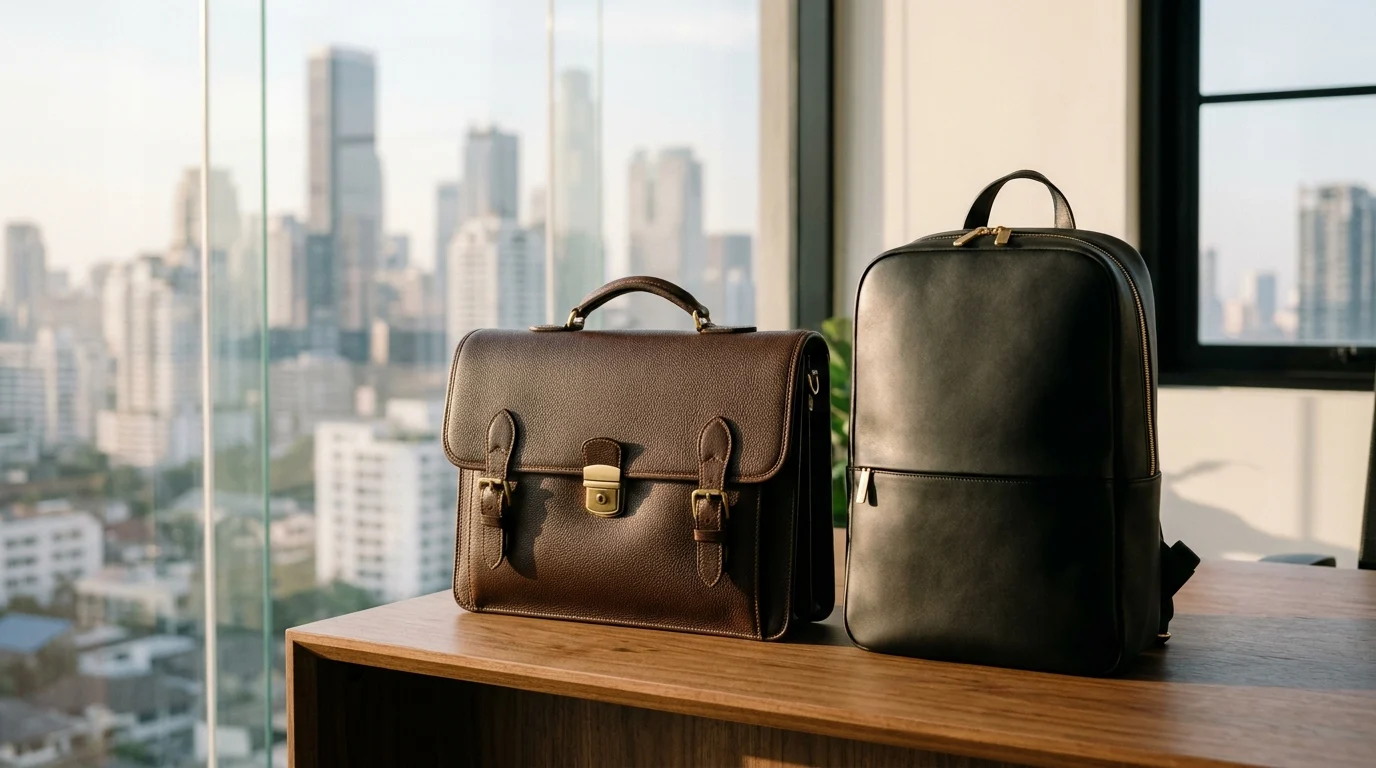
Leather Backpack vs Briefcase Which Work Bag Wins in 2026?
Compare full-grain leather backpacks and traditional briefcases for modern work. Analyze ergonomics, tech capacity, formality, and artisan durability.
Leather Backpack vs Briefcase Which Work Bag Wins in 2026?
The evolution of professional work culture has revolutionized how modern executives, attorneys, software engineers, and creative directors transport their daily business essentials. The contemporary office landscape no longer adheres to rigid, monolithic standards of dress, creating an ongoing debate between two iconic carry silhouettes: the traditional leather briefcase and the modern luxury leather backpack. While the structured briefcase has served for over a century as the undisputed symbol of executive authority and legal boardroom prestige, the rise of hybrid commuting, international business travel, and heavier tech loads has propelled the full-grain leather backpack into elevated corporate environments. Choosing the optimal work bag requires balancing ergonomic health, daily commuting mechanics, organizational capacity, and professional dress codes. For extended multi-day getaways requiring maximum packing capacity, explore our dedicated leather duffle bag vs weekend backpack comparison.
Key Takeaways for Professional Bag Selection:
- Formality vs Mobility: A structured leather briefcase delivers unmatched formal authority in conservative corporate settings, while a leather backpack excels in active commuting and hands-free mobility.
- Biomechanical Ergonomics: Full-grain leather backpacks distribute heavy laptop loads symmetrically across both shoulders, preventing the cervical spine compression associated with single-strap briefcases.
- Tech and Everyday Capacity: Modern leather backpacks comfortably accommodate laptops, chargers, headphones, and gym apparel, whereas briefcases prioritize flat document preservation and slim electronic devices.
- Suit Preservation Tactics: Carrying a heavy backpack over delicate tailoring can cause shoulder pad friction and fabric piling, requiring executives wearing fine wool suits to utilize handheld carrying methods.
- Artisan Material Longevity: Investing in 100% full-grain cowhide paired with industrial YKK brass hardware ensures your chosen work bag develops a distinguished patina over decades of daily commuting.
Is a Leather Backpack or Briefcase Better for Modern Work?
A leather briefcase is superior for conservative corporate environments requiring formal authority, whereas a leather backpack is superior for active urban commuters needing ergonomic comfort and tech capacity. The optimal choice depends directly on your daily transportation method, workplace dress code, and the physical volume of gear you carry.
The contemporary workplace has fractured into diverse operational models, ranging from traditional high-finance institutions to decentralized tech campuses and creative agencies. In conservative industries such as corporate law, investment banking, and executive consulting, first impressions carry tangible professional weight. In these environments, the leather briefcase remains the golden standard. It communicates discipline, meticulous organization, and respect for established protocol. Placing a structured full-grain briefcase on a conference table signals that you have arrived prepared for serious deliberation. Those exploring executive carry solutions can evaluate our handcrafted leather briefcases crafted from premium hides.
Conversely, the reality of modern metropolitan commuting has made physical comfort an urgent priority for millions of professionals. Walking multiple city blocks, navigating crowded transit turnstiles, and riding trains creates physical fatigue when carrying a heavy load in one hand. The luxury leather backpack solves this modern dilemma by combining the refined aesthetic of artisan leather with the functional utility of mountaineering pack design. When constructed from rich black or espresso leather with minimal exterior branding, a backpack looks completely at home in creative boardrooms, design studios, and progressive tech firms.
Furthermore, the hybrid work model means professionals rarely leave work equipment at an office desk overnight. Today's knowledge worker routinely transports a 16-inch laptop, charging bricks, noise-canceling headphones, water bottles, and gym clothing between home and satellite offices. The rigid compartments of a traditional briefcase struggle to absorb bulky three-dimensional items without unsightly bulging. The leather backpack accommodates fluctuating daily payloads with ease, making it the practical champion of modern hybrid lifestyles. For versatile hands-free options, discover our dedicated collection of leather backpacks.
How Do Leather Backpacks and Briefcases Compare in Ergonomics and Health?
Leather backpacks provide superior ergonomic support by distributing weight symmetrically across both shoulders and stabilizing the lumbar spine during walking. Leather briefcases concentrate the entire load on a single shoulder or hand, creating unilateral muscle tension and potential cervical spine misalignment during extended commutes.
The biomechanical impact of carrying professional equipment daily cannot be overstated. A standard corporate payload—comprising a workstation laptop, cables, legal folders, a vacuum-insulated water container, and everyday accessories—frequently weighs between 10 and 15 pounds. Carrying this weight in a traditional briefcase exerts asymmetric downward force on the trapezius muscles and cervical vertebrae. Over months of walking, the body naturally compensates by hiking the carrying shoulder and tilting the spine sideways, which frequently leads to chronic lower back strain, tension headaches, and postural imbalance.
Even when a briefcase is equipped with a detachable shoulder strap, the cross-body or single-shoulder configuration concentrates pressure over a narrow surface area. This concentrated pressure restricts blood circulation across the clavicle and collarbone, encouraging the wearer to lean forward awkwardly. For executives who commute primarily via automobile or taxicab and only carry their bag from the parking garage to the elevator, this ergonomic stress is negligible. However, for professionals who walk more than ten minutes consecutively, the asymmetric strain becomes physically fatiguing.
A properly engineered leather backpack eliminates asymmetric strain by utilizing broad, padded leather shoulder straps that span the full width of the shoulder blades. This bilateral configuration centers the load directly over the body's natural center of gravity, engaging the large postural muscles of the upper back and core. Additionally, a backpack featuring a structured back panel prevents hard laptop edges from pressing into the spine, promoting upright posture and unrestricted arm movement. For active commuters who prioritize physical wellness alongside sophisticated style, the ergonomic advantage of the backpack is decisive. To see how large-format leather carry compares across travel contexts, read our analysis on is a leather duffle bag worth buying for travel.
Which Work Bag Offers Superior Organization for Laptops and Tech Gear?
Leather backpacks offer superior three-dimensional volume for bulky chargers, headphones, and gym layers, while leather briefcases provide superior flat organization for legal documents, contracts, and slim tablets. Modern professionals carrying diverse tech ecosystems benefit from a backpack's multi-compartment depth and padded laptop sleeves.
Evaluating the organizational architecture of each bag reveals fundamental design philosophies tailored to different types of cargo:
- Document and Contract Preservation: The briefcase was historically conceived around the dimensions of legal and letter documents. Its rigid perimeter walls and vertical accordion dividers guarantee that client contracts, architectural prints, and physical portfolios remain pristine without bent corners or wrinkles. In contrast, soft-sided backpacks can allow loose papers to crumple beneath the weight of heavy items resting at the bottom of the main cavity.
- Laptop and Electronic Protection: Both bag silhouettes now incorporate dedicated electronic compartments, but their execution differs. Premium leather briefcases feature a padded central or rear partition designed to suspend a 14-inch to 16-inch laptop slightly above the bag's base, protecting it from impact when placed on hard floors. Modern leather backpacks elevate this protection by integrating dual padded sleeves capable of holding both a large laptop and a tablet simultaneously, often lined with high-density EVA foam and microfiber scratch barriers.
- Accessory and Peripheral Management: The three-dimensional depth of a leather backpack accommodates bulky peripherals that distort a briefcase. Dedicated zippered pockets easily house bulky external batteries, mouse peripherals, portable keyboards, and bulky headphone cases without stressing the leather exterior. Briefcases utilize flat organizer panels ideal for pens, business cards, slim power banks, and smartphones.
- Gym and Lifestyle Integration: For individuals who transition directly from the office to the athletic club or dinner, the backpack is unmatched. It easily swallows a change of clothes, grooming kit, and lunch container. Attempting to fit these items into a formal briefcase is physically impossible without stretching the seams and warping the leather frame.
To understand how traditional executive bags compare to casual shoulder alternatives, review our detailed guide comparing a leather messenger bag vs briefcase. You can also explore our broader line of versatile leather bags designed for daily metropolitan life.
| Professional Carry Silhouette | Optimal Commute Environment | Formality Level | Internal Tech Capacity | Ergonomic Comfort Rating | Price Range USD |
|---|---|---|---|---|---|
| Handcrafted Full-Grain Backpack | Walking, cycling, and train transit | Smart casual to business casual | 18 - 24 Liters (Laptop + Gear) | Exceptional bilateral balance | $89 - $249 |
| Structured Hard-Frame Briefcase | Automobile, executive rides, short walks | Formal corporate, legal, boardroom | 10 - 14 Liters (Laptop + Files) | Moderate single-point load | $89 - $249 |
| Soft-Sided Top-Zip Attache | Hybrid transit and regional train travel | Business formal to smart casual | 12 - 16 Liters (Laptop + Peripherals) | Good with padded shoulder strap | $89 - $249 |
| Executive Leather Duffle Bag | Multi-day business trips and flights | Upscale travel and executive retreat | 35 - 45 Liters (Full Wardrobe + Tech) | Heavy hand carry / shoulder sling | $89 - $249 |
| Minimalist Leather Portfolio Sleeve | Intra-office meetings and digital presentations | Modern executive minimalism | 2 - 4 Liters (Tablet or Ultra-thin laptop) | Featherweight underarm carry | $29 - $79 |
What Leather Hides and Artisan Standards Ensure Lifetime Durability?
Lifetime durability in leather work bags requires 100% full-grain cowhide measuring 1.1 to 1.4 millimeters, heavy-duty YKK brass zippers, reinforced stress-point box stitching, and dense polyester satin lining. These structural components withstand daily abrasion, heavy tensile stress, and varying weather conditions.
A professional work bag experiences far more physical abuse than outerwear. It is placed on concrete floors, shoved beneath airplane seats, subjected to heavy mechanical loads, and exposed to unexpected rain showers. Consequently, purchasing a bag constructed from corrected-grain split leather or bonded vinyl guarantees premature failure, with handles snapping and edges peeling within months. Investing in authentic heirloom craftsmanship requires understanding the vital material specifications that define professional longevity.
Master leather artisans focus on four foundational structural benchmarks when handcrafting daily carry bags:
- Full-Grain Cowhide Selection (1.1 - 1.4 mm): Cowhide is the undisputed premier material for work bags due to its tight collagen fiber density and exceptional puncture resistance. Utilizing uncorrected full-grain hides preserves the natural grain surface, allowing the bag to resist abrasion while absorbing daily handling into a rich, lustrous patina. Thinner leathers, such as 0.7 mm garment skins, lack the structural backbone required to support heavy laptop hardware without sagging.
- Solid Brass YKK Hardware: The primary failure point on mass-produced work bags is the zipper mechanism. Inferior cast-zinc teeth crack under lateral pressure, and lightweight sliders jam when the bag is fully loaded. Premium bags utilize genuine YKK brass zippers with heavy-gauge teeth that glide smoothly and become smoother over years of continuous operation. Structural D-rings and swivel clasps should be forged from solid brass or stainless steel to prevent tensile snapping.
- Reinforced Box-X Handle Stitching: The interface where handles and shoulder straps attach to the bag body experiences intense kinetic load. Master craftsmen reinforce these stress junctions with heavy-gauge bonded nylon thread sewn in a classic box-X pattern, often backed with internal leather reinforcement patches and solid brass rivets. This multi-layered construction prevents tearing even under 25-pound loads.
- Interior Lining Architecture: A durable exterior hide must be paired with an equally resilient interior. Smooth, abrasion-resistant polyester satin lining protects delicate laptop finishes from scuffs while preventing internal tears from sharp pen tips and charger prongs. Hand-finished edges treated with durable edge-paint seal the raw hide fibers from moisture penetration.
For an in-depth examination of the enduring professional utility of traditional attache cases, consult our guide on are leather briefcases still relevant in 2026. To complement your carry setup with matching artisan accessories, explore our handcrafted leather accessories.
| Carry Style & Category | Hide Type & Thickness | Hardware Specification | Interior Lining Material | Price Range USD | Shipping Lead Time | Craftsmanship Warranty |
|---|---|---|---|---|---|---|
| Full-Grain Leather Backpack | 100% Full-Grain Cowhide (1.1 - 1.4 mm) | Heavy-duty YKK brass zippers | Polyester satin interior lining | $89 - $249 | Ships in 3-5 business days | 1-year craftsmanship warranty |
| Executive Leather Briefcase | 100% Full-Grain Cowhide (1.1 - 1.4 mm) | Solid brass clasps & YKK zips | Padded polyester satin lining | $89 - $249 | Ships in 3-5 business days | 1-year craftsmanship warranty |
| Weekender Leather Travel Bag | 100% Full-Grain Cowhide (1.1 - 1.4 mm) | Dual YKK brass pulls & steel D-rings | Heavy-duty satin interior | $89 - $249 | Ships in 3-5 business days | 1-year craftsmanship warranty |
| Leather Wallets & Cardholders | Full-Grain Cowhide with RFID shield | Solid brass snap closures | Microfiber protective lining | $29 - $79 | Ships in 3-5 business days | 1-year craftsmanship warranty |
| Heavy-Duty Leather Belts | 100% Full-Grain Cowhide (1.1 - 1.4 mm) | Solid brass roller buckle | Natural unfinished back | $39 - $89 | Ships in 3-5 business days | 1-year craftsmanship warranty |
How to Style a Leather Backpack or Briefcase with Professional Attire?
Styling a leather briefcase requires coordinating leather color with your dress footwear and maintaining sharp suiting silhouettes, while styling a leather backpack requires choosing minimalist hardware and pairing it with tailored knitwear, blazers, and clean trousers. Aligning bag proportions with outerwear ensures an elevated aesthetic.
The visual impact of your work bag extends directly to your entire wardrobe. A poorly matched bag can undermine an otherwise impeccable tailored suit, while a thoughtfully chosen leather piece pulls disparate garments together into a cohesive executive presentation. To maximize versatility, adhere to the fundamental rule of leather coordination: harmonize the tone of your bag with your belt and footwear. A deep black leather bag pairs naturally with black oxfords, Chelsea boots, and charcoal or navy suiting, whereas a warm espresso brown bag complements cognac shoes, tan overcoats, and earthy flannel trousers.
Integrate your chosen work bag into these four proven sartorial formulas:
Formula 1: The Formal Corporate Executive
- Carry Piece: Classic structured black full-grain leather briefcase with a single top handle and brass hardware.
- Outerwear & Suiting: Charcoal wool two-piece suit or a sharp tailored blazer paired with a crisp poplin dress shirt. Explore our sophisticated leather blazers for an elevated corporate alternative.
- Footwear: Polished black calfskin cap-toe oxfords and a matching full-grain leather dress belt.
- Sartorial Rule: Carry the briefcase strictly by hand using the top handle during client meetings and courtroom appearances to preserve razor-sharp shoulder geometry.
Formula 2: The Modern Creative Tech Lead
- Carry Piece: Streamlined black leather backpack with concealed zip tracks and minimal external branding.
- Outerwear & Base Layer: Clean-cut merino wool crewneck sweater layered beneath a classic tailored jacket from our men's classic leather jackets line.
- Trousers & Footwear: Tailored slim-straight chinos in slate grey or olive, finished with minimalist leather dress sneakers or suede Chelsea boots.
- Sartorial Rule: Adjust the shoulder straps snugly so the backpack rests against the upper shoulder blades rather than sagging down toward the lumbar spine.
Formula 3: The Hybrid Airport Commuter
- Carry Piece: Dual-compartment full-grain leather backpack or soft-sided attache featuring an integrated trolley sleeve.
- Outerwear & Base Layer: Structured travel overcoat or durable utility jacket from our workwear jackets collection.
- Trousers & Footwear: Stretch-wool travel trousers paired with rugged Goodyear-welted boots from our men's leather shoes and boots.
- Sartorial Rule: Keep travel documents and high-frequency electronics accessible in the exterior pocket to breeze through security checkpoints effortlessly.
Formula 4: The Elevated Weekend Consultant
- Carry Piece: Supple espresso brown leather briefcase carried casually with a leather shoulder strap.
- Outerwear & Base Layer: Heavyweight ribbed cardigan or unlined leather jacket selected from our men's leather jackets or women's leather jackets.
- Trousers & Footwear: Relaxed selvedge indigo denim paired with suede desert boots or leather brogues.
- Sartorial Rule: Allow the natural pull-up oils of the brown leather to showcase authentic surface patina, communicating relaxed off-duty sophistication.
Can a Leather Backpack Damage Your Tailored Suits or Jackets?
A leather backpack can cause fabric pilling, shoulder pad compression, and premature seam wear when worn repeatedly over delicate tailored suit jackets and wool overcoats. Friction between backpack shoulder straps and fine suiting cloth generates heat and abrasion that damages delicate natural fibers over time.
While a sleek leather backpack looks undeniably handsome in smart casual settings, executives who wear traditional tailored suits daily must consider the physical consequences of strap friction. Tailored suit jackets are crafted from delicate high-twist worsted wools, cashmere blends, or linen fabrics that are vulnerable to surface friction. When you hoist a 12-pound leather backpack onto your shoulders, the heavy leather straps press down on the internal canvas chest pieces and shoulder pads that give a suit jacket its architectural structure.
As you walk, your shoulders move asynchronously with each stride, causing the underside of the backpack straps to continuously rub against the fabric of the jacket. Over several weeks of daily commuting, this persistent friction produces three visible problems:
- Surface Pilling and Fiber Shearing: The abrasive friction shears off microscopic wool fibers, creating unsightly fuzz balls and eventually wearing the cloth threadbare across the collarbones and armpits.
- Shoulder Canvas Warping: Premium suit jackets feature floating horsehair canvas inside the shoulder construction. The heavy downward weight of backpack straps can crush and crease this delicate structural layer, causing the jacket shoulders to develop permanent dimples.
- Back Panel Wrinkling and Sweating: Wearing a dense leather backpack firmly against the back of a wool suit blocks air circulation, trapping body heat and causing pronounced horizontal creasing across the lower back of the jacket.
To prevent this damage while enjoying the ergonomic benefits of a backpack, adopt these practical strategies:
- Handheld Commuting Strategy: When wearing a high-end tailored suit, carry your leather backpack by its reinforced top grab handle like a briefcase while walking short distances. Only slip the bag over both shoulders when wearing outerwear made of durable cotton twill, canvas, or heavy cowhide that easily resists friction.
- Strap Adjustment: If you must wear the backpack over a jacket, loosen the straps slightly so the bag does not clamp down tightly on the shoulder pads, and ensure the strap undersides are crafted from smooth leather rather than abrasive synthetic mesh.
For tips on pairing bags with structured leather outerwear, read our guide on how to style a leather duffle bag. To guarantee your outerwear shoulders match your body proportions perfectly, review our size and fit guide.
How to Maintain and Condition Heavy-Duty Leather Work Bags?
Maintaining leather work bags requires quarterly conditioning with rich wax-based leather balms, regular cleaning of corner seams, and lubricating heavy brass zippers with natural beeswax. Proper preventative care preserves leather suppleness and prevents structural cracking at high-friction stress points.
Because professional work bags encounter heavy daily mechanical friction, their maintenance protocol is slightly more intensive than garment care. The corners of the bag's base, the bottom piping, and the handle grips experience continuous contact with surfaces, resulting in accelerated oil depletion. If left unconditioned, the leather at the corners will dry out, scuff, and eventually develop structural fissures that compromise the bag's water resistance.
Follow this systematic preservation routine every three to four months to keep your leather carry looking immaculate:
- Thorough Vacuuming and Surface Cleaning: Empty all contents from the interior pockets and turn the bag upside down over a wastebasket to dislodge dust and grit. Use a soft horsehair brush to sweep out seams and pocket crevices. Wipe down the entire exterior leather surface using a soft microfiber cloth lightly moistened with distilled water to remove street grime.
- Deep Conditioning and Nourishment: Apply a small dab of premium natural leather balm containing beeswax, lanolin, or carnauba wax to a clean cotton applicator cloth. Work the balm into the leather in gentle overlapping circular patterns, ensuring even coverage across the front panels, sides, base corners, and handles. Allow the leather to rest in a warm room for 4 hours to absorb the nourishing oils, then buff vigorously with a clean horsehair brush to produce a distinguished, lustrous glow.
- Hardware and Zipper Maintenance: Metal zipper tracks and brass clasps accumulate atmospheric grime over time. Lightly coat the teeth of your YKK brass zippers with a dry beeswax bar or paraffin stick, then zip and unzip the slider multiple times to distribute the wax. This prevents teeth binding and ensures effortless glide even under full load.
- Weatherproofing and Water Protection: If you frequently walk in damp climates, apply a specialized beeswax-based leather protector spray that forms a breathable barrier against rain showers without clogging the natural hide pores. If your bag becomes wet, wipe it dry immediately with a clean towel and allow it to dry naturally at room temperature.
For comprehensive leather preservation techniques and product recommendations, review our complete leather care guide. You can also discover feedback from seasoned corporate travelers across our customer reviews.
Looking to upgrade your daily commute with handcrafted artisan leather? Review our frequently asked questions or connect with master artisans via live customer support to discuss custom leather selection, monogramming options, or bespoke compartment tailoring.
Explore The Full 2026 Leather Outerwear Collection
Vegetable-tanned full-grain cowhide, buttery New Zealand lambskin, and heritage Melton wool. Free express delivery across the USA with 30-day hassle-free returns.