
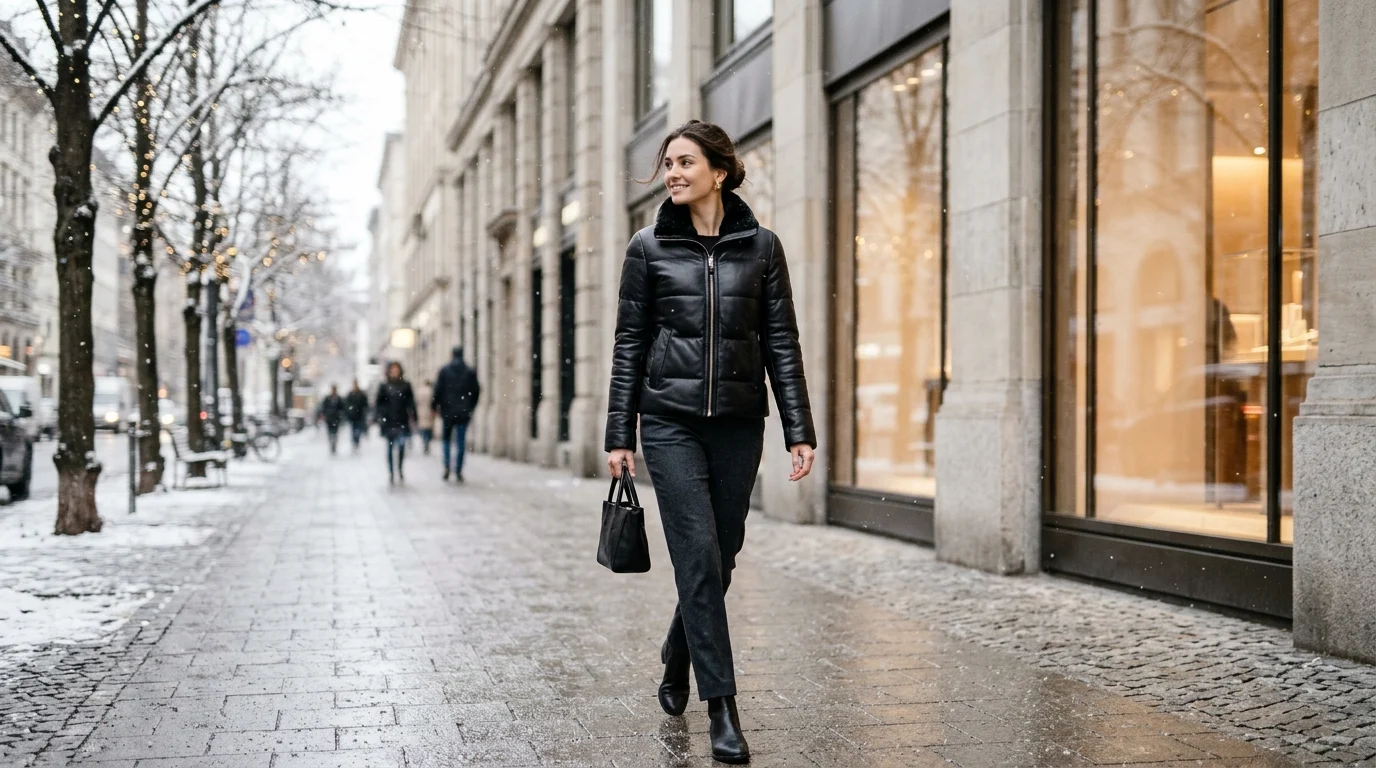
Is a Leather Puffer Jacket Worth Buying for Winter in 2026?
Discover whether a genuine leather puffer jacket is worth buying for winter 2026. Explore warmth ratings, down fill, styling versatility, and leather care.
Is a Leather Puffer Jacket Worth Buying for Winter in 2026?
Investing in a genuine leather puffer jacket for winter 2026 offers an unrivaled synthesis of high-fashion luxury and sub-zero functional warmth. While traditional athletic puffers rely on thin synthetic nylon that tears easily and projects an overly sporty silhouette, a leather puffer merges the structural authority of genuine hide with cloud-like thermal insulation. Master artisans craft these statement winter pieces to withstand bitter polar winds while establishing a commanding architectural presence across metropolitan street style.
Key Takeaways & Core Evaluation Summary:
- Thermal Performance: Combines windproof genuine leather (0% wind penetration) with high-loft down or thermal insulation, comfortable from 15°F to 45°F (-9°C to 7°C).
- Material Longevity: Premium full-grain lambskin (0.9–1.2mm) outlasts conventional nylon puffers by over a decade, developing a rich organic patina without shredding or peeling.
- Baffle Construction: High-end designs incorporate internal down-proof barrier envelopes to prevent quill punctures through exterior leather pores.
- Weight Considerations: Substantially heavier than lightweight synthetic coats, offering comforting physical heft and sculpted drape rather than athletic featherweight lightness.
- Investment Value: Serves as a versatile bridge between luxury outerwear and functional winter defense, transitioning seamlessly from morning commutes to formal nightlife.
What makes a genuine leather puffer jacket different from nylon coats?
A genuine leather puffer jacket replaces vulnerable synthetic nylon shell fabrics with durable full-grain lambskin leather that provides complete windproofing and superior tear resistance. Natural leather acts as an impenetrable barrier against arctic wind gusts while conforming to the wearer's anatomy, whereas nylon shells frequently rip on urban obstacles and generate loud rustling sounds. For colder climates requiring an insulated storm hood and extended thigh protection, explore our comprehensive guide on whether a genuine leather parka coat is worth buying for winter.
Standard winter outerwear relies heavily on ultra-lightweight ripstop nylon or polyester. While these synthetic textiles perform adequately on backcountry ski slopes, they suffer significant aesthetic and physical limitations in daily urban life. Thin nylon snags effortlessly on fences, sharp branches, and bag zippers, resulting in unsightly nylon tape repairs or escaped down clusters. Furthermore, synthetic textiles lack structural drape, giving wearers a bulbous, overly athletic silhouette that clashes with refined tailoring.
Full-grain leather changes the equation entirely. An uncorrected hide measuring 0.9 to 1.2 millimeters in thickness possesses a dense network of interwoven collagen fibers that cannot be sliced or abraded by ordinary everyday friction. The sheer density of genuine hide prevents exterior wind chill from stripping convective body heat, allowing the jacket's internal insulation to perform at peak thermal efficiency. Exploring our collection of handcrafted men's leather jackets illustrates how high-grade hides deliver lifetime durability that synthetic mass-market apparel cannot match.
Acoustic comfort represents another subtle yet profound difference that luxury wearers immediately appreciate. Synthetic ski parkas emit continuous swishing sounds with every arm swing and torso turn. Genuine full-grain lambskin moves with silent, butter-soft fluidity, providing quiet elegance. As the leather absorbs ambient body heat, it drapes more naturally around the shoulders, transforming a bulky outerwear category into a sculpted runway statement.
Environmental resilience against urban abrasion further elevates genuine leather over petroleum-derived textiles. In crowded commuter subways, tight elevators, and busy restaurants, nylon jackets inevitably suffer friction piling and cigarette burn punctures. Genuine animal hide naturally resists melting from brief contact with heat sources and recovers smoothly from surface scuffs through simple horsehair brushing and conditioning. Over multiple winter seasons, while synthetic puffers look degraded and worn out, a full-grain leather puffer gains depth, texture, and character.
How warm is a leather puffer jacket in freezing winter conditions?
A genuine leather puffer jacket delivers exceptional warmth down to 15 degrees Fahrenheit (-9 degrees Celsius) by combining complete convective wind resistance with trapped thermal insulation. Because full-grain leather blocks one hundred percent of freezing crosswinds, the internal down or thermal chambers retain radiant body heat far more effectively than porous fabric parkas.
Thermal comfort in sub-zero winter environments depends on two interconnected physical mechanisms: dead-air insulation and wind resistance. Traditional wool overcoats offer excellent breathability but permit icy wind drafts to penetrate their woven fibers unless layered with bulky sweaters. Conversely, standard nylon puffers trap heat well but allow external cold to compress their thin exterior fabrics. A leather puffer resolves this dilemma through a dual-barrier design.
The exterior leather shell serves as a solid aerodynamic shield that deflects sub-zero winds and prevents ambient freezing air from cooling the inner core. Beneath this exterior hide, master tailors construct quilted horizontal chambers packed with premium down or high-loft thermal fill. These chambers trap pockets of still air warmed by your natural body metabolism. When paired with a smooth polyester satin lining, this multi-tiered architecture maintains core body temperature across prolonged exposure to polar street conditions.
For regions experiencing severe alpine snowfall or extended sub-zero cold spells, selecting the right base layers enhances thermal efficiency without compromising silhouette lines. Fine-gauge merino wool turtlenecks, thermal henleys, or cashmere knitwear layer effortlessly beneath the satin lining. Riders and outdoor commuters who need maximum insulation across diverse outerwear styles can compare longline silhouettes in our curated guide to men's leather coats and tailored women's leather coats.
Laboratory thermal testing reveals that convective wind chill accounts for over sixty percent of heat loss during urban winter walking. Standard textile shells allow air currents to penetrate stitching seams, creating localized cold spots along the spine and ribs. In contrast, the continuous, non-porous structure of full-grain lambskin deflects turbulent drafts completely. This thermodynamic barrier means a leather puffer with 600-fill down insulation matches or exceeds the real-world perceived warmth of an 800-fill synthetic technical parka in brisk city winds.
What is the best leather hide for a winter puffer jacket?
Full-grain lambskin measuring between 0.9 and 1.2 millimeters represents the ultimate leather hide for constructing a winter puffer jacket. Lambskin delivers exceptional suppleness, buttery-soft drape, and lightweight flexibility, allowing quilted baffle chambers to expand naturally around insulation without creating rigid, stiff bulk across the chest and shoulders.
While heavy cowhide leather measuring 1.1 to 1.4 millimeters reigns supreme for high-abrasion motorcycle racing, using heavyweight steer hide across a down-filled puffer produces an uncomfortably stiff, cumbersome garment. A cowhide puffer would weigh upwards of eight to ten pounds, severely restricting arm movement and creating an inflexible, robot-like posture. Lambskin, by contrast, retains natural elasticity, draping gently over anatomical contours while providing more than enough tensile durability for daily urban commuting.
Artisanal tanneries utilize specialized chrome and semi-aniline tanning methods that optimize lambskin for winter conditions. This chemical drum treatment infuses natural lubricating oils deep into the hide fibers, preventing the leather from stiffening or cracking when ambient temperatures plummet below freezing. The resulting leather surface exhibits a refined matte or subtle semi-gloss luster that repels light snowfall effortlessly.
Goatskin measuring 0.8 to 1.0 millimeter serves as an outstanding alternative for wearers seeking additional surface texture and abrasion resilience. Goatskin features a natural pebbled grain pattern and high lanolin content that offers superior natural water resistance compared to standard bovine hides. Women seeking versatile cold-weather options can explore our extensive collection of women's leather jackets to discover varied textures from plush suede to ultra-smooth nappa finishes.
Tannery selection and fat-liquoring processes play a decisive role in sub-zero hide performance. During tanning, master curriers introduce specialized natural oils and emulsified waxes into the collagen matrix. If an inferior tannery skips adequate fat-liquoring, low winter humidity and freezing temperatures cause hide fibers to crystallize, leading to premature creasing and permanent surface fractures. Premium full-grain lambskin remains supple and responsive down to minus twenty degrees, guaranteeing effortless comfort throughout the harshest winter weeks.
Winter Outerwear Silhouette Comparison
| Outerwear Silhouette | Primary Material | Temperature Range (°F) | Wind Resistance | Water Resistance | Aesthetic Formality | Price Range (USD) |
|---|---|---|---|---|---|---|
| Genuine Leather Puffer | Full-Grain Lambskin | 15°F to 45°F | Complete (100% windproof) | Moderate (light snow/mist) | Luxury Streetwear & Nightlife | $249 - $399 |
| B-3 Aviator Shearling | Sheepskin with Fleece | -10°F to 35°F | Complete (heavy fleece barrier) | Moderate (treated hide) | Vintage Military & Heritage | $349 - $599 |
| Leather Trench Coat | Full-Grain Cowhide | 35°F to 55°F | High (belted double-breasted) | Moderate to High | High Fashion & Corporate | $249 - $399 |
| Technical Nylon Puffer | Synthetic Ripstop | 0°F to 40°F | High (membrane backer) | High (DWR coated) | Casual Sportswear & Alpine | $150 - $350 |
How do artisans construct down baffles inside a leather jacket?
Artisans construct leather puffer baffles by encasing down fill inside independent down-proof polyester barrier pockets before securing them behind exterior leather panels. This dual-envelope technique prevents sharp feather quills from puncturing the porous lambskin exterior while ensuring thermal insulation remains evenly distributed across each chamber without cold spots.
Direct-stitch baffle construction represents a fatal flaw common to low-cost fast-fashion leather puffers. When inexperienced manufacturers stitch horizontal quilting lines directly through exterior leather and down batting simultaneously, needles create thousands of microscopic puncture holes through the hide. Over time, sharp goose down quills migrate through these needle perforations, shedding white down feathers across your sweaters and degrading the jacket's insulating volume.
Master craftsmen overcome this challenge through specialized floating baffle construction. The insulation is first weighed and sealed inside breathable, down-proof polyester satin envelopes. These insulated packets are then strategically attached to internal seam allowances using flexible French binding. This allows the exterior leather panels to maintain clean, uninterrupted surface beauty while the internal baffles loft freely to capture maximum body warmth.
Channel spacing and stitch density dictate the jacket's final silhouette. Narrow two-inch quilting channels create an overly active, sporty look reminiscent of performance athletic gear. Artisans crafting luxury streetwear favor wide horizontal channels measuring four to six inches. These expansive baffles produce a clean, sculpted architectural aesthetic that highlights the continuous grain and natural texture of premium uncorrected lambskin. Explore our versatile casual jackets to see how modern quilting techniques elevate everyday outerwear.
Internal baffle chambers must also incorporate breathable perimeter micro-mesh vents. Because full-grain leather is naturally windproof, trapping moisture vapor inside airtight chambers could cause condensation during brisk walks or transition into heated buildings. Precision-engineered vapor release zones allow perspiration to escape without letting cold air penetrate, maintaining a stable, dry microclimate around your torso throughout fluctuating daily activities.
How do you care for and clean a leather puffer jacket in snow?
Caring for a leather puffer jacket in winter snow involves gently shaking off surface moisture, hanging the garment on a contoured wooden hanger, and air-drying away from artificial heat sources. Applying a lanolin-based leather cream bi-annually maintains natural moisture barriers, protecting the hide from dry winter indoor heating and road salt spray discoloration.
Winter weather presents unique hazards to genuine leather outerwear, particularly melting snow and airborne de-icing chemicals. When stepping indoors after a snowy commute, never use heat to dry your coat. Shaking the garment vigorously dislodges resting snowflakes before they melt into the pores. Use a dry, lint-free microfiber towel to blot away any remaining water droplets on the shoulders and collar.
Allow your leather puffer to air-dry naturally at standard room temperature over twenty-four to forty-eight hours. Exposing wet leather to direct radiator heat, baseboard heaters, or forced-air vents bakes out essential moisturizing oils, causing the collagen structure to shrink, stiffen, and crack permanently. Once the jacket dries completely, inspect the surface for road salt deposits, which appear as faint white streaks. Wipe salt marks away immediately with a damp cloth moistened with distilled water.
Conditioning is especially vital during dry winter months when indoor heating saps ambient moisture. Massage a nickel-sized portion of natural leather conditioner into high-friction zones including the collar, cuffs, and pocket welts every three to four months. For step-by-step restoration protocols and vintage leather rejuvenation, consult our comprehensive guide on how to clean a vintage leather jacket at home and study our dedicated leather care guide.
Pre-season water-repellent conditioning provides an invisible microscopic shield against unexpected slush splatters. Artisans recommend applying a fluoropolymer-free, beeswax-infused waterproofing spray formulated exclusively for nappa and lambskin leathers. Lightly mist the jacket from twelve inches away, allowing the mist to settle evenly without saturating the pores. This preventative barrier causes slush and rain to bead into droplets and roll off the leather without penetrating the drum-dyed finish.
Material & Durability Matrix
| Leather Type | Hide Thickness (mm) | Hardware Specs | Lining Material | Price Range (USD) | Standard Lead Time | Craftsmanship Warranty |
|---|---|---|---|---|---|---|
| Full-Grain Lambskin | 0.9 - 1.2 mm | YKK Brass Zippers | Polyester Satin Lining | $249 - $399 | Ships in 3-5 business days | 1-Year Craftsmanship Warranty |
| Full-Grain Cowhide | 1.1 - 1.4 mm | YKK Brass Zippers | Polyester Satin Lining | $249 - $399 | Ships in 3-5 business days | 1-Year Craftsmanship Warranty |
| Full-Grain Goatskin | 0.8 - 1.0 mm | YKK Brass Zippers | Polyester Satin Lining | $249 - $399 | Ships in 3-5 business days | 1-Year Craftsmanship Warranty |
| Bespoke Custom Made | Measured to spec | YKK Brass Zippers | Polyester Satin Lining | $299 - $499 | Ships in 7-14 business days | 1-Year Craftsmanship Warranty |
How should an oversized leather puffer jacket fit your frame?
An oversized leather puffer jacket should fit comfortably broad across the dropped shoulder seams while allowing three to four inches of breathing room through the torso for heavyweight knitwear layering. The sleeve cuffs should rest securely at the wrists with internal ribbed storm cuffs to seal out icy winter drafts without swallowing your hands.
The current 2026 fashion zeitgeist heavily favors relaxed, boxy, and dropped-shoulder puffer silhouettes popularized by luxury Parisian fashion houses. However, achieving an intentionally oversized silhouette requires precise garment proportions rather than simply purchasing two sizes larger than normal. Sizing up on standard jackets results in excessively long sleeves that bunch at the knuckles and an uncomfortably loose collar that lets cold wind pour down your chest.
Artisan-cut oversized puffers incorporate proportional adjustments specifically calculated for cold-weather layering. The shoulder seam is dropped two inches past the natural acromion bone, while the armhole circumference is deepened to accommodate chunky cable-knit cashmere sweaters without armpit pinching. Meanwhile, the sleeve length and torso hem are calibrated to prevent excess fabric dragging down your body proportions. Review our exact dimensional charts on the official size & fit guide before selecting your winter size.
Hemline adjustments provide critical versatility when styling oversized silhouettes. Look for jackets equipped with concealed elastic shock cords and solid brass barrel cord locks along the inner bottom hem. Cinching the hem creates a rounded, cropped bubble effect that sits cleanly atop high-waisted trousers, visually lengthening the legs while sealing in rising body heat during blustery days.
Collar architecture is another vital dimension that distinguishes premium outerwear from generic cuts. An artisan leather puffer features an insulated stand collar reinforced with dense interlining that stands erect without collapsing against your neck. When zipped fully upward, the funnel collar wraps comfortably around the chin and jawline, eliminating the need for a bulky winter scarf while creating an imposing, statuesque silhouette in urban settings.
What are the most stylish outfit formulas for a leather puffer jacket?
Styling a leather puffer jacket involves balancing its voluminous upper-body proportions with straight-leg trousers, chunky leather footwear, and minimalist knit base layers. Pairing the rich, tactile sheen of full-grain leather against soft textured wool, tailored denim, and luxury leather accessories creates sophisticated high-low streetwear synergy.
For an elevated everyday metropolitan uniform, layer a boxy black lambskin puffer over a cream cashmere turtleneck sweater and structured dark-wash raw selvedge jeans. Anchor the outfit with lug-sole leather chelsea boots and a minimalist leather messenger bag. The contrast between deep black leather and soft ivory knitwear creates visual depth, while the straight-leg denim anchors the puffer's expansive shoulder volume.
When styling women's fashion, contrast oversized outerwear against sleek feminine silhouettes. Drape a chocolate brown leather puffer over a fine-gauge ribbed wool knit midi dress, paired with knee-high leather boots. The juxtaposition of structured hide volume against a streamlined knit dress embodies effortless cold-weather chic. For casual weekend outings, explore our refined range of women's casual leather jackets and tactile men's suede jackets to discover complementary layering textures.
Men transitioning the leather puffer into smart-casual office commutes should layer the jacket over a fine merino wool crewneck and pleated flannel trousers. Adding a handcrafted leather belt and matching leather wallet from our curated leather accessories collection reinforces artisan harmony. To build an enduring wardrobe rotation across all seasons, study our foundational guide on how to style capsule wardrobe leather essentials.
Winter weekend travel demands utilitarian elegance that transitions smoothly from airport terminals to boutique hotels. Layer an espresso leather puffer over a relaxed crewneck sweatshirt and tapered wool joggers, completing the ensemble with a handcrafted weekend travel bag. For those exploring flight outerwear aesthetics and cropped athletic proportions, examine our historical analysis of men's bomber flight jackets and padded men's leather vests.
Outfit Breakdown for Urban Commuting:
- Outerwear: Boxy matte-black full-grain lambskin puffer with high funnel collar.
- Base Layer: Heavyweight ribbed wool turtleneck in charcoal or oat heather.
- Bottoms: Relaxed straight-leg selvedge denim or tailored wool twill trousers.
- Footwear: Commando-sole leather boots with Goodyear welted outsoles.
- Accessories: Full-grain leather gloves with cashmere thermal lining.
Outfit Breakdown for Weekend Gallery & Dining:
- Outerwear: Espresso brown leather puffer with antique brass zipper detailing.
- Base Layer: Fine-gauge silk-cashmere mock neck sweater in ivory.
- Bottoms: Wide-leg pleated trousers in heavy wool houndstooth or corduroy.
- Footwear: Chunky leather loafers or minimal leather dress boots.
- Accessories: Handstitched leather cardholder and wool felt fedora.
Why should you commission a bespoke custom leather puffer jacket?
Commissioning a bespoke custom leather puffer jacket allows you to select customized hide thickness, personalized torso length, and precise chest-to-waist ratios tailored to your individual proportions. Bespoke craftsmanship guarantees that internal down volume matches your regional winter climate without creating unflattering bulk across petite or athletic frames.
Mass-market sizing assumes uniform height-to-weight proportions that frequently disappoint discerning shoppers. A taller customer with long arms often finds standard puffers too short in the torso, while an individual with an athletic build encounters uncomfortable chest tightness when zipping the coat fully. Custom tailoring eliminates these compromises by drafting an individualized pattern template derived from thirteen distinct anatomical measurements.
Custom commissions also afford total creative freedom over functional details. You can select antique brass, gunmetal, or polished silver YKK zipper hardware, incorporate hidden fleece-lined hand-warmer pockets, or request a detachable leather hood with magnetic collar closures. Furthermore, you can personalize the internal lining, specifying vibrant silk-satin jacquard or insulated quilted linings for personalized thermal comfort.
Every custom piece crafted by Lux Wearz master artisans undergoes twelve rigorous quality checkpoints before shipping, ensuring flawless seam alignment and uniform down distribution. Discover verified feedback from collectors who elevated their winter wardrobe by reading our customer reviews. Those curious about car coats and mid-length winter alternatives can also review our comprehensive leather car coat buying and outfit guide.
Selecting bespoke outerwear transforms seasonal shopping into an enduring creative collaboration. You collaborate directly with master artisans who have spent decades perfecting the nuances of hide grading, seam reinforcement, and anatomical drape. The finished garment becomes a unique personal heirloom engineered specifically for your body and built to deliver luxurious warmth for decades.
Looking for this trending silhouette? Explore our handcrafted leather jackets with complimentary shipping across the USA. Need custom sizing or custom sleeves? Design yours with our custom order service and consult our master craftsmen today.
Explore The Full 2026 Leather Outerwear Collection
Vegetable-tanned full-grain cowhide, buttery New Zealand lambskin, and heritage Melton wool. Free express delivery across the USA with 30-day hassle-free returns.