
How to Check Real Leather When Buying Secondhand Jackets
Learn how to check real leather when buying secondhand jackets with 10 thrift tests, zipper dating, dry rot checks, and new USD 149-499 pricing.
Learning how to tell real leather from a synthetic copy when buying a secondhand jacket protects you from spending thrift or resale money on plastic coats that peel within months. Vintage racks, estate sales, and online resale platforms mix authentic full-grain hides alongside deceptive polyurethane lookalikes with worn tags or missing care labels. Because store owners will never let you hold a lighter to a sleeve or soak a collar in water, mastering non-destructive physical, visual, and hardware checks lets you authenticate any pre-owned piece in under three minutes.
Key Takeaways
- Never Use Destructive Tests on Store Stock: Skip lighter flame checks or water soaking in thrift shops; instead inspect raw pocket-welt edges, grain irregularity, and fold recovery.
- The Exposed Edge Reveals Everything: Real leather shows a dense, fibrous suede underside inside buttonholes and hem folds, whereas faux leather exposes woven polyester mesh or knitted cloth.
- Decode Vintage Hardware Stamps: Authentic pre-owned jackets carry solid brass zippers from YKK, Talon, or Ideal, while cheap synthetic copies use lightweight hollow metal or plastic teeth.
- Test for Dry Rot Before Paying: Gently flex the shoulder yoke and listen for faint crackling sounds or dry thread snaps that signal irreversible collagen breakdown in neglected vintage hides.
- Compare Repair Bills Against New Leather: Factor zipper, lining, and odor-removal costs against brand-new handcrafted cowhide starting at USD 149-249 with free shipping across the USA and a 1-year craftsmanship warranty.
Why Do Standard Real Leather Tests Fail When Buying Secondhand Jackets?
Standard online leather tests like burning a loose thread or dripping water onto a cuff fail when buying secondhand jackets because store staff forbid destructive testing and aged coatings block moisture. Shoppers need non-destructive tactile, edge-grain, and hardware checks that authenticate vintage hides safely without damaging merchandise you do not yet own.
Most beginner buying guides repeat two internet myths: hold a flame to the hem or pour water droplets on the sleeve. If you flick a lighter inside a vintage consignment shop, staff will escort you straight to the door. Even water testing proves unreliable on pre-owned coats because previous owners frequently spray silicone water-repellents, wax balms, or heavy acrylic topcoats that make real cowhide bead water exactly like vinyl.
Instead, professional vintage buyers rely on structural evidence sewn permanently into the garment. Checking inside pocket flaps, flexing high-wear elbow folds, and weighing solid metal zippers reveals the truth in seconds. Before walking into any thrift store or browsing vintage leather jackets, learn which visual cues separate enduring hide from disposable plastic, or review our lab-level guide on how to spot real vs fake leather for deeper material science.
How Can You Spot Real Leather Grain Without Guessing on a Thrift Rack?
Spotting real leather grain on a thrift rack starts by holding the back panel under bright overhead light to look for organic, non-repeating pore clusters and subtle natural crease lines. Synthetic polyurethane coats display uniform, roller-stamped pebble patterns that repeat like wallpaper across every inch of the garment.
Animal skin never grows identically from left shoulder to right forearm. When you examine authentic full-grain hides—whether rugged cowhide or supple lambskin—you notice tiny variations in follicle spacing, faint healed scratches, and slight thickness transitions near the underarm gussets. Run your fingertips slowly over the back yoke, and you should feel subtle micro-ridges rather than glassy, uniform smoothness.
By contrast, polyurethane and PVC imitations are pressed under giant engraved steel drums during manufacturing. If you trace a distinct cluster of three bumps near the collar and spot that exact identical triangle six inches lower down the sleeve, you are holding embossed plastic. Shoppers comparing authentic hide textures across both menswear and womenswear racks can examine clean grain examples in mens classic leather jackets and womens classic leather jackets.
Where Should You Look Inside a Secondhand Jacket to See the True Backing?
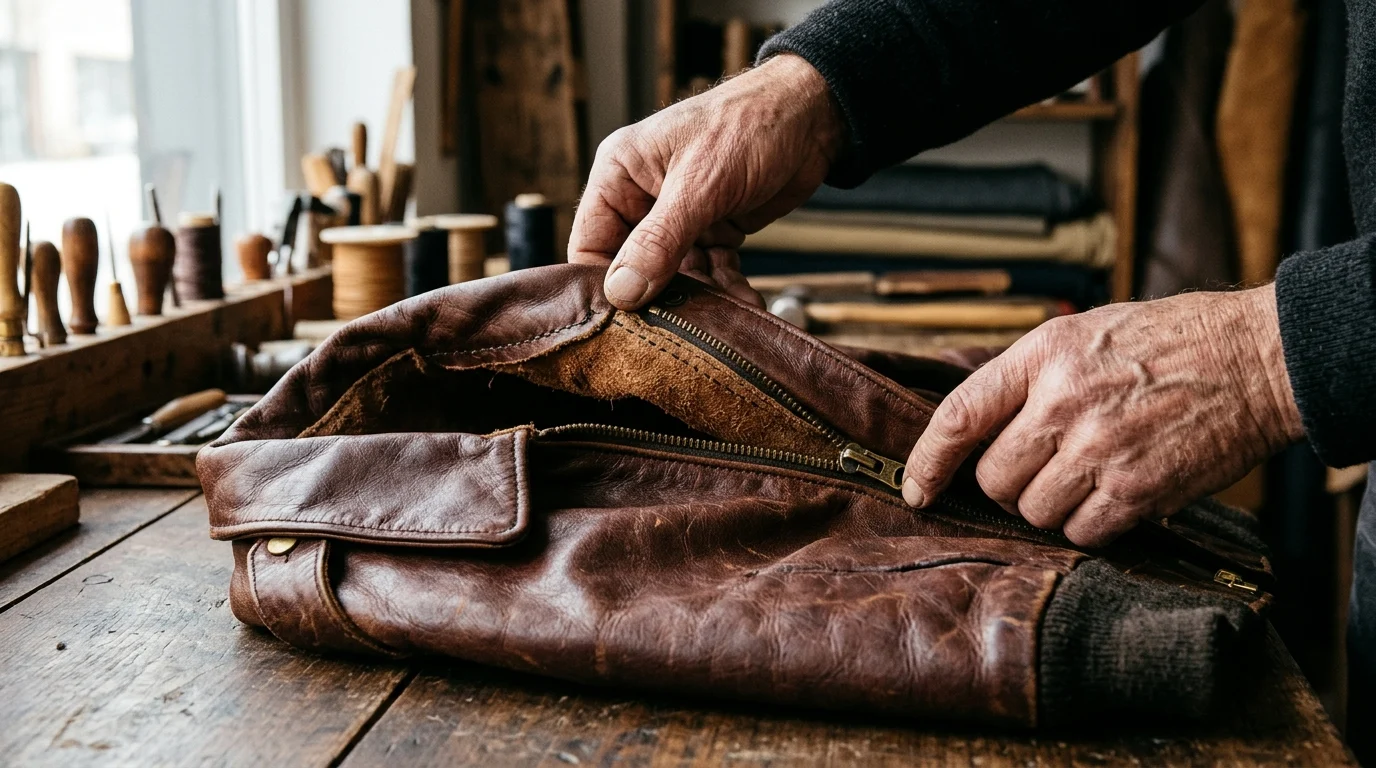
Checking the underside of interior pocket welts, the inside lip of buttonholes, and the folded zipper placket edge reveals the raw leather cross-section without altering the jacket. Real leather displays dense, hairy fibrous suede fibers, whereas synthetic copies reveal a distinct woven textile cloth or thin mesh glued beneath plastic film.
Even when a garment carries a full polyester satin lining, tailors always leave tiny raw edges exposed at construction transitions. Unzip the interior chest pocket and gently roll the leather lip outward with your thumb. Real hide appears solid, fibrous, and fuzzy along the cut edge, looking nearly identical from the top dyed face down to the raw inner flesh side.
Faux leather and cheap bonded leather cannot hide their layered construction at a raw cut edge. Under close inspection, synthetic copies look like a thin sheet of dark paint laminated onto white or black knitted polyester fabric. Look closely at the seam allowances along the bottom hem or under the collar stand as well—if tiny cloth threads fray from beneath a cracking surface skin, leave the jacket on the hanger.
How Do Aged Labels and "Genuine Leather" Tags Mislead Vintage Buyers?
Care tags on pre-owned jackets mislead buyers because legal "Genuine Leather" stamps often cover weak bottom-split hides coated in thick synthetic paint that peels like plastic. Worse, counterfeit overseas jackets frequently sew counterfeit luxury brand labels and fabricated "100% Real Leather" tags into cheap polyurethane shells.
Understanding leather grading terminology saves you from paying real-hide prices for coated split scraps. In commercial manufacturing, "Genuine Leather" is rarely a badge of top quality; instead, it frequently marks the fibrous lower split layer remaining after the durable top grain has been sliced away for higher-priced goods. Makers press and glue heavy pigment over that weak split base, creating a coat that cracks along the elbows after moderate winter wear.
Look instead for specific hide species names on older tags—such as full-grain cowhide, lambskin, goatskin, or steerhide—paired with clear country-of-origin stamps and care instructions warning against dry cleaning. If the tag reads "man-made materials," "PU leather," "polyurethane," or "shell: 100% viscose coated," walk away immediately. If you already own a jacket shedding flakes around the collar, read our repair analysis on why a leather jacket peels before risking another secondhand buy.
Which Zippers, Snaps, and Stitching Prove a Pre-Owned Jacket Is Authentic?
Authentic pre-owned leather jackets feature heavy solid brass or nickel zippers stamped YKK, Talon, Ideal, or Scovill alongside thick, even lock-stitch seams at three to five stitches per inch. Synthetic knockoffs almost always cut corners with featherweight hollow alloy sliders, plastic zipper teeth, and loose, crooked polyester thread.
Hardware serves as an honest lie detector because cheap factories never pair expensive solid-brass hardware with disposable plastic shells. Grasp the main front zipper slider between your thumb and forefinger and test its weight and glide. Authentic heavy-gauge YKK brass zippers feel dense, cold, and solid, engaging teeth smoothly without wobbling sideways.
Examine the stitching along high-stress zones like the shoulder yoke, armhole curve, and pocket corners. Handcrafted and heritage leather garments use heavy-duty bonded nylon or thick waxed thread spaced evenly so needle holes never perforate the hide like a postage stamp tear line. Backed reinforcement triangles or bar-tacks at pocket mouths signal real leathercraft—standards you can explore across our mens leather jackets and detailed further in our breakdown of quality leather jacket zippers and stitching.
How Do You Test Flex, Warmth, and Dry Rot Without Damaging Vintage Stock?
Testing flex and warmth safely requires pressing your thumb gently into the upper sleeve for ten seconds and folding a corner of the hem to check spring-back and quietness. Real healthy leather warms quickly to body heat and ripples into soft spiderweb wrinkles, whereas dry-rotted vintage hide cracks loudly or feels brittle like cardboard.
Touch tells your fingers within five seconds what shiny lighting tries to hide. When you press a flat palm against real full-grain cowhide or lambskin, the material absorbs your body warmth rapidly and feels supple, alive, and slightly waxy. Synthetic vinyl feels noticeably cold, slick, and rubbery even after prolonged handling, and creaks slightly when pinched between your fingers.
However, vintage shoppers face a second threat beyond fake plastic: dry rot in authentic 30-year-old leather. If a real cowhide jacket hung for decades in a damp attic or scorching garage, natural oils evaporate and acidic tanning salts weaken the collagen fibers. Flex the collar fold and pinch the shoulder seam softly; if tiny surface fissures splinter open, white salt blooms appear, or stitching snaps softly under gentle tension, the hide is beyond economical rescue.
How Do Pre-Owned Silhouette Cuts Compare Against New Handcrafted Leather?
Secondhand vintage jackets deliver broken-in patina and lower upfront sticker prices, while new handcrafted full-grain jackets eliminate dry rot risk, hidden odor damage, and dated boxy shoulder pads. Comparing vintage finds against fresh artisanal cuts clarifies when thrifting saves money and when buying new custom leather delivers higher long-term value.
| Leather Jacket Silhouette & Source | Best Body Type | Primary Aesthetic | Formality Tier | Shoulder Offset & Ease | Price Range USD |
|---|---|---|---|---|---|
| Vintage Thrifted Double Rider | Broad Chest, Athletic | Rugged 1980s Rock Heritage | Casual to Nightlife | Variable; often wide boxy shoulders | Secondary resale varies |
| Secondhand Flight Bomber | Average, Stocky Builds | Worn-In Aviation Surplus | Everyday Weekend Casual | 2.0 - 2.5 inches loose ease | Secondary resale varies |
| Pre-Owned Minimalist Racer | Lean, Slim Frames | Retro Motorsport Chic | Smart-Casual Streetwear | 0.75 - 1.25 inches snug ease | Secondary resale varies |
| New Entry Cowhide Jacket | Standard Sizes S-XXL | Clean Timeless Outerwear | Daily Casual to Smart-Casual | 1.25 - 1.75 inches balanced ease | USD 149-249 |
| New Premium Full-Grain Jacket | Athletic, Average, Curvy | Elevated Modern Streetwear | Smart-Casual to Evening | 1.25 - 1.75 inches tailored ease | USD 249-399 |
| Custom Made-to-Order Jacket | Petite, Tall, Broad Shoulders | Bespoke Modern Tailoring | Versatile All-Occasion | Exact bespoke anatomical pattern | USD 299-499 |
Pay special attention to era-specific shoulder proportions before buying secondhand outerwear online or in person. Jackets manufactured during the late 1980s and early 1990s frequently pack wide, boxy batwing armholes and thick foam shoulder pads that overwhelm modern frames. Conversely, early 2000s mall-brand leather blazers often run tight across the ribs while leaving oversized sleeve cuffs. When you want classic heritage silhouettes without vintage fit compromises, explore current mens biker moto jackets or tailored womens biker jackets.
What Material Specs Should Replace Mystery Secondhand Labels?
Verified full-grain leather jackets use documented hide thicknesses—1.1-1.4mm cowhide, 0.9-1.2mm lambskin, or 0.8-1.0mm goatskin—paired with YKK brass zippers, polyester satin linings, and hand-stitched seams. Comparing unknown thrift finds against transparent artisanal specifications prevents overpaying for thin split leather or disguised synthetic substitutes.
| Material Grade & Construction | Hide Thickness | Hardware & Seams | Lining Spec | Lead Time | Price Range USD | Warranty & Returns |
|---|---|---|---|---|---|---|
| Entry Genuine Cowhide | 1.1-1.4mm cowhide | YKK brass zippers, hand-stitched | Polyester satin lining | 3-5 business days | USD 149-249 | 30-day returns, 1-year warranty |
| Premium Full-Grain Lambskin | 0.9-1.2mm lambskin | YKK brass zippers, hand-stitched | Polyester satin lining | 3-5 business days | USD 249-399 | 30-day returns, 1-year warranty |
| Full-Grain Goatskin Outerwear | 0.8-1.0mm goatskin | YKK brass zippers, hand-stitched | Polyester satin lining | 3-5 business days | USD 249-399 | 30-day returns, 1-year warranty |
| Custom Made-to-Order Build | Choice of 0.8-1.4mm hides | YKK brass zippers, hand-stitched | Polyester satin lining | 7-14 business days | USD 299-499 | 30-day returns, 1-year warranty |
| Shearling & Aviator Winter Cut | Heavyweight leather shell | YKK brass zippers, heavy buckles | Genuine shearling lining | 3-5 business days | USD 349-599 | 30-day returns, 1-year warranty |
| Secondhand Coated Split Leather | Thin split layer with paint coat | Mixed hardware; inspect closely | Often torn rayon or nylon | Immediate pickup | Used market varies | Zero warranty or returns |
| Polyurethane Faux Copy | Plastic film on woven fabric | Light alloy or plastic zippers | Thin polyester taffeta | Immediate pickup | Used market varies | Zero warranty; peels rapidly |
Every new Lux Wearz piece is handcrafted by master artisans with 20+ years experience and passes a strict 12-point quality inspection before shipping. That level of transparent hide documentation—backed by free shipping across the USA and 30-day hassle-free returns—gives buyers total certainty that thrift-store guessing never matches. Shoppers looking for rugged everyday silhouettes with verified hide grades can also check mens bomber flight jackets and tailored everyday cuts.
How Do You Authenticate Real Leather When Buying Secondhand Online?
Authenticating real leather on online resale platforms like eBay, Depop, or Poshmark requires requesting four specific macro photos before clicking buy: the raw pocket-welt edge, the zipper pull stamp, the underarm lining seam, and natural daylight creases on the elbow. Sellers offering genuine hides gladly provide close-up proof, while scammers dodge macro requests.
Never trust a grainy mirror selfie or a dimly lit bedroom flat-lay shot when buying pre-owned leather remotely. Harsh flash photography makes cheap polyurethane vinyl shine like polished calfskin, while soft warm lamps mask dry-rot cracking along the collar edge. Always message the seller asking for crisp natural window-light macro shots of the inner chest pocket opening and the care label text.
Equally important, request flat tape-measure photos across three critical points: pit-to-pit chest width, shoulder-seam to shoulder-seam width, and center-back collar to bottom hem. Vintage leather shrinks slightly over decades of rain cycles and conditioning, meaning a vintage "Large" often fits closer to a modern slim "Medium." Comparing seller tape numbers against our size and fit guide prevents expensive non-returnable mistakes on peer-to-peer apps.
What Hidden Defects Turn a Cheap Thrift Leather Find Into a Money Pit?
Hidden smoke odor, mold spores inside the lining, torn armhole seams, and rusted main zippers frequently turn a cheap secondhand jacket into a costly repair project. Fixing a failed brass zipper and relining torn satin sleeves easily adds over a hundred dollars to your purchase price without fixing brittle leather.
Inspect the armpit lining and interior pocket bags thoroughly before handing over cash at a flea market or estate sale. Musty basement mildew leaves dark speckled spots inside cotton pocket bags and produces a sour, damp-earth smell that standard airing never removes. Similarly, stale cigarette smoke trapped deep inside porous lambskin lining can linger for years unless treated professionally.
Test the main front zipper from bottom pin to top stop three times in a row. Missing teeth, frayed zipper tape fabric at the insertion box, or a split slider force a full cobbler zipper replacement because broken teeth cannot be patched individually. If a used jacket passes the leather test yet smells musty or carries dried dust, consult our workshop restoration protocol on how to clean a vintage leather jacket and follow our leather care guide before wearing it.
When Is Buying New Custom Full-Grain Leather Smarter Than Buying Secondhand?
Buying new custom full-grain leather becomes smarter than buying secondhand whenever a pre-owned jacket exceeds USD 120 yet needs zipper repairs, lining replacement, or shoulder tailoring. At that price threshold, a brand-new handcrafted Lux Wearz cowhide jacket at USD 149-249 or bespoke custom build at USD 299-499 delivers cleaner fit, fresh hide oils, and warranty protection.
Calculate total ownership cost honestly instead of judging only the thrift tag price. Tailoring leather sleeves or replacing an oxidized main zipper costs significantly more than altering cotton shirts because cobblers need industrial walking-foot sewing machines. Combine a questionable secondhand price tag with dry-cleaning bills, odor treatments, and repair labor, and you quickly exceed the cost of brand-new full-grain leather.
Even better, ordering new bespoke leather eliminates decades of someone else's elbow stretch and shoulder slump. You choose exact hide thickness—from supple 0.9-1.2mm lambskin to structured 1.1-1.4mm cowhide—plus exact sleeve length and chest ease backed by a 1-year craftsmanship warranty. Explore ready-to-wear womens leather jackets, check rugged motorcycle riding gear and leather bags, or design your exact fit through custom made-to-order jackets.
What Are the 10 Non-Destructive Checks to Run Before Buying Any Pre-Owned Jacket?
Running a structured 10-point inspection covers visual grain, edge backing, hardware weight, odor, and structural stitching in under three minutes without harming store property. Working down this sequence prevents emotional impulse buys when a sharp-looking coat catches your eye on a crowded vintage rack.
Follow these ten fast workshop checks in order on every jacket you pick up:
- Check 1 — Light-Angle Pore Scan: Tilt the back panel under overhead light to confirm irregular natural pores instead of repeating mechanical embossing.
- Check 2 — Pocket-Lip Edge Roll: Peel open an interior pocket welt to verify fuzzy, solid suede fibers rather than white or black woven cloth backing.
- Check 3 — Thumb Warmth and Press: Hold your thumb onto the sleeve for ten seconds to feel rapid body-heat absorption and natural wrinkle spring-back.
- Check 4 — Neckline Smell Check: Sniff the collar seam for earthy, musky hide scent rather than sharp vinyl chemical fumes, mildew, or stale smoke.
- Check 5 — Zipper Slider Stamp: Inspect the front zipper pull for solid metal weight and stamped marks like YKK, Talon, or Ideal, testing the bottom box latch three times.
- Check 6 — Dry-Rot Collar Flex: Bend the folded collar edge softly and listen closely for crisp crackling sounds or brittle cracking lines along the finish.
- Check 7 — Cuff and Elbow Delamination: Examine high-friction forearm creases for flaking surface paint that exposes pale fuzzy split leather underneath.
- Check 8 — Armhole Seam Tug: Pull gently across the underarm lining seam to verify tight stitch integrity without torn satin or dried sweat stains.
- Check 9 — Shoulder Pad Profile: Pinch the shoulder crown to spot bulky 1980s foam pads that distort modern proportions when worn over light knitwear.
- Check 10 — Cost-to-Warranty Math: Add any needed zipper, lining, or cleaning repairs to the tag price before comparing against verified new outerwear.
If a thrifted treasure passes every single step above at a genuine bargain price, grab it confidently and condition it promptly. When a pre-owned jacket fails hardware, odor, or delamination checks, leave it behind and browse verified customer reviews or reach out to contact our artisans for honest guidance on fresh full-grain outerwear built to last for decades.
Explore The Full 2026 Leather Outerwear Collection
Vegetable-tanned full-grain cowhide, buttery New Zealand lambskin, and heritage Melton wool. Free express delivery across the USA with 30-day hassle-free returns.