
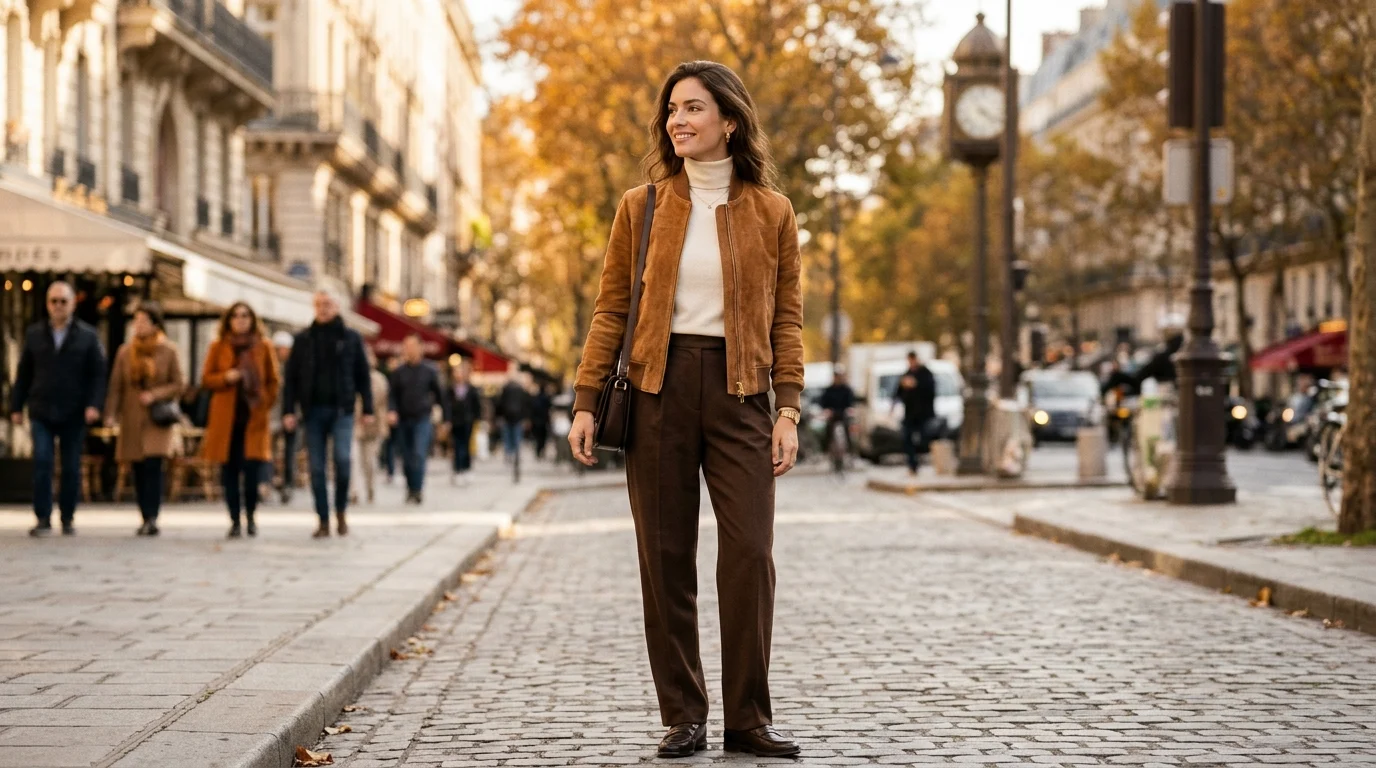
Suede vs Leather Bomber Jacket How to Choose Your Layer
Compare suede and smooth leather bomber jackets across durability, weather resistance, and styling versatility to invest in the right outerwear silhouette.
The enduring debate between suede and smooth leather bomber jackets represents one of the most critical decisions in luxury outerwear collecting. Both garments share an iconic military heritage rooted in mid-twentieth-century aviation flight jackets, characterized by ribbed waistbands, blouson torsos, and clean zip-front closures. However, their divergent surface textures, tactile personalities, and environmental tolerances produce profoundly different styling experiences. Choosing between the velvety matte finish of premium suede and the sleek, protective resilience of full-grain leather requires analyzing hide architecture, maintenance realities, and everyday lifestyle demands.
Key Takeaways
- Surface Distinction: Smooth leather uses the outermost grain layer for high durability and water resistance, while suede uses the inner flesh split to create a soft, velvety nap.
- Climate Suitability: Full-grain smooth leather effortlessly deflects wind and light rain, whereas suede requires dry conditions and specialized protective sprays.
- Styling Versatility: Suede excels in smart-casual, quiet luxury ensembles with tailored trousers, while smooth leather anchors rugged streetwear and raw denim.
- Artisan Specifications: Quality bomber jackets feature heavy YKK brass hardware, durable ribbed cuffs, and smooth satin linings for effortless interior layering.
- Long-Term Aging: Smooth leather develops an authentic, lustrous patina over decades, while suede maintains a rich, understated textural elegance when brushed regularly.
What Are the Core Structural Differences Between Suede and Smooth Leather Bomber Jackets?
A suede bomber jacket is crafted from the sanded inner flesh split of animal hide to produce a velvety fibrous nap, whereas a smooth leather bomber utilizes the dense exterior grain layer. This fundamental structural divergence gives smooth leather superior tensile durability and water repellency, while suede provides unmatched lightweight pliability and matte texture.
Understanding leather hide anatomy clarifies why these two finishes behave so differently under daily use. An animal hide consists of two primary anatomical layers: the upper epidermis grain layer and the underlying corium flesh layer. Smooth full-grain leather retains the intact upper grain, which features tightly bundled collagen fibers that naturally resist abrasion, tearing, and liquid penetration. In contrast, traditional suede is created by splitting the hide and buffing the inner corium surface. Sanding this interior fiber network raises thousands of microscopic filaments, producing the signature tactile fuzz known as the nap. Because the protective epidermal barrier has been removed, suede remains exceptionally soft and pliable from the very first wear, completely bypassing the rigid break-in period common to heavy grain leathers.
Tanning chemistry further amplifies these physical differences between the two outerwear styles. Full-grain smooth leathers undergo finishing processes that involve light conditioning oils, waxes, and clear protective sealants that enhance surface sheen while locking out environmental humidity. Suede, however, requires specialized dry tanning that prevents collagen fibers from matting together. Master tanners must maintain optimal fiber separation during tumbling to ensure the nap remains dynamic, shifting in tone as light plays across the brushed surface. When exploring iconic aviation cuts in womens aviator shearling jackets or casual jackets, noticing how light interacts with matte suede versus reflective grain leather reveals the distinct sartorial energy each material projects.
Tensile fiber strength and structural elasticity also diverge markedly between the two hide styles. Because full-grain leather maintains the complete epidermis, its interwoven fibers absorb immense multidirectional tension without warping or tearing along stitched seams. This structural integrity allows full-grain smooth bombers to support heavy internal storage, weighted pocket items, and repeated friction against seatbelts or backpack straps. Suede, having shed its dense grain barrier, possesses lower tear threshold resistance. As a consequence, artisan craftsmen reinforce all stress-bearing seams in suede garments with hidden stabilizing grosgrain ribbon, ensuring that pocket welts and armholes maintain crisp geometric lines without stretching out over years of routine handling.
Both materials hold esteemed positions across luxury fashion houses and independent bespoke ateliers. While smooth leather projects an assertive, utilitarian confidence associated with motorcycle subcultures and vintage pilot gear, suede communicates sophisticated restraint and modern quiet luxury. Investing in either garment guarantees an exceptional outerwear foundation, provided you understand how each material interacts with your regional climate, seasonal wardrobe, and maintenance routine.
How Do Suede and Smooth Leather Bombers Compare in Weather Resistance and Climate Adaptability?
Smooth leather bomber jackets provide natural moisture resistance and wind protection, effortlessly deflecting light precipitation and chill. Suede bomber jackets absorb environmental moisture rapidly due to their porous open-fiber structure, requiring dedicated hydrophobic treatments and dry conditions to prevent water spotting and stiffening.
Moisture defense remains the single greatest practical distinction separating smooth leather from suede outerwear. When raindrops strike a full-grain cowhide or lambskin bomber, the surface tension of the dense grain barrier prevents immediate absorption. A light drizzle will bead on the exterior, allowing you to simply wipe the moisture away with a dry microfiber cloth without causing internal fiber damage. Conversely, suede's exposed fibrous nap acts like a natural sponge. Water droplets penetrate deep into the corium layer, washing away vital natural lubricants and causing the collagen strands to contract as they dry. Unprotected suede that suffers heavy rain exposure frequently develops stiff, dark water spots and uneven nap texture.
Wind protection and temperature regulation also vary significantly between the two hide finishes. Smooth leather functions as a total wind barrier, completely blocking freezing drafts from penetrating the garment shell. When paired with high-quality interior insulation, a smooth leather bomber easily serves as dependable outerwear throughout late autumn and freezing winter months. Suede, due to its porous split structure, allows greater natural breathability. This breathability makes suede an extraordinary option for transitional spring and mild autumn days when heavy outerwear feels suffocating, but it leaves the wearer more susceptible to biting winter winds.
Thermal transfer properties also affect how comfortable each material feels during prolonged transit. Smooth leather absorbs solar radiation quickly, retaining body warmth when navigating cold outdoor gust fronts. Suede dissipates radiant heat more gradually, preventing clammy interior moisture buildup when transitioning from brisk morning sidewalks into heated indoor cafes or commuter trains. This natural microclimate regulation makes suede particularly advantageous for commuters who experience frequent temperature swings throughout a single workday.
For outerwear collectors living in regions characterized by frequent rainstorms or humid coastal climates, a smooth leather jacket provides reliable year-round utility. If you primarily navigate climate-controlled urban settings, commute by vehicle, or enjoy crisp, dry autumn days, a suede bomber delivers unmatched sartorial luxury without weather-related stress. Reviewing our technical guide on can you wear a leather jacket in the rain offers comprehensive protocols for protecting both smooth and split leather hides from moisture damage.
Which Outerwear Silhouette Offers Superior Styling Versatility for Modern Wardrobes?
Suede bomber jackets deliver superior smart-casual and quiet luxury styling versatility when paired with tailored trousers and fine-gauge knitwear. Smooth leather bomber jackets excel in rugged streetwear, utilitarian aesthetics, and evening power dressing when styled alongside raw denim, graphic tees, and heavyweight combat boots.
The tactile aesthetic of suede makes it the undisputed champion of sophisticated smart-casual dressing. Its rich, non-reflective surface blends seamlessly with high-end woven textiles such as flannel wool, cashmere knits, and fine cotton twills. A caramel-tan or deep espresso suede bomber layered over an ivory merino turtleneck and charcoal pleated trousers creates an elevated ensemble suitable for upscale dining, creative executive boardrooms, and autumn weekend getaways. Suede softens the military origins of the bomber silhouette, allowing it to function as a luxurious, informal alternative to traditional tailored sport coats.
Conversely, smooth leather bomber jackets command attention through bold contrast and rugged durability. The natural luster of black or mahogany full-grain cowhide creates striking visual tension when paired with textured casual fabrics. Styling a smooth leather bomber over a heavyweight loopback cotton hoodie, vintage faded selvedge denim, and lug-sole leather boots produces a classic, timeless streetwear uniform that has remained stylish for over half a century. Furthermore, smooth leather excels in nighttime environments, reflecting ambient city lighting and projecting an unmistakable aura of confidence.
Color depth and dye penetration also distinguish the visual impact of each garment style. Because suede is dyed through complete drum immersion without synthetic acrylic topcoats, pigments penetrate completely through the open corium fibers. This produces remarkably deep, nuanced earth tones such as rich tobacco, olive taupe, dusty sage, and midnight navy that change subtly depending on ambient sunlight. Smooth leathers, while equally vibrant, reflect specular highlights along folded edges and shoulder yokes, creating dramatic highlights and deep shadow contours that flatter athletic physiques.
Exploring broader wardrobe options within mens leather jackets and womens leather jackets illustrates how leather textures shape personal style. For individuals who prefer nuanced textural layering and earthy palettes, suede proves infinitely rewarding. For those who prioritize effortless daily resilience, edgy streetwear pairings, and rugged masculine silhouettes, smooth leather remains an irreplaceable cornerstone.
To explore the deeper technical distinctions between brushed leather finishes, consult our detailed analysis on nubuck vs suede leather jackets. Understanding grain sanding techniques helps collectors appreciate why different hide finishes behave uniquely across diverse outfit formulas.
How Do Suede and Smooth Leather Bombers Compare Across Silhouettes and Pricing?
A suede bomber jacket commands similar pricing to smooth leather alternatives while demanding distinct maintenance investments and styling contexts. Comparing weight, formality, climate tolerance, and price brackets helps outerwear collectors determine which iconic silhouette aligns with their wardrobe priorities and regional weather patterns.
Outerwear investments should be evaluated through both financial cost and practical utility. While production costs for high-grade split suede and premium full-grain leather remain comparable at luxury artisan workshops, their cost-per-wear calculations depend heavily on regional weather and maintenance diligence. A smooth leather bomber often delivers higher initial wear frequency because unexpected precipitation never sidelines the garment. However, a meticulously maintained suede bomber offers an exclusive, high-end elegance that smooth leather cannot replicate in smart-casual settings.
The following comparison table breaks down the essential aesthetic, functional, and financial parameters across modern bomber outerwear silhouettes:
| Silhouette & Finish | Best Climate | Aesthetic Profile | Formality Level | Shoulder Offset & Ease | Price Range USD |
|---|---|---|---|---|---|
| Suede Leather Bomber | Dry / Mild Autumn & Spring | Quiet Luxury / Refined Casual | Smart Casual | 1.0 to 2.0 Inches Relaxed Ease | 249-399 |
| Smooth Cowhide Bomber | Cold / Wet / Windy Winter | Rugged Heritage / Utilitarian | Casual Streetwear | 1.5 to 2.5 Inches Dropped Ease | 249-399 |
| Smooth Lambskin Bomber | Mild / Year-Round Versatility | Sleek Luxury / Modern Drape | Elevated Casual | 1.0 to 1.5 Inches Tailored Ease | 249-399 |
| Entry Genuine Bomber | All-Weather Commuting | Classic Aviator / Daily Wear | Casual | 1.0 to 2.0 Inches Standard Ease | 149-249 |
For enthusiasts seeking alternative outerwear silhouettes with tailored aviation heritage, our curated collections of mens classic leather jackets, mens varsity jackets, and womens casual jackets provide versatile layering options that bridge classic military heritage with contemporary runway styling.
What Are the Verified Material Specifications and Hardware Requirements for Bomber Jackets?
Premium bomber jackets require heavy-duty YKK brass zippers, reinforced rib-knit cuffs, and smooth polyester satin linings that glide effortlessly over interior knitwear. Hide thickness ranges from 0.9 to 1.2 mm for supple lambskin to 1.1 to 1.4 mm for durable cowhide, ensuring balanced drape and longevity.
Material integrity dictates whether a bomber jacket maintains its structural blouson silhouette over decades or collapses into a shapeless garment. High-grade cowhide bombers feature hides measuring 1.1 to 1.4 mm in thickness, providing substantial physical armor that naturally deflects road debris and resisting surface tears. For buyers who prefer immediate softness with fluid drape, full-grain lambskin measuring 0.9 to 1.2 mm delivers decadent suppleness without unnecessary bulk. Suede bombers utilize premium split-grain hides that offer balanced fibrous density, ensuring the brushed nap remains plush and resistant to premature matting.
Hardware engineering requires equal scrutiny. The front closure must withstand significant tension during movement, especially when seated. Authentic YKK brass zippers featuring precision-machined teeth guarantee jam-free performance across thousands of operations. Ribbed waistbands and collar trims must incorporate high-tensile elastane blended with heavy-gauge yarn to prevent elastic memory loss, ensuring the blouson waist retains its flattering cinched profile. Furthermore, the interior lining must be crafted from high-density polyester satin that allows the jacket to glide effortlessly over coarse woolen sweaters without creating friction or static electricity.
The following matrix provides verified material specifications and craftsmanship details for our outerwear collections:
| Leather Type | Hide Thickness (mm) | Hardware Specs | Lining Material | Price Range USD | Lead Time | Warranty & Guarantee |
|---|---|---|---|---|---|---|
| Full-Grain Cowhide | 1.1-1.4mm | YKK Brass Zippers | Polyester Satin Lining | 249-399 | 3-5 Business Days | 1-Year Craftsmanship Warranty / 30-Day Returns |
| Full-Grain Lambskin | 0.9-1.2mm | YKK Brass Zippers | Polyester Satin Lining | 249-399 | 3-5 Business Days | 1-Year Craftsmanship Warranty / 30-Day Returns |
| Full-Grain Goatskin | 0.8-1.0mm | YKK Brass Zippers | Polyester Satin Lining | 249-399 | 3-5 Business Days | 1-Year Craftsmanship Warranty / 30-Day Returns |
| Premium Split Suede | Supple Brushed Split Nap | YKK Brass Zippers | Polyester Satin Lining | 249-399 | 3-5 Business Days | 1-Year Craftsmanship Warranty / 30-Day Returns |
| Custom Made-to-Order | 0.8-1.4mm Bespoke | YKK Brass Zippers | Polyester Satin Lining | 299-499 | 7-14 Business Days | 1-Year Craftsmanship Warranty / 30-Day Returns |
To examine how military flight outerwear evolved from cockpit utility into iconic streetwear fashion, read our complete retrospective on the leather bomber jacket buying and styling guide. Discovering original flight specifications enriches your appreciation for every stitch, rib, and brass tooth on modern heirloom jackets.
What Are the Essential Care and Maintenance Protocols for Suede and Smooth Leather?
Caring for a smooth leather bomber requires periodic wiping with a damp cloth and bi-annual conditioning with a pH-balanced balm. Suede bombers demand dry maintenance protocols including regular brushing with a brass-bristle suede brush, specialized eraser spot treatments, and regular application of non-silicone waterproofing sprays.
The golden rule of suede preservation is that liquids and traditional conditioners must never touch the nap. Applying liquid oils or balms directly to suede flattens the delicate raised fibers, permanently darkening the hide and leaving an oily, ruined surface. Instead, invest in a dedicated dual-sided suede brush featuring brass wire bristles for reviving flattened nap and soft nylon bristles for routine dust removal. For minor dry scuffs or salt residue, gently rub the area with a specialized rubber suede eraser, following up with vigorous brushing along the natural grain direction to restore uniform texture.
Before exposing your suede bomber to the outdoor elements, protect the fibers with a high-grade fluoropolymer waterproofing spray. Spray the jacket evenly from a distance of ten inches, applying two light coats rather than a single heavy saturation. Allow the garment to cure completely in a well-ventilated room for twenty-four hours before wearing. Reapply this invisible protective shield every six to eight weeks during peak seasonal wear to prevent rainwater, coffee splatters, and environmental grease from penetrating the collagen fibers.
Smooth leather maintenance, by contrast, focuses on hydration and surface nourishment. Because smooth grain leather loses natural lipids through environmental exposure, massaging a lanolin-based or beeswax-infused leather balm into the hide every six months preserves fiber suppleness and prevents dry cracking. If your smooth jacket encounters dirt or road salt, wipe the exterior down with a soft cloth dipped in lukewarm water and mild saddle soap, then allow it to dry naturally at room temperature.
Both garment styles demand proper storage geometry. Never hang a heavy leather or suede bomber on flimsy wire or narrow plastic hangers. The weight of the leather will cause the shoulder seams to deform, creating unsightly bumps. Store your jacket on a wide, contoured cedar hanger inside a breathable cotton garment bag. Avoid storing leather in non-breathable plastic dry-cleaning bags, as trapped humidity fosters mold growth. For comprehensive stain removal instructions and seasonal storage recommendations, consult our official leather care guide.
How Should You Select the Ideal Fit for Your Bomber Jacket?
Selecting the ideal fit for a bomber jacket requires verifying that the shoulder seams align naturally with your acromion joint while leaving sufficient chest allowance for seasonal layering. Ensuring the ribbed waistband rests securely across your hip bone guarantees that the signature blouson drape flatters your torso without billowing excessively.
A well-fitted bomber jacket balances athletic structure with relaxed comfort. When zipping the front closure fully, the chest should provide three to four inches of ease beyond your natural chest measurement. This allowance enables you to comfortably cross your arms and reach forward without experiencing tightness across the upper back. The ribbed cuffs should terminate securely at the base of your wrists, preventing cold air from entering the sleeves while keeping the leather from sliding over your hands.
Torso length remains critical to achieving proper proportions. A traditional bomber is intentionally engineered as a cropped silhouette designed to terminate at or slightly below the natural waistline. If the ribbed hem falls past your upper thighs, the jacket loses its vintage military character and begins to resemble a casual parka. Ensuring the ribbed hem sits snugly against your waist or belt line allows you to pair the jacket with both high-rise trousers and mid-rise denim without disrupting your body proportions.
To confirm your exact chest, shoulder width, and sleeve measurements before ordering, explore our detailed size and fit guide. Proper measurement ensures your bomber delivers tailored elegance and maximum comfort from your very first outing.
Which Bomber Jacket Should You Invest in First for Your Outerwear Collection?
Investing in a smooth leather bomber jacket is the ideal choice for first-time buyers seeking a versatile, weather-resistant garment that withstands daily wear and unpredictable conditions. A suede bomber represents the ultimate second investment for style connoisseurs wanting to expand their wardrobe into elevated textural luxury.
When building an heirloom outerwear collection from the ground up, versatility and durability should guide your initial purchase. A full-grain smooth leather bomber in black, deep mahogany, or dark chocolate brown functions as an indestructible workhorse. It navigates rainstorms, winter winds, casual weekend coffee runs, and evening social events with equal ease. Because smooth leather becomes more attractive with age as it develops a unique patina, it offers an extraordinary return on investment for daily commuters and frequent travelers.
Once you possess a dependable smooth leather foundation, introducing a suede bomber transforms your styling capabilities. Suede introduces warmth, depth, and tactile luxury that immediately elevates simple denim and knitwear outfits into runway-worthy compositions. A camel, tan, or olive suede bomber serves as the ultimate transitional statement piece for dry autumn afternoons, crisp spring evenings, and elegant indoor gatherings. Pairing suede with tailored accessories from leather bags and mens leather vests establishes a refined, multilayered wardrobe that reflects masterful sartorial curation.
If you are exploring other iconic silhouettes such as motorcycle gear, comparing our mens biker moto jackets and womens biker jackets allows you to discover how different collar configurations and hardware placements complement your personal style. For clients who desire custom sleeve adjustments, tailored chest circumferences, or bespoke leather selections, our master artisans are always accessible to discuss your vision. You can easily contact our artisans or review verified feedback on our customer reviews page to learn more about our handcrafted quality.
For common questions regarding ordering, international delivery, and warranty coverage, browse our frequently asked questions page.
Explore The Full 2026 Leather Outerwear Collection
Vegetable-tanned full-grain cowhide, buttery New Zealand lambskin, and heritage Melton wool. Free express delivery across the USA with 30-day hassle-free returns.