
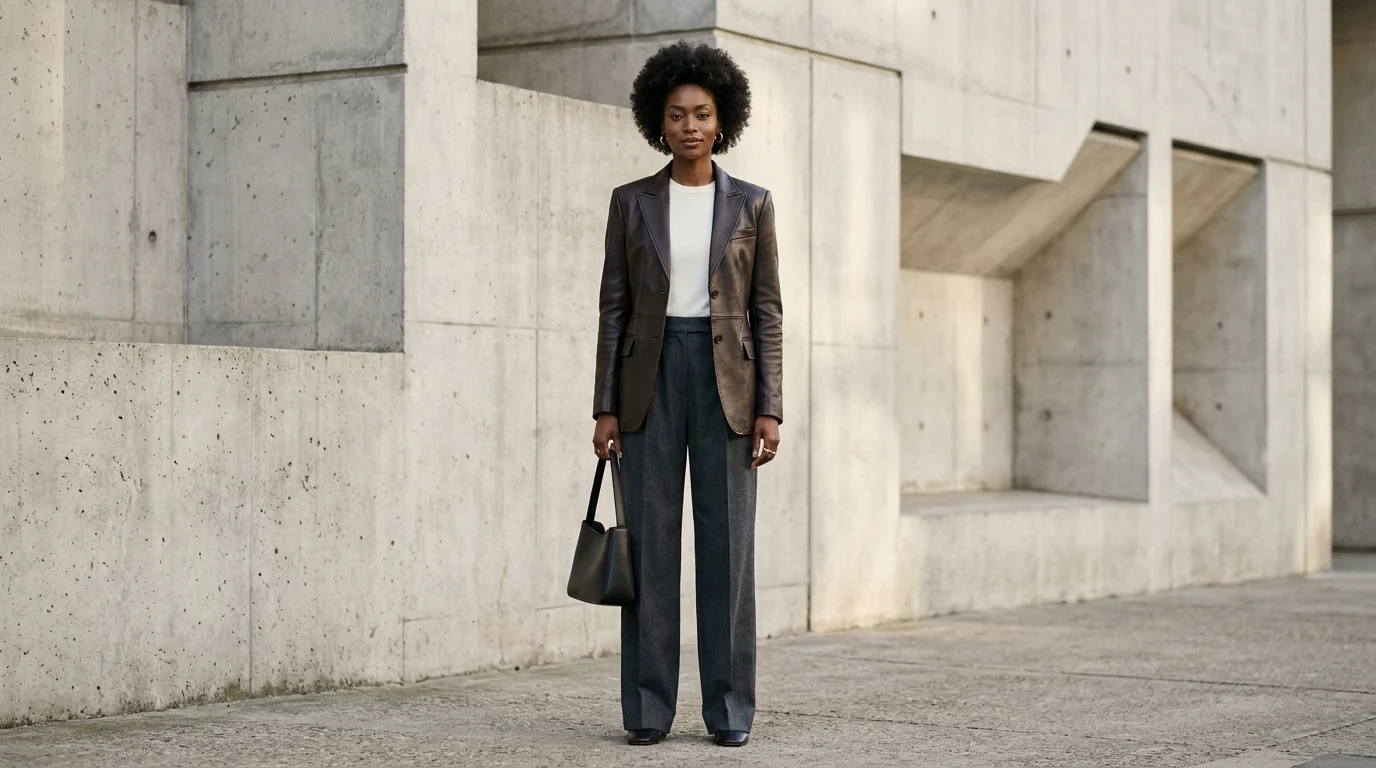
Single vs Double Breasted Leather Blazer Which Silhouette Wins
Compare single vs double breasted leather blazers for 2026. Explore tailoring differences, lapel styles, button stance, body-type cuts, and styling rules.
Navigating the boundary between sartorial tailoring and modern outerwear requires understanding how garment architecture changes when crafted from genuine hide. A leather blazer introduces structure, subtle natural drape, and tactile substance that traditional worsted wool or cotton canvas cannot replicate. When selecting between single-breasted and double-breasted silhouettes, deciding which cut flatters your frame and matches your lifestyle involves weighing front panel overlap, button stance, lapel geometry, and layering versatility. Both silhouettes command respect across contemporary streetwear, executive boardrooms, and evening lounges, but each serves a distinctly different sartorial purpose.
Key Takeaways
- Front Closure Architecture: Single-breasted leather blazers feature a narrow central meeting with 1 to 3 buttons, offering effortless vertical lines, whereas double-breasted designs feature a generous 3 to 5-inch overlapping panel with a 4-on-2 or 6-on-2 button stance.
- Open vs. Buttoned Wearability: A single-breasted leather blazer drapes naturally whether left open or buttoned, making it the superior choice for transitional daily wear, while a double-breasted cut demands buttoning to maintain its sharp architectural structure without sagging.
- Silhouette Impact: Double-breasted cuts add visual width and masculine presence across the chest with dramatic peak lapels, while single-breasted cuts elongate the torso, providing universally slimming proportions across every body profile.
- Leather Grade Selection: Ultra-supple 0.9–1.2mm full-grain lambskin provides the fluid drape necessary for double-breasted overlap, whereas durable 1.1–1.4mm cowhide delivers rugged resilience in structured single-breasted cuts.
- Investment Value: Both silhouettes represent lifetime investments when crafted with hand-stitched seams, polyester satin lining, and heavy-duty reinforced horn or antique brass buttons.
What Is the Difference Between Single and Double Breasted Leather Blazers
A single-breasted leather blazer features a single vertical column of one to three buttons with minimal front fabric overlap, creating an understated, versatile vertical drape. In contrast, a double-breasted leather blazer utilizes two parallel columns of buttons with a broad overlapping front panel measuring three to five inches, producing a structured, commanding silhouette rooted in military naval tailoring.
The structural divergence begins at the front canvas. Because genuine leather possesses natural weight and thickness, layering multiple plies across the abdomen fundamentally changes how the garment interacts with your body. In a single-breasted cut, the front edges meet cleanly along the center line of the torso. This produces a streamlined profile that does not add unnecessary bulk around the waist or hips. The closure is uncomplicated, typically secured by two genuine horn or heavy brass buttons positioned along the natural waistline to define the wearer's proportions.
Double-breasted construction requires significantly more artisan leatherwork. Master tailors must cut an extended underlap panel and overlap panel, reinforcing both facing pieces with structured fusing to prevent the heavy hide from buckling. The traditional button layout features four or six external buttons arranged in parallel or subtle V-shaped columns, with one internal anchor button known as a jigger button. This internal anchor distributes the weight of the outer panel evenly across the right hip, ensuring the front placket stays flat against the ribcage. When crafted from genuine leather, this dual-layer construction provides substantial thermal wind protection, acting almost as a windproof chest shield during transitional autumn and winter commutes.
Sartorial versatility separates the two closures in everyday rotation. A single-breasted blazer is fundamentally casual-friendly. You can wear it buttoned for formal meetings, leave the top button fastened while unbuttoning the lower stance for effortless walking movement, or wear it completely open over a lightweight knit or tee. The lapels remain balanced and upright even while unfastened. A double-breasted leather blazer, however, is architecturally engineered to remain buttoned. Leaving a double-breasted leather coat open creates two broad wings of stiff leather that flop horizontally and pull the shoulder seams out of alignment. For individuals seeking a single jacket that functions seamlessly unbuttoned at a coffee shop or buttoned at a gallery opening, the single-breasted model is intrinsically more forgiving.
How Do Lapel Styles and Button Stances Define Each Silhouette
Lapel geometry and button stances establish the formal character and visual weight of leather blazers, directly determining whether the garment projects modern minimalism or vintage power dressing. Single-breasted leather blazers standardly incorporate slim notch lapels measuring 2.75 to 3.25 inches, while double-breasted designs almost universally feature wide, sweeping peak lapels measuring 3.75 to 4.5 inches.
The notch lapel on a single-breasted jacket features a distinct V-shaped cutout where the collar joins the lapel facing. This horizontal step creates a relaxed, accessible visual line that guides the observer's eyes down the center placket. It blends effortlessly into smart-casual ensembles, harmonizing with crewneck knitwear, open-collar linen shirts, and graphic streetwear tees. Some contemporary luxury designers experiment with slim peak lapels or modern mandarin standing collars on single-breasted cuts, but the classic notch lapel remains the gold standard for everyday versatility and timeless longevity.
Peak lapels on a double-breasted jacket point decisively upward toward the outer shoulder points. This upward trajectory visually broadens the chest and collarbones while narrowing the perception of the waist, creating a classic athletic V-taper. When translated into rich leather, peak lapels require precision skiving—thinning the hide edges before folding and edge-stitching—to prevent excessive thickness at the gorge. The prominent width of peak lapels commands visual focus, transforming the blazer into an undeniable statement piece that pairs impeccably with roll-neck sweaters, silk neckwear, and pleated wool trousers.
Button stance mechanics further dictate drape and posture. Single-breasted leather jackets typically utilize a standard two-button configuration where the top button aligns precisely with the natural waist or one inch above the navel. Fastening only the top button creates an elegant flare over the hips, permitting unhindered leg stride. Double-breasted jackets employ specialized naming conventions: a 6-on-2 stance features six exterior buttons with two active buttonholes, whereas a 4-on-2 or 4-on-1 stance creates a deeper chest opening and longer lapel roll. The lower the fastening button stance on a double-breasted jacket, the more relaxed and elongated the torso appears. Conversely, a higher button stance reinforces an imposing military posture.
Which Body Type Flatters Single Versus Double Breasted Leather Cuts
Body proportions and torso volume dictate which leather blazer cut delivers the most harmonious visual balance and personal comfort. Single-breasted leather blazers flatter virtually every physique by creating unbroken vertical lines that elongate shorter frames and streamline broader midsections. Conversely, double-breasted leather cuts visually broaden the upper torso, making them exceptionally flattering for tall, lean, or athletic frames seeking added substance.
Shorter and stockier body types benefit immensely from the vertical architecture of single-breasted tailoring. Because genuine leather possesses inherent heft, adding overlapping layers across the stomach can introduce unwanted thickness. The narrow button stance of a single-breasted jacket draws the eye vertically along the center axis, creating an optical illusion of greater height and a trimmer waistline. Leaving the jacket unfastened creates two clean vertical panels that frame the torso, breaking up horizontal width and allowing comfortable layering over knitwear without feeling constricted around the ribs.
Tall and slender individuals often find that standard jackets look sparse or lack visual weight. A double-breasted leather blazer solves this challenge by introducing substantial horizontal lines across the pectorals and abdomen. The dual button rows and broad overlapping panel anchor the torso, giving narrower frames a fuller, more commanding presence. Furthermore, broad peak lapels extend outward to meet the shoulder line, emphasizing upper body width while tapering cleanly into a tailored waistline. For individuals with broader shoulders and a narrow waist—the athletic V-shape—a bespoke cut double-breasted blazer with a suppressed waist emphasizes natural muscle contour without pulling at the armholes.
Proper sizing remains critical regardless of chosen silhouette. Leather does not stretch like woven wool; while it molds gently to the wearer's contours over months of regular wear, an undersized leather blazer will strain at the buttonholes and cause unsightly horizontal rippling across the chest. Exploring our comprehensive size and fit guide provides detailed chest, shoulder point, and sleeve measurements to guarantee your jacket fits with half an inch of breathing room across the back yolk.
Table 1: Trend and Silhouette Architectural Comparison
| Attribute | Single-Breasted Leather Blazer | Double-Breasted Leather Blazer |
|---|---|---|
| Front Closure Type | Single vertical row (1 to 3 buttons) | Overlapping front placket (4x2 or 6x2 stance) |
| Front Panel Overlap | 0.75 to 1.25 inches | 3.5 to 5.0 inches |
| Standard Lapel Style | Classic notch lapel (2.75 to 3.25 inches) | Sweeping peak lapel (3.75 to 4.5 inches) |
| Ideal Body Profiles | Universal (petite, broad, athletic, tall) | Slender, tall, athletic inverted-triangle |
| Unbuttoned Drape | Balanced, vertical, effortless | Flaps outward; requires deliberate buttoning |
| Layering Versatility | High (hoodies, knits, tees, shirts) | Moderate (best with fine knits or dress shirts) |
| Aesthetic & Vibe | Modern minimalist, downtown sleek, casual | Formal authority, vintage power, red carpet |
| Visual Torso Effect | Elongates torso, slims waistline | Broadens chest, adds visual substance |
| Formality Spectrum | Smart casual to business creative | Business formal to high-fashion evening |
| Price Range USD | 249 to 399 | 249 to 399 |
How to Style a Single Breasted Leather Blazer for Modern Streetwear and Office
Styling a single-breasted leather blazer requires balancing its sleek luxury finish with everyday foundational wardrobe staples across casual, creative office, and evening environments. Pairing an espresso or black lambskin single-breasted blazer with wide-leg raw denim, a heavyweight white cotton t-shirt, and leather dress sneakers creates an effortless, high-low smart-casual uniform.
For corporate and creative work settings, the single-breasted blazer effortlessly replaces a conventional wool suit jacket. Select a matte finish full-grain leather blazer in charcoal or dark espresso. Layer it over a crisp poplin button-down shirt or an ultra-fine 16-gauge merino wool turtleneck sweater. Combine this with pleated flannel trousers or tapered olive wool chinos, finishing with Goodyear-welted oxfords or clean Chelsea boots. Fasten only the center button while standing to maintain structured professionalism, allowing the clean notch lapels to frame your collar neatly.
For weekend downtown streetwear, embrace proportional contrast by juxtaposing the jacket's tailored structure with relaxed streetwear silhouettes. Layer an oversized black lambskin blazer over a loopback cotton hoodie in heather grey or washed black. Pair with straight-leg carpenter pants or relaxed stonewash denim, anchoring the ensemble with chunky lug-sole loafers or archival basketball sneakers. Leaving the blazer unbuttoned allows the hoodie's kangaroo pocket and drawstring hardware to break up the smooth leather surface, delivering an authentic 1990s minimalist aesthetic popularized on modern runways.
Transitional evening dressing calls for monochromatic sophistication. Style a black single-breasted lambskin blazer over an open-collar silk-viscose shirt or a fitted ribbed modal tank. Pair with fluid tailored wide-leg trousers that break cleanly over pointed-toe leather zip boots. Accessorize with a minimalist silver watch and thin chain necklaces, letting the jacket's buttery hide texture serve as the centerpiece of the outfit. Those exploring complementary everyday outerwear silhouettes can discover tailored options in our mens leather jackets, womens leather jackets, and mens classic leather jackets collections.
How to Style a Double Breasted Leather Blazer for Evening and Power Dressing
Styling a double-breasted leather blazer demands intentional garment pairings that honor its dramatic vintage heritage and assertive architectural presence. Layering a tailored 6-on-2 double-breasted lambskin blazer over a fine-gauge cashmere roll-neck sweater, tailored charcoal trousers, and polished monk strap shoes establishes an unmatched evening aesthetic of commanding sophistication.
The fundamental rule when wearing a double-breasted leather blazer is keeping your base layers streamlined and close to the body. Because the overlapping leather front creates a dual layer of hide across your chest, pairing it with bulky cable-knit sweaters or thick hoodies will create excess tension and unsightly pull lines across the button stance. Instead, choose luxurious fine-gauge knitwear, lightweight silk-blend shirts, or minimalist band-collar tops. Ensure the internal jigger button is fastened securely first, followed by the middle exterior button, allowing the peak lapels to roll naturally over the chest without buckling.
For formal evening events, cocktail parties, and gallery openings, pair a black or midnight blue double-breasted leather blazer with high-waisted pleated dress trousers featuring side adjusters. A crisp white tuxedo shirt worn without a tie or a fitted black silk turtleneck creates a striking visual contrast against the deep luster of premium leather. Finish the look with patent leather dress shoes or polished black leather Chelsea boots. The bold peak lapels naturally frame the neck and jawline, exuding effortless power and red-carpet charisma that conventional tailoring cannot match.
Street-luxe styling requires confident styling choices. Counterbalance the blazer's formal military roots by pairing it with relaxed, dark-wash Japanese selvedge denim and a clean ivory ribbed undershirt. Fasten the central waist button and roll the cuffs slightly to reveal an artisan watch or bracelet. Ground the outfit with sleek Cuban-heel leather boots to maintain vertical elevation. For women, an oversized double-breasted lambskin blazer functions exceptionally well as a statement dress coat when paired with sheer tights, a micro-hemline slip dress, and knee-high leather boots. Discover our expansive range of curated tailored leather blazers, versatile casual leather jackets, womens casual everyday jackets, and womens classic leather outerwear crafted for modern statement styling.
What Leather Types and Craftsmanship Details Ensure Lifetime Durability
Selecting the correct leather type and examining artisan craftsmanship details ensures your tailored blazer withstands decades of wear while developing a rich, personalized patina. Full-grain lambskin between 0.9mm and 1.2mm thickness provides the optimal balance of featherlight drape and tear resistance for double-breasted cuts, whereas 1.1mm to 1.4mm full-grain cowhide delivers unmatched structure and abrasion resilience for structured single-breasted coats.
Full-grain leather represents the highest grade of animal hide, utilizing the complete intact top grain layer without artificial buffing, sanding, or synthetic stamping. This intact grain retains the natural fiber density that makes the leather virtually indestructible against surface tears and scuffs. Over years of regular exposure to body heat and ambient conditions, full-grain leather absorbs natural oils, developing a deep, multidimensional luster known as patina. In tailored blazers, lambskin offers unmatched buttery softness and immediate glove-like comfort, eliminating the stiff break-in period common to heavy motorcycle hides. Goatskin provides a tightly pebbled grain with remarkable natural water resistance and lightweight tensile strength, making it an outstanding choice for frequent travelers.
Interior tailoring craftsmanship is equally paramount. Because a leather blazer does not stretch, the interior lining must glide effortlessly over your underlying clothing without catching or binding. Premium polyester satin lining offers low friction, exceptional breathability, and superior resistance against underarm seam abrasion compared to cheap rayon or stiff nylon. Every stress point—including the underarm gussets, pocket welt corners, and shoulder seams—must feature reinforced hand-stitched bar tacking. Artisan tailors utilize heavy-gauge bonded polyester thread with balanced stitch density to prevent needle perforations from weakening the leather grain.
Hardware specifications complete the heirloom standard. Hand-carved genuine horn buttons or solid antique brass buttons must be reinforced on the reverse side with interior backing buttons (stay buttons). These small clear or shell buttons absorb the pulling force when you move, preventing the exterior buttons from tearing through the hide. For personalized adjustments or specialized sleeve length requirements, our bespoke tailoring consultants can customize button placements, pocket flaps, and shoulder pad densities to match your exact anatomical specifications.
Table 2: Material and Durability Specifications Matrix
| Specification Factor | Full-Grain Lambskin Blazer | Full-Grain Cowhide Blazer | Full-Grain Goatskin Blazer |
|---|---|---|---|
| Hide Thickness (mm) | 0.9-1.2mm for lambskin | 1.1-1.4mm for cowhide | 0.8-1.0mm for goatskin |
| Material Grade | 100% genuine full-grain leather | 100% genuine full-grain leather | 100% genuine full-grain leather |
| Interior Lining | Polyester satin lining | Polyester satin lining | Polyester satin lining |
| Hardware & Fasteners | Reinforced horn or YKK brass zippers | Reinforced horn or YKK brass zippers | Reinforced horn or YKK brass zippers |
| Seam Construction | Hand-stitched seams | Hand-stitched seams | Hand-stitched seams |
| Hand Feel & Texture | Ultra-soft, fluid, buttery drape | Stiffer, structured, rugged grain | Supple, fine pebble grain, durable |
| Ideal Silhouette Pairing | Double-breasted & relaxed blazers | Structured single-breasted blazers | Lightweight travel blazers |
| Lead Time | Standard ships within 3-5 business days | Standard ships within 3-5 business days | Standard ships within 3-5 business days |
| Custom Order Lead Time | 7-14 business days | 7-14 business days | 7-14 business days |
| Delivery Terms | Free shipping across the USA | Free shipping across the USA | Free shipping across the USA |
| Warranty & Returns | 1-year warranty, 30-day returns | 1-year warranty, 30-day returns | 1-year warranty, 30-day returns |
| Price Range (USD) | 249-399 | 249-399 | 249-399 |
How to Maintain and Care for a Tailored Leather Blazer
Maintaining a tailored leather blazer requires proper hanging habits, seasonal conditioning, and prompt moisture management to preserve hide suppleness and tailored garment structure. Hanging your leather blazer on a wide, contoured wooden suit hanger with curved shoulder supports prevents the heavy hide from stretching out of shape or developing unsightly hanger dimples along the shoulder padding.
Never store a leather blazer on thin wire hangers or standard plastic retail hangers. The weight of genuine hide concentrates pressure on the narrow contact points, which can permanently deform the delicate canvas shoulder pads and stretch the collar placket. Hang the garment in a well-ventilated closet away from direct sunlight, central heating vents, and damp walls. Keep the jacket buttoned—especially if it is a double-breasted model—to ensure the front plackets remain flat and aligned. Never seal genuine leather inside non-breathable plastic garment bags, as trapped moisture encourages mold growth while suffocating the hide's natural oils. Instead, use a breathable cotton garment cover for extended seasonal storage.
Conditioning protects the hide from premature drying and cracking. Every six to twelve months, apply a specialized, wax-free leather conditioner formulated for lightweight lambskin or garment leather. Place a nickel-sized amount of conditioner onto a clean, lint-free microfiber cloth and massage gently into the hide using circular motions, paying extra attention to the collar band, elbow creases, and buttonholes. Allow the leather to absorb the nutrients for thirty minutes before gently buffing away excess residue with a clean cloth. For comprehensive maintenance routines, stain treatment protocols, and water-repellent advice, reference our official leather care guide.
If caught in an unexpected rain shower, never attempt to accelerate drying using a hair dryer, heat radiator, or direct sunlight. High artificial heat bakes the natural moisture out of the collagen fibers, causing the leather to shrink, curl, and turn brittle. Gently blot standing raindrops using a dry, soft microfiber towel, then hang the blazer on its contoured wooden hanger at room temperature away from drafts. Allow it to air-dry naturally over 24 hours before wearing. If deep soil or oily spills occur, consult professional leather cleaning specialists rather than conventional dry cleaners, who use harsh chemical solvents that strip protective tanning oils.
What Sizing Mistakes Should You Avoid When Buying a Leather Blazer
Sizing mistakes in leather blazers stem from treating leather tailoring like stretchy knitted outerwear or oversized synthetic jackets. Buying a leather blazer that is too tight across the shoulder points or too tight across the chest button stance creates severe pulling strain that permanently distorts the hand-stitched seams.
The most common sizing error is prioritizing waist fit over shoulder width. In high-end tailoring, the shoulder seam must terminate exactly where your collarbone meets the outer edge of your shoulder joint. If the shoulder seam hangs past your natural shoulder, the blazer will look slouchy and unrefined. If the seam sits too high on the shoulder bone, the armholes will pinch into your underarms, restricting forward arm movement and causing horizontal creases across the back yoke. Because altering leather shoulders is extremely difficult and leaves visible needle holes, getting the shoulder point measurement correct on your initial purchase is mandatory.
The second sizing pitfall involves button stance tension. When testing a single-breasted blazer, fasten the top button and slide your flat hand under the lapel over your chest; you should feel gentle, snug resistance without fabric puckering. If the lapels bow outward or the button pulls with an X-shaped crease radiating across the stomach, the jacket is one size too small. For double-breasted blazers, verify that the underlap panel lies completely flat against your ribs without riding up when both internal and external buttons are engaged. Always account for your planned underlying layers—if you plan to wear cashmere sweaters or flannel shirts underneath, measure your chest while wearing those garments.
Sleeve length requires careful attention to artisan cuff architecture. A tailored leather blazer sleeve should terminate approximately half an inch above the base of your thumb, allowing a quarter-inch of your dress shirt or sweater cuff to show. Avoid excessively long sleeves that bunch over your knuckles, as bunching leather ruins the sharp, tailored silhouette. For customers requiring bespoke chest-to-waist drop ratios, extended sleeves, or custom broad-shoulder allowances, explore our rugged workwear jackets program where our master artisans handcraft each garment to your exact body measurements.
How Do Sibling Outerwear Silhouettes Compare to the Leather Blazer
Understanding how a tailored leather blazer compares against sibling outerwear silhouettes helps you curate a balanced, functional wardrobe tailored to diverse microclimates and dress codes. While blazers provide unmatched sartorial formality and sharp structure, sporty leather bombers, rugged motorcycle racers, and relaxed overshirts address distinctly different everyday styling demands.
A tailored leather blazer sits at the pinnacle of sartorial formality among leather outerwear. It features interior canvas chest pieces, padded shoulders, notch or peak lapels, and horn button closures that mirror bespoke suiting. It excels in corporate settings, upscale dinners, and artistic galas where standard casual jackets appear too informal. If your daily environment demands commanding professional presence with a rebellious modern edge, the leather blazer stands uncontested. Learn more about boardroom styling strategies in our in-depth analysis of whether leather blazers are professional for work.
Sportier silhouettes, such as the classic bomber jacket or ribbed flight jacket, utilize elasticized leather waistbands and ribbed cuffs to trap body heat while creating a rounded, relaxed profile. They are inherently informal, prioritizing casual street utility and weekend road trips over tailored elegance. Similarly, asymmetrical biker jackets and cafe racers feature diagonal zippers, snap-down collar tabs, and heavy waist belts engineered for windproofing and motorcycle abrasion resistance. While bikers and racers dominate downtown rock-and-roll streetwear, they cannot comfortably transition into conservative corporate environments or replace a tuxedo jacket at formal evening affairs.
For transitional seasons where structured tailoring feels too heavy, leather overshirts and shackets provide a minimalist middle ground. Crafted from ultra-thin 0.8mm lambskin without heavy interior shoulder padding, shirt jackets drape like heavy flannels, functioning effortlessly as intermediate indoor layers. However, when outdoor temperatures drop and visual impact matters most, the commanding lapels of a single or double-breasted leather blazer deliver unmatched sophistication. Readers interested in broader trend movements can explore our review of modern leather jacket styles and comprehensive capsule wardrobe leather essentials.
Why Artisanal Construction and Bespoke Tailoring Redefine Luxury Outerwear
Artisanal leather construction redefines luxury by prioritizing bespoke fit precision, hand-selected full-grain hides, and zero-compromise assembly techniques over mass-manufactured fast fashion. Master leather artisans with over two decades of bench experience hand-cut each pattern piece individually, ensuring hide grain patterns and color tones harmonize seamlessly across the finished blazer.
In commercial assembly lines, garments are cut in bulk using automated computerized die presses that ignore natural grain inconsistencies, resulting in mismatched leather textures on front chest panels. In our artisan atelier, each full-grain lambskin and cowhide skin undergoes meticulous visual inspection under daylight-balanced illumination. Craftsmen assess hide elasticity, grain density, and surface character, orienting pattern pieces along the hide's natural stretch axis. This labor-intensive technique ensures your finished blazer expands naturally with your shoulder blade movement without binding or distorting over decades of daily wear.
Stitch integrity represents another pillar of true heirloom manufacturing. We utilize high-tensile three-ply bonded polyester thread engineered to resist rot, UV degradation, and friction wear. Every seam is sewn with calibrated needle penetration speeds to prevent friction heating from damaging the delicate grain edges. Pocket welts, interior storm flaps, and button plackets receive invisible interior stay tape reinforcement, preventing leather stretching under pocket load. Every finished garment undergoes a rigorous 12-point quality inspection before leaving our workshop, verifying seam alignment, button security, lining smoothness, and flawless surface finish.
Investing in artisan outerwear guarantees personal exclusivity and peace of mind. Standard production blazers ship within three to five business days with complimentary shipping across the USA, backed by our 30-day hassle-free return policy and comprehensive 1-year craftsmanship warranty. For those seeking unmatched personal expression, our custom tailoring atelier creates bespoke one-of-a-kind patterns based on your exact anatomical profile. Explore our complete collection of mens leather coats and read authentic feedback from discerning clients in our verified customer reviews.
What Footwear and Accessories Harmonize Best with Leather Blazers
Choosing the right footwear and accessory pairings elevates a leather blazer from an isolated garment into a cohesive, commanding personal style statement. Pairing black or dark espresso leather blazers with refined footwear textures—such as reverse-suede Chelsea boots, pebble-grain Derbies, or burnished calfskin loafers—creates deliberate textural depth without overwhelming the senses.
The essential styling rule for leather footwear pairing centers on color harmony rather than identical texture matching. If you are wearing a smooth lambskin blazer in rich cognac or tobacco brown, pairing it with medium brown suede Chelsea boots introduces a tactile contrast that softens the sheen of the jacket. If wearing a sleek black single-breasted leather blazer, opt for polished black leather monk straps or minimalist white leather low-top sneakers with matching black leather heel tabs. Avoid high-gloss patent leather shoes for daytime or office settings, as pairing two high-sheen leather garments can look overly theatrical; reserve patent finishes strictly for black-tie evening events.
Leather accessories require disciplined coordination. Your belt leather should align with your footwear family—pair warm brass belt buckles with brown leather jackets and cool silver or gunmetal buckles with black leather blazers. When selecting carry gear, avoid heavy nylon backpacks whose rough shoulder straps create abrasive friction against delicate lambskin shoulders. Instead, pair your tailored blazer with a luxury full-grain leather briefcase, structured document folio, or hand-stitched leather weekender duffle that complements your jacket's refined aesthetic.
Jewelry and eyewear selections provide the final polished accents. Because a leather blazer carries inherent sartorial swagger, keep metal jewelry minimal and refined. A classic stainless steel or gold-toned mechanical wristwatch on a leather strap, paired with a subtle signet ring or cuff bracelet, reinforces an aura of quiet luxury. For eyewear, classic acetate frames in tortoiseshell or matte black harmonize effortlessly with both single and double-breasted lapels, ensuring your overall ensemble remains timeless, sophisticated, and effortlessly put-together across every social setting.
Seasonal Transition Strategies for Autumn Winter and Spring Leather Blazer Outfits
Adapting your leather blazer across fluctuating microclimates requires mastering smart modular layering formulas tailored to seasonal temperatures and indoor climate control. During cool autumn mornings between 45 and 60 degrees Fahrenheit, single-breasted leather blazers excel over lightweight cashmere crewnecks, while double-breasted blazers provide superior chest insulation against brisk winter winds when temperatures dip into the 30s.
Autumn represents the quintessential season for leather tailoring. Take advantage of the crisp air by layering a rich cognac or espresso single-breasted blazer over a textured waffle-knit henley or a fine-gauge merino turtleneck. Combine with medium-wash selvedge denim or heavy cotton corduroy trousers, which introduce textural richness that complements smooth leather grain. The natural breathability of genuine leather prevents overheating during midday temperature spikes, while the polyester satin interior lining glides smoothly over knitted wool fibers.
During deep winter, double-breasted leather blazers demonstrate their functional outerwear heritage. The three to five-inch overlapping front chest panel creates a dual barrier against freezing headwinds. Wear your double-breasted leather blazer fully buttoned over a fitted cashmere roll-neck sweater and a tailored wool waistcoat. When braving exterior snow or freezing rain, drape a relaxed cashmere overcoat over the blazer's shoulders, removing the outer coat upon entering heated indoor venues to reveal your sharp leather tailoring underneath. Ensure you wipe away any exterior moisture or road salt residue promptly with a damp microfiber cloth to protect hide luster.
Spring transition requires a lighter, more vibrant sartorial palette. Swap heavy winter flannels for breathable linen-cotton trousers, lightweight poplin shirts, or clean modal crewneck tees. An unbuttoned single-breasted lambskin blazer in light tan, olive green, or midnight navy injects contemporary elegance into casual weekend brunches and outdoor evening gatherings. Leaving the collar slightly popped or pushing the sleeves gently up the forearm conveys relaxed modern luxury, demonstrating the boundless versatility of artisan-crafted leather tailoring.
How to Select Between Ready to Wear and Bespoke Custom Leather Blazers
Choosing between ready-to-wear sizing and bespoke custom leather tailoring depends on your unique physical proportions, desired personalization details, and timelines. Ready-to-wear leather blazers provide immediate gratification and standardized proportional cuts that fit standard body profiles perfectly, while bespoke made-to-order tailoring delivers unmatched anatomic precision for individuals with non-standard chest-to-waist drops, broad shoulders, or specialized sleeve length requirements.
Standard ready-to-wear leather blazers are patterned after universal proportional grading scales. If your off-the-rack suit size fits comfortably without requiring major alterations, our standard sizing blazers will deliver a fantastic fit with minimal fuss. Standard orders ship within three to five business days with complimentary shipping across the USA, backed by our 30-day return policy. When trying on a ready-to-wear blazer, verify that the shoulder seams align with your natural joint and that you can comfortably hug yourself without excessive pulling across the back armholes.
Bespoke custom tailoring, by comparison, eliminates every fit compromise. If you possess an athletic physique with a 44-inch chest and a 32-inch waist, off-the-rack blazers that fit your chest will inevitably billow awkwardly around your midsection. In our custom made-to-order atelier, master pattern makers draft a distinct pattern template tailored to your specific chest, shoulder width, bicep circumference, torso length, and sleeve reach. Furthermore, bespoke orders allow you to hand-select your preferred hide type, interior satin lining hue, horn or brass button finish, and pocket flap configurations. Custom orders require seven to fourteen business days of artisan hand-crafting, ensuring every stitch reflects your personal vision.
Whichever route you select, investing in genuine full-grain leather tailoring guarantees a garment that outlives fleeting fast-fashion cycles. A well-tailored leather blazer does not merely hang in your wardrobe—it evolves alongside you, recording your journeys in its developing patina and molding to your posture with every wear. Whether you choose the sleek, everyday versatility of a single-breasted cut or the commanding, vintage authority of a double-breasted silhouette, you are acquiring a piece of wearable art crafted to endure for generations.
Explore The Full 2026 Leather Outerwear Collection
Vegetable-tanned full-grain cowhide, buttery New Zealand lambskin, and heritage Melton wool. Free express delivery across the USA with 30-day hassle-free returns.