
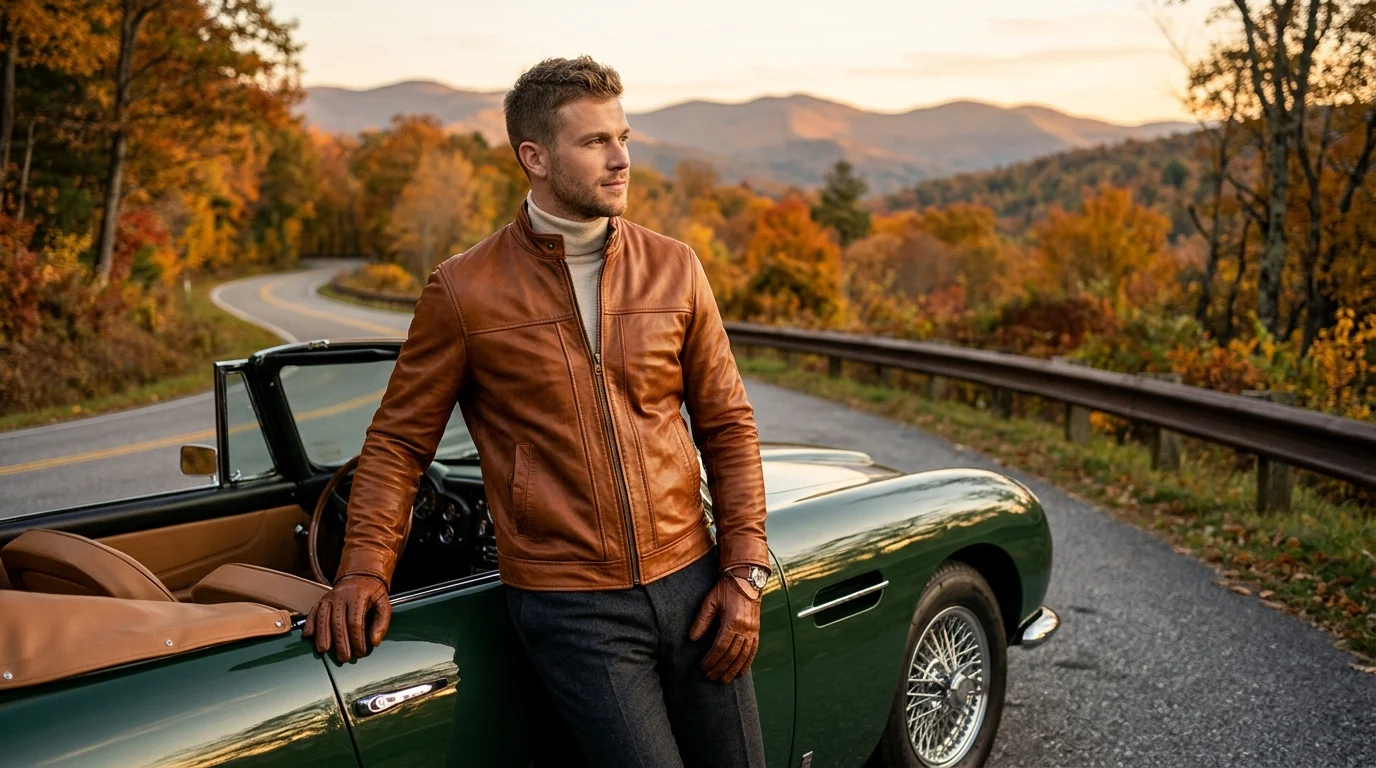
Leather Driving Jacket vs Motorcycle Jacket Which One to Buy
Compare a leather driving jacket with a motorcycle jacket to discover key differences in leather weight, ergonomics, styling, and daily comfort before buying.
Key Takeaways
- Core Purpose Discrepancy: A leather driving jacket optimizes seated ergonomic comfort and lightweight luxury, while a motorcycle jacket provides high-speed abrasion resistance and structural crash protection.
- Hide Weight and Thickness: Driving coats utilize supple 0.9 to 1.2 mm full-grain lambskin or lightweight cowhide, whereas protective moto outerwear requires dense 1.1 to 1.4 mm full-grain steerhide.
- Ergonomic Patterning Differences: Motoring silhouettes feature shorter torso cuts to eliminate seat bunching, while biker jackets incorporate pre-curved sleeves and dropped kidney panels.
- Hardware Philosophy: Driving jackets feature flush antique brass zippers and mandarin snap tabs, avoiding aggressive metal studs that could puncture or scratch luxury car seats.
- Styling Versatility: Motoring blousons excel in smart-casual and business-casual environments, whereas motorcycle jackets deliver bold counterculture edge for urban streetwear.
What Is the Difference Between a Leather Driving Jacket and a Motorcycle Jacket?
A leather driving jacket prioritizes lightweight ergonomic mobility, supple hand-feel, and seated cockpit comfort, whereas a leather motorcycle jacket focuses primarily on high-speed abrasion resistance, heavy hide thickness, and structural impact defense. Modern motorists choose driving jackets for everyday refined luxury, while motorcycle riders demand heavy-duty cowhide jackets equipped with protective armor systems.
Outerwear enthusiasts often confuse these two iconic garments because both share high-octane motorsport origins and rich leather patinas. However, the mechanical demands of gripping a steering wheel inside a luxury grand tourer differ fundamentally from operating a motorcycle at seventy miles per hour on exposed asphalt. When you slip into a motoring blouson from our curated men's leather jackets collection, you experience immediate softness without the burdensome bulk of dedicated road armor.
Motorcycle outerwear functions as life-saving personal protective equipment. The garment must withstand severe pavement friction, prevent road rash, and shield delicate joints from blunt trauma. Conversely, a driving jacket functions as an exquisite lifestyle layer. Master artisans engineer driving coats to insulate against cabin drafts, accommodate repetitive arm movements, and maintain a sharp, tailored profile that looks sophisticated outside the vehicle.
Furthermore, driving jackets focus on clean lines that transition gracefully into executive dining rooms and casual office spaces. You will find no aggressive waist belts or bulky metal shoulder epaulets on a motoring coat. Instead, clean panels and understated closures allow the garment to complement fine tailoring, premium denim, and luxury knitwear effortlessly. Dedicated motorcycle garments maintain an unapologetically rugged demeanor that commands attention on the open road but can feel overpowering in quieter social settings.
Historical Heritage of Motoring Blousons Versus Biker Outerwear
Automotive driving jackets originated in early twentieth-century open cockpit road rallies where gentlemen drivers required supple leather outer layers to block chilly crosswinds without hindering steering wheel maneuverability. Motorcycle jackets emerged in 1928 with Irving Schott's asymmetric double rider silhouette, designed specifically to shield motorcyclists from high-speed roadway impacts, gravel debris, and abrasive pavement.
Early automotive roadsters lacked enclosed cabins, climate controls, and windshields, forcing endurance racers to wear protective hides during events like the Mille Miglia and Targa Florio. Craftsmen fashioned these early motoring garments with high throat latches, wind-resistant storm flaps, and unrestrictive shoulders. As luxury car cabins evolved throughout the 1950s and 1960s, driving outerwear transitioned into refined leather blousons that paired effortlessly with flannel trousers and leather driving shoes.
Meanwhile, motorcycle riders encountered far harsher roadway hazards that inspired specialized utility garments found in our men's biker moto jackets archive. Biker jackets developed heavy asymmetrical front closures to prevent high-speed wind penetration through the zipper teeth. During the mid-twentieth century, Hollywood rebels cemented the black double rider as a symbol of defiance, ensuring that motorcycle gear retained its bold, assertive visual presence across modern fashion.
Throughout the decades, motoring coats preserved their aristocratic racing roots, adorning European gentlemen touring the Amalfi Coast or competing in vintage rallies at Goodwood. The silhouette remained closely associated with classic car collecting and understated luxury. Motorcycle jackets took a divergent cultural path through rock and roll, punk rebellion, and counterculture movements, creating two distinct style lineages that continue to influence how modern men express personal style through leather outerwear.
Silhouette Anatomy and Ergonomic Cut: Cockpit Comfort Versus Riding Posture
Ergonomic patterning distinguishes leather driving jackets from traditional motorcycle outerwear through torso length, armhole positioning, and sleeve curvature. A driving jacket features a clean, waist-length cut with centered zippers that prevent leather bunching while seated, whereas a motorcycle jacket incorporates aggressively pre-curved sleeves, action back expansion pleats, and dropped tail panels.
When you sit behind a sports car steering wheel, excess torso length causes the lower hem of a jacket to push upward into your chest. Master patternmakers solve this issue in driving jackets by trimming the overall front body length, placing the bottom hem exactly at the natural beltline. They raise the armholes and rotate the sleeve pitch slightly forward, allowing drivers to execute ninety-degree steering maneuvers without pulling the back hem upward.
Motorcycle jackets solve a vastly different biomechanical problem. Riding a sports bike or cruiser forces the human torso into a hunched, forward-reaching posture. To accommodate this aggressive reach, moto garments incorporate dual bi-swing shoulder gussets, generous chest ease, and sleeves that extend two inches past the wrist bone. When you drop your arms to your sides in a dedicated riding jacket, the sleeves often look excessively long and the chest feels stiff, reflecting its technical optimization for handlebar grips rather than casual pedestrian walking.
The waist architecture also reveals divergent engineering priorities. Driving jackets utilize clean, straight waist hems or elasticized leather ribbed waistbands that rest comfortably above seat bolsters. Motorcycle jackets feature elongated rear kidney panels that extend low over the lower back, ensuring cold wind does not expose the rider's lower spine while leaning over a motorcycle fuel tank. These structural differences explain why a dedicated motorcycle jacket can feel awkward and bulky when seated inside a luxury coupe.
Leather Thickness and Hide Weight: Supple Lambskin Versus Heavy Cowhide
Hide selection dictates the physical weight, stiffness, and break-in timeline of leather outerwear garments across motoring and motorcycling categories. Driving jackets utilize lightweight 0.9 to 1.2 millimeter full-grain lambskin or soft calfskin for immediate cloud-like suppleness, while motorcycle riding jackets require dense 1.1 to 1.4 millimeter full-grain cowhide engineered for maximum slide resistance.
The tactile experience of a genuine driving coat emphasizes buttery drape and weightless thermal comfort. We hand-select supple lamb hides that flex effortlessly over your shoulders, eliminating the exhausting multi-year break-in period common to rigid workwear. You can explore our detailed material breakdown in our guide on lambskin vs cowhide vs goatskin leather jackets to discover how hide grain density impacts long-term garment drape.
Protective motorcycle outerwear rejects thin fashion hides in favor of dense steerhide or heavy cowhide that weighs four to six pounds. This structural thickness creates a rigid protective barrier capable of surviving high-speed pavement slides without tearing. While this heft delivers exceptional crash survivability on the highway, it feels overly restrictive and heavy when you simply want to drive to a restaurant or walk through a metropolitan art gallery.
Hide tanning methods also diverge based on intended use. Driving jackets frequently undergo specialized vegetable or semi-aniline tanning processes that accentuate natural skin textures, creating a luxurious surface sheen that patinas beautifully with gentle wear. Heavy motorcycle cowhide undergoes heavy chrome tanning and protective topcoat finishing to resist gasoline spills, acid rain, and direct UV radiation, creating a resilient shell that sacrifices initial softness for rugged highway endurance.
Comparative Silhouette Analysis: Motoring Cut Versus Motorcycle Armor
Sartorial silhouette comparison clarifies how driving coats and motorcycle jackets balance aesthetics, torso proportions, and body-type suitability across different social environments. The following data matrix outlines key architectural distinctions between luxury motoring outerwear and classic biker jackets.
| Style Silhouette | Best Body Type | Aesthetic Vibe | Formality Level | Shoulder Offset & Ease | Price Range USD |
|---|---|---|---|---|---|
| Tailored Driving Blouson | Athletic, Slim, and Average Frames | Refined European Grand Tourer | Smart-Casual to Business-Casual | +1.0 Inch Relaxed Ease | USD 249-399 |
| Classic Double Rider Moto | Broad Shoulders, Athletic Builds | Rebellious Rock Counterculture | Casual Streetwear | +2.5 Inches Forward Gusset | USD 249-399 |
| Minimalist Cafe Racer | Lean, Tapered, and Tall Silhouettes | Clean Vintage Track Heritage | Elevated Casual | +1.5 Inches Pre-Curved | USD 249-399 |
| Touring Motoring Coat | Tall and Broad Body Types | Executive Highway Sophistication | Professional Business Travel | +2.0 Inches Tailored Ease | USD 299-499 |
| Bespoke Driving Roadster | Custom Sized to All Proportions | Exclusive Artisan Craftsmanship | High Sartorial Luxury | Tailored to Exact Posture | USD 299-499 |
Selecting the ideal silhouette requires evaluating where you intend to wear your jacket most frequently. Motorists seeking understated refinement often gravitate toward our men's classic leather jackets, which offer the streamlined proportions of vintage motoring coats without distracting metallic clutter. Conversely, riders demanding authentic track aesthetics will appreciate the bold asymmetric lines and muscular presence of traditional moto cuts.
Each silhouette interacts differently with varying male body types. Shorter gentlemen often find that traditional motorcycle jackets visually shorten their frame due to bulky waist belts, heavy lapels, and dropped back hems. In contrast, a streamlined driving blouson creates a clean, vertical line that elongates the torso. Taller men with broad shoulders can comfortably fill out the extra volume of an asymmetrical double rider, turning its substantial hardware into a balanced stylistic asset.
Hardware Engineering: Minimalist Closures Versus Heavy-Duty Crash Zippers
Hardware specifications differentiate luxury motoring jackets from protective riding gear through zipper gauges, collar latches, and pocket layouts. Driving jackets showcase discreet antique brass zippers, smooth snap-tab mandarin collars, and flush welt pockets that avoid scratching automotive interior leather, whereas motorcycle jackets employ heavy-gauge asymmetrical zippers, wide lapel snaps, and waist-cinching belts.
Automotive interiors contain expensive aniline leather upholstery, polished wood veneers, and delicate composite trim. Heavy metal buckles, sharp zipper pulls, or protruding pocket studs can easily gouge an exotic car seat during spirited cornering. Consequently, master craftsmen finish driving jackets with concealed zip teeth, leather zipper garages, and low-profile horn or snap buttons. The collar sits low as a neat mandarin band, keeping your neck warm without catching on seat headrests.
Dedicated motorcycle gear uses prominent, oversized metal hardware designed for emergency reliability and gloved operation. Heavy number ten YKK brass zippers resist burst pressure during road impacts, while wide notched lapels snap firmly to the chest to eliminate fluttering wind turbulence. Waist buckles allow riders to cinch the lower torso tightly, blocking cold drafts from rushing up the rider's spine at highway speeds. For riders seeking dedicated track protection, our specialized motorcycle riding gear offers impact-rated closures built specifically for two-wheel security.
Pocket engineering also reflects these distinct design philosophies. Motoring jackets feature slant handwarmer pockets cut at steep forty-five-degree angles, allowing drivers to access sunglasses, toll passes, or keys with minimal torso twisting while buckled into seat belts. Motorcycle jackets prioritize deep zippered chest utility pockets that keep heavy smartphones, registration documents, and wallets safely locked away against turbulence and vibrations at eighty miles per hour.
Interior Construction, Linings, and Thermal Regulation
Interior lining architecture dictates how effectively leather outerwear manages cabin warmth, body heat, and moisture accumulation during extended wear. Driving jackets feature smooth polyester satin linings that glide effortlessly over cashmere sweaters and dress shirts, whereas motorcycle riding jackets frequently incorporate abrasion-resistant mesh linings, thermal zip-out quilted vests, and internal armor pockets.
Automotive cockpits subject drivers to rapid temperature fluctuations between direct sunshine through windshield glass and chilly exterior drafts. A lightweight satin lining facilitates breathability while allowing the wearer to slip the jacket on and off inside cramped car cabins without pulling at shirt sleeves. Furthermore, high-end driving coats often integrate discreet underarm eyelets or micro-perforated side panels to prevent sweat build-up against leather vehicle seats.
Riding jackets demand technical interior engineering designed to stabilize internal impact protectors. Heavy mesh fabrics anchor shoulder, elbow, and back armor directly against the rider's skeletal joints, preventing armor rotation during a fall. If you want to understand how different suede and smooth leather finishes breathe during temperature shifts, explore our comprehensive analysis of nubuck vs suede leather jackets comparison guide for deeper textile insights.
Additionally, climate-control engineering in driving jackets often includes breathable natural cotton chest panels behind the satin lining, ensuring you stay comfortable during multi-hour road trips. Motorcycle jackets, on the other hand, frequently incorporate heavy windproof polyurethane membranes bonded behind the leather shell, prioritizing complete draft exclusion over indoor breathability.
Material Durability and Craftsmanship Standards
Artisan production specifications establish verifiable quality baselines across leather thickness, seam strength, zipper hardware, and warranty guarantees. The following craftsmanship matrix details verified technical parameters sourced directly from our master leather workshop.
| Garment Category | Leather Hide Type | Hide Thickness | Hardware Specs | Interior Lining | Production Lead Time | Craftsmanship Guarantee | Price Range USD |
|---|---|---|---|---|---|---|---|
| Entry Genuine Leather Jacket | Cowhide, standard sizing | 1.1-1.4mm | YKK brass zippers | Polyester satin lining | Standard 3-5 business days | 1-year warranty and 30-day returns | USD 149-249 |
| Premium Full-Grain Jacket | Full-grain lambskin or cowhide | 0.9-1.2mm lambskin, 1.1-1.4mm cowhide | YKK brass zippers | Polyester satin lining | Standard 3-5 business days | 1-year warranty and 30-day returns | USD 249-399 |
| Custom Made-to-Order Jacket | Bespoke sizing, choice of leather | Tailored to hide selection | YKK brass zippers | Polyester satin lining | Custom 7-14 business days | 1-year warranty and 30-day returns | USD 299-499 |
| Shearling & Aviator Jacket | Genuine shearling lining | Soft and heavy insulating hide | YKK brass zippers | Genuine shearling lining | Standard 3-5 business days | 1-year warranty and 30-day returns | USD 349-599 |
Every jacket crafted in our atelier undergoes a rigorous twelve-point quality inspection before departure. Master artisans with more than twenty years of bench experience hand-stitch every stress seam, ensuring structural durability that withstands decades of daily wear. To verify your exact chest, shoulder, and sleeve measurements before ordering, consult our comprehensive size and fit guide.
Our workshop selects only top-tier full-grain hides, rejecting corrected leathers and bonded vinyl synthetics. Full-grain leather preserves the outermost layer of the animal skin, retaining natural epidermal pores that allow the leather to breathe and mold to your physique over time. Whether you choose supple lambskin for automotive touring or dense cowhide for highway protection, hand-stitched seams and industrial bonded nylon threads ensure your investment will not unravel under stress.
How to Style a Leather Driving Jacket for Modern Streetwear and Smart Casual Wear
Styling a leather driving jacket requires balancing clean sartorial minimalism with tailored casual essentials. Fashion enthusiasts pair rich caramel or espresso leather driving jackets with fine-gauge merino wool roll-necks, pleated charcoal trousers, and clean leather dress shoes, achieving an effortlessly polished aesthetic that transitions seamlessly from weekend road trips to upscale urban dining.
Because driving jackets feature minimal exterior hardware, they serve as sophisticated alternatives to traditional wool blazers. For smart-casual office settings, layer a cognac lambskin driving blouson over a crisp white Oxford cotton button-down shirt and tailored slim-fit navy chinos. Complete the ensemble with burnished leather penny loafers or clean white minimalist leather trainers to project quiet luxury confidence.
For relaxed weekend outings, embrace vintage grand touring elegance. Layer your driving jacket over an oatmeal waffle-knit henley and straight-leg selvedge denim in raw indigo. You can browse versatile layering pieces in our casual jackets selection, pairing your outerwear with handcrafted leather racing gloves to capture authentic automotive heritage on scenic country drives.
During cooler autumn months, incorporate monochromatic layering. Style a deep espresso brown lambskin driving coat over a charcoal cashmere crewneck sweater, washed black denim, and dark brown Chelsea boots. The absence of heavy metal zippers allows the rich natural grain of the brown leather to become the primary focal point of the outfit, exuding understated refinement without screaming for attention.
How to Style a Leather Motorcycle Jacket for Edgy Streetwear Outfits
Styling a leather motorcycle jacket centers on contrasting rugged vintage attitude with contemporary urban silhouettes. Streetwear tastemakers layer black double rider or cafe racer motorcycle jackets over heavyweight cotton hoodies, relaxed straight-leg selvedge denim, and combat boots, establishing an iconic silhouette rooted in mid-century counterculture and timeless rebellious energy.
To achieve an authentic rock-and-roll street style outfit, anchor a heavyweight black cowhide biker jacket with a faded vintage band t-shirt or charcoal thermal long-sleeve. Pair the upper layers with black distressed denim or relaxed-fit workwear cargo trousers, finishing the look with sturdy lug-sole motorcycle boots. The asymmetrical zipper and polished metal lapel snaps provide sharp metallic highlights that energize monochrome base outfits.
For transitional spring or autumn streetwear, substitute the heavy hoodie with a lightweight loopback sweatshirt or an unbuttoned flannel overshirt. If you appreciate clean lines with authentic motorsport heritage, explore our mens motorbike jackets and vintage silhouettes in our vintage leather jackets gallery to find cuts featuring subtle track striping and retro cafe racer mandarin collars.
You can also elevate motorcycle outerwear into modern high-low fashion. Pair a slim black double rider jacket with a crisp white dress shirt, a slim silk knit tie, and tapered wool trousers. This juxtaposition of formal tailoring against aggressive motorcycle hardware creates a visually arresting contrast popular among modern fashion tastemakers and red-carpet stylists worldwide.
Alternative Minimalist Silhouettes: Shirt Collars and Bomber Hybrid Jackets
Fashion enthusiasts seeking alternatives to both heavy biker armor and ultra-streamlined driving jackets often discover perfect equilibrium in collarless leather overshirts and flight blousons. These hybrid outerwear garments blend the lightweight drape of motoring skins with functional utility pockets suitable for versatile four-season layering.
A leather shirt jacket or minimalist collarless blouson offers exceptional transitional utility. Crafted with flat shirt-style collars, snap plackets, and chest patch pockets, these jackets layer seamlessly beneath heavy overcoats during deep winter or serve as standalone outer jackets throughout mild autumn days. You can explore versatile collarless designs in our shirt and collarless jackets showcase.
Similarly, iconic military aviation silhouettes share ergonomic similarities with automotive blousons. Flight jackets utilize ribbed elastic cuffs and waistbands that prevent cold air from entering the sleeves while seated. For those who appreciate military aviation heritage alongside motorsport tailoring, our mens bomber flight jackets collection provides timeless leather options engineered for all-day mobility.
Hybrid silhouettes eliminate the difficult choice between extreme minimalism and rugged utility. They allow you to enjoy the featherweight comfort of lambskin with the versatile styling potential of casual military and workwear cuts, ensuring your outerwear wardrobe remains dynamic across every season.
Durability and Maintenance: Caring for Motoring Suppleness Versus Rugged Armor
Leather care procedures vary significantly between delicate motoring skins and heavyweight motorcycle armor due to differing dye penetrations and exposure levels. Motoring jackets benefit from gentle moisture balms and soft microfiber buffing every six months, while heavy motorcycle cowhide demands periodic deep conditioning and weatherproofing wax to withstand driving rain, road salt, and harsh sun.
Fine lambskin driving coats feature delicate, open-pore grain structures that absorb natural oils readily. Never apply heavy petroleum waxes or harsh silicone sprays to lambskin, as dense sealants will clog hide pores and discolor subtle vegetable tanning dyes. Instead, treat your driving jacket with specialized lanolin creams, storing the garment on wide contoured wooden hangers inside breathable cotton garment bags.
Heavy cowhide motorcycle jackets endure brutal outdoor elements including insect strikes, road grit, and sudden downpours. Wipe down highway grime with a damp cotton cloth immediately following stormy rides. Learn comprehensive preservation techniques in our restorative guide on how cleaning a leather jacket saves vintage fashion, and study our official leather care guide to maintain supple resilience across decades of enthusiastic ownership.
Never store either garment in damp basements, hot attics, or non-breathable plastic dry-cleaning bags. Enclosed plastic traps ambient humidity, encouraging mold proliferation and drying out essential hide tanning oils. By treating your leather to seasonal conditioning sessions and proper storage, full-grain motoring and biker jackets will develop rich personal patinas that enhance in beauty with each passing year.
Buying Verdict: Which Leather Jacket Best Fits Your Lifestyle and Wardrobe?
Choosing between a leather driving jacket and a motorcycle jacket depends entirely on your daily routine, climate comfort, and stylistic intentions. Select a driving jacket if you desire a lightweight, butter-soft luxury layer for daily automotive commuting and smart-casual dinners; invest in a motorcycle jacket if you demand rugged abrasion protection and timeless counterculture presence.
If you spend considerable time commuting in a vehicle, attending business meetings, or navigating mild temperate climates, a full-grain lambskin driving jacket provides unmatched comfort. It weighs next to nothing on your shoulders, requires zero break-in period, and pairs naturally with tailored trousers, knitwear, and smart casual attire. You will never feel restricted behind the steering wheel or overheated in climate-controlled indoor spaces.
If your lifestyle involves two-wheel highway riding, outdoor festivals, or you simply gravitate toward bold, masculine rock-and-roll styling, a full-grain cowhide motorcycle jacket remains the undisputed champion. Its heavy-duty construction protects against harsh winds and roadway abrasions while aging into a personalized masterpiece with each passing year. Read verified feedback from our global community of enthusiasts on our customer reviews page, or consult our dedicated frequently asked questions portal for tailored sizing guidance.
Ultimately, discerning outerwear collectors often acquire both silhouettes over time. A supple caramel or espresso driving blouson commands respect during weekdays, business travel, and casual Friday office hours, while a black full-grain cowhide motorcycle jacket stands ready for weekend concerts, highway rides, and raw streetwear expression. Investing in heirloom full-grain leather ensures that whichever silhouette you choose, your jacket will deliver decades of enduring style, warmth, and confidence.
Explore The Full 2026 Leather Outerwear Collection
Vegetable-tanned full-grain cowhide, buttery New Zealand lambskin, and heritage Melton wool. Free express delivery across the USA with 30-day hassle-free returns.