
Is a Distressed Leather Vest Worth Buying for Everyday Layering
Evaluate whether a distressed leather vest is worth buying for 2026. Explore full-grain cowhide durability, hoodie layering formulas, and styling versatility.
Is a Distressed Leather Vest Worth Buying for Everyday Layering
Navigating transitional weather demands versatile outerwear that provides core thermal comfort without restricting arm mobility or causing mid-afternoon overheating. A distressed leather vest bridges the functional divide between heavy cold-weather jackets and lightweight shirts, introducing rich tactile grain, rugged Americana heritage, and architectural depth to contemporary street styling. Deciding whether an artisan leather vest represents a worthwhile wardrobe investment involves examining hide resilience, hand-rubbed patina development, seasonal layering flexibility, and cost-per-wear economics. When crafted from genuine full-grain leather, a distressed vest transcends fleeting outerwear trends, serving as an indestructible modular anchor across all four seasons.
Key Takeaways
- Core Thermal Efficiency: A distressed leather vest shields your chest and vital organs against biting wind chill while leaving your arms completely unencumbered, making it ideal for brisk 45 to 65-degree Fahrenheit transitional temperatures.
- Heirloom Patina Mechanics: Full-grain cowhide between 1.1mm and 1.4mm thickness absorbs ambient oils and surface friction, causing distressed brown undertones to emerge with greater depth and character over years of daily wear.
- Modular Streetwear Layering: Pairing an unbuttoned distressed leather vest over a heavyweight loopback cotton hoodie, flannel overshirt, or ribbed knitwear establishes effortless visual contrast between rugged hide and soft textiles.
- Artisan Hardware Architecture: Premium leather waistcoats feature heavy-gauge YKK antique brass zippers, reinforced solid brass snaps, and polyester satin lining that resists friction abrasion against heavy base layers.
- Investment & Longevity: Backed by hand-stitched seam construction and a one-year craftsmanship warranty, an authentic distressed leather vest provides decades of dependable wear at an accessible price point of USD 149 to 249.
Is a Distressed Leather Vest Worth Buying for Transitional Weather
A distressed leather vest is exceptionally worth buying for transitional weather because it delivers windproof torso insulation while eliminating arm restriction and overheating during fluctuating temperatures. Crafted from heavyweight 1.1mm to 1.4mm full-grain cowhide, an artisan vest shields your chest from cold breezes while venting heat naturally through the open armholes.
The practical value of a leather vest centers on thermal regulation. During autumn and early spring, temperatures often fluctuate by twenty degrees between chilly morning commutes and warm afternoon sun. Wearing a heavy, fully lined leather jacket frequently leads to clamminess and perspiration once indoor heating or midday sunlight takes effect. A distressed leather vest provides targeted core warmth over your cardiovascular center, maintaining body temperature balance without trapping moisture along your forearms.
Mobility represents another decisive advantage over full-sleeved outerwear. Traditional heavyweight motorcycle and workwear jackets require significant elbow break-in and can feel cumbersome when driving, riding, working at a desk, or carrying weekend gear. Because a vest eliminates sleeve bulk entirely, your arms enjoy complete 360-degree range of motion. You can effortlessly shoulder a travel duffle, reach across a motorcycle handlebar, or operate tools without experiencing armhole binding or back tension.
From a styling perspective, the distressed finish removes the intimidating gloss of brand-new leather. Hand-buffed edges and subtle color variations around the collar, pocket welts, and hemline give the garment an authentic lived-in swagger on day one. Rather than waiting three seasons for rigid hide to break in, a distressed finish looks intentional, rugged, and relaxed immediately. For individuals seeking modular utility, exploring our curated mens leather vests and womens leather vests reveals versatile silhouettes engineered for effortless daily layering.
What Style Features Separate Workwear Vests from Motorcycle Riding Vests
Distinct structural features separate workwear leather vests from motorcycle riding vests, including neckline geometry, closure mechanisms, pocket layouts, and torso length specifications. Workwear leather vests typically incorporate ribbed knit bomber collars, scoop necks, and spacious patch pockets, whereas motorcycle club vests feature mandarin stand collars, concealed zipper plackets, and windproof snap flaps.
Workwear vests draw inspiration from traditional chore jackets and utility waistcoats designed for tradesmen and ranch hands. They prioritize ease of access and functional utility, featuring open hand-warmer pockets cut at a comfortable 45-degree angle alongside reinforced chest drop pockets for utility gear. The collar is frequently cut low in a subtle V-neck or scoop neckline, allowing the vest to layer comfortably under heavier coats or over thick collared flannel shirts without bunching around the throat. The front closure standardly utilizes heavy-duty brass snaps or an open-ended central zipper designed for quick venting.
Motorcycle riding vests—frequently termed club-style or tactical vests—are engineered specifically for high-speed wind resistance and protective coverage. They feature a higher, close-fitting mandarin collar that prevents wind turbulence from chilling the neck. The front closure incorporates a dual-closure system: an interior heavy-duty brass zipper concealed beneath an exterior storm flap secured with heavy snaps. This double barrier prevents highway wind from penetrating between zipper teeth. Furthermore, motorcycle vests are patterned with a slightly dropped back kidney panel to ensure continuous lower back coverage when leaning forward over handlebars.
Hardware durability differs significantly between the two styles. While casual workwear waistcoats prioritize comfortable brass snaps, riding vests employ reinforced interior pocket welts, concealed carry compartments, and seamless single-panel leather backs ideal for club embroidery. Both variations share exceptional durability when assembled with heavy nylon bonded thread and reinforced stress bar-tacking. Riders interested in high-speed protective equipment can reference our specialized analysis on whether a club style leather motorcycle vest is worth buying.
How Does Distressed Full Grain Cowhide Age and Develop Patina
Distressed full-grain cowhide ages by developing a dynamic, multi-tonal patina as friction, body oils, and sunlight expose the lighter undertones beneath the hand-rubbed surface finish. Unlike synthetic faux leather that peels or cracks over time, genuine 1.1mm to 1.4mm cowhide becomes softer, more supple, and texturally complex with every year of regular wear.
The chemistry of distressed leather begins in the tannery with pull-up and hand-waxing techniques. Tanners impregnate the full-grain hide with special blends of natural oils and waxes before applying a darker surface pigment. When the finished vest is stretched, folded, or rubbed against surrounding surfaces, these oils migrate within the collagen fibers, temporarily lightening the color in high-wear zones such as the side seams, pocket entries, and shoulder yoke. This optical reaction produces an organic two-tone visual effect that synthetic materials cannot duplicate.
Surface abrasions on full-grain distressed hide enhance rather than detract from the garment's aesthetic value. Minor scratches incurred while carrying gear or hiking trails blend naturally into the distressed base, contributing to an authentic story of adventure and wear. Furthermore, the hide absorbs ambient natural oils from your hands, deepening the richer shadow tones along the creases while preserving the lighter highlights along prominent seams. Over three to five years, your vest transforms into an entirely unique custom piece that reflects your individual lifestyle and body contours.
Caring for distressed cowhide requires minimal intervention to maintain its natural matte texture. Avoid heavy silicone-based sprays or glossy wax polishes that fill the open pores and destroy the matte vintage appearance. Periodically wiping the surface with a damp cloth and applying a lightweight, wax-free leather balm every twelve months keeps the interior fibers hydrated without compromising the rugged distressed aesthetic. Detailed conditioning steps are cataloged in our official leather care guide.
Table 1: Leather Vest Silhouette and Utility Comparison
| Style Silhouette | Ideal Body Frame | Aesthetic Tradition | Recommended Base Layer | Closure System | Price Range USD |
|---|---|---|---|---|---|
| Distressed Workwear Vest | Broad, athletic, standard | Rugged Americana, heritage | Heavy flannels, waffle thermals | YKK brass zipper or snaps | 149 to 249 |
| Club Style Motorcycle Vest | Muscular, tall, broad | Biker culture, tactical | Heavyweight cotton hoodies | Dual zip and snap storm flap | 149 to 249 |
| Tailored Leather Waistcoat | Slim, athletic, tall | Vintage sartorial, western | Poplin shirts, fine knitwear | 5-button horn closure | 149 to 249 |
| Shearling-Lined Winter Vest | Universal (petite to tall) | Alpine heritage, aviator | Cable-knit sweaters, turtlenecks | Heavy antique brass zipper | 349 to 599 |
| Puffer Insulated Leather Vest | Tall, lean, athletic | Contemporary streetwear | Tech fleeces, oversized hoodies | Heavy zipper with storm placket | 249 to 399 |
How to Style a Distressed Leather Vest with Hoodies and Streetwear
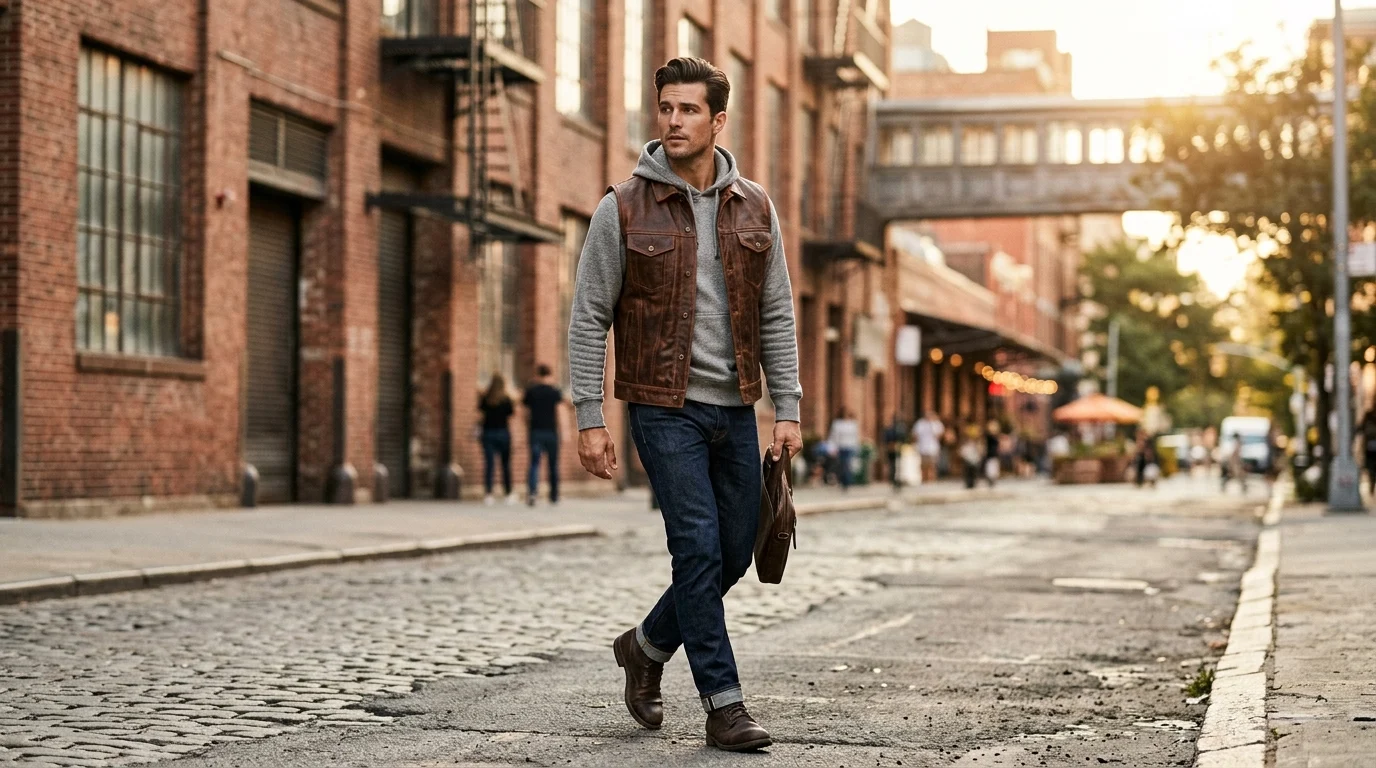
Styling a distressed leather vest with streetwear begins by pairing an unzipped dark cognac or espresso vest over a heavyweight, 450-to-500 GSM loopback cotton hoodie in heather grey, washed black, or oatmeal. Ground the look with relaxed-fit Japanese selvedge denim or utility cargo trousers, finishing with rugged leather combat boots or retro basketball sneakers.
The key to successful hoodie layering lies in proportional harmony and fabric weight contrast. Because distressed leather possesses substantial visual weight and stiffness, pairing it with a thin, flimsy polyester sweatshirt causes the vest to overwhelm the underlayer, resulting in awkward bunching around the armholes. Select an oversized, boxy cotton hoodie with dropped shoulders and a double-layered structured hood that sits cleanly over the vest's back collar. Leaving the vest unfastened showcases the contrast between the soft matte fleece and the textured, weathered cowhide.
Color blocking dictates visual impact in urban streetwear. A dark brown or distressed tan vest pairs effortlessly with cool neutral hoodies in ash grey, bone, or sage green. Avoid wearing a distressed brown leather vest over a matching brown sweatshirt, as monochromatic brown tops lack visual separation and can appear muddy. Instead, let your underlayer provide crisp contrast while your denim or cargo pants balance the lower half of your silhouette.
Accessorizing distressed streetwear requires rugged simplicity. Incorporate a woven cotton web belt or full-grain leather belt with antique silver hardware. Roll your denim cuffs once to showcase the contrasting selvedge ID line and highlight sturdy workwear footwear. For women, layering an oversized distressed vest over a cropped cream hoodie, high-waisted wide-leg denim, and platform combat boots creates an assertive, balanced silhouette that flatters natural body proportions. Discover complementary outerwear pairings in our casual leather jackets and utility canvas and field jackets collections.
How to Style a Distressed Leather Vest for Heritage Americana and Workwear
Styling a distressed leather vest for heritage Americana involves layering it over a heavy buffalo-plaid wool-cotton flannel shirt, durable double-knee duck canvas trousers, and Goodyear-welted leather service boots. Fastening the bottom two snaps while leaving the top open frames the flannel collar and creates a classic, utilitarian silhouette rooted in western frontier craftsmanship.
Fabric texture pairing is paramount when curating an authentic workwear look. Distressed full-grain cowhide harmonizes naturally with coarse, tactile textiles including brushed cotton twill, 14-ounce raw denim, heavy corduroy, and wool flannel. Avoid pairing distressed workwear vests with delicate synthetic silks, fine dress trousers, or shiny track pants, as the extreme stylistic clash looks disjointed. Instead, lean into heritage earth tones: mustard yellows, hunter greens, deep navy blues, and rich burgundy plaids that complement the natural amber undertones of distressed leather.
Functional hardware accents reinforce the vintage workwear aesthetic. Look for vests featuring reinforced brass rivets at pocket corners, heavy-duty snap fasteners, and deep interior utility pockets capable of securing modern smartphones and EDC gear. During colder outdoor days, an unlined or satin-lined leather vest layers effortlessly beneath a heavier wax-coated barn coat or chore jacket, providing an invisible core thermal barrier while leaving your front open when unbuttoning the heavy outer coat indoors.
Footwear selections must provide substantial visual grounding. Sleek dress shoes look out of place beneath rugged distressed hides; instead, opt for oiled leather work boots, moc-toe boots, or rugged suede service footwear with storm-welted Vibram lug soles. Matching the leather tone of your boots to the secondary undertones of your distressed vest creates a cohesive, purposeful ensemble that effortlessly transitions from outdoor workshops to casual evening gatherings. Explore our comprehensive collection of handcrafted leather waistcoats and heavy-duty workwear jackets designed for enduring utilitarian performance.
What Craftsmanship and Material Details Guarantee Lifetime Longevity
Identifying artisan craftsmanship details ensures your distressed leather vest withstands decades of rugged daily use without seam separation, hardware failure, or lining tears. Full-grain cowhide measuring 1.1mm to 1.4mm thickness provides the optimal balance of impenetrable puncture resistance and comfortable torso flexibility, while heavy bonded polyester stitching prevents seam unraveling under heavy stress.
Full-grain hide is the uncompromised standard for authentic heirloom outerwear. Unlike split leather or corrected-grain hides—which shave away the strong outer epidermis and substitute synthetic polyurethane coatings—full-grain leather preserves the tightly interwoven collagen matrix that has evolved naturally over animal life. This dense fiber structure prevents wind penetration, resists water droplets, and tolerates friction abrasion against concrete, wood, and metal without tearing.
The internal construction of a premium vest is equally vital. Low-cost vests frequently cut corners by utilizing thin nylon taffeta or flimsy cotton linings that rip along the lower lumbar seam within months of friction against denim waistbands. Master craftsmen at Lux Wearz line each vest with high-density polyester satin lining, engineered specifically for low friction, moisture wicking, and superior tear strength. Furthermore, armhole openings and collar perimeters feature internal reinforcement stay tape sandwiched between the leather facing and lining to prevent stretching from repeated on-and-off wear.
Hardware selection completes the heirloom formula. We exclusively utilize genuine YKK antique brass zippers featuring oversized teeth that glide smoothly without jamming, even when coated in road dust or grit. All snap buttons are solid forged brass anchored with reinforced steel washers, preventing snaps from pulling through the leather when unbuttoning under tension. Every garment undergoes a thorough 12-point quality check by master leather artisans with over 20 years of experience before leaving our workshop. For personalized size adjustments or custom pocket requests, connect directly with our master artisan support team.
Table 2: Material Specifications and Craftsmanship Durability Matrix
| Quality Specification | Full-Grain Cowhide Vest | Full-Grain Lambskin Vest | Full-Grain Goatskin Vest |
|---|---|---|---|
| Hide Thickness Range | 1.1-1.4mm for cowhide | 0.9-1.2mm for lambskin | 0.8-1.0mm for goatskin |
| Leather Grade Standard | 100% genuine full-grain leather | 100% genuine full-grain leather | 100% genuine full-grain leather |
| Hardware Components | YKK brass zippers & brass snaps | YKK brass zippers & brass snaps | YKK brass zippers & brass snaps |
| Interior Lining Type | Polyester satin lining | Polyester satin lining | Polyester satin lining |
| Seam Construction | Hand-stitched seams | Hand-stitched seams | Hand-stitched seams |
| Abrasion Resistance | Extremely high, rugged wear | Moderate, delicate suppleness | High, natural pebble grain |
| Best Utility Pairing | Workwear, moto, outdoor | Fashion streetwear, light layering | Lightweight travel layering |
| Standard Delivery Time | Ships within 3-5 business days | Ships within 3-5 business days | Ships within 3-5 business days |
| Custom Order Lead Time | 7-14 business days | 7-14 business days | 7-14 business days |
| Shipping Terms | Free shipping across the USA | Free shipping across the USA | Free shipping across the USA |
| Warranty & Returns | 1-year warranty, 30-day returns | 1-year warranty, 30-day returns | 1-year warranty, 30-day returns |
| Price Range (USD) | 149-249 | 149-249 | 149-249 |
How to Choose the Perfect Fit and Size for a Leather Vest
Choosing the correct leather vest size requires accounting for intended underlying layers to prevent tight chest constriction while maintaining clean vertical torso lines. If you plan to wear your distressed leather vest primarily over thick winter hoodies and flannels, sizing up one standard chest size ensures comfortable breathing room without pulling across the buttons.
The primary fitting checkpoint is the chest circumference. Measure your chest at its widest point directly beneath your armpits while wearing the thickest garment you intend to layer under the vest. Add two inches of ease to this measurement to determine your ideal vest chest size. When you fasten the zipper or snaps, the vest should lie flat across your pectorals without creating horizontal tension pull marks. You should be able to slide your flat hand easily between your chest and the leather.
Armhole clearance is the second critical fit parameter. An armhole cut too high and tight will pinch into your underarms when wearing bulky hoodies, restricting circulation and causing uncomfortable bunching. Conversely, an armhole cut excessively deep can make the vest look baggy and allow cold wind to enter the chest cavity. The armhole seam should sit approximately one to one-and-a-half inches below your natural armpit, providing ample room for sleeve movement while maintaining a clean, structured silhouette.
Length proportions must harmonize with your beltline. A classic motorcycle or workwear vest should terminate right at the top of your hip bone, overlapping your belt buckle by approximately one to two inches. If the vest is too short, your shirt will untuck awkwardly whenever you reach upward; if the vest is too long, the lower hem will bunch upward against your lap when sitting down. Reference our detailed size and fit guide for exact garment dimensions, or consult our sizing experts for custom tailoring options.
How Do Leather Vests Compare to Leather Jackets Across Practical Scenarios
Comparing a distressed leather vest against a full-sleeved leather jacket highlights key functional tradeoffs regarding climate adaptability, seasonal versatility, packability, and cost efficiency. While full leather jackets deliver maximum cold-weather protection and wind resistance along the arms, leather vests offer superior seasonal range, easier packing for travel, and lower cost-per-wear value.
In terms of temperature versatility, a leather vest enjoys a much longer operational window throughout the calendar year. A heavy full-grain leather motorcycle jacket is typically confined to temperatures between 40 and 60 degrees Fahrenheit; once temperatures rise above 65 degrees, full leather sleeves trap heat rapidly, making the jacket unbearable for walking. A distressed leather vest, however, transitions effortlessly from brisk 45-degree autumn mornings over a sweater to 70-degree summer evenings over a light t-shirt, giving you up to seven months of active rotation per year.
Packability and travel convenience further distinguish the vest silhouette. A heavy leather biker jacket weighs between four and six pounds and occupies massive volume in carry-on luggage, making it difficult to travel with when flying. A leather vest weighs under two pounds and rolls compactly into a weekender bag or backpack without taking up valuable luggage space. It serves as the ultimate travel companion, ready to be thrown over whatever shirt you are wearing for instant polish and warmth upon landing.
From a financial investment standpoint, distressed leather vests provide exceptional economic value. Handcrafted full-grain leather jackets typically command prices from USD 249 to 399, whereas our premium full-grain leather vests retail from USD 149 to 249. You receive the exact same 1.1mm to 1.4mm full-grain cowhide, heavy-duty brass hardware, and hand-stitched artisan craftsmanship at a substantially lower price point, maximizing your wardrobe return on investment. Readers seeking broader outerwear styling comparisons can explore our guides on how to style a leather vest and leather workwear jacket outfits.
Seasonal Care and Weatherproofing Strategies for Distressed Leather Vests
Protecting a distressed leather vest against rain, snow, road grit, and ambient dryness preserves its suppleness without diminishing its distinctive matte vintage finish. Because distressed leather features open, breathable pores designed to absorb oils and develop patina, applying a lightweight fluorocarbon-free water-repellent spray provides invisible barrier protection against unexpected downpours.
When applying water-repellent sprays, test a small, inconspicuous patch on the interior hem facing first. Spray evenly from a distance of eight to ten inches, ensuring a light mist rather than soaking the hide. Allow the vest to air-dry at room temperature for two hours. This hydrophobic treatment causes water droplets to bead up and roll off the leather surface rather than saturating the inner fibers. If the vest does become thoroughly soaked in heavy rain, gently blot standing moisture using a dry cotton towel and hang it on a contoured wooden hanger away from radiators and direct sunlight.
Seasonal cleaning requires gentle mechanical action rather than aggressive chemicals. Use a soft horsehair brush to remove dry dust, dirt, and street grit from the seams and pocket welts after outdoor activities. For surface stains or road grime, wipe with a damp microfiber cloth moistened with diluted, pH-balanced leather cleaner. Never immerse genuine leather in a washing machine, and never use petroleum-based solvents or household spot removers, which permanently strip the natural tanning oils and leave unsightly bleached rings.
Proper off-season storage guarantees your vest emerges in peak condition every autumn. Store the garment in a cool, climate-controlled closet using a breathable garment bag. Placing cedar blocks nearby naturally deters moths while imparting a clean, woodsy aroma. Avoid cramming the vest between tight garments, as prolonged compression can create permanent creases in thick cowhide. For additional maintenance insights, consult our helpful leather vest FAQ or read real-world experiences in our verified customer testimonials.
Why Investing in Artisan Handcrafted Leather Vests Outlasts Fast Fashion
Investing in an artisan handcrafted leather vest directly challenges the disposable ethos of fast fashion by delivering durable materials, repairable construction, and ethical workshop practices. Every Lux Wearz distressed leather vest is individually cut and hand-stitched by senior master artisans with over twenty years of leatherworking expertise.
Fast-fashion retailers mass-produce synthetic polyurethane pleather vests that degrade within one to two seasons, shedding microplastics and cracking along flex lines. These synthetic garments cannot be repaired or conditioned; once the petroleum-based coating peels, they are destined for landfills. In sharp contrast, full-grain cowhide is a completely natural, biodegradable organic material that grows more beautiful, comfortable, and resilient with age, frequently surviving for three decades or more as an heirloom garment passed between generations.
Artisan assembly techniques ensure structural repairability. Our master tailors use heavy-gauge bonded threads and reinforced lock-stitch machinery that prevents a severed thread from unraveling the entire seam. If a snap button loosens after five years of hard riding, any local leather cobbler or our in-house repair team can replace it in minutes. We stand firmly behind every piece with our 30-day return policy and comprehensive 1-year craftsmanship warranty, offering free sizing consultations via video call for bespoke orders.
Explore our extensive selection of vintage leather outerwear, mens classic leather jackets, and womens leather jackets to discover timeless outerwear built for genuine everyday life. Whether you are navigating bustling downtown streets or embarking on cross-country road trips, a handcrafted distressed leather vest provides the enduring protection, comfort, and heritage style you deserve.
Explore The Full 2026 Leather Outerwear Collection
Vegetable-tanned full-grain cowhide, buttery New Zealand lambskin, and heritage Melton wool. Free express delivery across the USA with 30-day hassle-free returns.